Short answer
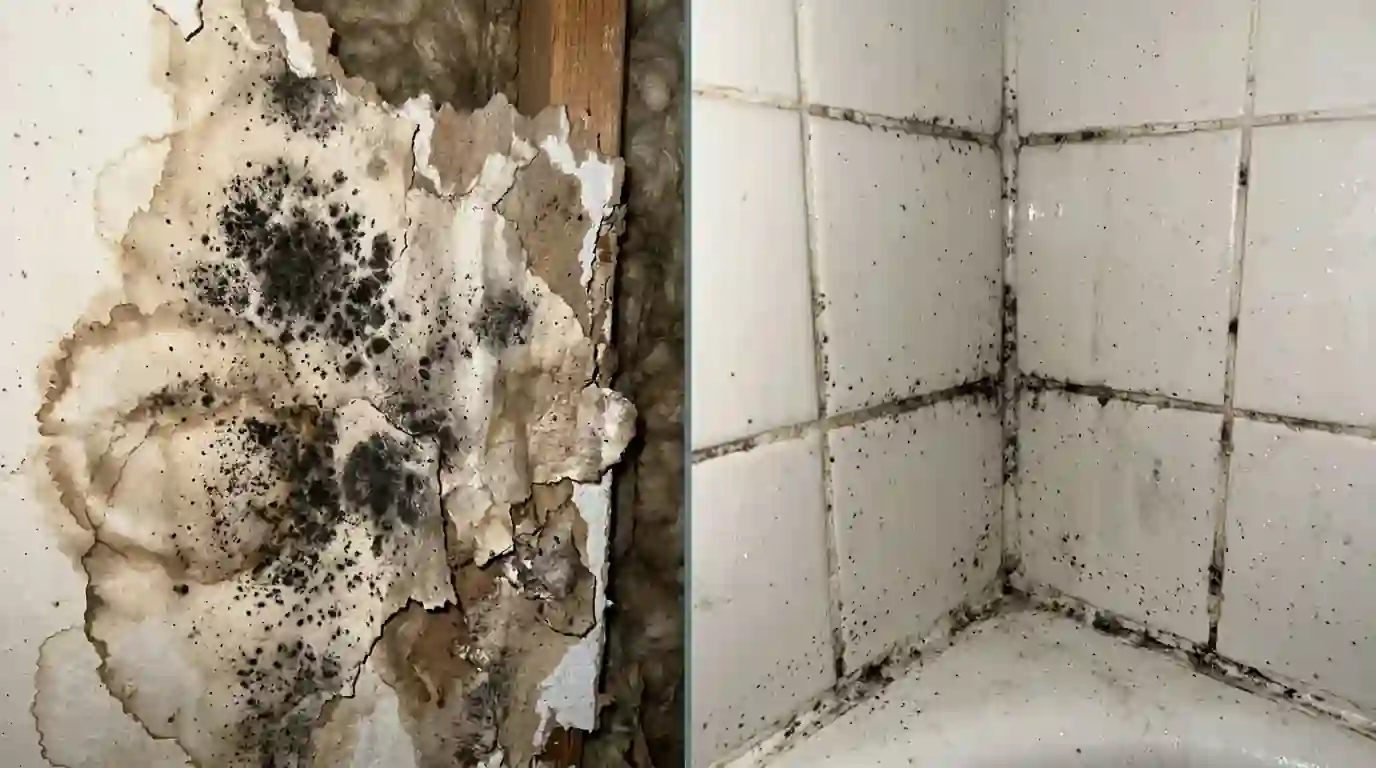
Black mold in New York City homes usually means dark growth on drywall paper, ceiling board or wood that has stayed wet for weeks, while everyday mold is surface growth on tile, grout, glass or painted trim. The real difference is the material: growth on porous material that stayed wet gets cut out, and surface growth on hard surfaces is cleaned once the moisture is fixed.
What people mean by black mold
In everyday use, black mold means dark, sometimes slimy or sooty growth, and people often mean one particular species that grows on cellulose, the paper on drywall and ceiling board. That species needs material that stays wet for a long time, so finding it tells you something useful: water has been in that wall or ceiling for weeks.
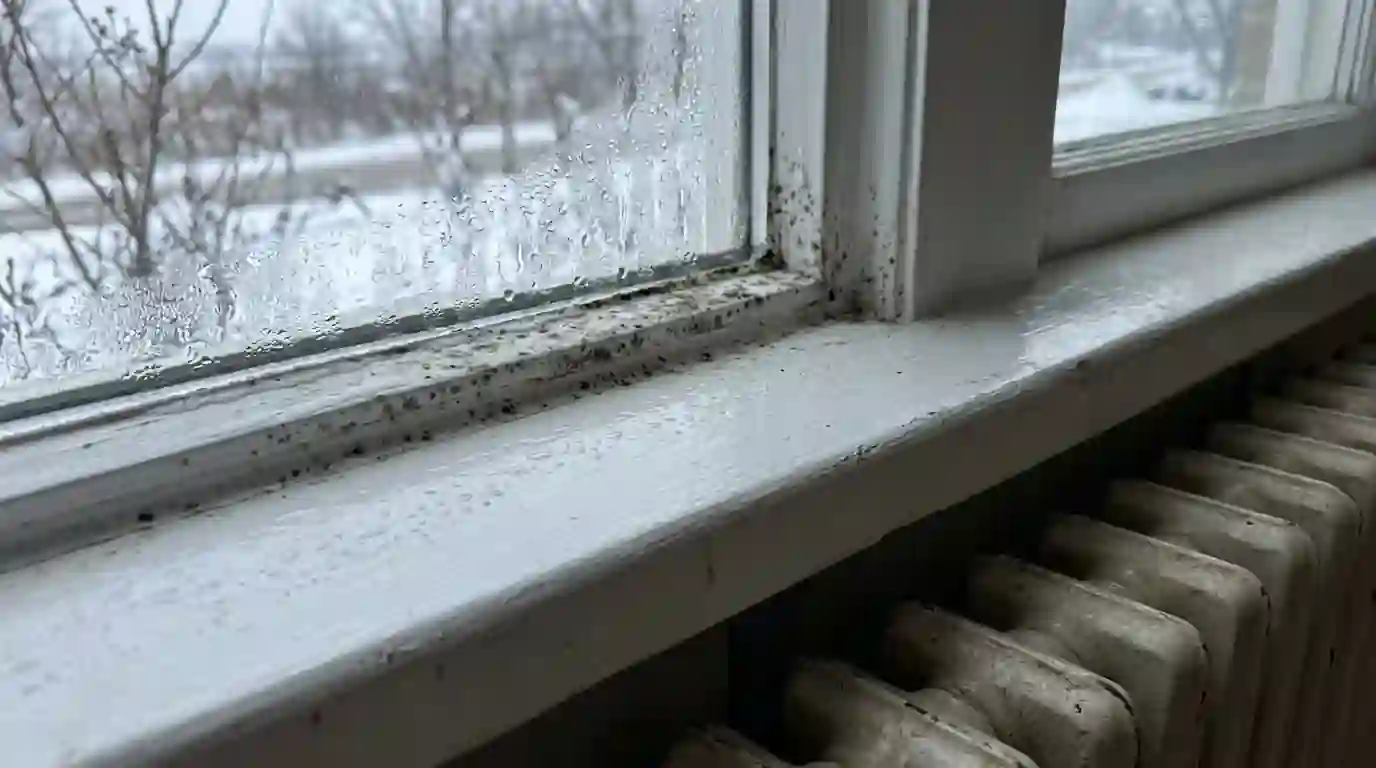
Plenty of dark growth is not that species at all. Black specks on shower grout, window caulk and the backs of furniture on cold walls are usually common molds feeding on moisture and soap film. They look similar and call for a very different job.
What black mold is not
It is not a reason to panic or leave home, and it is not something a spray will solve. It is a sign of long-term water, and once the water is fixed and the material is removed, it is gone.
Why the material matters more than the color
Where it grows tells you how it is handled.
| Where it grows | What it usually means | How it is handled |
|---|---|---|
| Drywall paper and ceiling board | A long-running leak or flood water | Cut out inside containment |
| Wood framing | Water reached the cavity | Cleaned or sanded once dry |
| Tile grout and caulk | Condensation and soap film | Cleaned, caulk replaced |
| Window glass and sills | Winter condensation | Cleaned, humidity reduced |
| Carpet pad | A leak or flood soaked it | Removed |
Not sure what you are looking at? Describe it on the phone and we will tell you whether it is a surface clean or more.
Talk to us nowWhere black mold hides in city homes
Dark growth on long-wet material turns up in the same handful of places in New York buildings, almost always somewhere a slow leak could run unnoticed.
- Under kitchen sink bases and behind dishwashers
- Behind baseboards in basements that took water
- On the back of ceiling board under a bathroom upstairs
- Behind shower tile where grout has failed
- Around window returns where a facade or window leaks
Is black mold more dangerous?
Any mold growing indoors should be removed and the moisture fixed, whatever the species, and the removal method does not change with the color. What changes the job is the material and how much of it is affected. Anyone with asthma, allergies or health concerns about exposure should talk to their doctor; our job is to find the water and get the growth out.
When a test is worth it
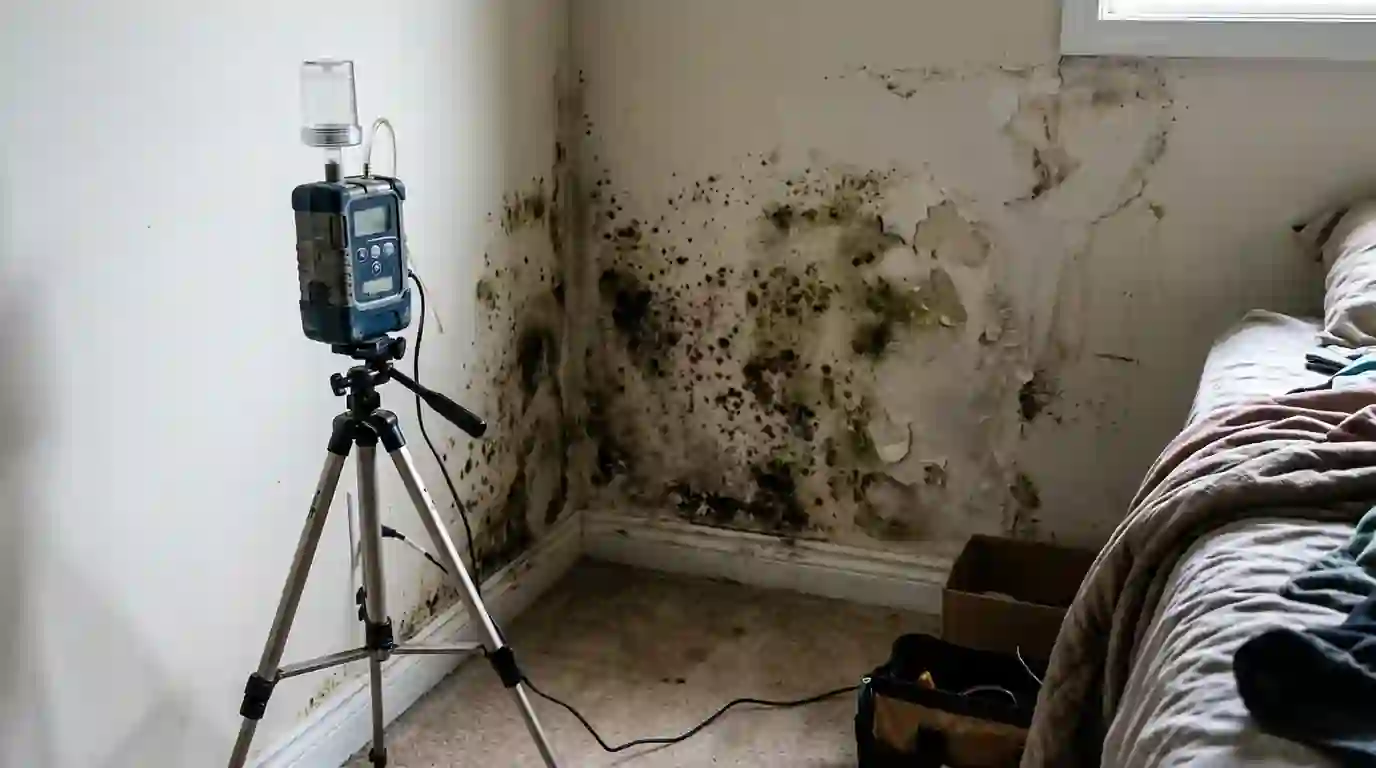
Testing tells you the species and how much is in the air or on a surface. It is worth paying for when you need an answer for someone else, such as a landlord, a board, a buyer or a doctor, or when you smell mold and cannot find it. When you can already see growth on a wet wall, the plan is the same either way: the wet material comes out.
Surface mold you can clean yourself
Not every dark spot needs a crew. Small patches of surface growth on hard, non-porous surfaces, the kind that shows up on shower grout, window glass or a painted sill, can be handled at home. Wear gloves, clean with detergent and water, dry the surface, and fix what made it wet, whether that is a fan that does not pull or a window that sweats every morning.
Stop and call if the spot comes back within a few weeks, if the paint is bubbling or the wall feels soft, if the growth covers more than a small patch, or if it is on drywall, ceiling board or wood. Those are signs the moisture is inside the material rather than on it.
What to do if you find it
A few steps protect the house and keep the job small.
- Stop the water. Find and stop the leak, or call someone who can.
- Do not scrub or sand it dry. That puts spores in the air.
- Do not paint over it. Paint hides it and traps moisture behind it.
- Photograph it. Useful for a landlord, a board or an insurer.
- Call for a moisture check. The readings show how far it goes behind the surface.
How removal works
Removal follows the same order whatever the species. The area is sealed with plastic and kept under negative air so spores stay inside. Affected drywall, ceiling board and insulation are cut out past the edge of the growth and the wet readings, then bagged inside the containment. The framing behind is HEPA vacuumed and cleaned or sanded, the cavity is dried until it reads dry, and only then is the wall rebuilt. Fixing the leak that started it is part of the job, because dry wood does not grow mold again.