Quick answer
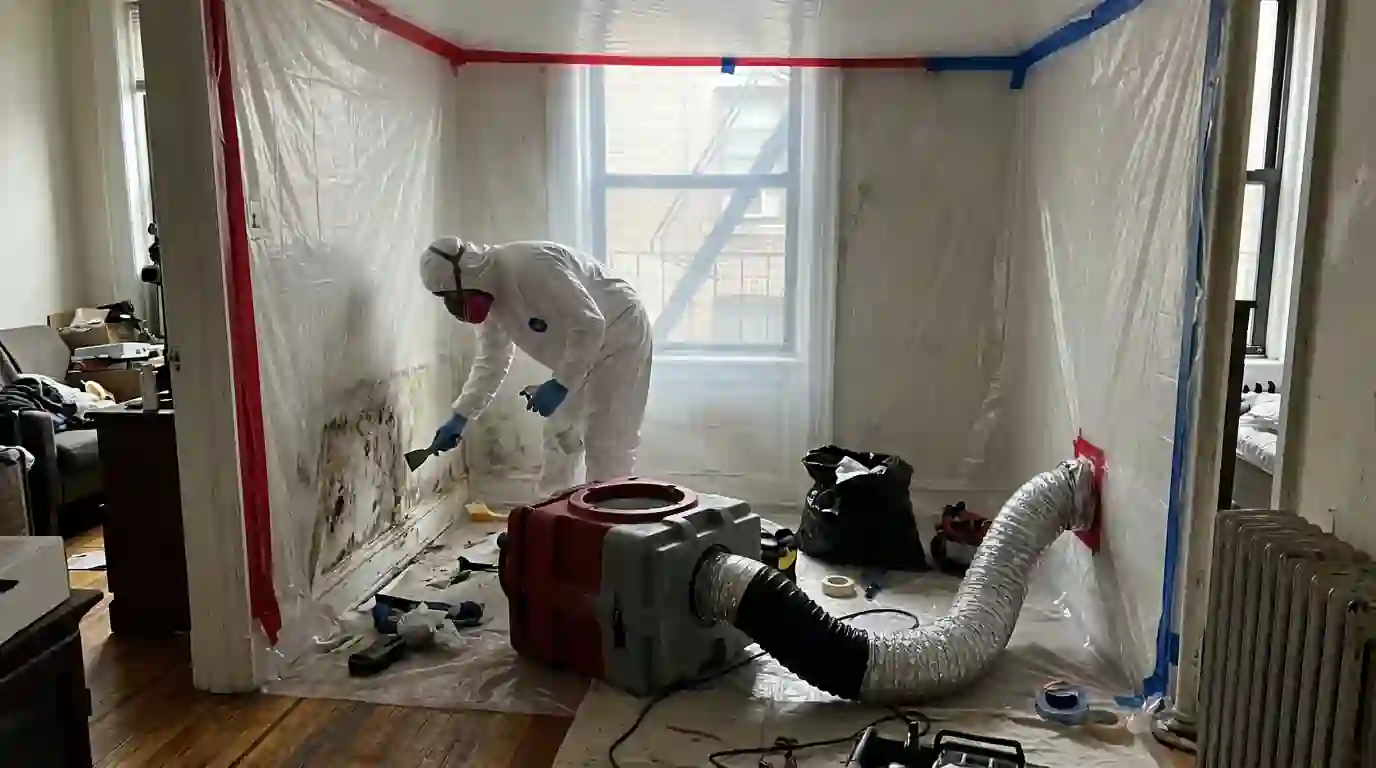
Mold work in Jackson Heights is mostly apartment work: prewar garden co-ops and walk-ups where leaks travel along old risers, bathrooms that have not been opened in decades, and basement units that took on water in heavy storms. We trace the water, contain the work inside the unit, remove the growth and dry, then hand the board, the managing agent or the landlord the written scope and photos they ask for.
Updated September 2026
Local conditions
What drives mold in Jackson Heights buildings
The core of Jackson Heights was built as garden apartments. The Queensboro Corporation put up eight block-long garden apartment complexes between 1920 and 1925, and Linden Court, opened in 1919, was the first it sold under a cooperative plan. Many of those buildings are still co-ops, so a mold job involves a board and a managing agent as well as the owner.
It is also a large, rent-regulated neighborhood. In 2009 Jackson Heights had about 188,000 residents, 52.7 percent of its rental units were rent-regulated, and 15.3 percent of its homes sat inside a historic district. Old buildings with long-term tenants mean plumbing and windows that have not been opened in a long time.
Basements are the other risk. During Ida, most of the city's overnight deaths were in Queens basement homes, in neighborhoods including Woodside, next door. Below-grade units here can take on storm water fast, and mold follows within a day or two if they are not dried.
Jobs we do most in Jackson Heights
Co-op and rental apartments make up most of our Jackson Heights work. Each job has its own page.
Apartment Mold Remediation
Containment and removal inside a co-op or rental unit with hallways protected.
Hidden Leak Detection
Tracing a wet wall or ceiling to the riser or the unit above.
Bathroom Mold Removal
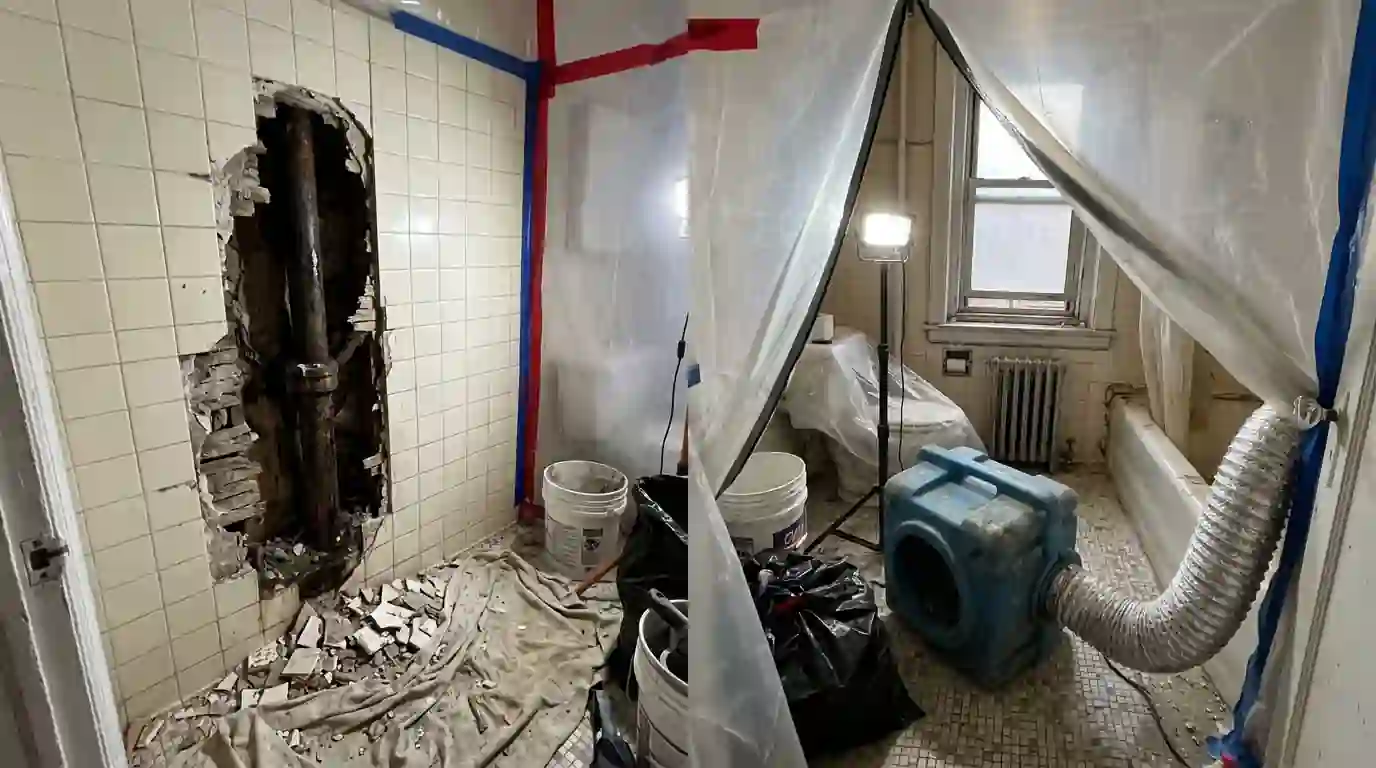
Prewar bathrooms with growth behind tile and in the ceiling below.
Flooded Basement Cleanup
Pump-out and drying when a storm floods a basement unit.
Mold Testing
Air and surface samples when a board, buyer or neighbor needs numbers.
Window Condensation Mold Removal
Black spotting on sills and walls around old courtyard windows.
Working in garden co-ops
Before work starts, we send the managing agent the scope, the schedule and the plan for protecting the hallway, stairs and courtyard path. Many garden buildings have no elevator, so we bag and seal materials inside containment and carry them out through a cleaned route.
When the water comes from a riser or another unit, we document it with readings and photos so the right party can repair it. In buildings with 10 or more units, where the city requires separate companies above 10 square feet, we take either the assessment role or the removal role.
More in Queens
Nearby areas we also cover
Questions from Jackson Heights
In most buildings, yes. We prepare the scope and schedule the board usually wants to see.
Moisture readings tell them apart. Condensation stays at cold surfaces; a leak shows wet readings inside the wall.
We answer 24/7 and start pumping and drying as soon as a crew arrives.
Interior mold work is generally unaffected; exterior changes such as windows can need approval.