Quick answer
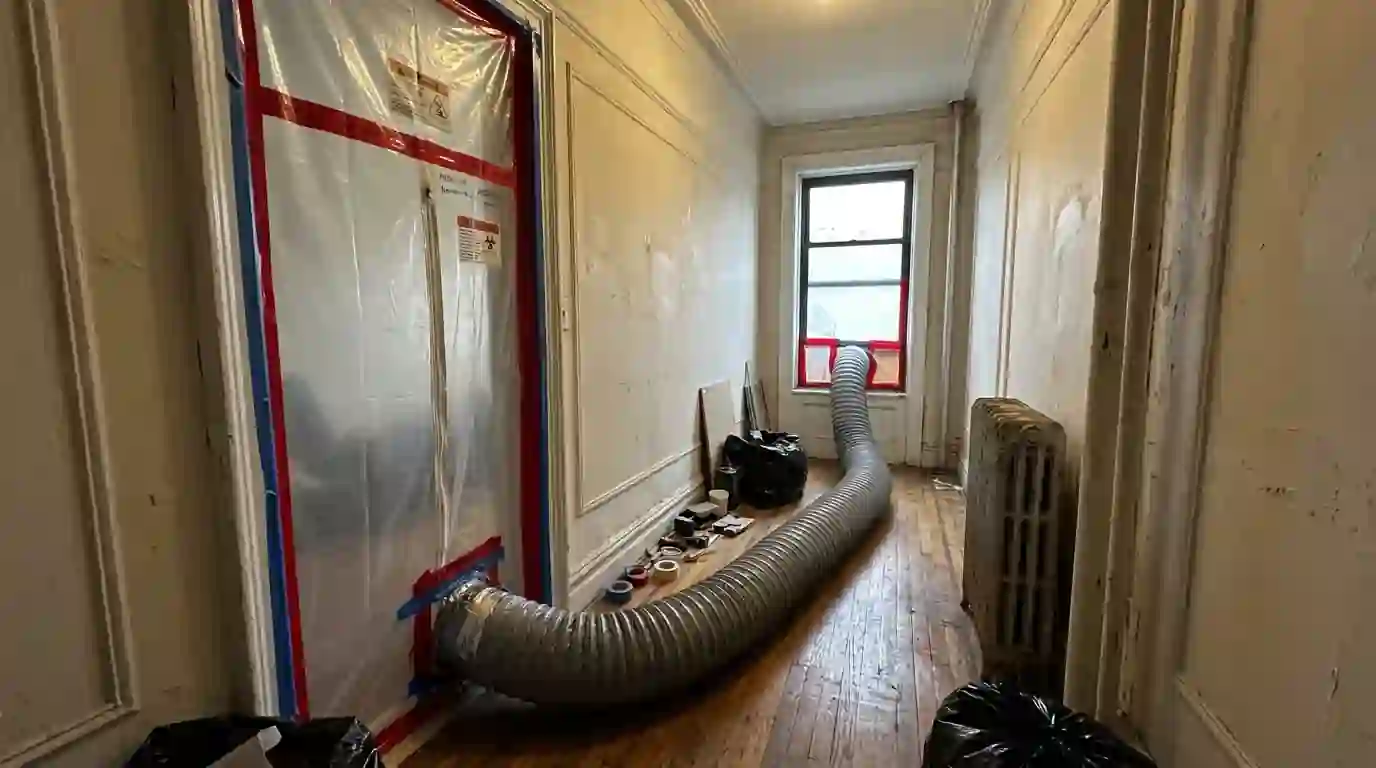
Mold remediation in New York City means finding the moisture source, sealing the area under negative air, removing mold-damaged porous materials, HEPA cleaning what remains and drying to readings, and national guides put a typical project at $1,223 to $3,757, averaging $2,368. Small patches under 10 square feet are simpler; larger ones follow stricter city rules in bigger buildings.
Updated September 2026
What remediation actually involves
Killing mold is not the goal; removing it and the water behind it is. Spraying a wall leaves dead growth in place, and dead spores still cause problems. So remediation follows a fixed order: stop the water, contain the area, remove what grew into porous materials like drywall, insulation and carpet, HEPA vacuum and clean hard surfaces, and dry everything to readings before anything is rebuilt.
The size of the job decides the setup. A patch on one wall gets a small sealed work area; a whole apartment gets full containment with negative air exhausted outside. If you are not sure how far it goes, a moisture-mapping inspection tells us before we cut anything.
Small patches under 10 square feet
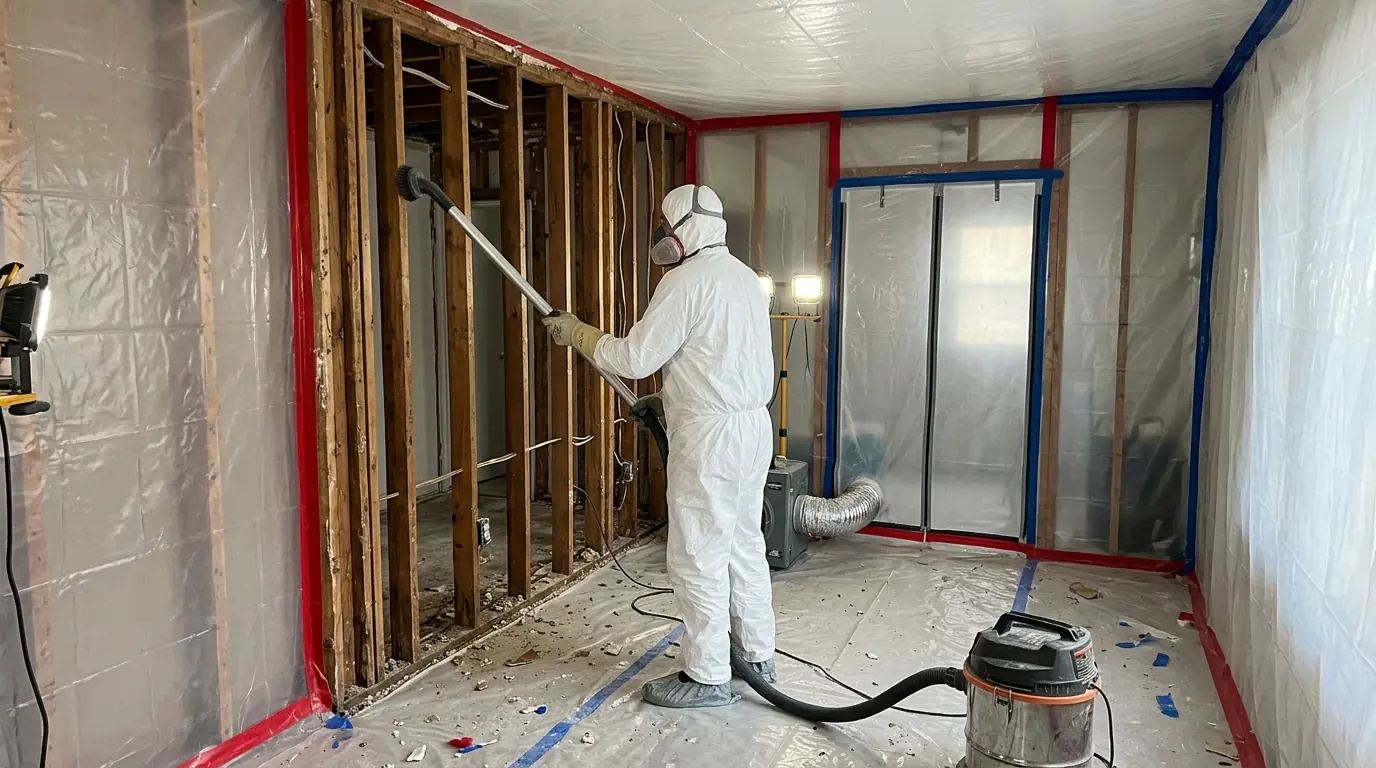
Ten square feet is roughly a three-by-three patch, and it is the line most guidance and New York City rules use for small jobs. Below it, the work is limited: we seal the immediate area, HEPA vacuum, remove affected board or clean the surface with detergent, and dry it. The leak still has to be found and fixed, or the patch is back in a few weeks. Small jobs are also the right time to call, before the growth spreads past the line.
Room-size contamination
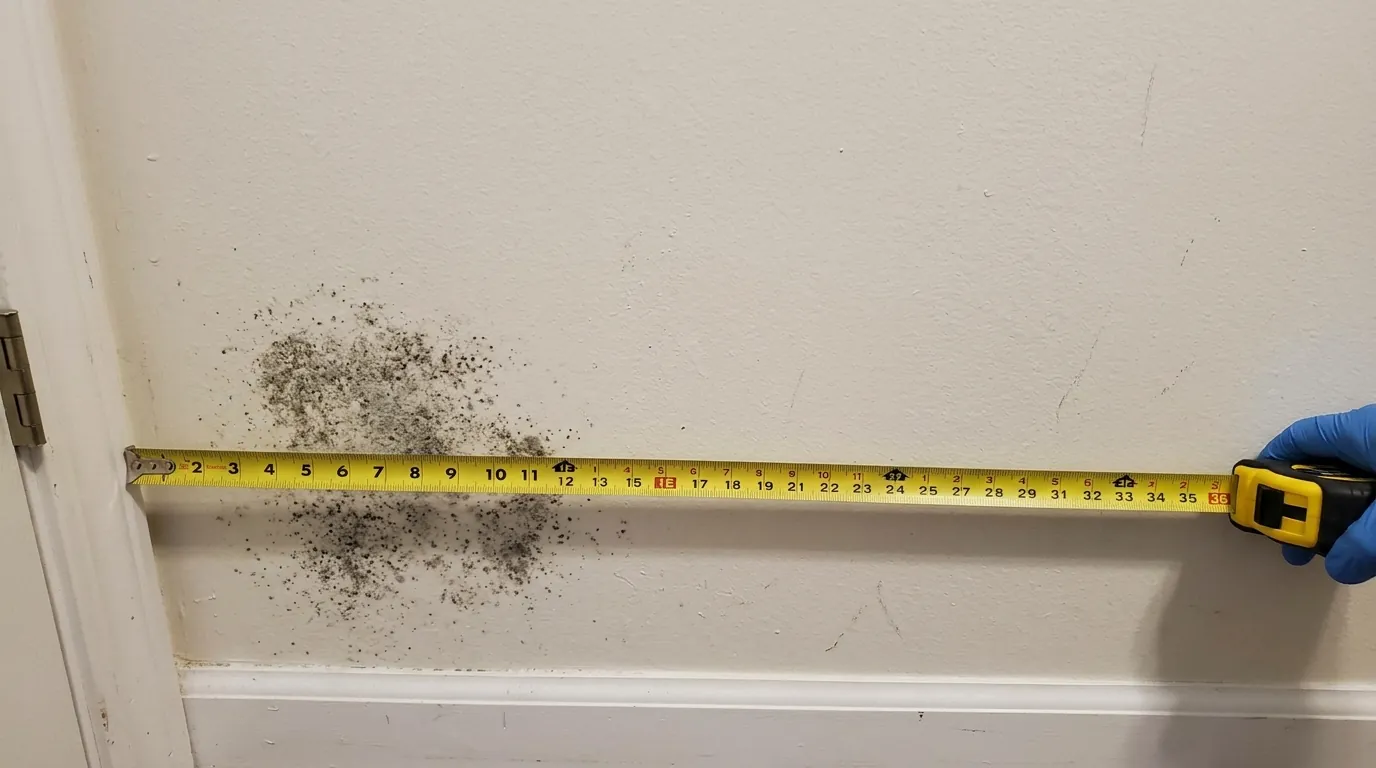
When growth covers a wall, a ceiling or most of a room, the work area is fully contained: plastic walls, a zipper door, sealed vents and a HEPA air scrubber exhausting outside so the room stays under negative pressure. Affected drywall, insulation and flooring come out and are bagged inside the containment. Framing and hard surfaces are HEPA vacuumed and cleaned, the room is dried to readings, and the containment stays up until the space is clean and the readings confirm it is dry.
Whole-apartment and whole-house jobs
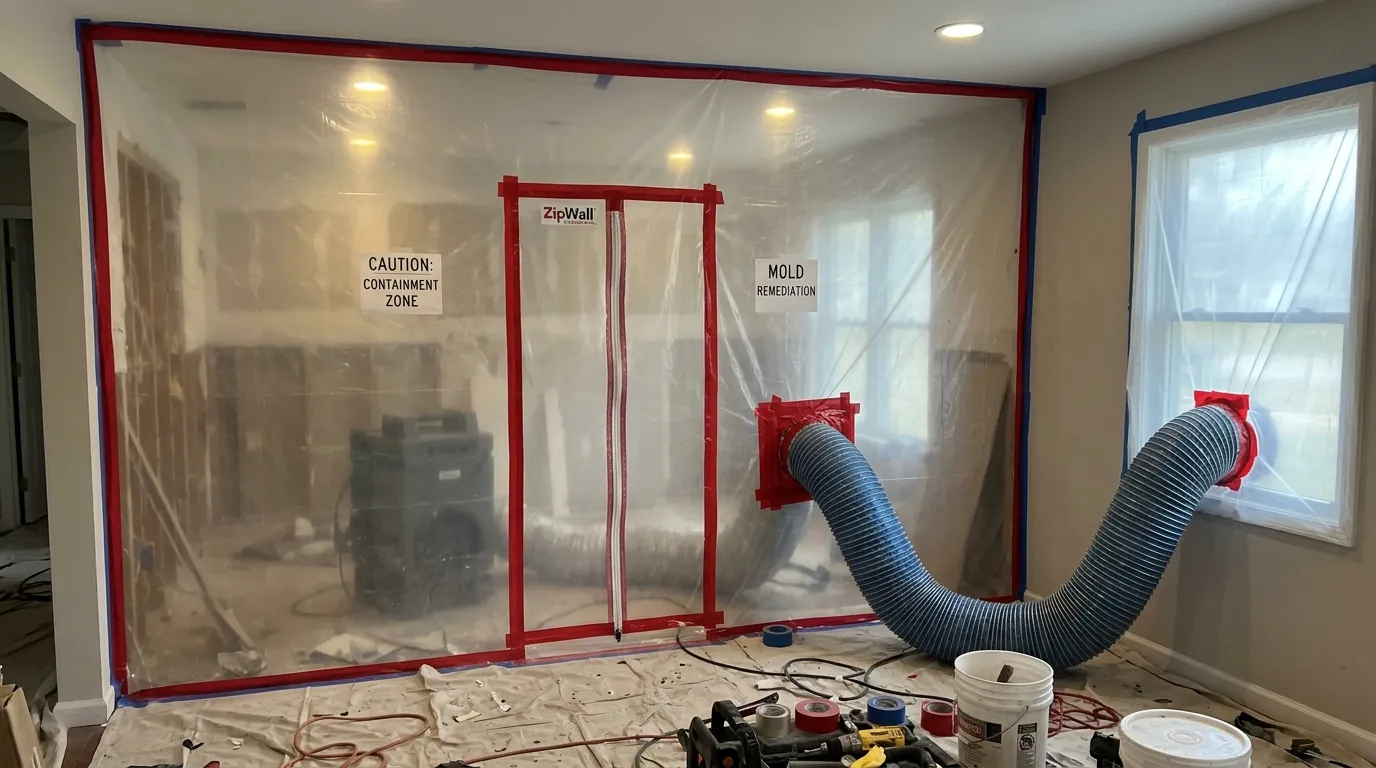
After a long-running leak, a flood or years of condensation, growth can reach several rooms, the ductwork and belongings. These jobs are planned in zones so part of the home can stay usable where possible. Contents are sorted and cleaned or packed out, the air system is cleaned so it does not redistribute spores, and each zone is cleaned and dried before the next opens up. In larger buildings, independent assessment and clearance are part of the plan from the first day.
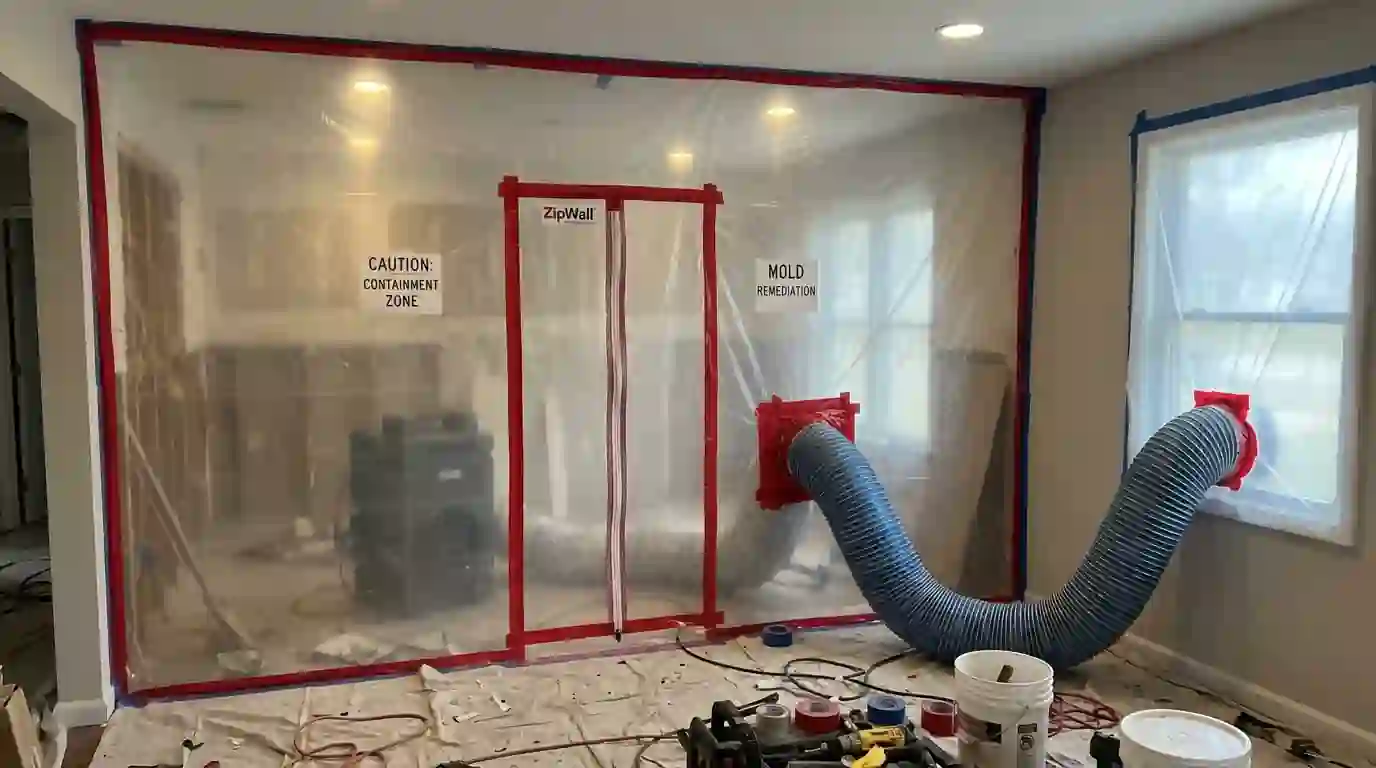
What mold remediation costs
National guides put a typical mold remediation at $1,223 to $3,757, averaging $2,368, and whole-house jobs at $10,000 to $30,000. The area affected and how much material comes out drive the number.
Area affected
Square footage of growth and wet material.
Containment size
A small work area or a full negative-air setup.
Materials removed
Drywall, insulation, flooring and cabinets.
Access
Behind built-ins, in attics or under floors.
Rebuild
Priced once removal and drying are done.
New York conditions
Why city buildings need the full process
NOAA now classifies New York City as a humid subtropical climate, and the heavier storms that come with it put more water into basements, walls and roofs. Local Law 55 requires owners of buildings with three or more apartments to inspect units every year for mold and fix the underlying cause, not just the visible growth. Both point the same way: remediation here has to include finding and stopping the water, or the same wall is back on the list next year.
How a remediation job runs
The same order on every job, sized to the area.
We find and stop the water
Leak, flood path or condensation source.
We map the damage
Readings and thermal imaging set the boundary.
We contain the area
Plastic walls, zipper door and negative air.
We remove what grew
Porous materials cut out and bagged inside containment.
We clean and dry
HEPA vacuuming, damp wiping, dehumidifiers to readings.
We verify and hand over
Final readings, photos and a written summary.
Call (332) 234-9326A person answers, day or night.
How long remediation takes
A small patch is often handled in a single visit. Room-size jobs take longer because containment goes up first and drying has to finish before the room is rebuilt. Whole-home jobs are scheduled zone by zone. In every case the calendar is set by the drying readings, not a fixed number of days, and we tell you where things stand after each visit.
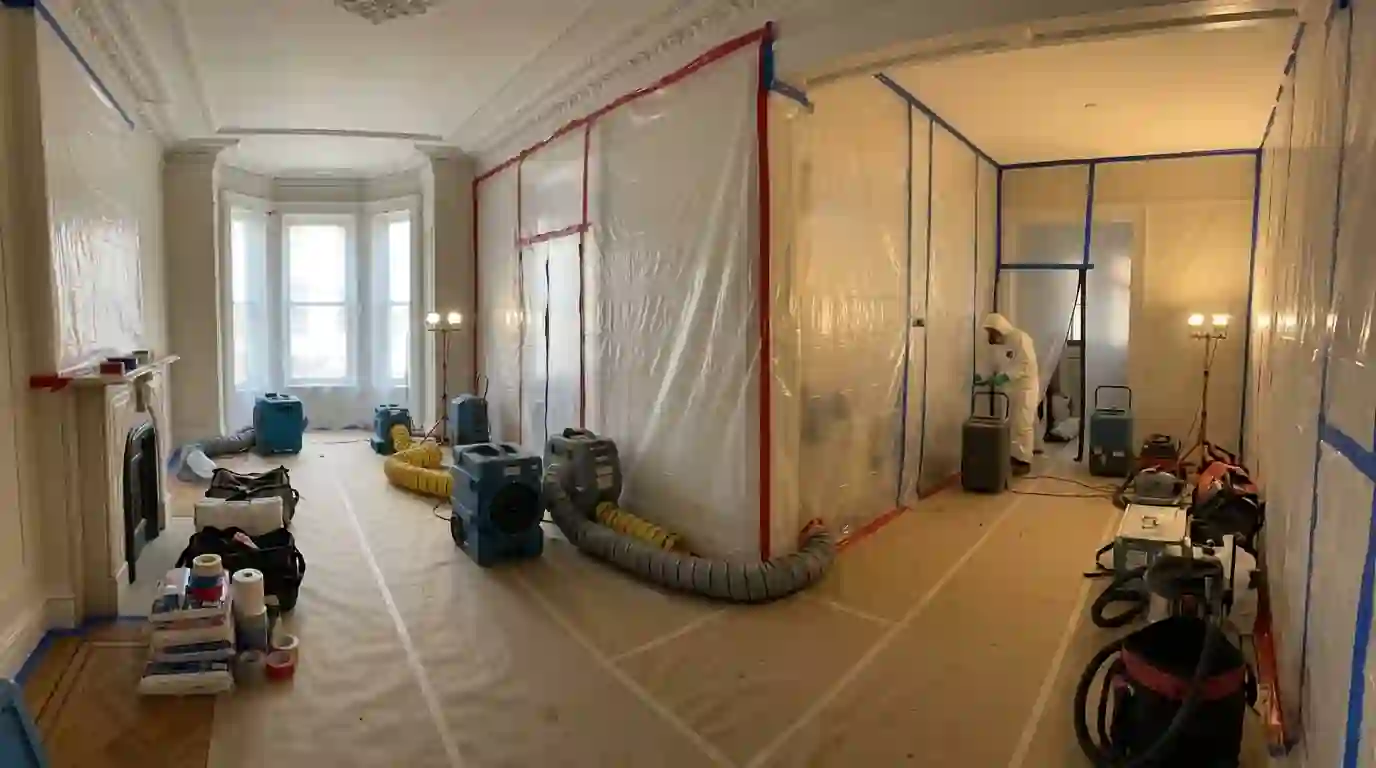
Negative air keeps spores inside the sealed room while the rest of the home stays in use.
Talk to us nowQuestions about mold remediation
Removal cleans what you see. Remediation also contains the area, removes damaged materials, fixes the water and dries the space.
We remove it. Dead growth left in place still causes problems.
Final moisture readings, a visual check, and clearance testing where the job calls for it.
Usually, with the work area sealed under negative air.
Not if the water source is fixed and the space is kept dry.
Yes. See mold damage repair.
Related jobs we handle
Commercial Mold Remediation
After-hours containment so tenants and customers keep using the building.
Restaurant Mold Remediation
Walk-ins, basement prep rooms and dish areas cleaned between services.
HPD Mold Violation Remediation
Tracing the leak, removing the mold and documenting the work for the correction.
Black Mold Removal
Dark growth on long-wet drywall paper, cut out and bagged inside containment.
Mold that needs to come out properly?
Call now. We answer 24/7 and start with the water behind it.
Answered 24 hours a day, 7 days a week