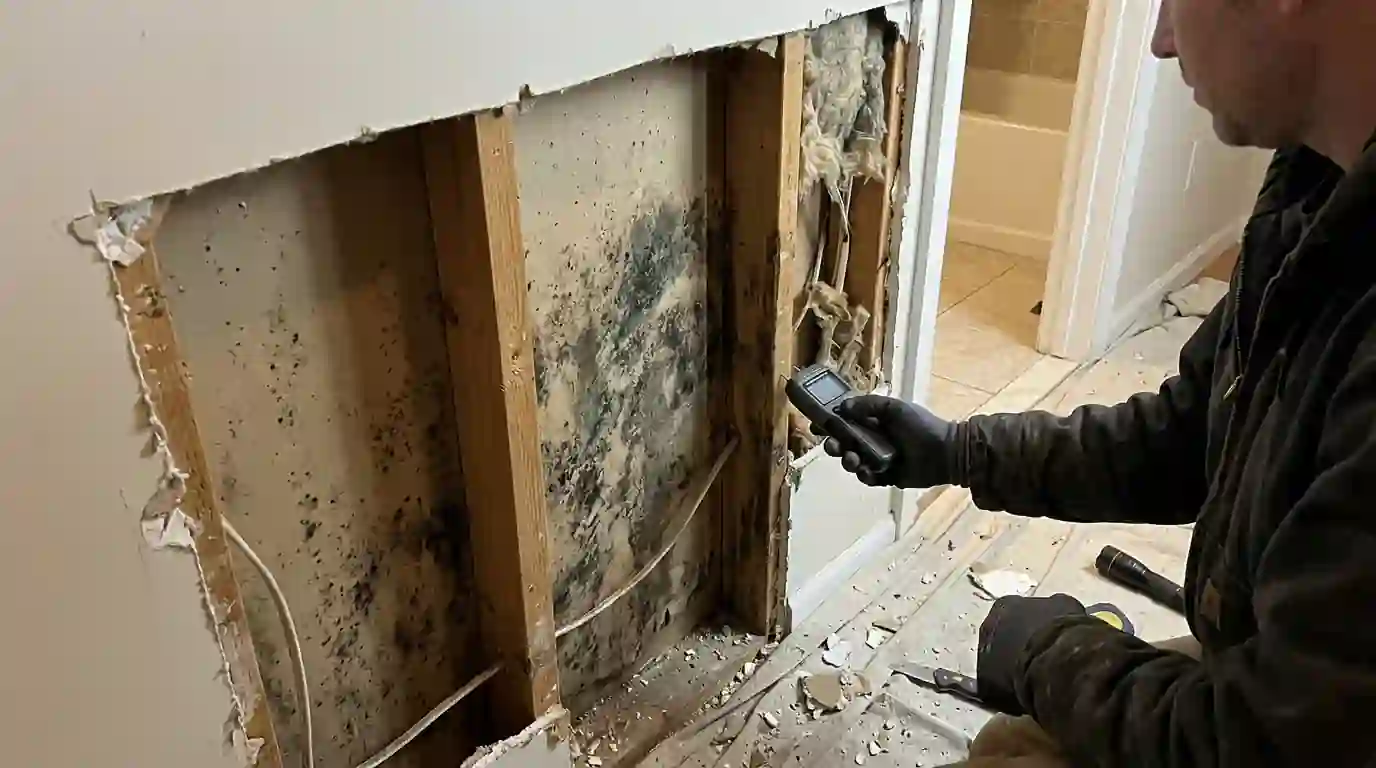
Quick answer
Bathroom mold in New York City is either surface growth from shower steam, which cleans up once ventilation is fixed, or growth behind tile and under the vanity from a leak, which means opening the wall. National guides put bathroom mold removal at $500 to $1,000, more when tile or a vanity has to come out.
Updated September 2026
Steam problem or leak problem
The spots on the ceiling above the shower are usually steam: warm, wet air with nowhere to go settles on the coldest surface in the room. That is a ventilation fix plus cleaning. Soft grout, loose tiles, a stain on the ceiling of the apartment below, or a musty smell under the vanity are different. They point to water getting behind the finishes from a valve, a drain, a failed pan or a supply line.
We read the walls, floor and ceiling with a meter before recommending anything. Surface growth gets cleaned and the fan gets checked for real airflow. Leaks get traced, the affected tile, board or vanity comes out inside containment, the cavity is dried, and the room is put back through our repair and rebuild.
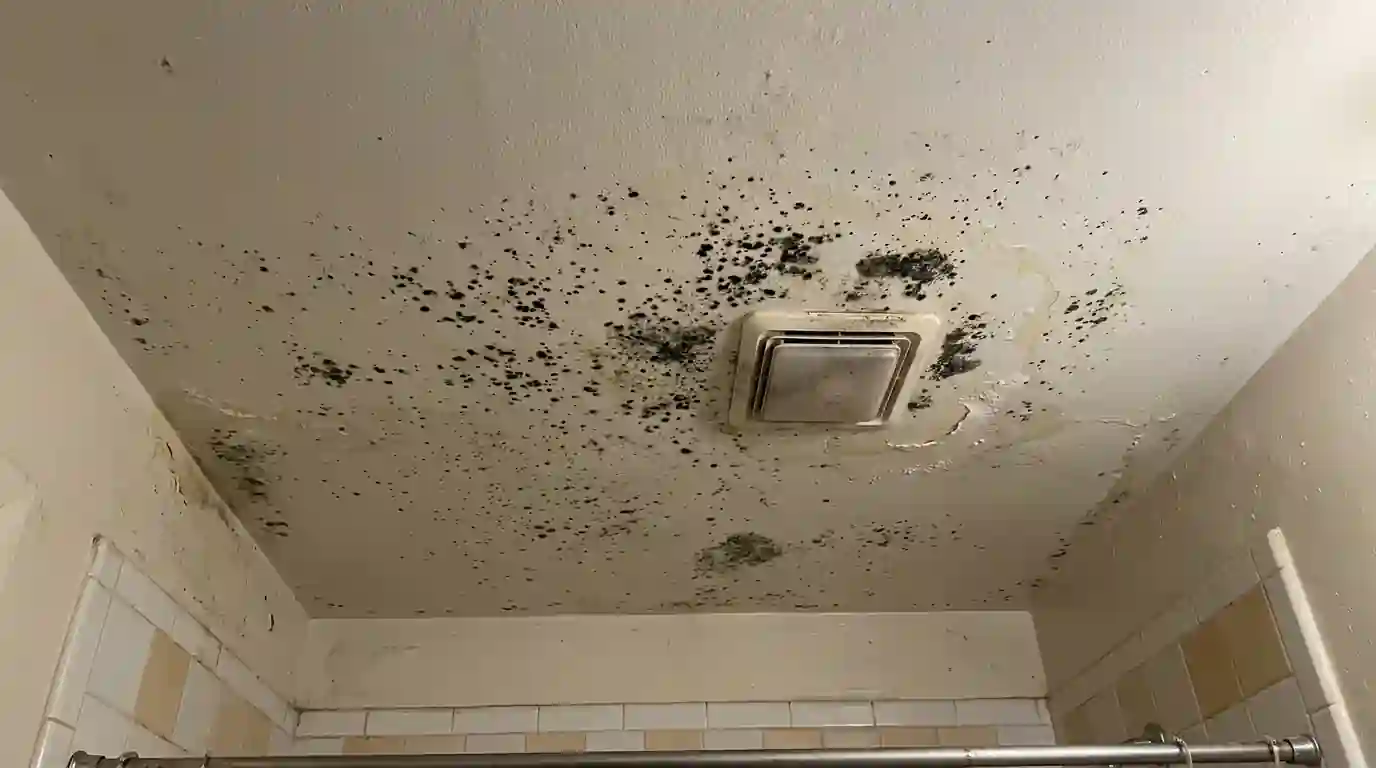
Ceiling mold above the shower
Ceiling spots over a tub or shower are almost always condensation. The paint surface grows mold because the room stays wet for hours after each shower. We clean the growth, check the paint and board underneath with a meter, and test the fan: whether it moves air, where it vents, and whether the duct is disconnected. If the board is soft or stained through, that section is replaced and primed with a moisture-resistant finish. Most of the time the lasting fix is the fan, not the ceiling.
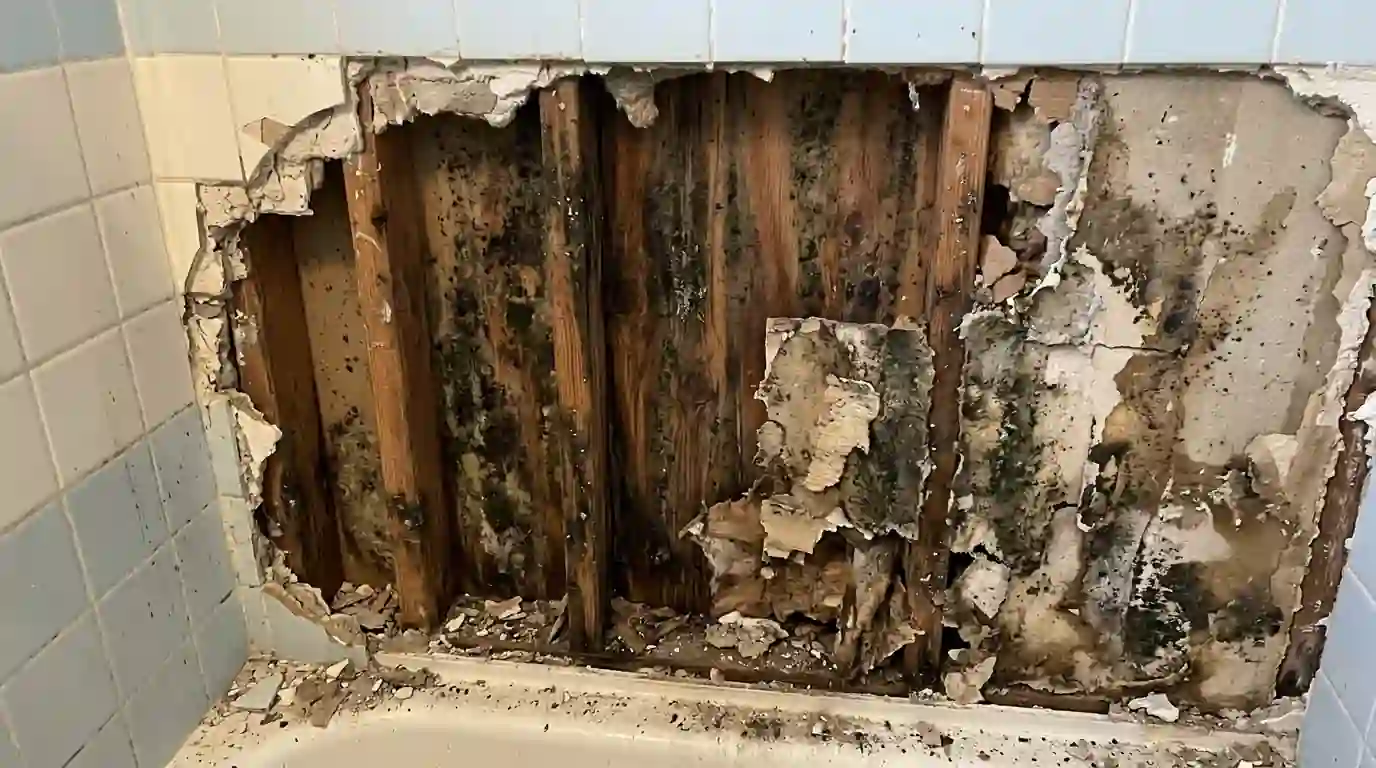
Mold behind tile and tub surrounds
When grout keeps cracking, tiles sound hollow or come loose, or the wall next to the shower reads wet, water has been getting behind the tile for a while. The backer board, framing and sometimes the wall of the next room carry growth. We open the wall from the least visible side where we can, or remove the affected tile, cut out wet board inside containment, dry the cavity and find the source, whether that is a valve, a spout, a failed seal or a shower pan.
Vanity and toilet leaks
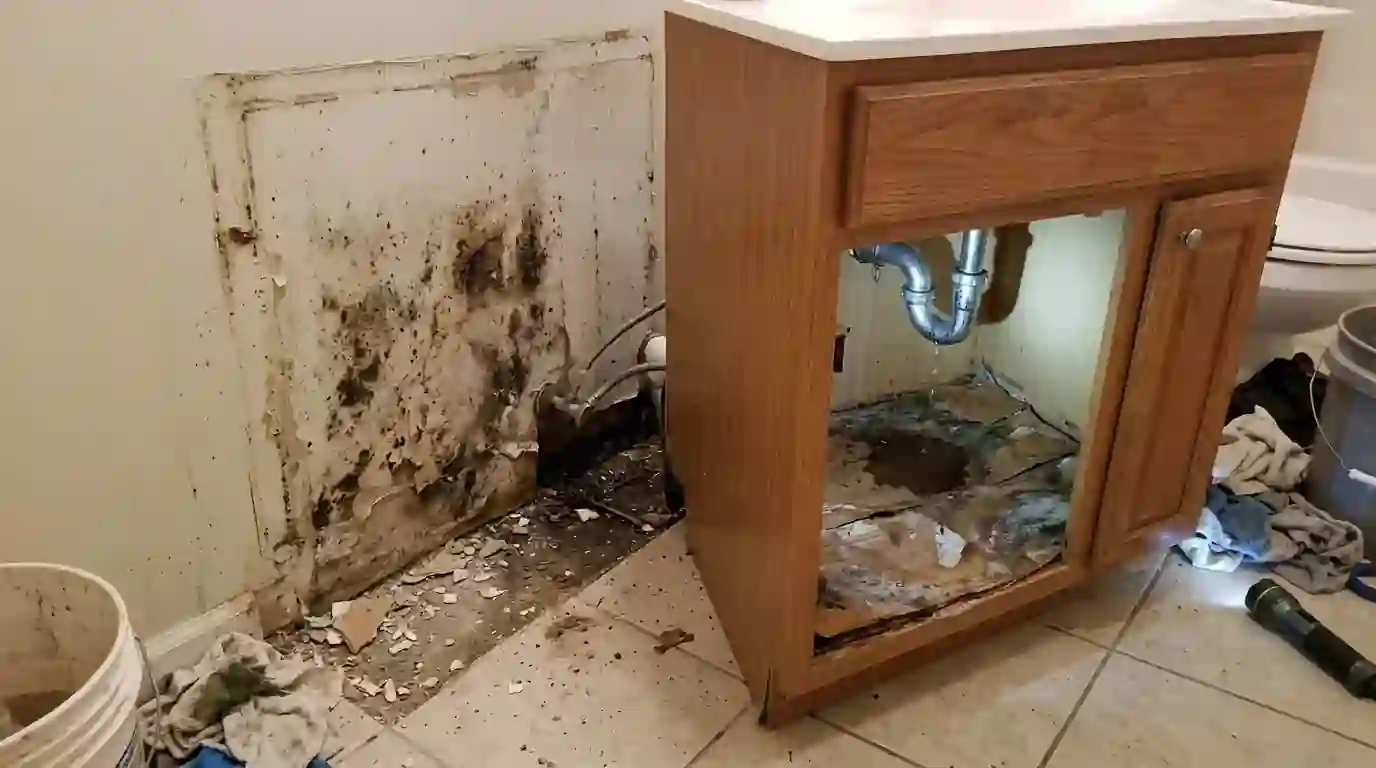
A slow leak from a sink trap, supply line or toilet seal soaks the vanity floor and the subfloor under the toilet for months before anyone sees it. The signs are a musty smell under the sink, a swollen cabinet base, or a floor that feels soft near the toilet. We pull the vanity or toilet, remove the soaked particleboard and subfloor that grew, dry what remains, and hand the plumbing repair to the right trade before the room goes back together.
What bathroom mold removal costs
National guides put bathroom mold removal at $500 to $1,000. Jobs that involve opening a tiled wall, pulling a vanity or replacing subfloor go higher because of the removal and rebuild.
Surface or behind the wall
Cleaning is quick; opening tile is not.
Tile work
Removing and resetting or replacing tile.
Vanity and toilet
Pulling and resetting fixtures, replacing damaged parts.
Ventilation fix
A new fan or duct run to the outside.
Unit below
Ceiling repair downstairs if the leak reached it.
Signs of bathroom mold, and what they mean
Spots on the ceiling over the shower
Usually steam and weak ventilation; cleans up once the fan works.
Soft or crumbling grout
Water is getting behind the tile rather than running off it.
A stain in the unit below
A leak from your tub, shower or toilet is reaching the floor below.
Musty smell under the vanity
A slow drip from a trap or supply line soaks the cabinet floor.
Dark caulk that keeps coming back
Growth under the caulk line means it needs to come out and be redone.
A fan that does not clear the mirror
If the mirror stays fogged long after a shower, the fan is not moving air.
New York conditions
Why small city bathrooms grow mold
Half of all housing units in Manhattan are studios or one-bedrooms, and in a unit that small the bathroom fan is often the only thing moving shower steam out, whether or not it has been cleaned in years. July nights in Central Park average near 70 degrees, so in summer the steam from a shower has little chance to dry off before the next one. A small, warm, unventilated room that stays wet all day is where ceiling mold starts.
What you can do, and when to call
What you can safely do
- Clean surface spots on painted ceilings and tile with detergent and water
- Run the fan during and after showers and keep the door open afterward
- Replace moldy caulk once the joint is fully dry
Where it needs us
- Loose tiles or soft grout, which means water behind the wall
- A stain on the ceiling of the unit below
- Mold that returns within weeks of cleaning
- Anything under or behind the vanity or toilet
How a bathroom job runs
Meter first, then clean or open, then fix the cause.
We read the room
Ceiling, walls, floor and the vanity base with a meter.
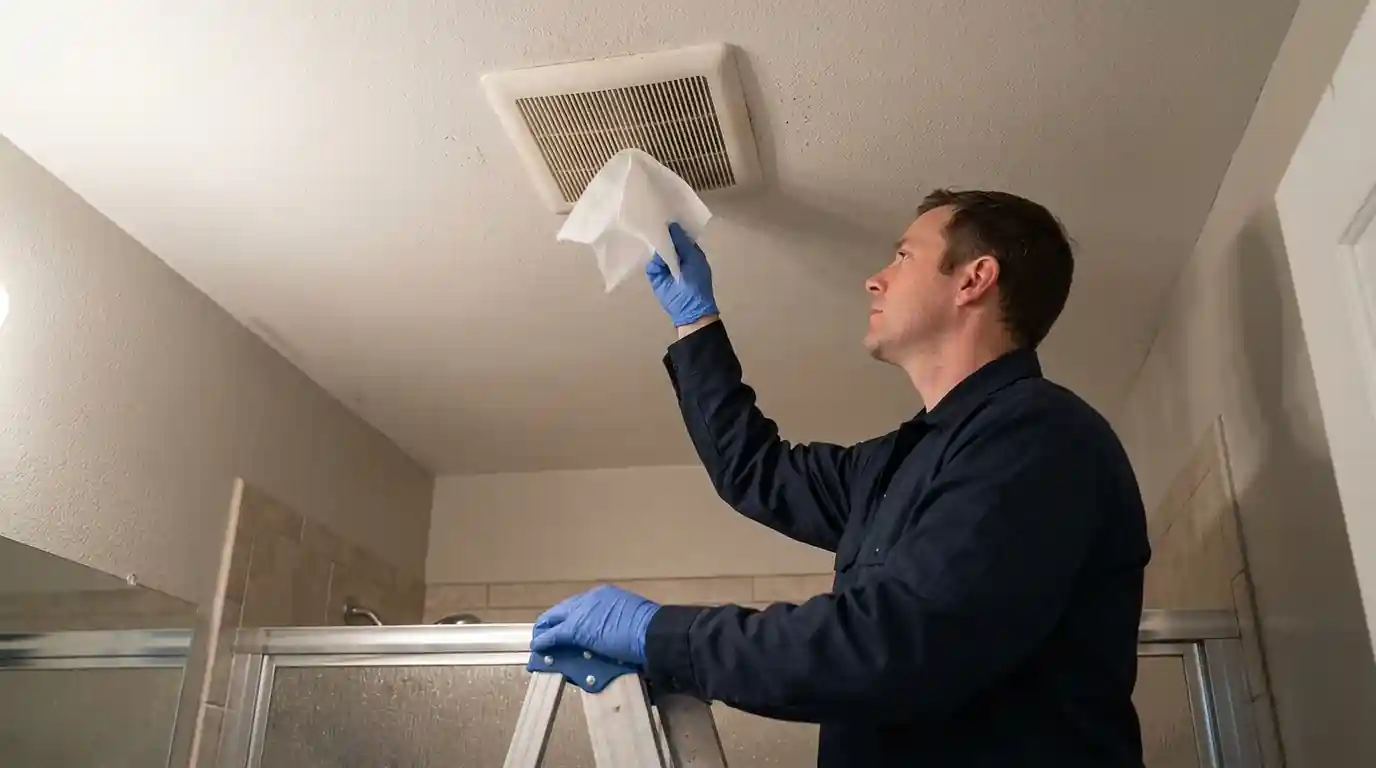
We check the fan
Airflow, duct connection and where it actually vents.
We seal the work area
Containment before any tile or board comes out.
We remove what grew
Surface cleaning, or wet board, tile and vanity parts removed.
We dry and find the source
Readings until dry, with the leak traced and repaired.
We put it back
Board, tile, caulk and paint, or ready for your tile setter.
Call (332) 234-9326A person answers, day or night.
Questions about bathroom mold removal
Usually not, if it is surface growth from steam. It is a sign the fan is not doing its job.
Mold grows under the caulk line. It has to come out, the joint dried, and new caulk applied.
Sometimes, if we can open the wall from the other side.
If yours does not clear the mirror after a shower, it is worth checking.
We trace it and coordinate access through the building.
A cleaning is quick; an opened wall stays open until it reads dry.
Related jobs we handle
Basement Mold Removal
Foundation walls, framing and finished basements dried and cleared.
Ceiling Mold Removal
Stains from the unit above or the roof, opened, dried and rebuilt.
Window Condensation Mold Removal
Sills, frames and cold corners that stay wet all heating season.
Kitchen Mold Removal
Sink bases, appliance line leaks and the wall behind the backsplash.
Bathroom mold that keeps coming back?
Call now. We answer 24/7 and find out whether it is steam or a leak.
Answered 24 hours a day, 7 days a week