Quick answer
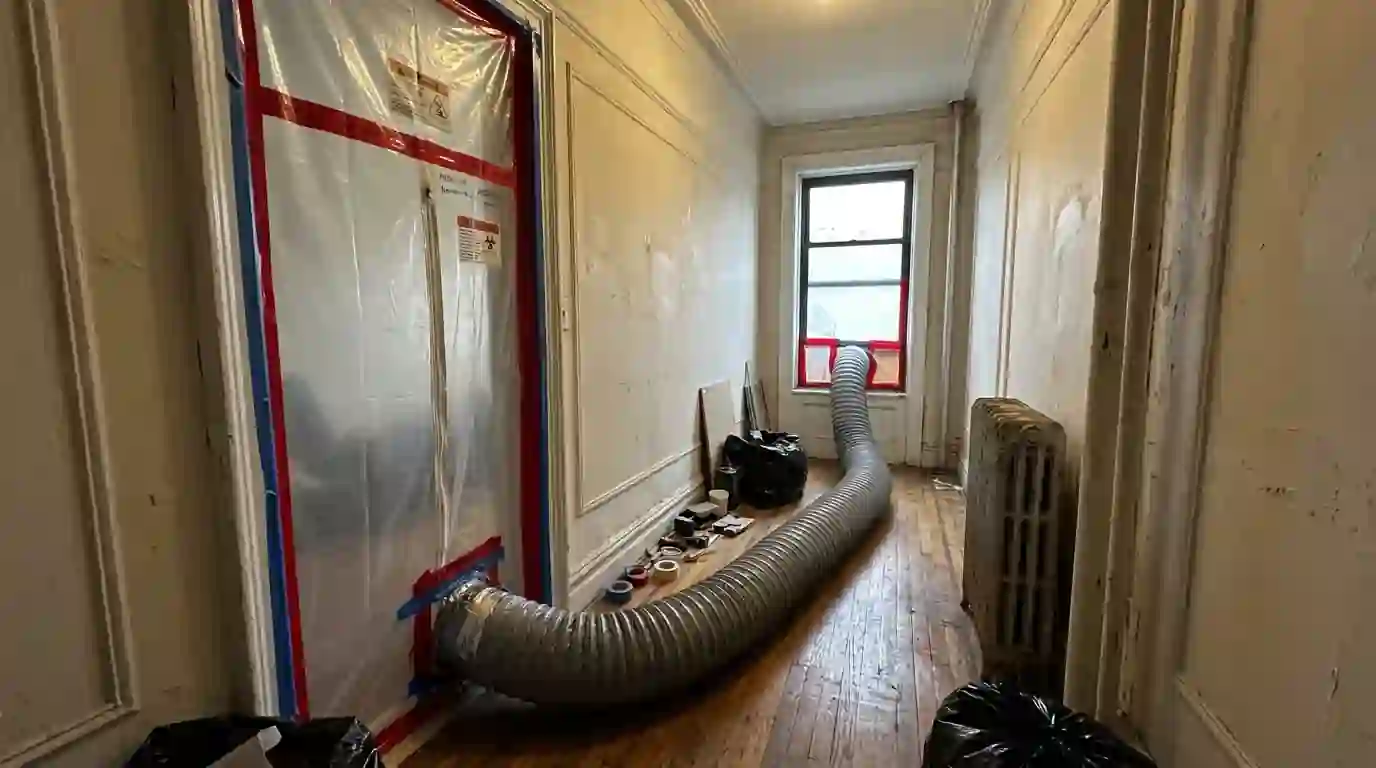
Apartment mold remediation in New York City is removal inside an occupied building: the elevator and hallway are protected, the affected rooms are sealed under negative air, and the growth and its leak are dealt with. In buildings with 10 or more units, mold over 10 square feet must be assessed and removed by two independent companies, and small jobs follow the city work practices.
Updated September 2026
What is different about apartment jobs
The mold work itself is the same as anywhere: find the water, contain the area, remove what grew, clean and dry. What changes is everything around it. Co-op and condo boards want paperwork and a written scope before work starts, buildings limit work hours and elevator use, and the source of the water is often in another unit or behind a shared riser.
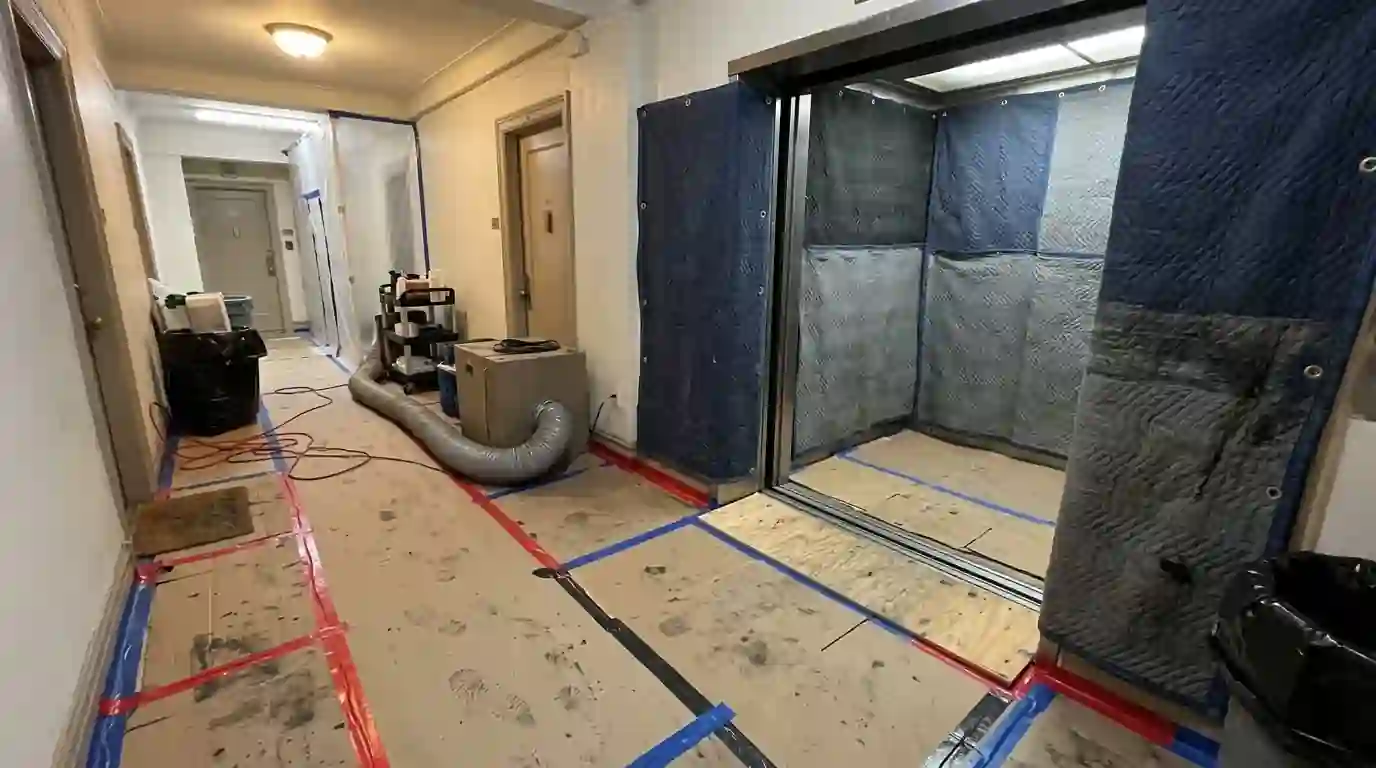
We handle that part too. We coordinate with management, schedule around building rules, protect the hallway and elevator, and keep the containment inside your unit. When the source is upstairs, we work with the building to get it stopped, as with a ceiling leak from above. When a violation is involved, the job follows our HPD violation process.
Co-op and condo units
Co-op and condo work starts with the building. Most boards require paperwork, a written scope and sometimes an alteration agreement before a crew can start, and they set the hours and elevator bookings. We prepare the paperwork with you, schedule around the rules, and keep the building informed. When the source is a common element like a riser or the roof, the building is usually responsible for that repair, and our readings and photos help make that case to the board or the managing agent.
Rental apartments
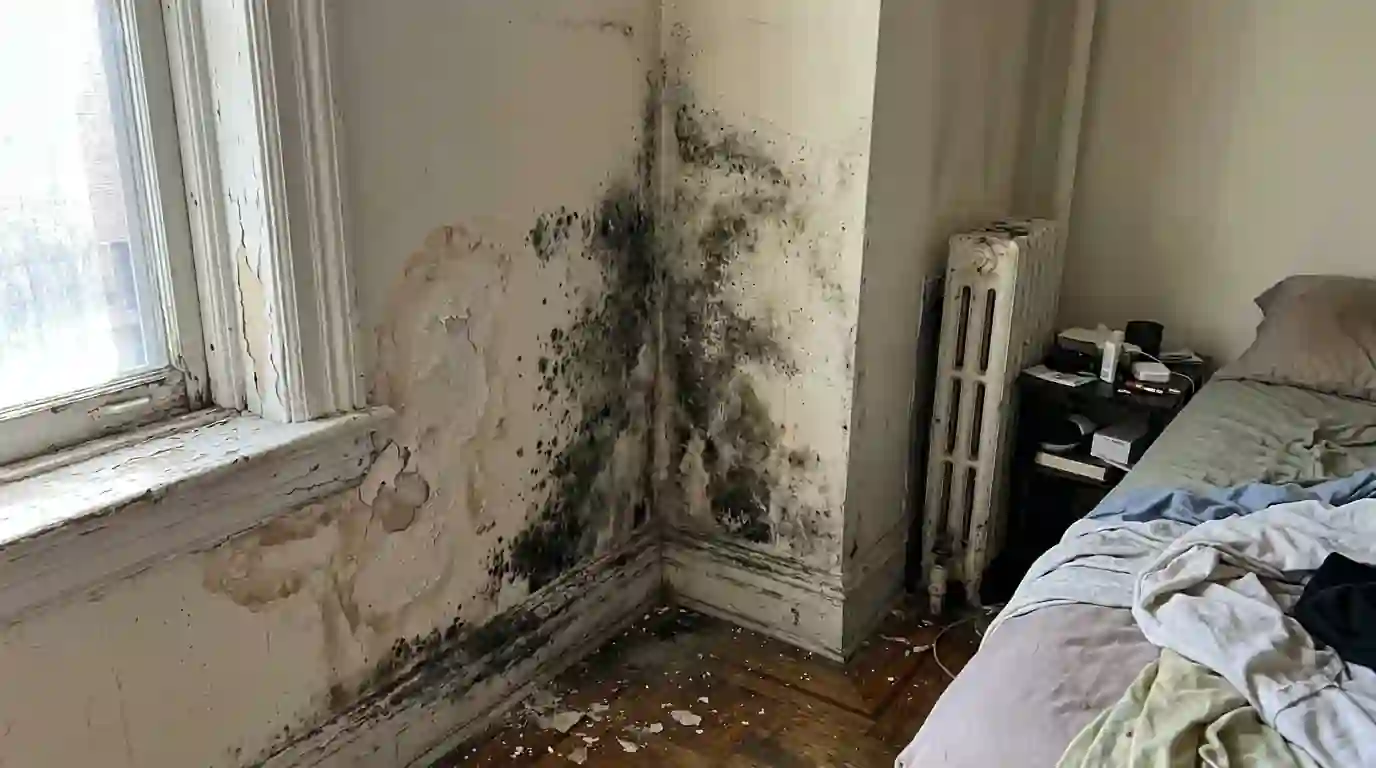
In rentals, the owner is responsible for correcting mold and the condition behind it, and tenants can report it to HPD through 311. We work for owners and managing agents who want it fixed properly the first time, and we document conditions clearly enough that the work speaks for itself. When a tenant calls us directly, we can inspect and document, and the removal is then arranged with the owner or agent, with our findings shared so nobody has to start from scratch.
Basement and garden units
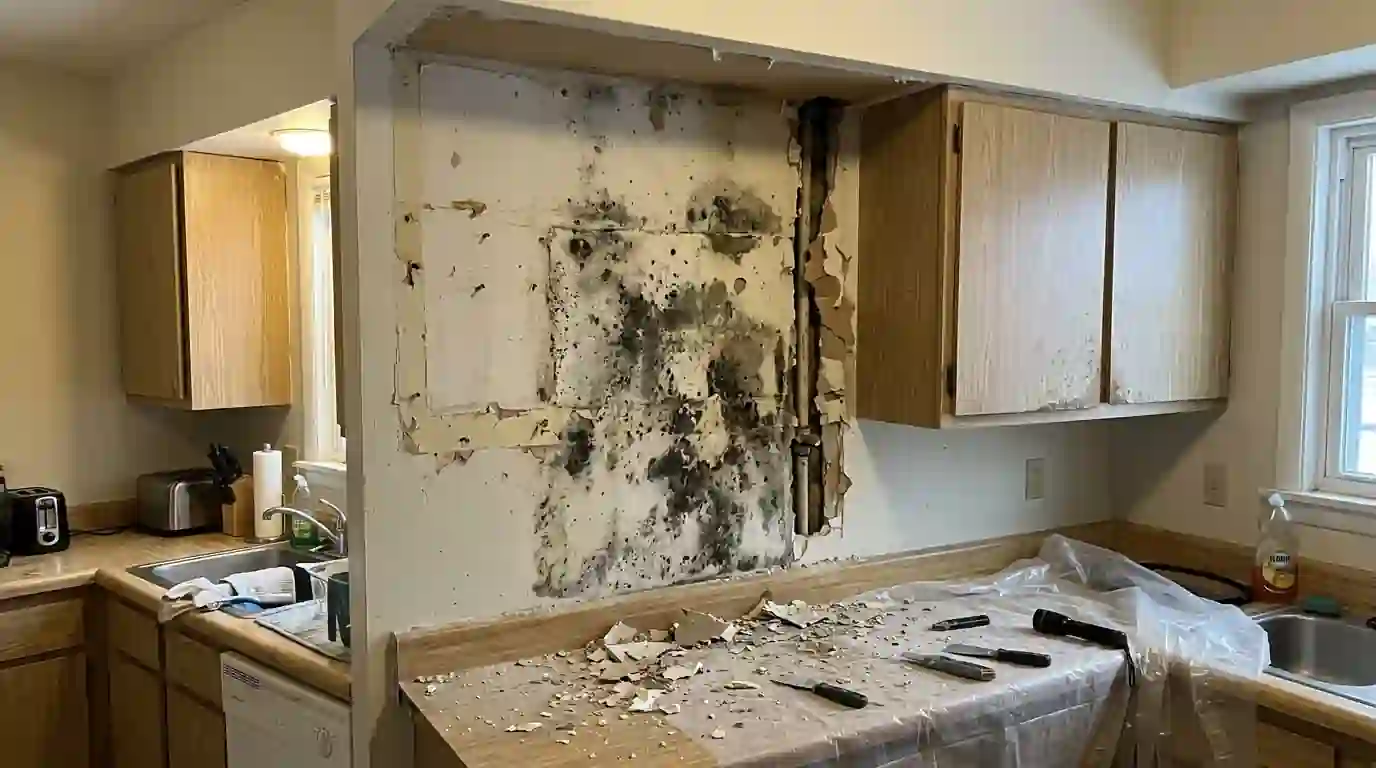
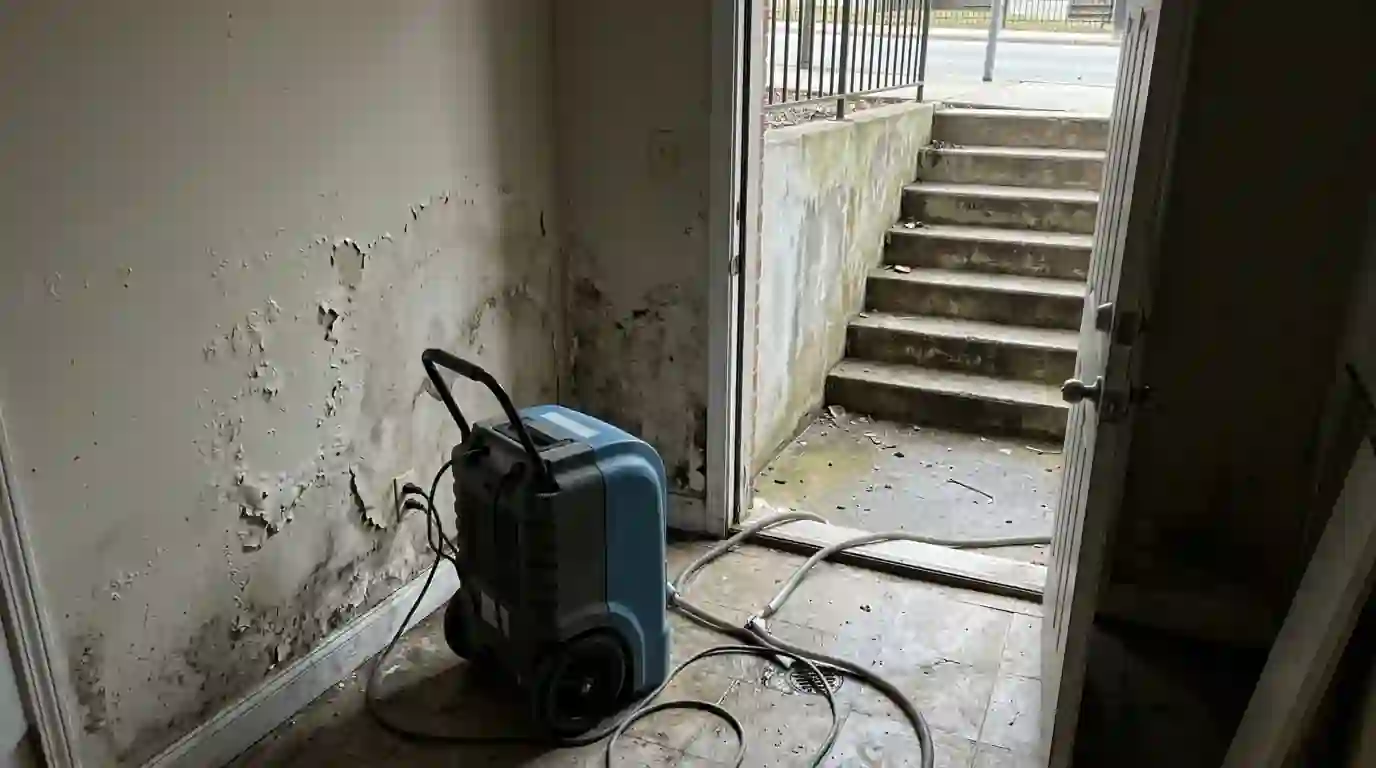
Basement and garden apartments sit closest to the ground and flood first in heavy rain, so their mold usually comes from groundwater, window wells or water under the entry door. We contain the affected rooms, remove the growth, dry the walls and slab, and look at how water is getting in, because those units need the entry points fixed to stay dry. A dehumidifier with a drain line helps these units through the summer. See our basement page for the same work in houses.
What apartment mold remediation costs
National guides put a typical mold remediation at $1,223 to $3,757 and a bathroom job at $500 to $1,000. Building requirements such as paperwork, protection and restricted hours add to apartment jobs.
Area affected
One bathroom or several rooms.
Building rules
Work hours, elevator bookings and paperwork.
Source location
A leak in another unit adds coordination.
Materials removed
Board, plaster, flooring and cabinets.
Documentation
Scopes and reports for boards or HPD.
What an apartment job includes
- Coordination with the super or managing agent before work
- Paperwork the board or management asks for
- Elevator and hallway protection on work days
- Containment and negative air inside the unit
- Removal and bagging of materials that grew
- HEPA cleaning of the rooms and belongings nearby
- Moisture source traced, including other units if needed
- Photos, readings and a written summary for your records
New York conditions
How city rules shape apartment mold work
HPD classes mold violations by size: under 10 square feet is Class A with 90 days to correct, 10 to 30 square feet is Class B with 60 days, and 30 square feet or more is Class C with 24 hours. In buildings with 10 or more units, mold over 10 square feet has to be assessed and removed by two independent companies. Knowing which rules apply before work starts keeps the job, and the correction, clean in New York City buildings.
What you can do, and when to call
What you can safely do
- Photograph the mold and any leak, with dates
- Report it in writing to the super, landlord or managing agent
- Clean small surface spots with detergent and water and keep the area ventilated
Where it needs us
- Growth inside walls, ceilings or under floors
- Mold over 10 square feet
- A leak from another unit that keeps returning
- Anything the board or landlord needs documented
How an apartment job runs
Building rules first, then the mold.
We coordinate with the building
Management, paperwork, work hours and elevator.
We find the water
In your unit, the unit above or a shared riser.
We protect the path
Elevator, hallway and entry covered on work days.
We contain the rooms
Sealed work area under negative air.
We remove, clean and dry
Materials that grew bagged out, rooms cleaned and dried.
We document it
Photos, readings and a summary for board, landlord or tenant.
Call (332) 234-9326A person answers, day or night.
Questions about apartment mold remediation
The owner is responsible for correcting mold and the condition causing it.
Usually. We prepare the paperwork boards commonly ask for.
They will see the hallway protection, but containment keeps the work inside your unit.
We trace it and work with management to stop the source.
Usually, with the affected rooms sealed off.
For inspection and documentation, yes; removal is arranged with the owner.
Related jobs we handle
Commercial Mold Remediation
After-hours containment so tenants and customers keep using the building.
HPD Mold Violation Remediation
Tracing the leak, removing the mold and documenting the work for the correction.
Restaurant Mold Remediation
Walk-ins, basement prep rooms and dish areas cleaned between services.
Black Mold Removal
Dark growth on long-wet drywall paper, cut out and bagged inside containment.
Mold in your apartment?
Call now. We answer 24/7 and handle the building side as well as the mold.
Answered 24 hours a day, 7 days a week