Quick answer
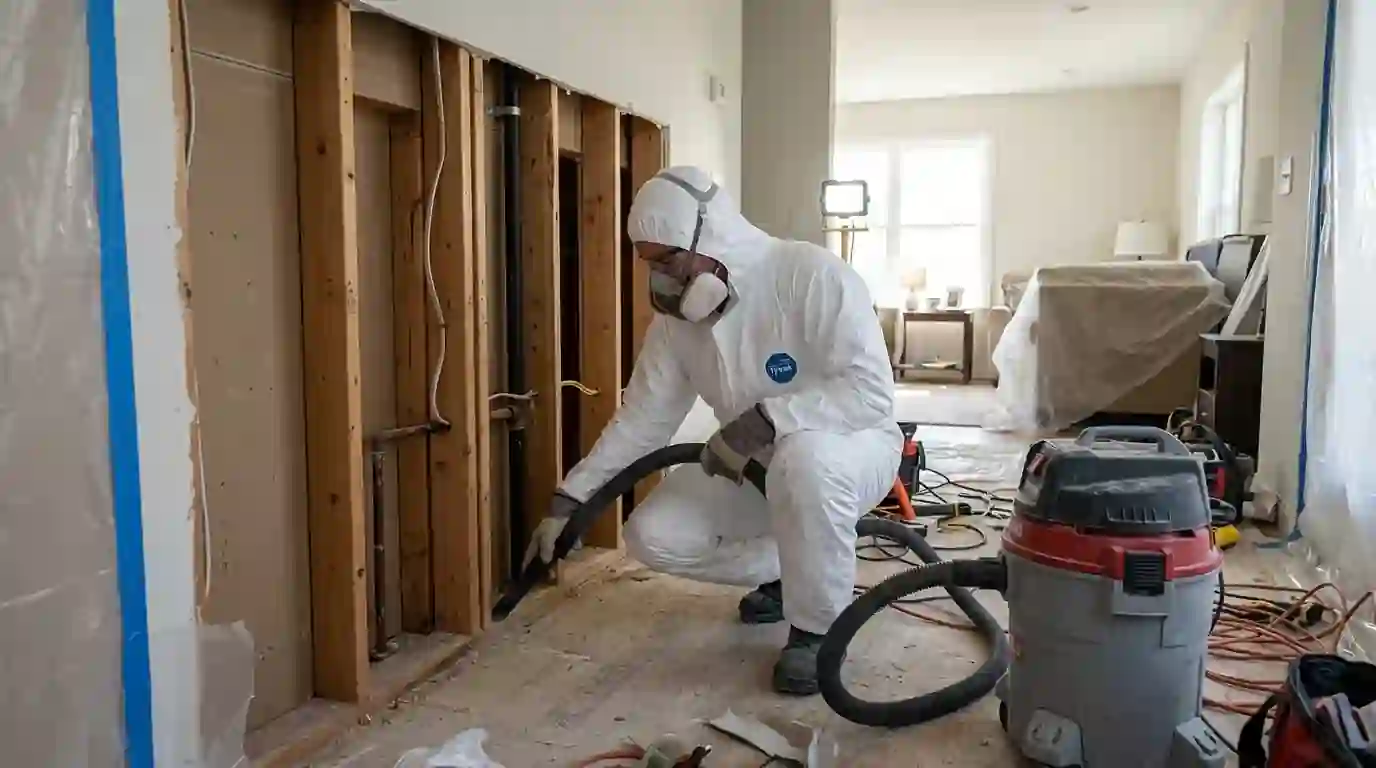
Mold damage repair in New York City is the rebuild after removal: new drywall or plaster, trim, cabinets and flooring put back, then primer and paint, and it should only start once the framing reads dry on a meter. Closing a wall over damp wood is how the same mold returns in the same spot.
Updated September 2026
Why the rebuild is part of the mold job
Removal leaves open wall cavities, missing base cabinets, pulled-up floors and ceilings with holes in them. Handing that to a separate contractor means a second schedule, a second visit to clean up, and a gap where nobody is checking whether the framing is actually dry.
We rebuild on the same job. The drying readings from the wall work decide when we close up, and the materials go back to match what was there: drywall in modern rooms, plaster or a skim coat in prewar ones, and trim profiles copied from the rest of the room so the repair does not stand out.
Drywall and plaster replacement
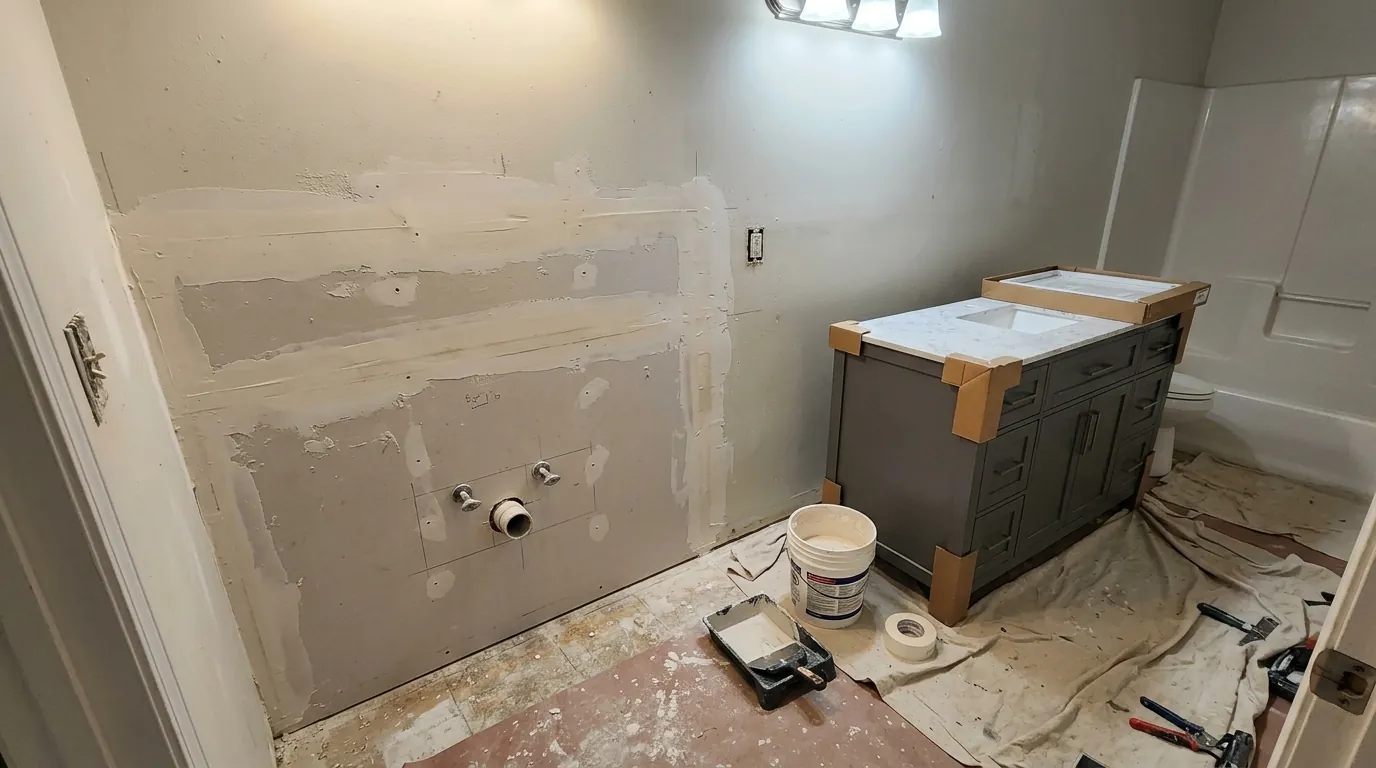
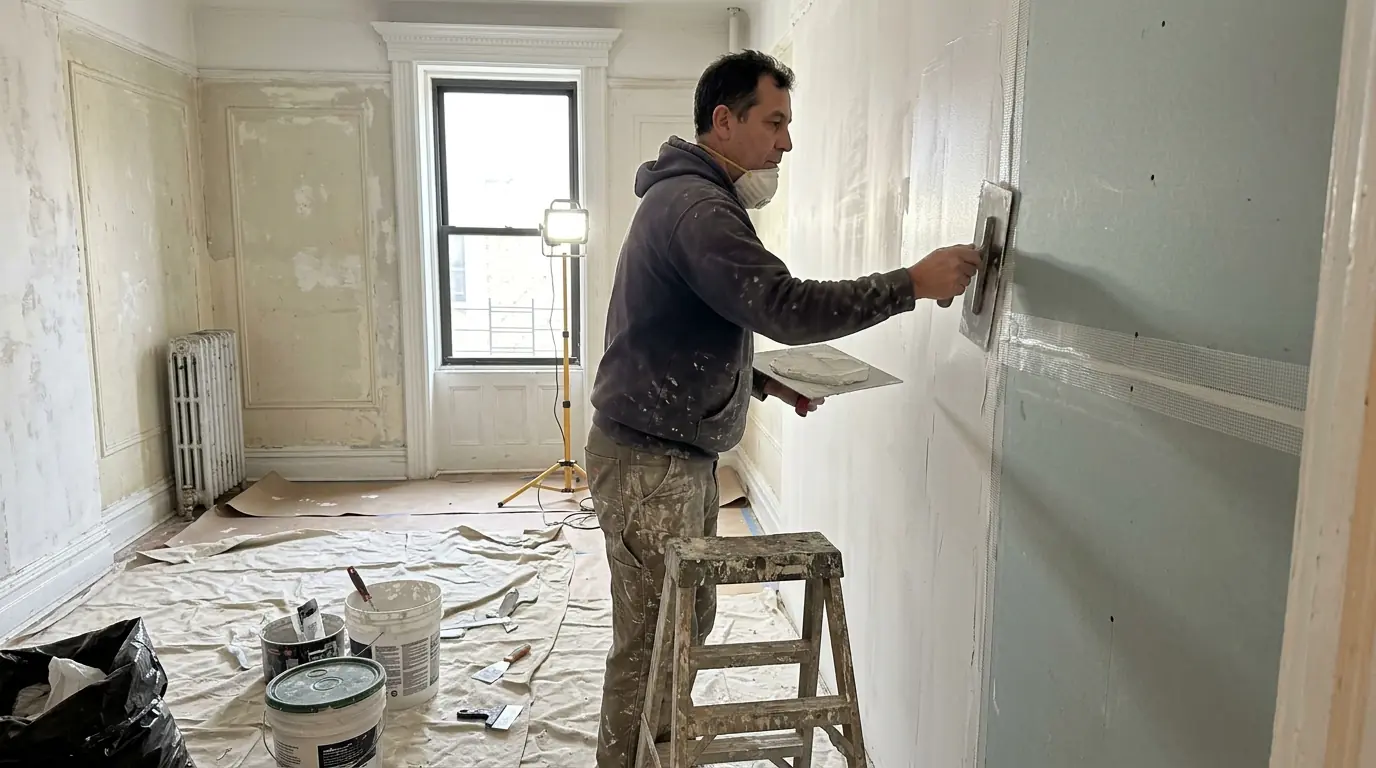
Drywall repairs go in with standard board or, in bathrooms and basements, moisture-resistant board, taped and finished so the seam disappears under paint. Plaster walls are different: a large opening in a prewar wall can take new board skimmed to meet the old plaster, or a full plaster patch when the wall has detail you want to keep. We match the surface texture of the rest of the room, because a smooth patch in a textured wall is the repair everyone notices.
Trim, cabinets and flooring
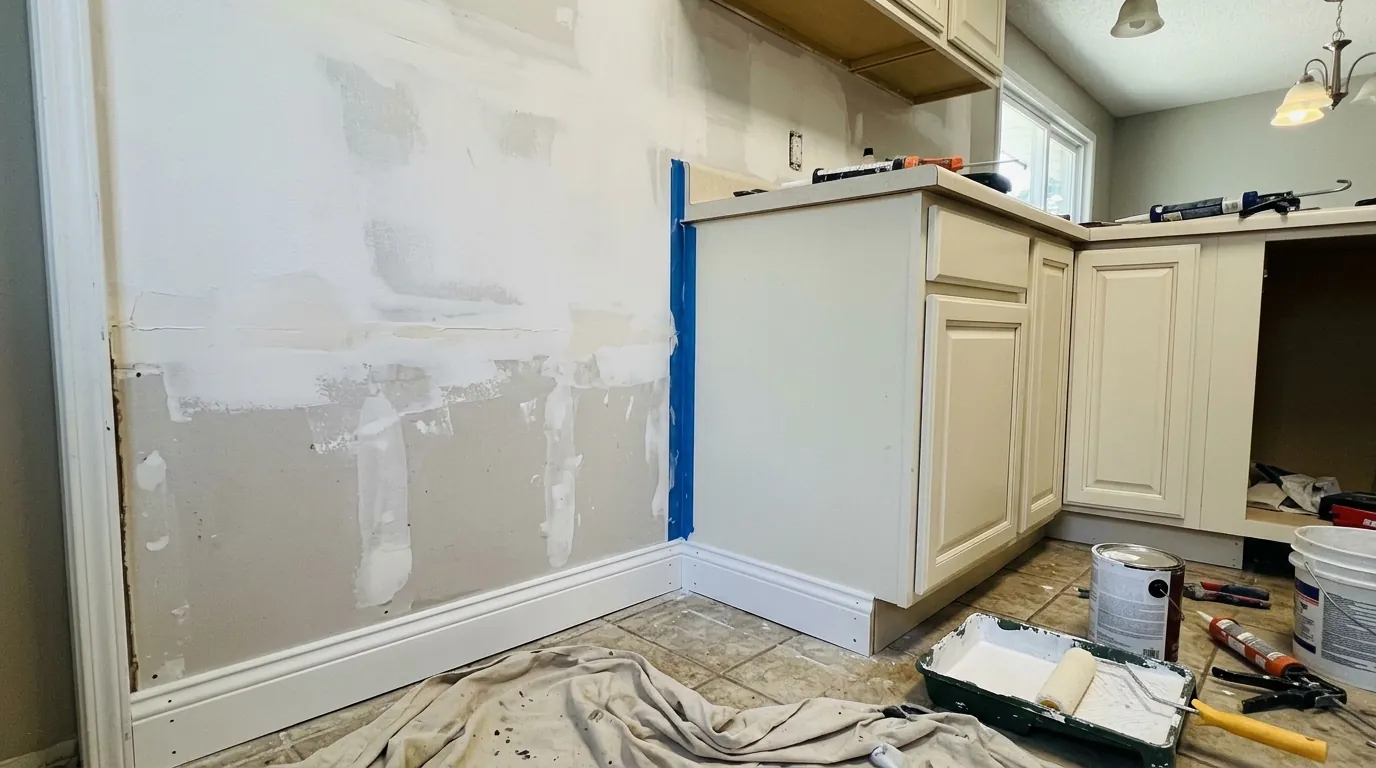
Base cabinets, vanities and baseboard often come out during removal because the growth was behind them. We label what we remove so it can go back, and replace what cannot be saved with pieces that match the profile and finish. Flooring is judged by what is underneath: wood that dried flat goes back, while swollen or delaminated planks, laminate and any subfloor that grew mold get replaced so the new floor sits on something sound. We keep the old pieces until you have seen the match.
Primer and paint after removal
Mold stains and water marks bleed through ordinary paint, so repaired areas get a stain-blocking primer before the finish coat. Where the whole wall or ceiling was affected, painting the full surface avoids a patch that shows in raking light. Primer and paint are the last step, not a way to cover anything: if a stain comes back through fresh primer, the area is still wet, and we go back to the moisture readings before doing anything else, including another coat.
What drives the cost of a rebuild
We did not find a sourced national range for rebuild after mold removal on its own, and it varies more with finishes than with the mold itself. For context, national guides put a whole wall mold job, removal and repair together, at $1,000 to $12,000.
Size of the openings
A few feet of drywall or a whole wall.
Wall type
Plaster and skim coats take longer than new board.
Finishes to match
Custom trim, tile and older cabinet styles add time.
Flooring
Replacing subfloor and flooring adds materials and labor.
Paint scope
Patch areas or full walls and ceilings.
What the rebuild covers
- Final moisture readings on framing before anything closes
- New drywall, taped and finished to match the wall
- Plaster patch or skim coat in older walls
- Baseboard, casing and crown reset or matched
- Cabinets and vanities reinstalled or replaced
- Subfloor and flooring repair where it was removed
- Stain-blocking primer and paint on the repaired areas
- A final walk-through and cleanup
New York conditions
Rebuilding in older city buildings
More than half of the housing units in New York City are in buildings put up before 1947, so a large share of our rebuilds happen in plaster walls, around old window casings and under decades of paint layers. That changes the repair: new drywall rarely sits flush with old plaster without shimming, and original trim profiles are seldom sold off the shelf. We plan for both before we open the wall, so the room looks like it was never touched.
How a rebuild runs
It starts when the removal ends and the readings say dry.
We confirm dry readings
Framing and subfloor are measured before anything closes.
We protect the room
Floors covered and the work area kept separate.
We hang or patch
Drywall, board and skim, or plaster, to match the wall.
We finish the surfaces
Tape, compound and sanding with dust control.
We reset what came out
Trim, cabinets, vanities and flooring back in place.
We prime, paint and clean
Stain-blocking primer, finish coat and a final cleanup.
Call (332) 234-9326A person answers, day or night.
How long the rebuild takes
The rebuild waits for dry readings, so drying sets the start date. Once the framing reads dry, most of the time goes into drywall finishing, which needs drying time between coats, and into matching trim or cabinet pieces when originals cannot be reused. We give you the schedule once the removal is done and we know what has to be replaced.
Questions about mold damage repair
Yes. We can leave the walls open and dry with the readings documented, ready for them.
In bathrooms, basements and other damp areas we recommend moisture-resistant board.
We match the surface with a plaster patch or a skim coat so the repair blends in.
Not over stain-blocking primer on dry material. If it does, the area is still wet.
Yes, when they are sound. Damaged pieces are replaced to match.
Once the framing reads dry. We will not close a wall before that.
Related jobs we handle
Musty Odor Removal
Finding what smells, removing it, then treating the air that is left.
Contents Mold Cleaning
Furniture, clothing and papers sorted into clean, keep and discard.
Mold Prevention and Encapsulation
Coatings, venting fixes and follow-up checks that keep it from returning.
HVAC and Duct Mold Removal
Through-wall units, coils and ducts cleaned so they stop spreading spores.
Walls still open after mold removal?
Call now. We answer 24/7 and can pick up the rebuild from where removal stopped.
Answered 24 hours a day, 7 days a week