Quick answer
Wall mold in New York City usually grows on the back of the drywall or plaster first, and national guides put drywall mold removal at $1,000 to $20,000 depending on how far water traveled inside the wall. Board with growth past a small surface patch is cut out and replaced, and the cavity is dried before it closes.
Updated September 2026
Why wall mold is bigger than it looks
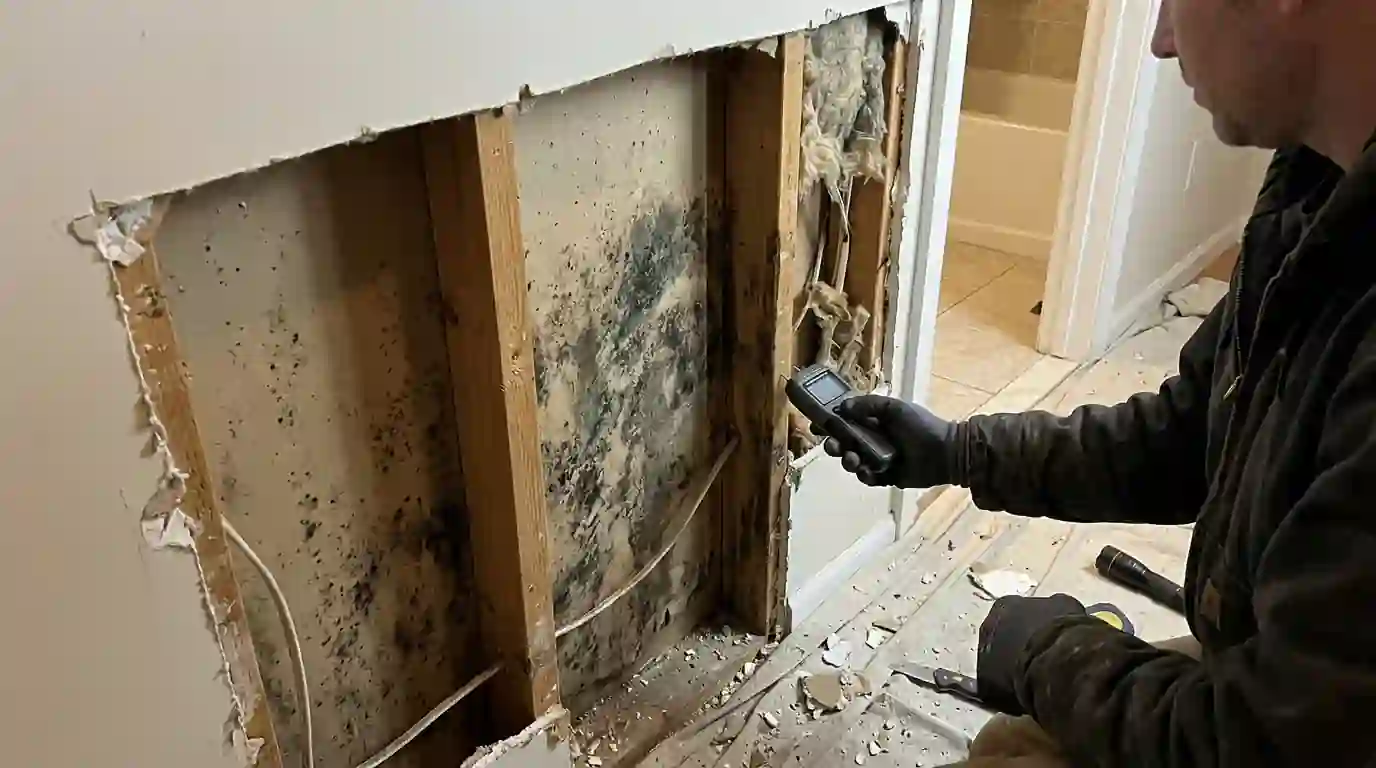
What you see on the painted side is the edge of the problem. Water from a leak or condensation runs down inside the cavity, soaks the bottom of the board and the sill plate, and feeds growth on the back of the paper where there is no light and no airflow. By the time spots show through paint, the back is usually worse.
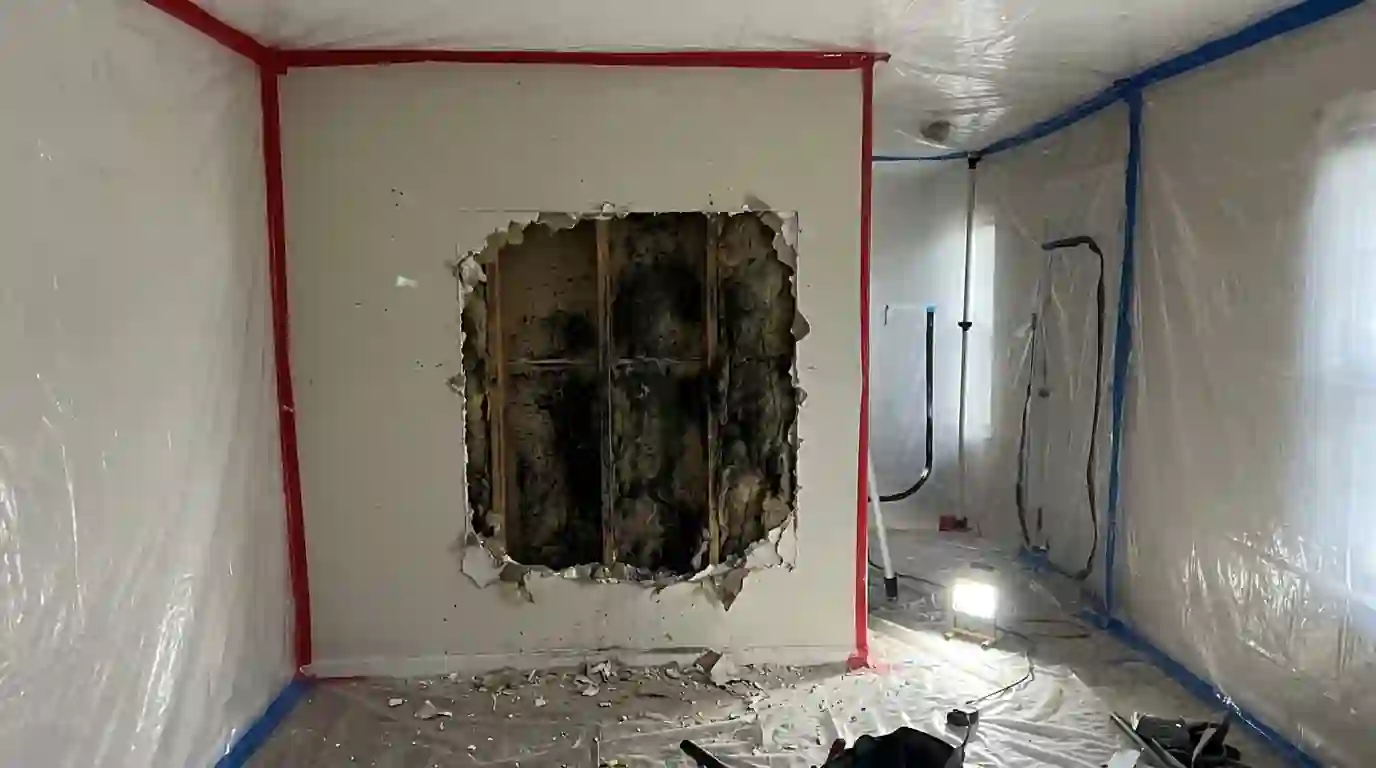
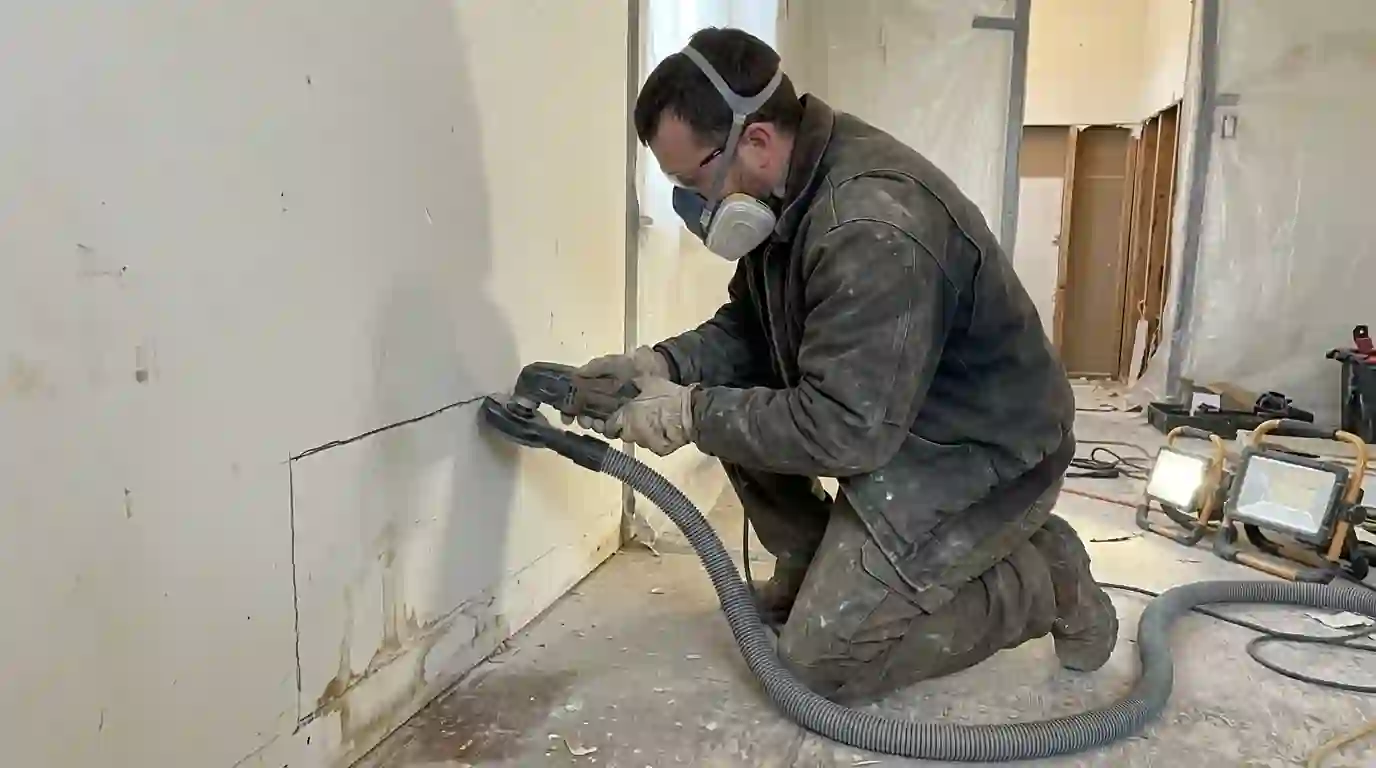
So we measure before we cut. Readings and a thermal scan show where the wall is wet, and we open it there, inside containment, with a HEPA vacuum at the saw. Studs get cleaned or sanded, the cavity is dried to target readings, and then the wall is closed with new board or plaster repair.
Drywall cavities
Most apartments and houses renovated in the last few decades have drywall on wood or metal studs. Paper-faced board feeds mold once it is wet, so when growth reaches the back of it, cleaning the face does not fix anything. We cut the affected sections out to a line past the wet boundary, bag them inside containment, HEPA vacuum and clean the studs, and dry the cavity. Metal studs clean easily; wood ones may need sanding where the stain has soaked in.
Plaster and lath walls
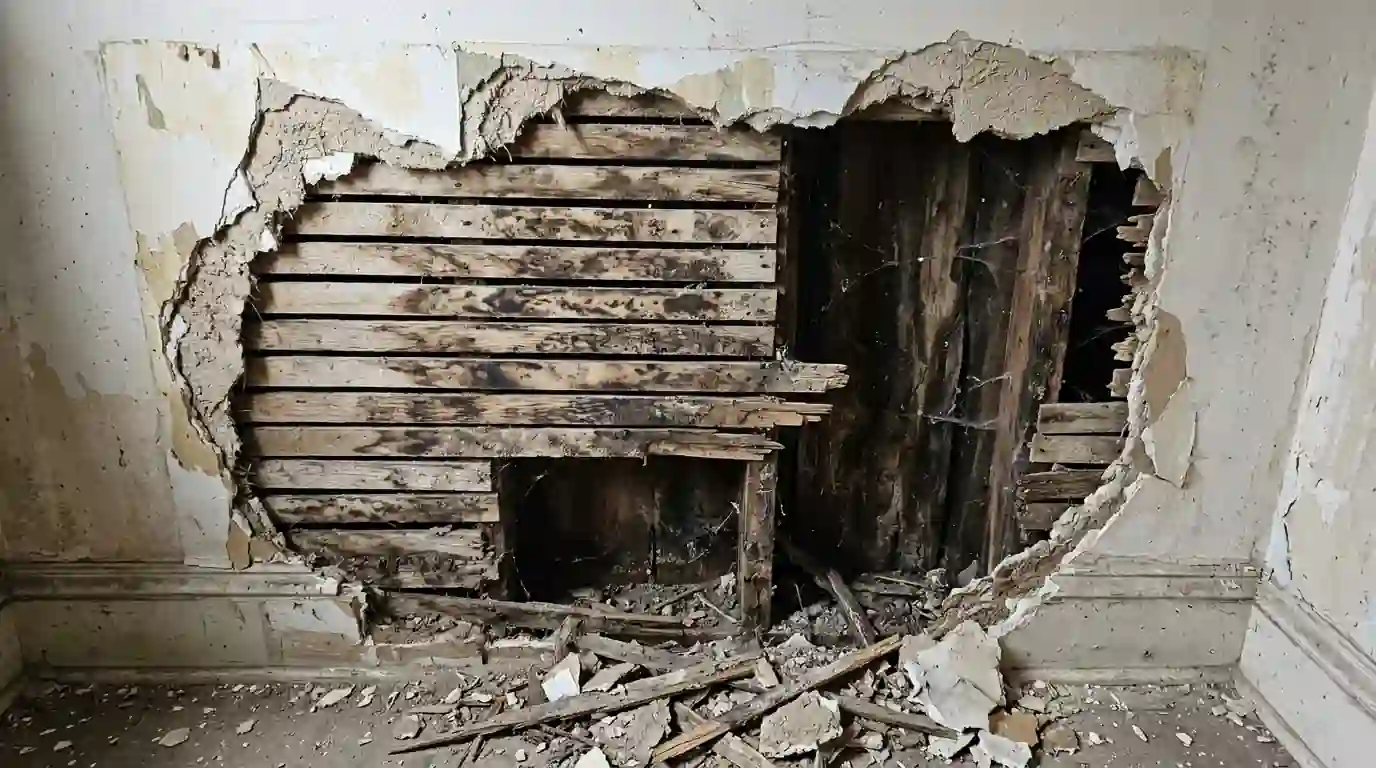
Prewar buildings have plaster on wood or metal lath, and plaster behaves differently. It holds moisture longer, rarely grows mold on its own surface the way paper does, and hides growth on the lath and framing behind it. We open plaster in small sections, check the lath and framing, and remove only what is affected. The repair can be new plaster, a skim coat over board, or a patch matched to the old wall, depending on how you want it to look.
Exterior walls with condensation
Outside walls in older buildings often have little or no insulation, so in winter the inside surface stays cold. Warm, moist air from cooking, showers and radiators condenses there, especially behind beds and dressers and inside closets where air barely moves. The growth is usually on the surface and the first inch of the wall, so removal is simpler, but it returns unless the moisture is managed with ventilation, humidity control and a few inches of space behind furniture. Our condensation page covers the window side of the same problem.
What wall mold removal costs
National guides put drywall mold removal at $1,000 to $20,000 and wall mold jobs at $1,000 to $12,000. The spread is wide because a closet corner and a whole flooded wall are both wall jobs.
How far the water went
The wet boundary sets how much wall comes out.
Drywall or plaster
Plaster takes longer to open and repair.
What is on the wall
Tile, cabinets and built-ins come off and go back.
Containment size
One closed room is simpler than an occupied hallway.
Finish
A patch and paint, or a skim and repaint of the room.
Signs the growth is inside the wall
Spots along the baseboard
Growth at floor level follows water that wicked up from a leak or flood.
Paint that bubbles or peels
Moisture moving through the wall lifts the paint film.
A smell near one wall
Musty air strongest at one wall points to the cavity behind it.
Plumbing on the other side
A shower, toilet or sink backing onto the wall is the usual source.
Cold outside walls in winter
Condensation on uninsulated walls feeds growth behind furniture.
A stain that keeps returning
Stain blocker hides it for a while; wet material brings it back.
New York conditions
What cold winters do to outside walls
January nights at Central Park average in the upper 20s, and in the older buildings that make up more than half of New York City housing, many exterior walls have little insulation behind the plaster. That cold surface is where condensation collects all winter, especially in steam-heated apartments where the air inside stays warm and moist. The result is the gray-black band along outside walls, behind headboards and inside closets that we see every season from December through March.
What you can do, and when to stop
What you can safely do
- Wipe small surface spots on painted walls with detergent and water, then dry the area
- Pull furniture a few inches off cold outside walls
- Report or fix the leak and photograph the wall first
Where it needs us
- Growth that returns after cleaning, which means it is inside
- Drywall that is soft, stained through or bubbling
- A wall that stayed wet for more than a day or two
- Plaster and lath walls, which need careful opening and repair
How we take care of a wall
Same order for one closet or a whole apartment.
We find the wet boundary
Meters and a thermal scan mark where the wall is wet.
We seal the room
Plastic, covered vents and a HEPA air scrubber first.
We cut past the growth
Affected board or plaster comes out beyond the wet edge.
We clean the cavity
HEPA vacuuming, then cleaning or sanding studs and plates.
We dry it to readings
Dehumidifiers run until the framing reads dry.
We close and finish
New board or plaster, primer and paint, or ready for your contractor.
Call (332) 234-9326A person answers, day or night.
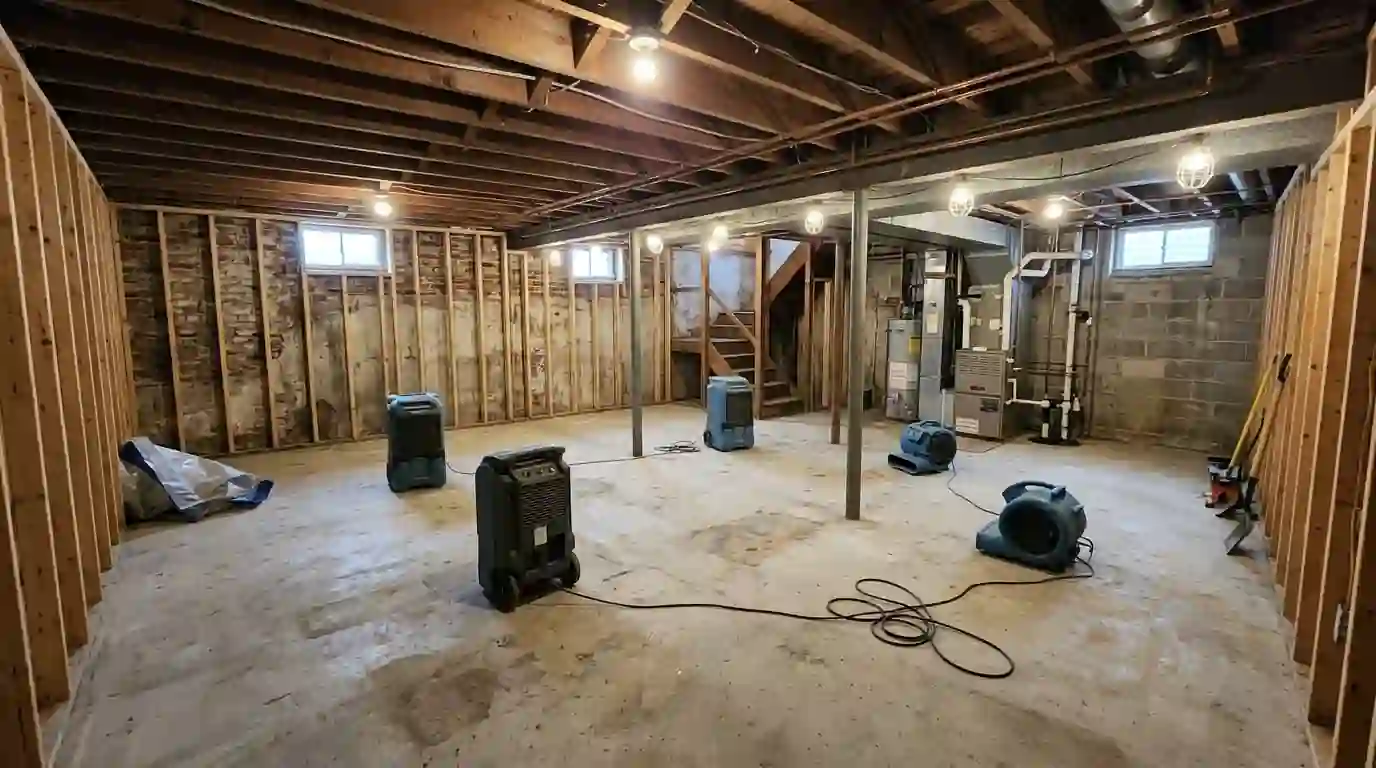
After removal: clean studs, dry readings, and nothing closed up until the meter agrees.
Talk to us nowQuestions about wall mold removal
Bleach lightens surface stains but does not reach growth on the back of the board, and it adds water.
Enough to get past the wet and stained area, which the readings show before we cut.
Usually. The work area is sealed and kept under negative air.
Not if the source is fixed and the cavity is dried before closing. Condensation walls also need humidity control.
Yes, or we leave it ready for your contractor.
We check the other side when the source may be there and coordinate access with the building.
Related jobs we handle
Window Condensation Mold Removal
Sills, frames and cold corners that stay wet all heating season.
Bathroom Mold Removal
Ceilings over the shower, walls behind tile and floors under the toilet.
Attic Mold Removal
Roof sheathing and insulation cleaned or replaced, and the ventilation fixed.
Carpet and Floor Mold Removal
Carpet, pad, hardwood and the subfloor underneath, checked and cleared.
Spots on a wall that keep coming back?
Call now. We answer 24/7 and tell you whether it is a surface clean or a job inside the wall.
Answered 24 hours a day, 7 days a week