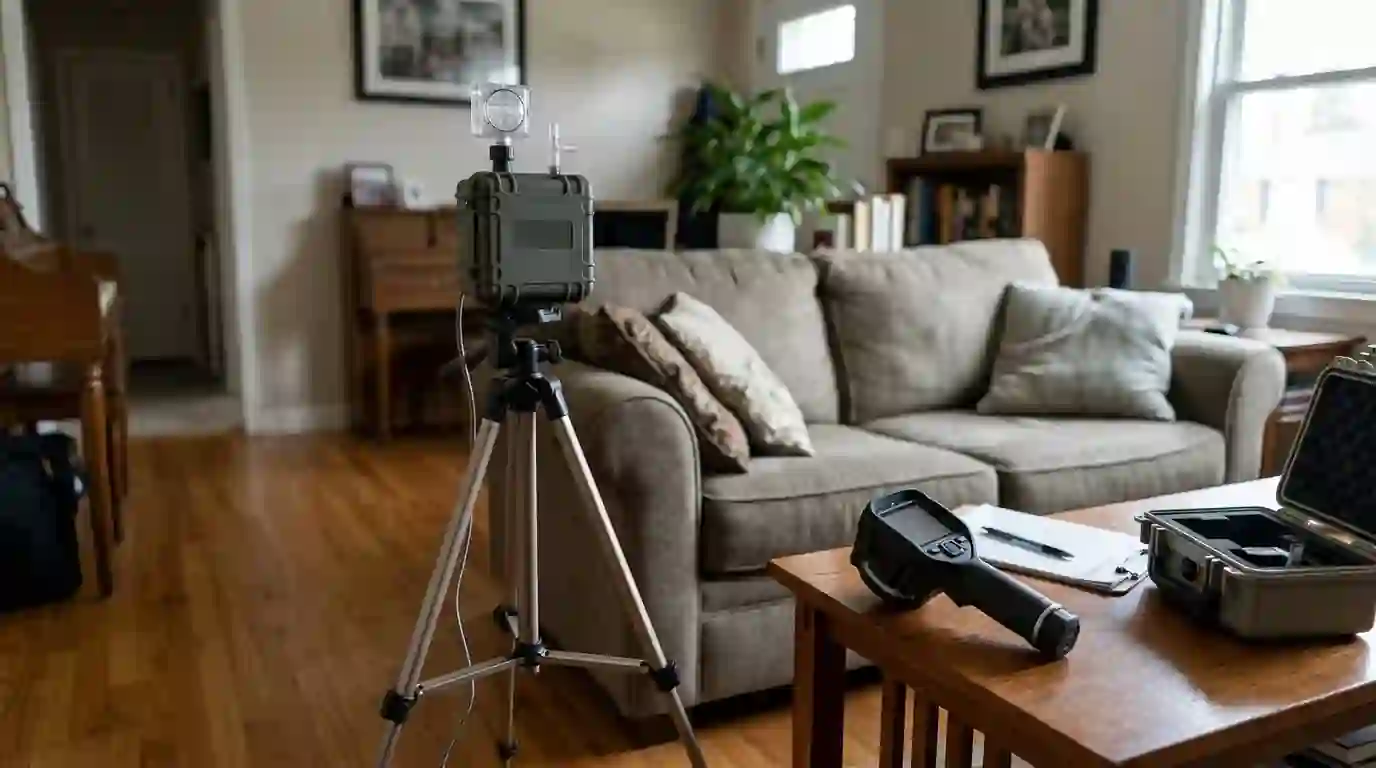
Hidden leak detection in New York City traces water back to its source without tearing out walls: moisture meters and a thermal camera map where materials are wet, and the pattern points to a riser, a fixture, the unit above, the roof or the facade. Finding the source first keeps openings small and stops a leak from becoming a mold job.
Updated September 2026
Signs of a leak you cannot see
A stain that grows or returns
Water is still arriving, from above or inside the ceiling.
Paint bubbling in one spot
Moisture behind the wall is lifting the paint film.
Flooring that cups or lifts
Water is spreading under the finish floor.
A musty smell in one room
Damp material inside a wall or floor is starting to grow.
A water bill that keeps rising
A running leak often shows on the bill before anywhere else.
Warm or cool patches on a wall
Hot water lines and wet areas change surface temperature.
How we find a leak without guessing
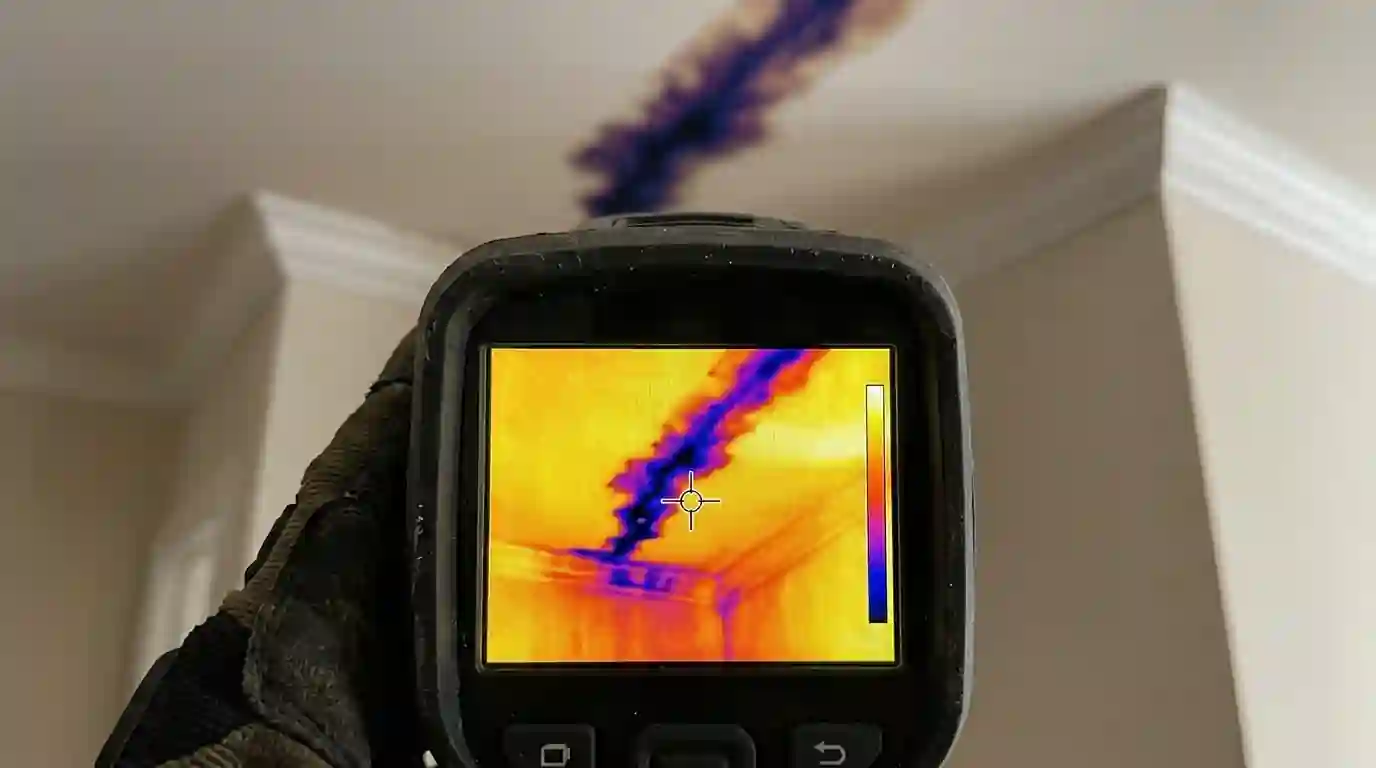
Water moves along joists, pipes and the backs of walls before it shows, so a stain can sit several feet, or a whole floor, from the leak. We start where the damage is, read the surrounding walls, ceilings and floors in a grid, and let the wet pattern point the way. A thermal camera shows cool, wet areas and warm hot-water lines behind finished surfaces; the meter confirms which are actually wet.
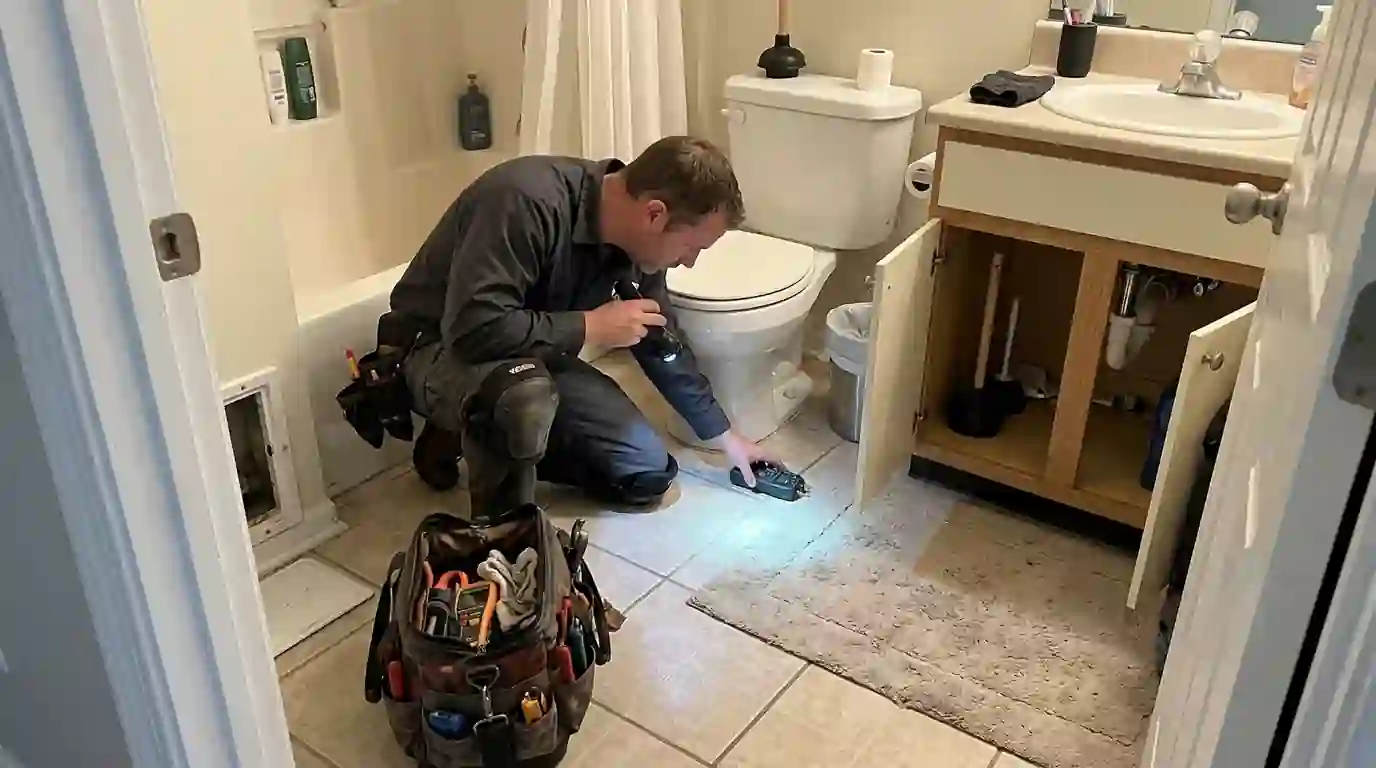
Then we check the likely sources in order: fixtures and supply lines, shower pans and tub drains, risers, the unit above, windows, the roof and the facade. When the source is found, you know which trade to call and exactly where to open. When water has already reached drywall or insulation, the cleanup follows through water damage restoration.
Leaks between apartments
In a multi-family building, the water behind your ceiling stain usually comes from the unit above: a tub overflow, a failed shower pan, a toilet seal or a supply line. We read your ceiling and walls, then coordinate access with the building to check the apartment upstairs, and sometimes the one above that. Photos and readings from each unit show where the water starts, which makes it much easier for the building, the neighbors and any insurers to agree on who fixes what.
Leaks inside walls and floors
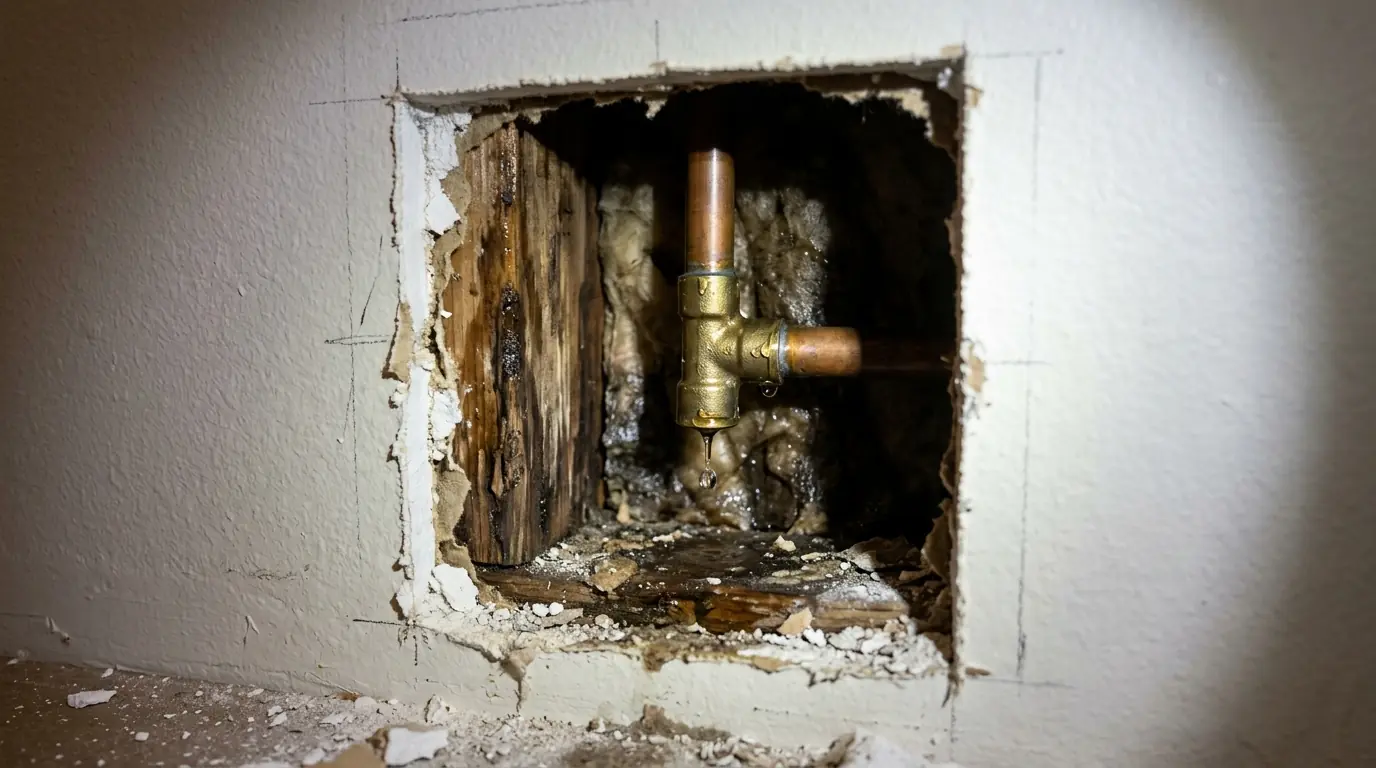
Supply lines, drain lines and heating pipes run inside walls and under floors, and a pinhole or a failed fitting can leak for weeks before anything shows. We follow the moisture with a meter along the wall and floor, use the thermal camera to trace warm hot-water lines and cool wet areas, and narrow it to a small section. The opening that follows is sized to the repair, not to a guess, and the plumber goes straight to the problem.
Roof and facade leaks
Water that shows up only during rain comes from outside: roofs, parapets, flashing, window frames or cracked facade. Top-floor ceilings and exterior walls take the damage, and the path from entry point to stain can be long. We map the wet area after a rain, match it to the outside features above it, and mark the likely entry points for the roofer or the facade contractor, so repairs happen where the water actually gets in rather than where it finally shows.
How a leak detection visit runs
Tell us whether water is dripping right now when you call.
We start at the damage
Stains, soft spots and where the smell is strongest.
We read in a grid
Meter readings around the area show which way the water came.
We scan with thermal
Cool wet areas and warm pipes show behind finished surfaces.
We check the likely sources
Fixtures, lines, risers, the unit above, roof and facade.
We mark the spot
The smallest opening that confirms the source.
We hand off and follow up
The right trade repairs it; we dry and check for mold.
Call (332) 234-9326A person answers, day or night.
New York conditions
Why the source matters in city buildings
HPD mold violations typically direct owners to trace and repair the source as well as remove the mold, and HPD completed 56,198 inspections in fiscal year 2022 in response to indoor allergen complaints, most of them reported through 311. In New York City buildings, where risers and bathrooms stack floor over floor, a leak left unfound tends to come back as a stain, a mold complaint and eventually a violation. Finding it once, and fixing it at the source, is cheaper than all three.
What a leak detection visit includes
- Moisture readings in a grid around the damage
- A thermal scan of walls, ceilings and floors
- A check of fixtures, supply lines and drains nearby
- Access to the unit above when the building can arrange it
- Photos with readings marked on them
- A marked location for the smallest useful opening
- The likely source and which trade repairs it
- A drying and mold check plan if materials are wet
What leak detection costs
We did not find a sourced national range for leak detection on its own. It is priced much like an inspection, which national guides put at $303 to $1,045, depending on the size of the area and how many units need checking.
Area to check
One ceiling or several rooms.
Access to other units
Checking the apartment above adds coordination.
Rain-only leaks
May need a visit timed after a storm.
Small openings
Confirming the source can need a small cut.
Drying and cleanup
Priced separately if materials are wet.
Questions about hidden leak detection
Usually we can narrow it to a small section. A small opening then confirms it.
We find it and mark it. A plumber, roofer or facade contractor repairs it.
We coordinate access through the building and document readings in both units.
The water is coming from the roof, a window or the facade.
It can within a day or two if it stays wet. We check and dry it.
We answer 24/7 and prioritize active leaks.
Related jobs we handle
Indoor Air Quality Testing
Humidity logging and particle counts for rooms that feel stuffy or smell.
Mold Testing
Air and surface samples read by an outside lab, explained in plain words.
Mold Inspection
Meters and thermal imaging to find the wet material before anything is cut.
Ceiling Mold Removal
Stains from the unit above or the roof, opened, dried and rebuilt.
Water showing up with no obvious source?
Call now. We answer 24/7 and trace it to where it starts.
Answered 24 hours a day, 7 days a week