Quick answer
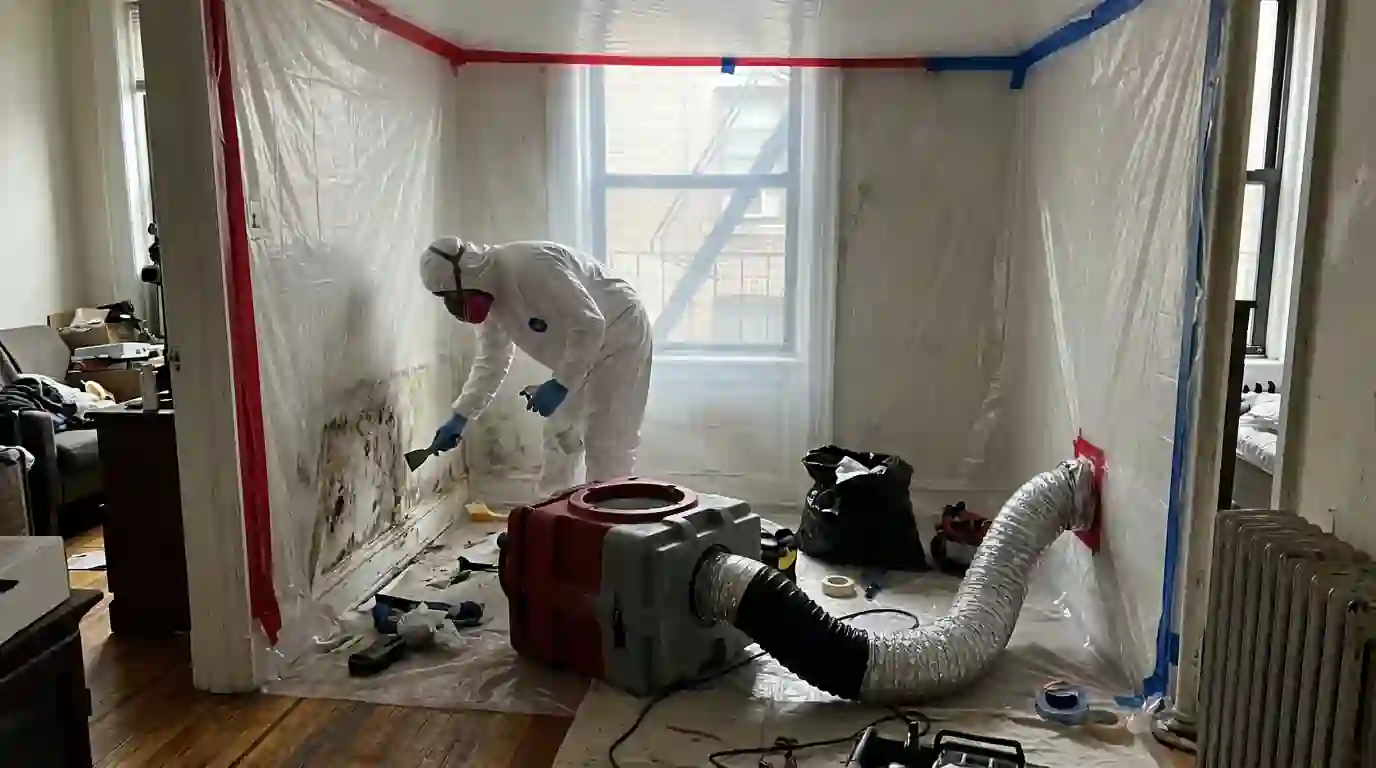
Mold remediation in Queens most often follows water: basements flooded in storms, sewer backups through floor drains, and slow leaks in attached houses and apartment buildings. We extract and dry first, then remove what grew; national figures put sewage-contaminated water damage at about $7.50 per square foot and a typical remediation at $1,223 to $3,757.
Updated September 2026
Local conditions
What drives mold in Queens homes
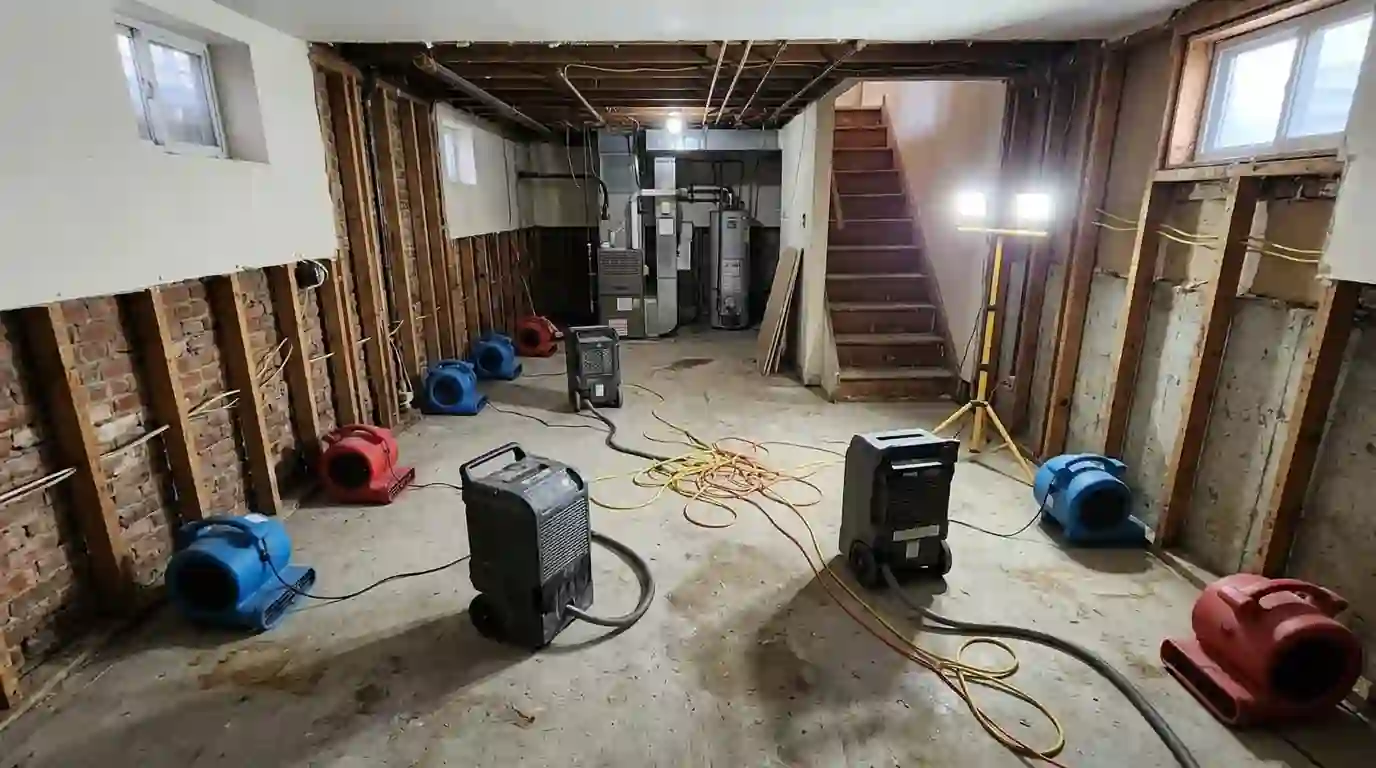
Queens took the hardest hit when Ida came through in September 2021: eight of the nine deaths reported overnight in the city were in the borough, in basement homes in neighborhoods including Woodside, Flushing, Hollis and Jamaica. That night 3.15 inches of rain fell on Central Park in a single hour, far more than the sewers were built to carry.
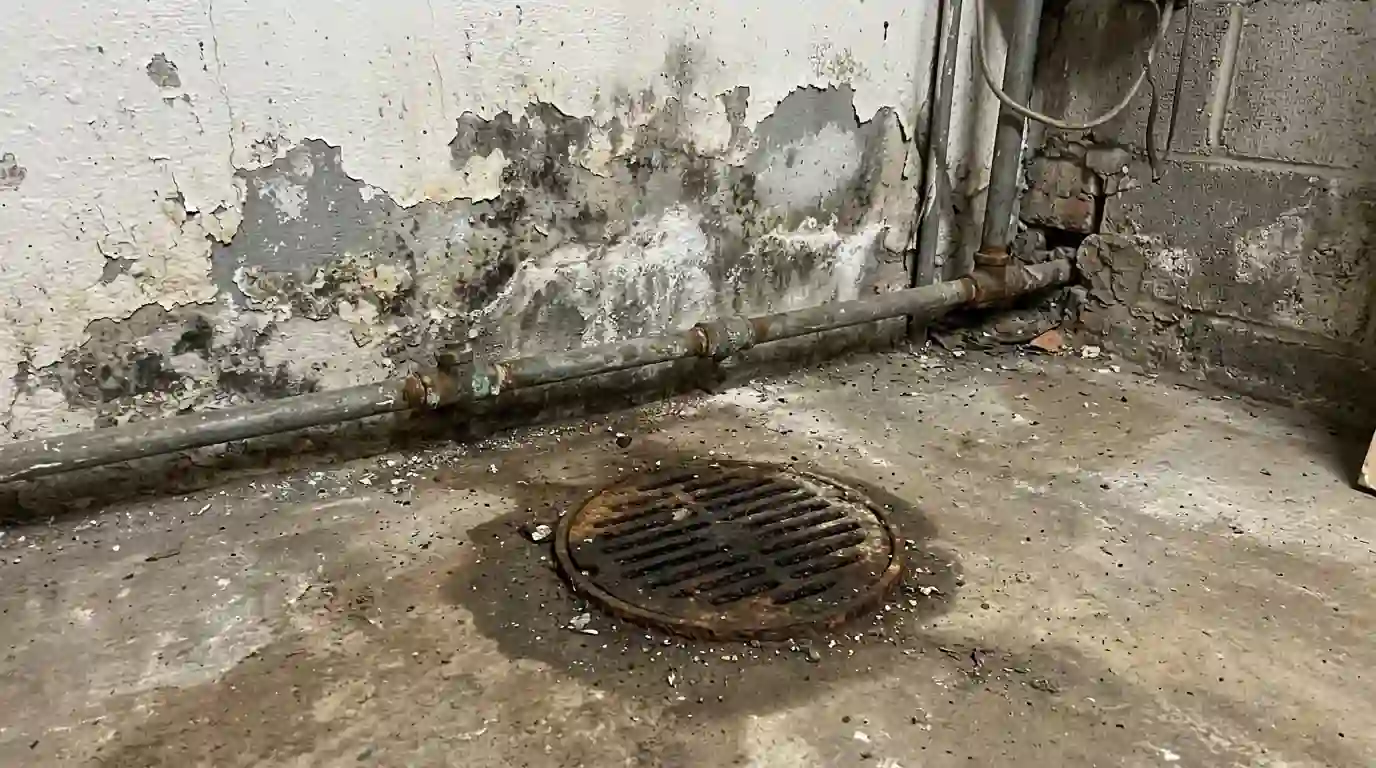
Sewer backups are a chronic problem as well. About 60 percent of the city runs on combined sewers, and the Department of Environmental Protection found grease behind more than 60 percent of confirmed backups; community boards 12 and 13 in southeast Queens logged more than 4,800 backup reports in five years.
Each of those events leaves a wet basement, and a wet basement that is only mopped becomes a mold job within weeks. That is why a Queens job often combines cleanup, drying and mold removal in one visit.
Jobs we do most in Queens
Water drives most of our Queens work. These are the jobs we are called for most, each with its own page.
Flooded Basement Cleanup
Pump-out and tear-out after storm water comes down the stairs or up the drains.
Sewage Backup Cleanup
Floor drain and toilet backups cleaned, disinfected and dried.
Basement Mold Removal
Growth on basement walls and framing that were wiped down but never dried.
Water Damage Restoration
Leaks from appliances, pipes and the unit above, dried before mold starts.
Musty Odor Removal
Basements that still smell long after the water is gone.
Dehumidifier Installation
Drained dehumidifiers that keep a basement dry through the summer.
Working in Queens homes
Queens jobs range from basements under attached houses to apartments in large co-op buildings, and the approach changes with the building. In a house, we look at where water gets in: the driveway drain, the basement door, window wells and the floor drain. In an apartment building, we coordinate with management and check the units around yours.
After any backup, we point out whether a backwater valve could protect the basement next time. Installing one is plumbing work, but knowing the basement needs one is part of ours.
Neighborhoods with their own page in Queens
Jackson Heights Astoria Howard Beach & South Ozone Park
Nearby areas we also cover
Questions from Queens
Yes, 24/7. Cleanup includes removing porous materials, disinfecting and drying.
If your basement has had a backup, it is worth asking a plumber. We point out where one would help.
Not if the water came up through drains, because it carries sewage. Keep out and call.
Within a day or two if materials stay wet, which is why drying starts right away.