Quick answer
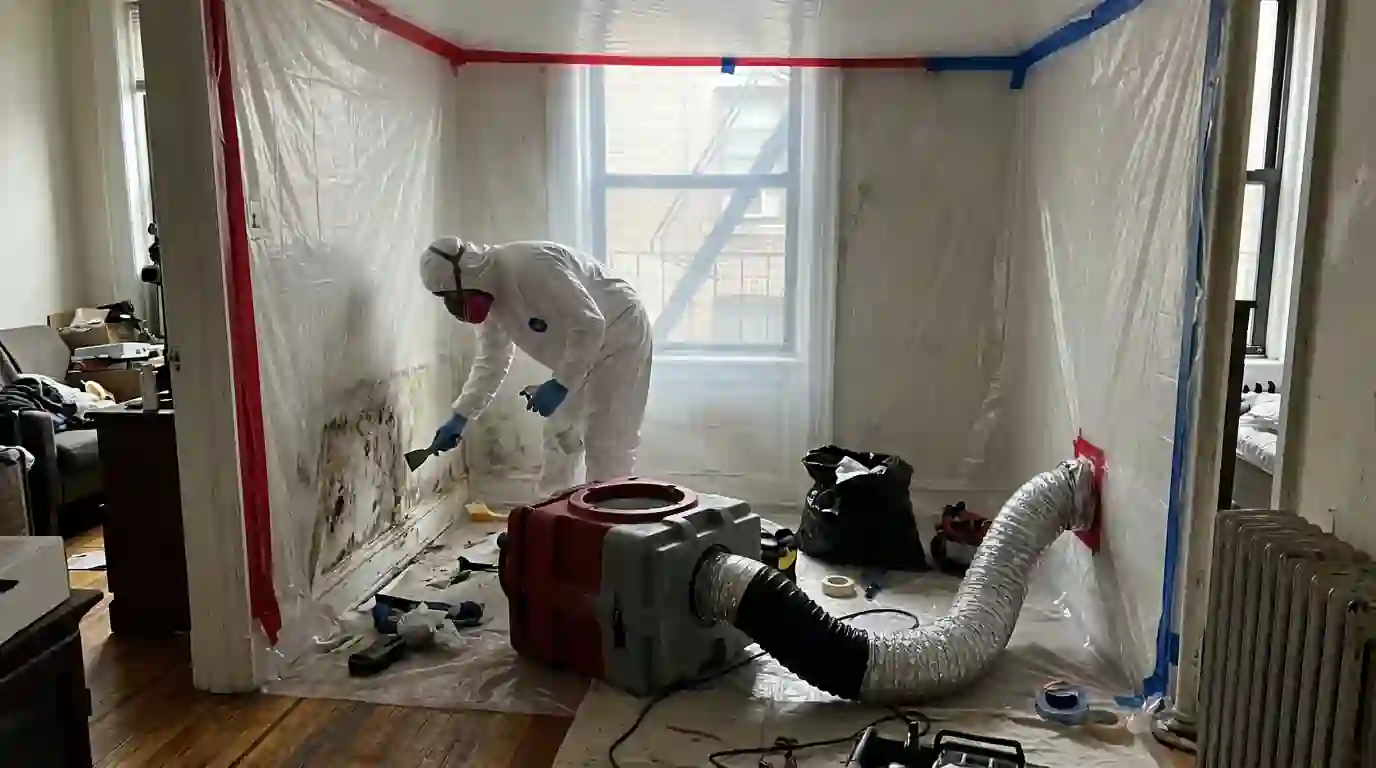
Mold work in Inwood is mostly apartment work in older elevator and walk-up buildings with long-term tenants. The usual causes are leaking risers and radiator lines, bathroom plumbing that drips into the unit below and condensation on cold exterior walls in winter. We trace the water with the super or managing agent, contain the work inside the unit, remove the growth and dry, then give owner and tenant a written record.
Updated September 2026
Local conditions
What drives mold in Inwood buildings
Washington Heights and Inwood together have the most rent-stabilized units in the city, and the district logged 144.2 serious housing violations per 1,000 units in 2019. Long-term tenants, older buildings and owners working to violation deadlines are the normal setting for a mold job here.
The buildings are old. More than half of New York City housing units are in buildings from before 1947, and four in five predate 1974. In a stacked prewar building, a riser or radiator leak can wet a wall for months before a stain shows two floors down.
Winter does the rest. Central Park January normals run about 39 to 41 degrees by day and 27 to 30 at night, cold enough to sweat older windows and uninsulated exterior walls. Half of all Manhattan housing units are studios or one-bedrooms, small spaces where moisture builds quickly.
Jobs we do most in Inwood
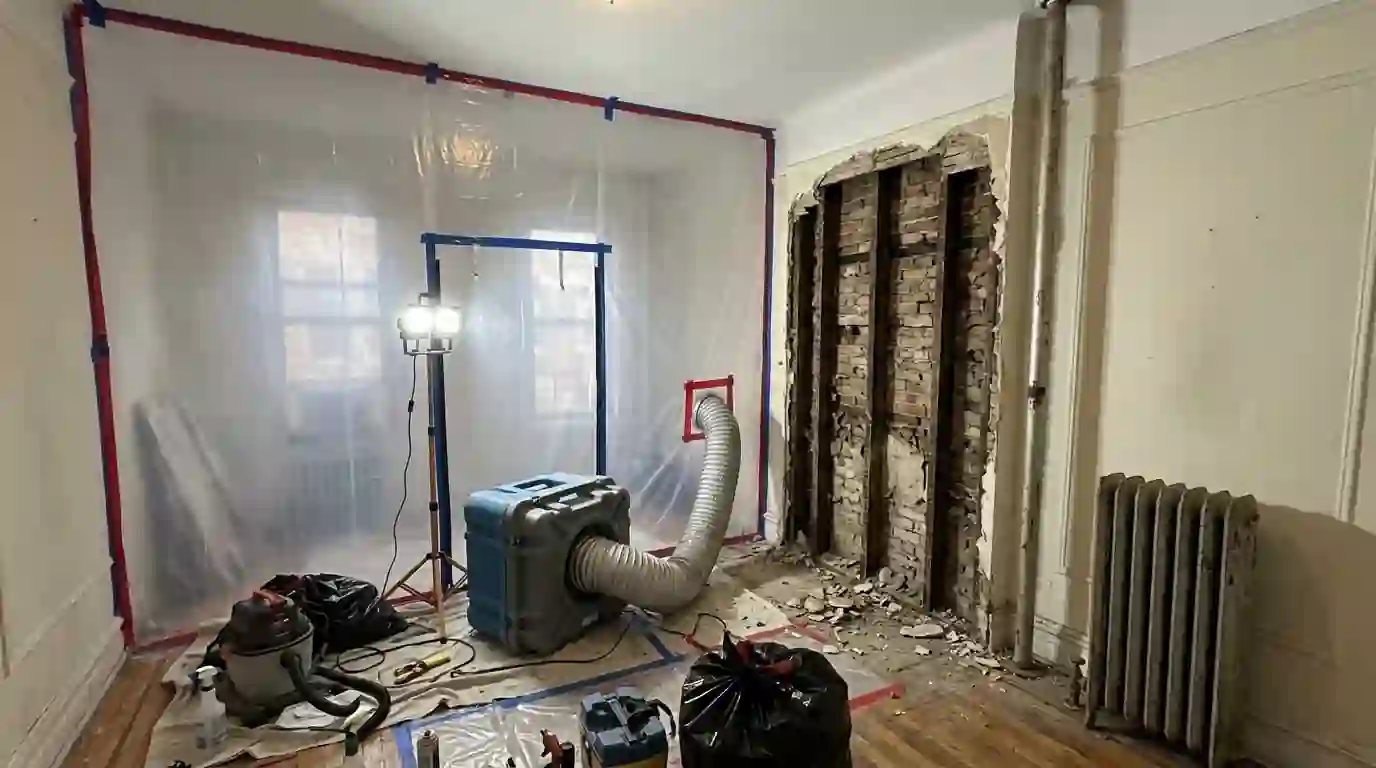
Apartment work in older rent-stabilized buildings makes up most of our Inwood calls. Each job has its own page.
Apartment Mold Remediation
Containment and removal inside the unit, hallways and elevators protected.
Hidden Leak Detection
Tracing a stain to the riser, the radiator line or the unit above.
HPD Mold Violation Remediation
Correcting the cause and the mold before an HPD deadline.
Window Condensation Mold Removal
Black spotting on sills and cold walls in winter.
Bathroom Mold Removal
Growth behind tile and in ceilings under old bathroom plumbing.
Mold Testing
Air and surface sampling when owner or tenant needs numbers.
Working with long-term tenants and their buildings
A tenant who has lived in an apartment for twenty years has furniture against every wall and belongings in every closet. We plan the containment around that, move and protect what needs to move, and put the room back the way we found it.
When the source is a riser, a radiator line or another unit, we document it with readings and photos so the owner repairs it once. In buildings with 10 or more units, where the city requires separate companies above 10 square feet, we take one role, not both.
More in Manhattan
Nearby areas we also cover
Questions from Inwood
Usually not. The work area is sealed off and the rest of the apartment stays usable.
Cold exterior walls collect condensation where air cannot move. Pulling furniture slightly away helps.
The building. Risers are part of the heating system the owner maintains.
Yes. We move and cover what is near the work area and keep everything else outside the containment.