Quick answer
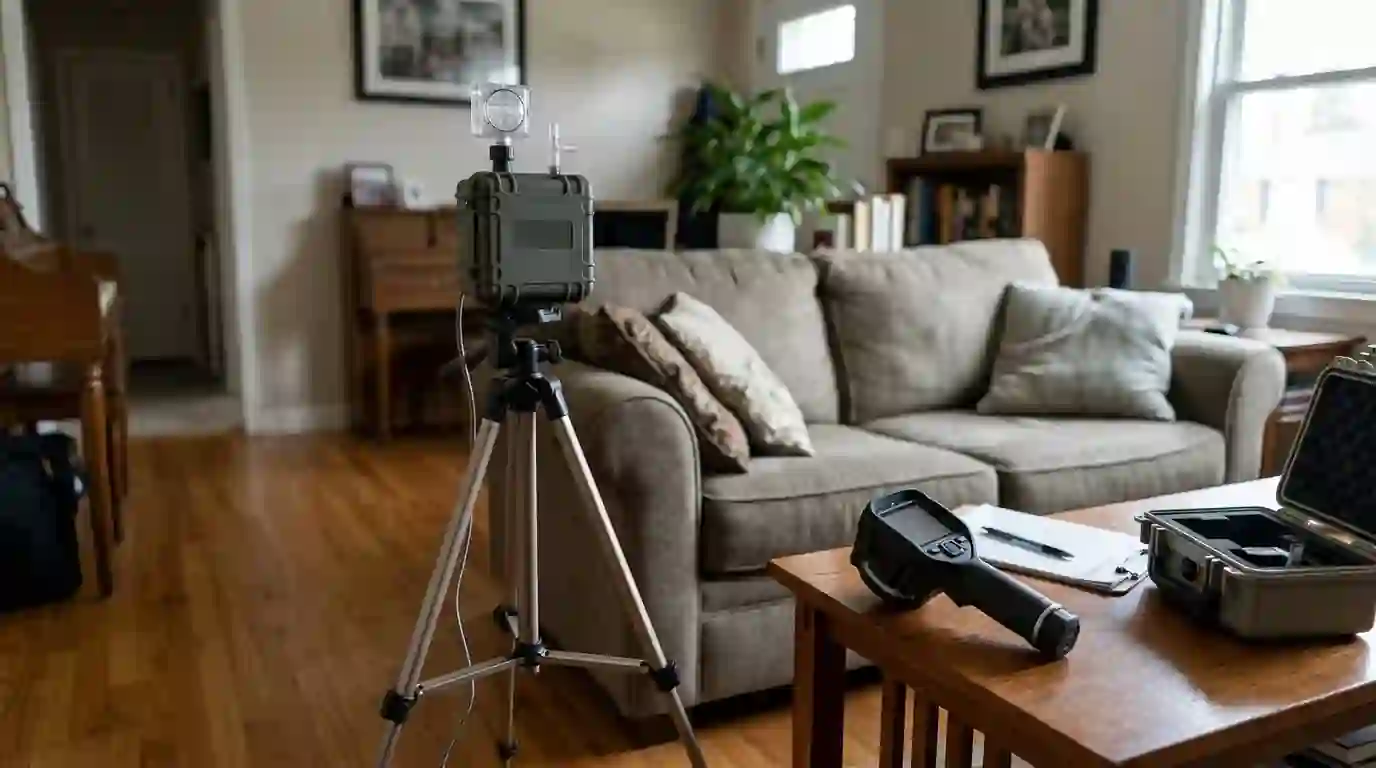
Indoor air quality testing in New York City measures humidity, dew point and airborne particle counts over time, so you can see whether a stuffy or musty room has a moisture problem, a ventilation problem or hidden mold. It is not a mold test on its own; when the readings point to growth, we add mold sampling at $250 to $350 nationally.
Updated September 2026
What the readings tell you
Most air complaints we see in apartments come down to moisture that nobody measured: a bathroom fan that moves no air, a bedroom where the humidifier runs all night, a basement unit that sits damp from June to September. A data logger left in the room for a few days shows the pattern, and a particle counter shows whether the air carries more dust and debris than the rooms around it.
From there the answer is usually practical: fix the fan, move the humidifier, run a dehumidifier, or open up the wall that the readings keep pointing at. When growth is likely, we recommend mold sampling rather than guessing.
What an air quality visit includes
- Humidity and temperature readings in each problem room
- Dew point readings to show where condensation will form
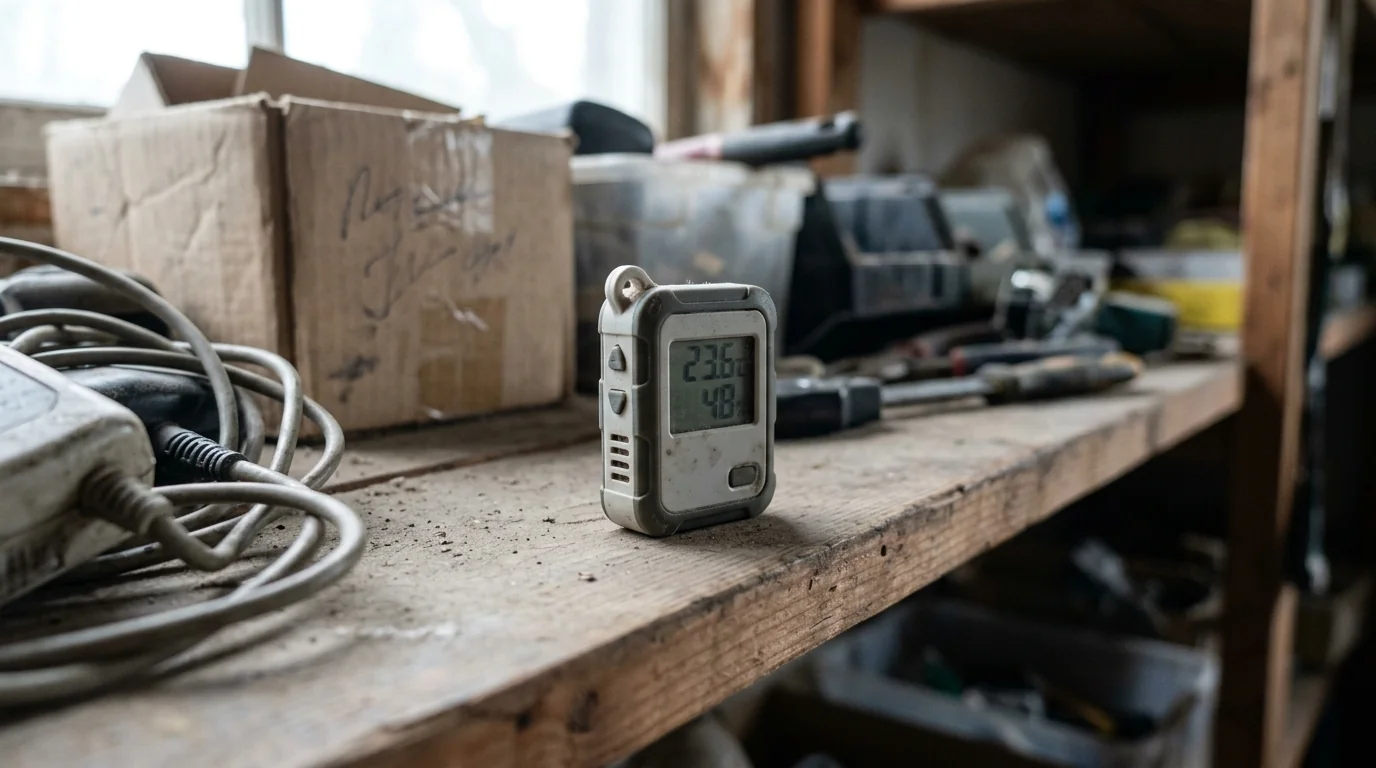
- A data logger left for several days when patterns matter
- Particle counts compared with a cleaner room or outdoors
- A check of bath and kitchen exhaust and AC drainage
- Moisture readings on walls and ceilings near the complaint
- Photos of anything that needs attention
- A plain summary with the fixes in order of payoff
Humidity and dew point logging
A single humidity reading tells you little, because it changes with every shower, pot of pasta and open window. We leave a data logger in the room for several days and read the pattern: how high humidity climbs, how long it stays there, and how close the room gets to its dew point, the temperature at which moisture condenses on cold surfaces. Rooms that spend hours near dew point are the ones that grow mold on window returns, closet walls and the backs of furniture.
Particle counts
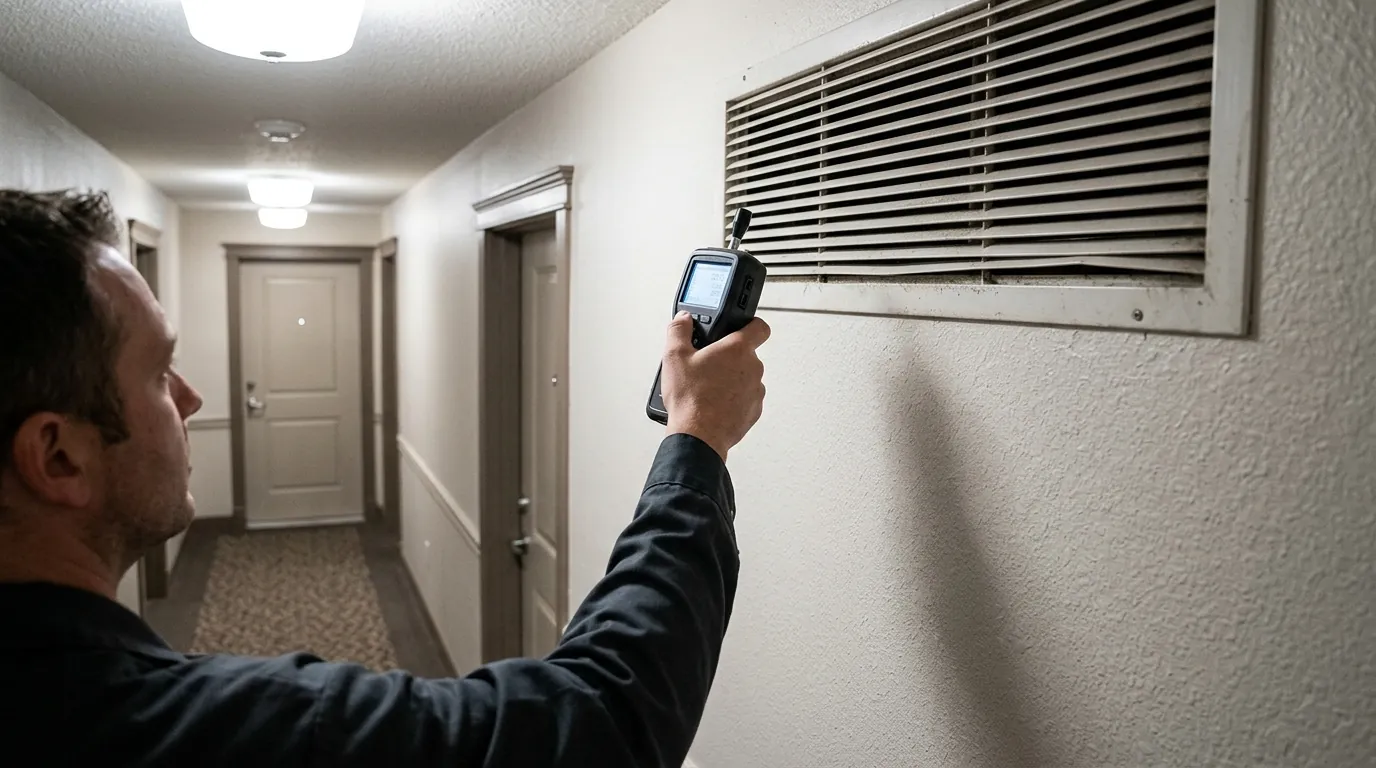
A handheld particle counter measures how many airborne particles sit in the air at different sizes. On its own it does not identify mold, but comparing a problem room with a clean room or with outdoor air shows whether something inside is shedding debris. High counts near a return vent, a closet or a wall send us to look there, often at a dusty coil, a damp carpet or a cavity with growth behind it. We note the reading, the location and the time, so a follow-up check after the fix is a fair comparison.
Musty smell with no visible mold
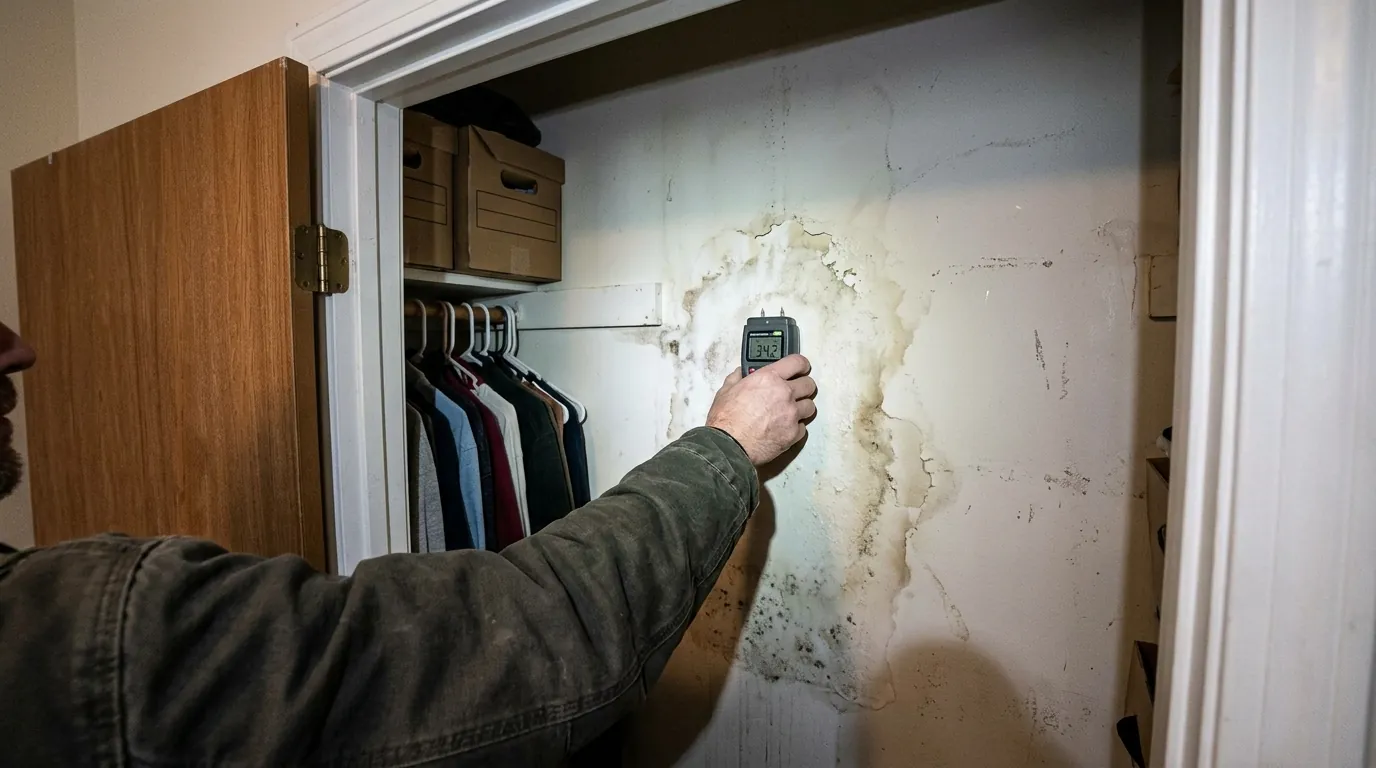
A musty smell with nothing on the walls is the most common reason people call for air testing. The smell comes from compounds released by growth that is somewhere you cannot see: inside a wall, under a carpet pad, in an air conditioner or in a closet against a cold wall. We combine the air readings with moisture readings on the surfaces around the smell, and when both point the same way, targeted sampling or a small inspection opening confirms it.
New York conditions
Why summer air feels heavy in city apartments
July nights in Central Park average near 70 degrees, so the air stays warm and moist long after sunset, and an apartment sealed up with window units can hold that moisture indoors. Half of all housing units in Manhattan are studios or one-bedrooms, where one room carries the cooking, showering and sleeping for the whole household. In a small space those moisture sources add up quickly, which is why logging over several days tells us far more than a single reading.
Signs a room is worth measuring
A stale or musty smell
Odor that returns after airing out points to damp material or poor air exchange.
Condensation on glass
Water on the inside of windows means the room air is holding more moisture than the glass can handle.
Clammy air in summer
A room that feels sticky with the AC running may have a unit that cools without drying.
Dust that returns quickly
Surfaces that coat again within days can mean particles moving through ducts or gaps.
A bath fan that barely pulls
If tissue will not stick to the grille, moist shower air has nowhere to go.
One unit worse than the rest
A single apartment with worse air than its neighbors usually has a local source.
How an air quality visit runs
One visit to set up, one to collect and explain.
We ask about the symptoms
Which rooms, which season, and what changed recently.
We take spot readings
Humidity, temperature and particle counts in each room.
We set the data logger
It records the pattern while you live normally.
We check the likely causes
Exhaust fans, AC drainage and nearby damp surfaces.
We collect and read the data
Peaks, dew point and how long the room stays wet.
We explain the fixes
In order of payoff, with sampling only if it earns its cost.
Call (332) 234-9326A person answers, day or night.
What air quality testing costs
We did not find a sourced national range for air quality testing on its own, so we price by the number of rooms and how long the logger stays. When mold sampling is added, national guides put it at $250 to $350.
Rooms measured
One bedroom or a whole house changes the setup.
Logging period
A few days of data costs more than a spot check, and tells you more.
Lab samples
Added only when readings point to growth.
Access
Units above and below may need readings too.
Written report
A letter for a landlord or board takes more time.
Questions about indoor air quality testing
No. It measures humidity, dew point and particles. Mold testing identifies spores in a lab.
Rooms that sit near their dew point for hours are the problem, which is why we log over time rather than read once.
Yes. A dirty coil or a drain pan that holds water can grow mold and blow it into the room. See HVAC and duct mold removal.
No. The logger gives the truest picture while you live in the space normally.
Yes, cheapest effective fix first.
Yes, logging over the work week.
Related jobs we handle
Mold Inspection
Meters and thermal imaging to find the wet material before anything is cut.
Mold Testing
Air and surface samples read by an outside lab, explained in plain words.
Hidden Leak Detection
Meters, thermal imaging and a methodical search to find water before it becomes mold.
Dehumidifier Installation
Sized dehumidifiers with a drain line, so the basement stays under 50 percent.
Air in one room never feels right?
Call now. We answer 24/7 and can usually tell on the phone whether logging or an inspection is the better first step.
Answered 24 hours a day, 7 days a week