Quick answer
Basement mold in New York City is usually on the bottom of finished walls, the framing behind them and the foundation surface, fed by flood water, groundwater or summer condensation, and national guides put basement mold removal at $500 to $3,000. Removal only lasts once the water source is handled and the space is kept dry.
Updated September 2026
What we find in most basements
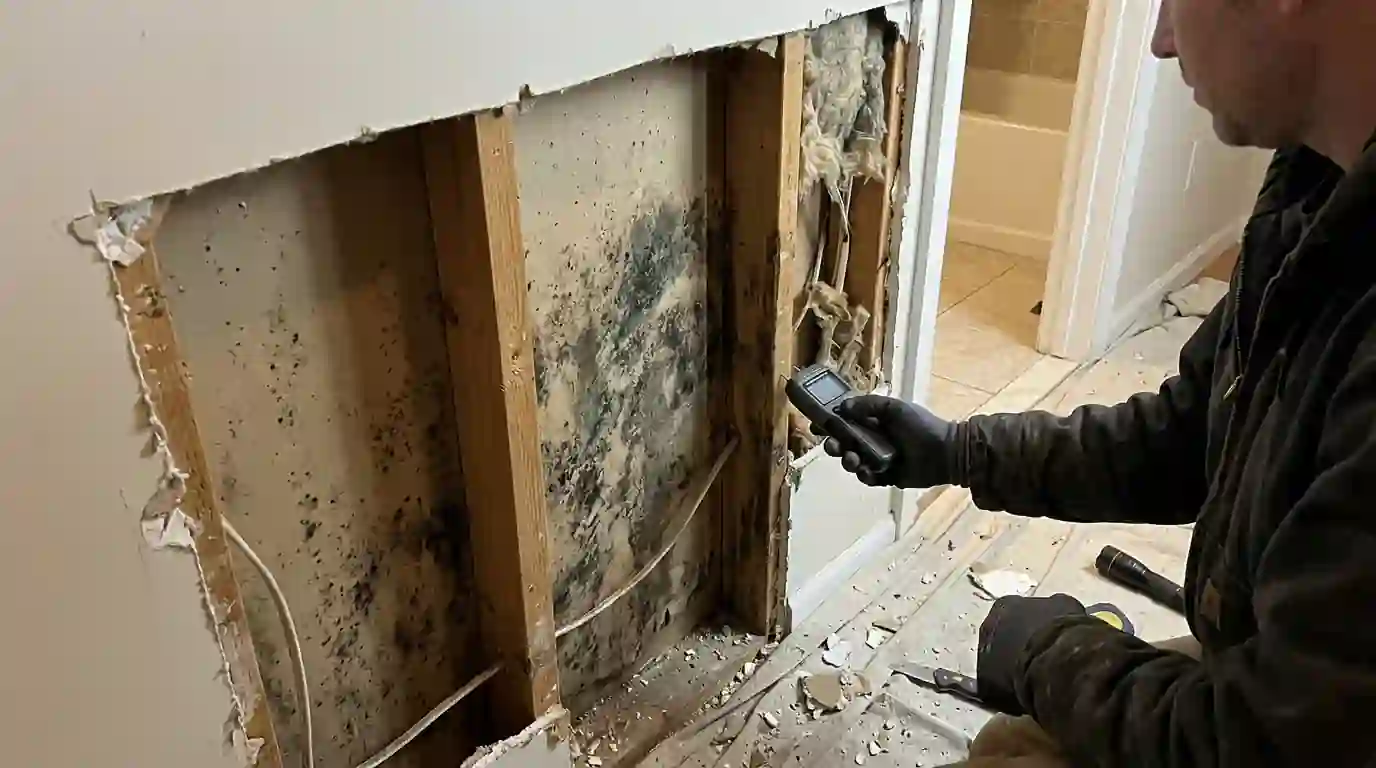
The pattern repeats: a finished basement took on water, the carpet was pulled and the walls were wiped down, and months later the bottom two feet of drywall show spots and the room smells. Behind the board, the sill plate and studs have been damp the whole time. In unfinished cellars, growth sits on stored cardboard, wood shelving and the foundation surface itself.
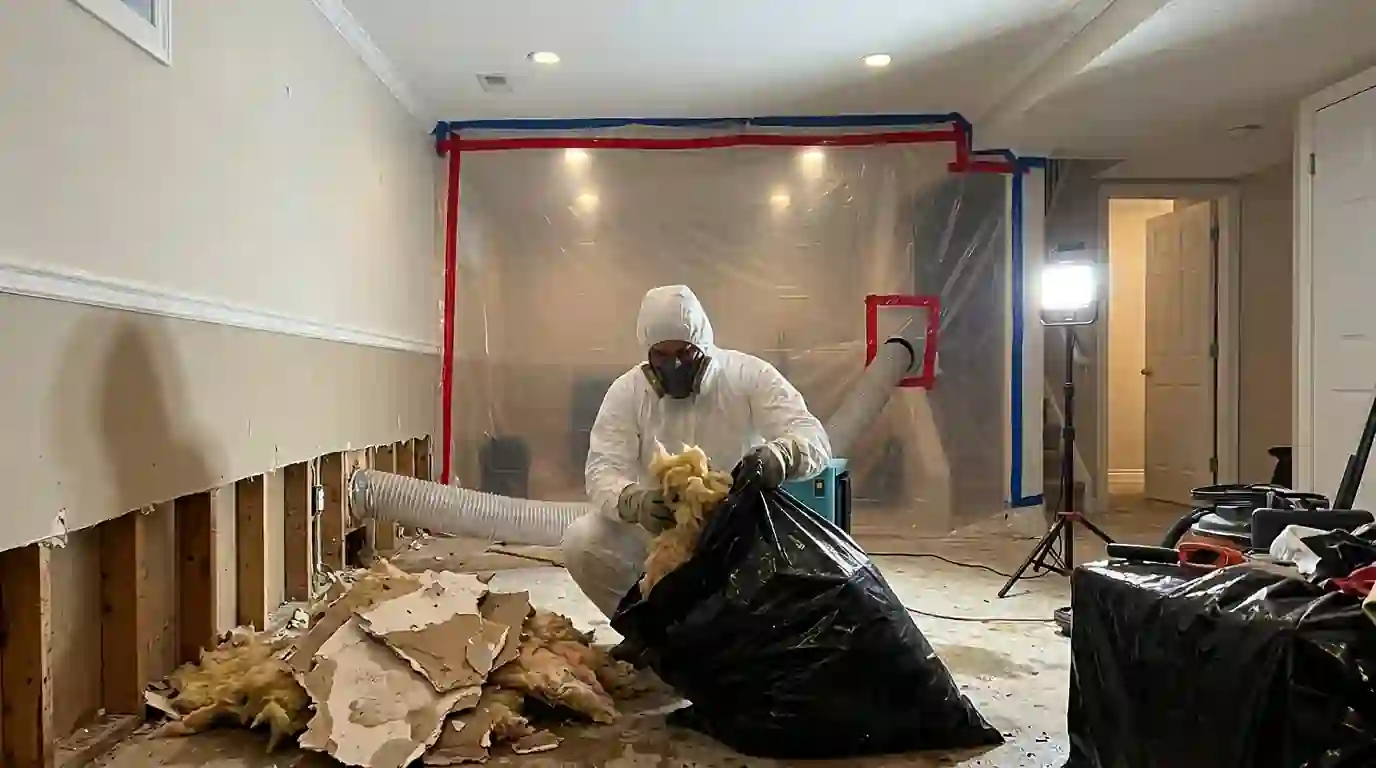
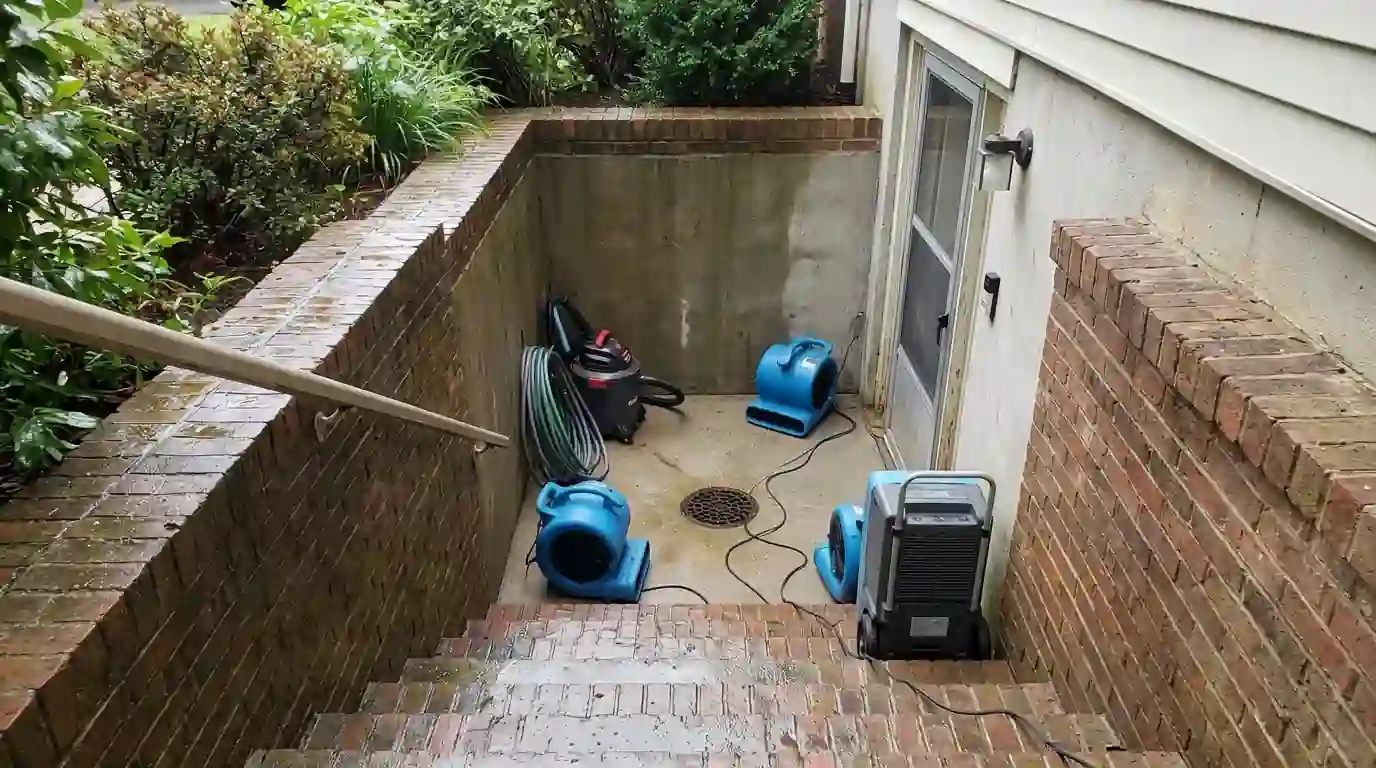
We map the moisture along every wall, set up containment and negative air so spores stay in the basement, and remove what grew. The foundation gets cleaned, framing is cleaned or sanded, and the space is dried until it reads dry. For basements that run damp every summer, a properly drained dehumidifier is what keeps the job done.
Clean in place, flood cut, or strip to the studs
| Option | What it means | Right for | Trade-off |
|---|---|---|---|
| Clean in place | HEPA vacuum and clean surfaces without removing finishes | Light growth on concrete, block or sealed surfaces | Only works where nothing porous is wet |
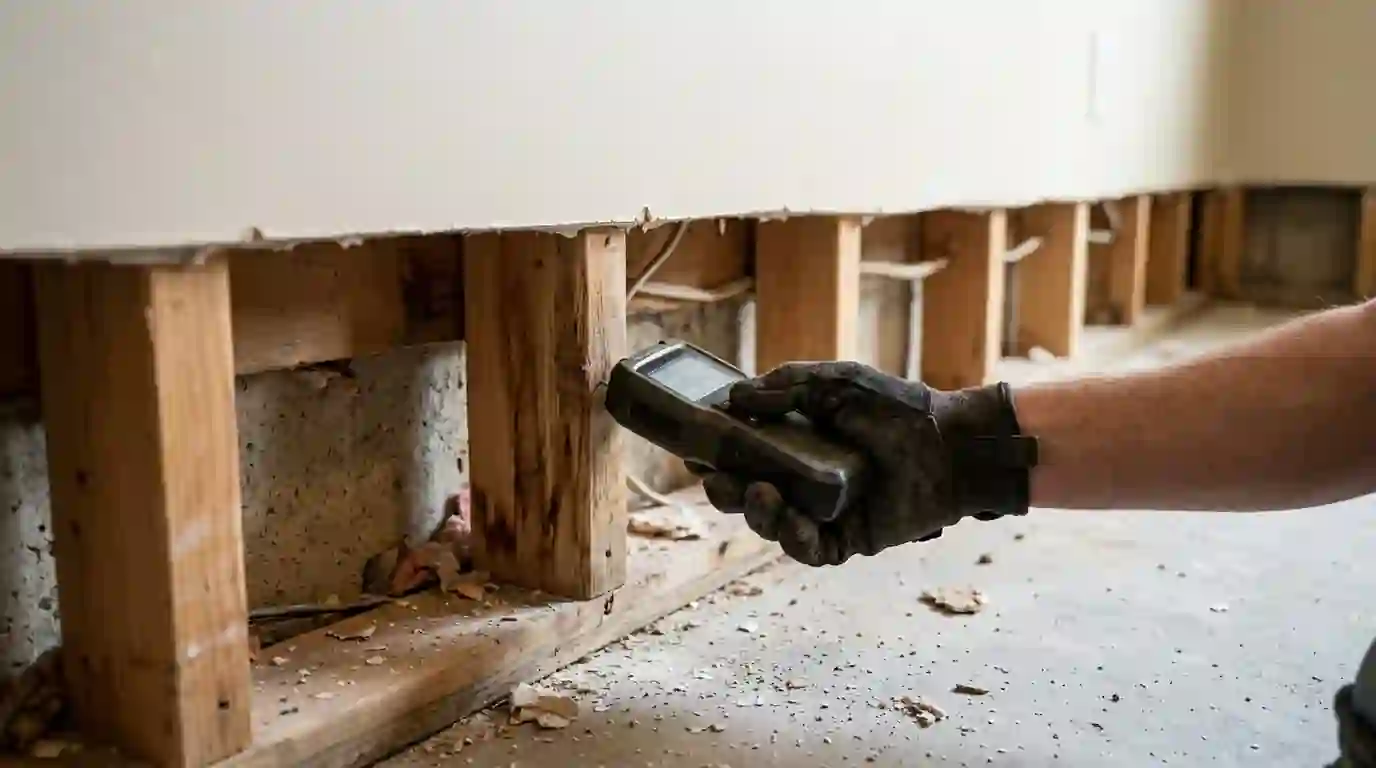
| Flood cut | Remove the bottom two to four feet of drywall and insulation | Water that stayed near the floor | Leaves a rebuild strip around the room |
| Strip to studs | Remove all finishes on the affected walls | Growth or wet readings high up the wall | Largest rebuild, but nothing hidden is left |
Finished basements
Finished basements hide the problem behind drywall, carpet and a drop ceiling. After a flood or a slow leak, the bottom of the walls and the carpet pad stay wet long after the surface dries. We read every wall with a meter, take out the board and insulation as high as the wet line reaches, remove the pad and any carpet that grew, and clean and dry the framing. The rebuild uses moisture-resistant board, and we recommend keeping it a little off the slab.
Unfinished cellars and foundation walls
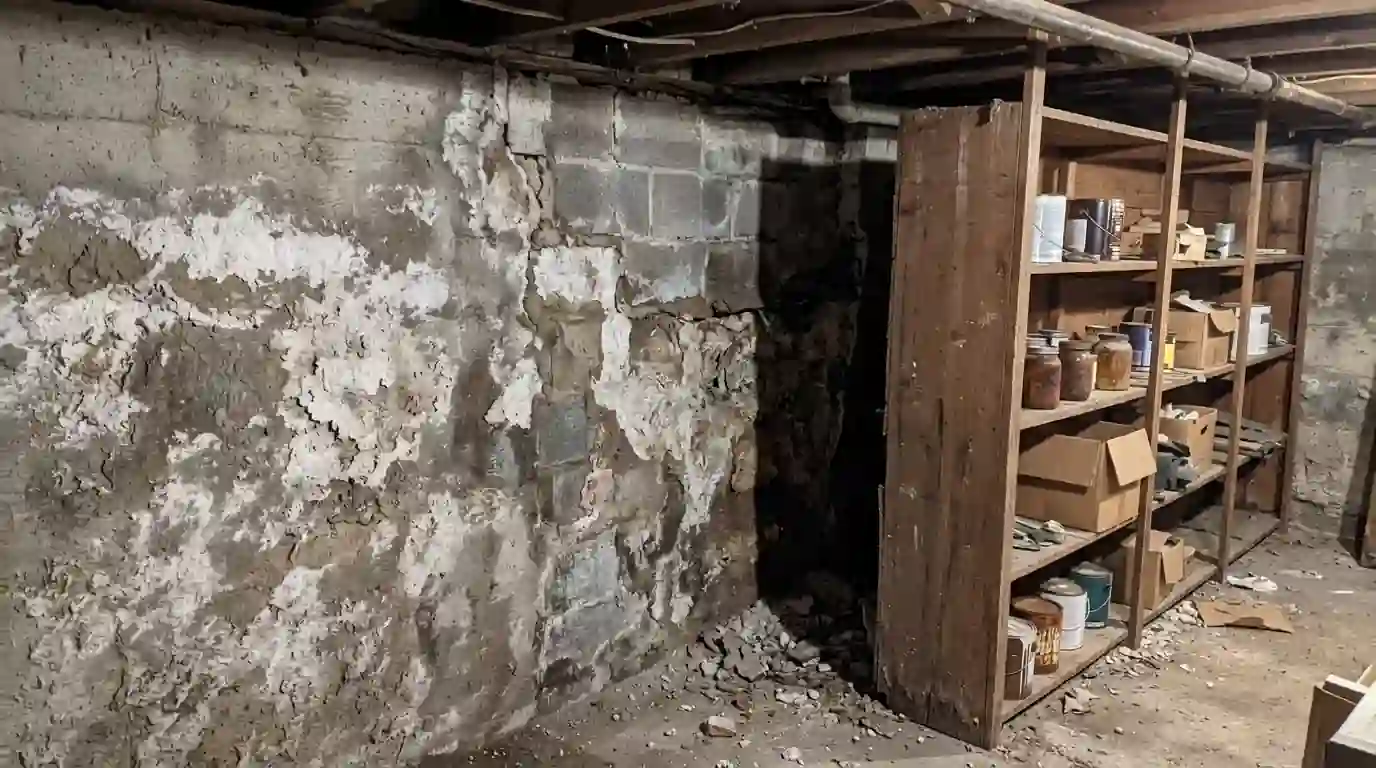
In an unfinished cellar the mold is usually on what sits against the walls: wood shelving, stored boxes, old paneling and the undersides of stairs. Foundation walls themselves carry surface growth and white mineral crust where water moves through. We clear and clean the surfaces with HEPA vacuums and detergent, remove what cannot be saved, and point out where water is entering, whether that is a crack, a window well or a gap around a pipe, so it can be sealed.
Basement apartments
Basement and garden apartments are homes, so the work has to be contained and quick. We seal the affected rooms, keep the rest of the unit usable where we can, and schedule around the people who live there. Because these units flood first in a heavy storm, we also look at how water got in: window wells, the entry stairwell, floor drains and doors at grade. The fix is not only the mold but the path the water took to get inside.
What basement mold removal costs
National guides put basement mold removal at $500 to $3,000, and whole-house jobs at $10,000 to $30,000. Finished basements sit toward the top of the basement range because more has to come out and go back.
Finished or unfinished
Drywall, insulation and flooring add removal and rebuild.
How high the water went
The wet line decides the size of the cut.
Stored contents
Clearing and cleaning belongings adds time.
Access
Narrow stairs and tight cellars slow the work.
Keeping it dry
A dehumidifier or drain work may be part of the fix.
New York conditions
What recent storms did to city basements
When the remnants of Ida dropped 3.15 inches of rain on Central Park in a single hour in 2021, 11 of the 13 people who died in New York City were in basement apartments. The Department of Buildings later said most of the properties where people died were illegally converted cellar and basement units, including one on Ridgewood Avenue in Brooklyn. Basements across the city flooded that night, and many of the mold calls we still get trace back to walls that were wiped down after a storm but never opened and dried.
What you can handle, and when to call us
What you can safely do
- Move boxes, rugs and stored items off the floor and away from walls
- Run a dehumidifier and keep basement windows closed on humid days
- Clean small spots on concrete with detergent and water, then dry them
Where it needs us
- Growth on drywall, insulation or wood framing
- Any basement that flooded and was not dried within a day or two
- A smell that stays after you have cleaned and aired it out
- Basement apartments and finished spaces people sleep in
How a basement job runs
The same order whether it is a laundry corner or a whole finished floor.
We find where the water gets in
Walls, windows, drains and the slab, before any removal.
We map the moisture
Readings on every wall set how much comes out.
We seal the basement
Containment at the stairs and negative air to outside.
We remove what grew
Board, insulation, pad and stored items that cannot be saved.
We clean and dry
HEPA vacuuming, cleaning the foundation, and drying to readings.
We keep it dry
A drain plan and a dehumidifier setting that holds.
Call (332) 234-9326A person answers, day or night.
Questions about basement mold removal
Not over existing growth or damp walls. Clean and dry first; coatings come after.
The growth is usually behind finishes, under carpet or on stored items.
Yes, with containment and scheduling around the people who live there.
It can, if water still gets in. We point out the entry points so they can be sealed.
Carpet and pad on a slab that got wet usually should. We check before deciding.
Yes. See dehumidifier installation.
Related jobs we handle
Crawl Space Mold Removal
Joists, sills and the ground cover under additions and older houses.
Wall Mold Removal
Opening walls in the right place and cutting only what the mold reached.
Kitchen Mold Removal
Sink bases, appliance line leaks and the wall behind the backsplash.
Ceiling Mold Removal
Stains from the unit above or the roof, opened, dried and rebuilt.
Basement smells damp or has spots on the walls?
Call now. We answer 24/7 and start by finding where the water gets in.
Answered 24 hours a day, 7 days a week