Quick answer
New construction mold in New York City is almost always surface growth on framing, sheathing or subfloor that got wet before the building was closed in, and it has to be removed before drywall goes up. We HEPA vacuum, sand or blast the stained wood, then dry it to meter readings, which costs far less than opening finished walls later.
Updated September 2026
Why framing mold shows up on renovations
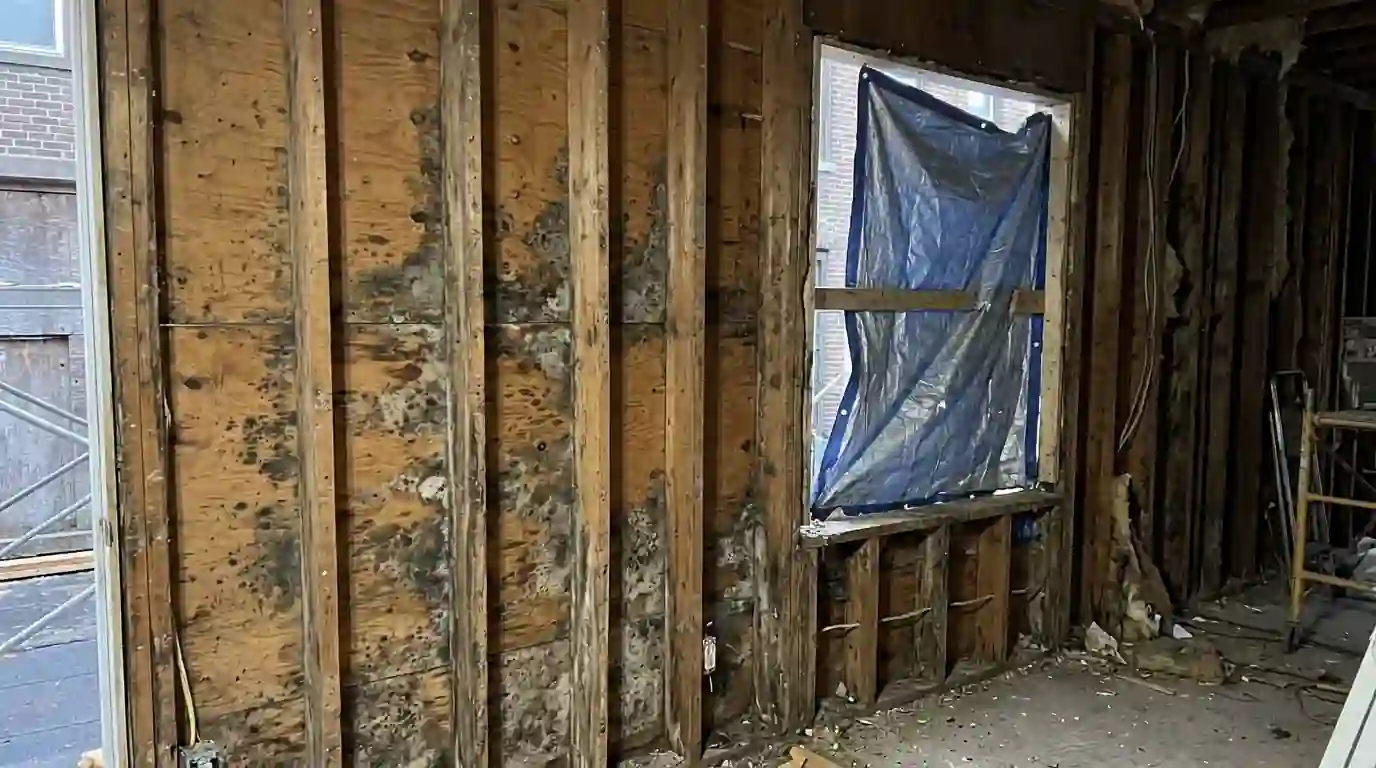
Lumber arrives damp, sits under a tarp in the rain, or gets soaked while a roof or window opening stays exposed for a week. By framing inspection, speckles have spread along the studs and the underside of the sheathing. Most of it is surface growth, not rot, which is why it can be cleaned instead of replaced.
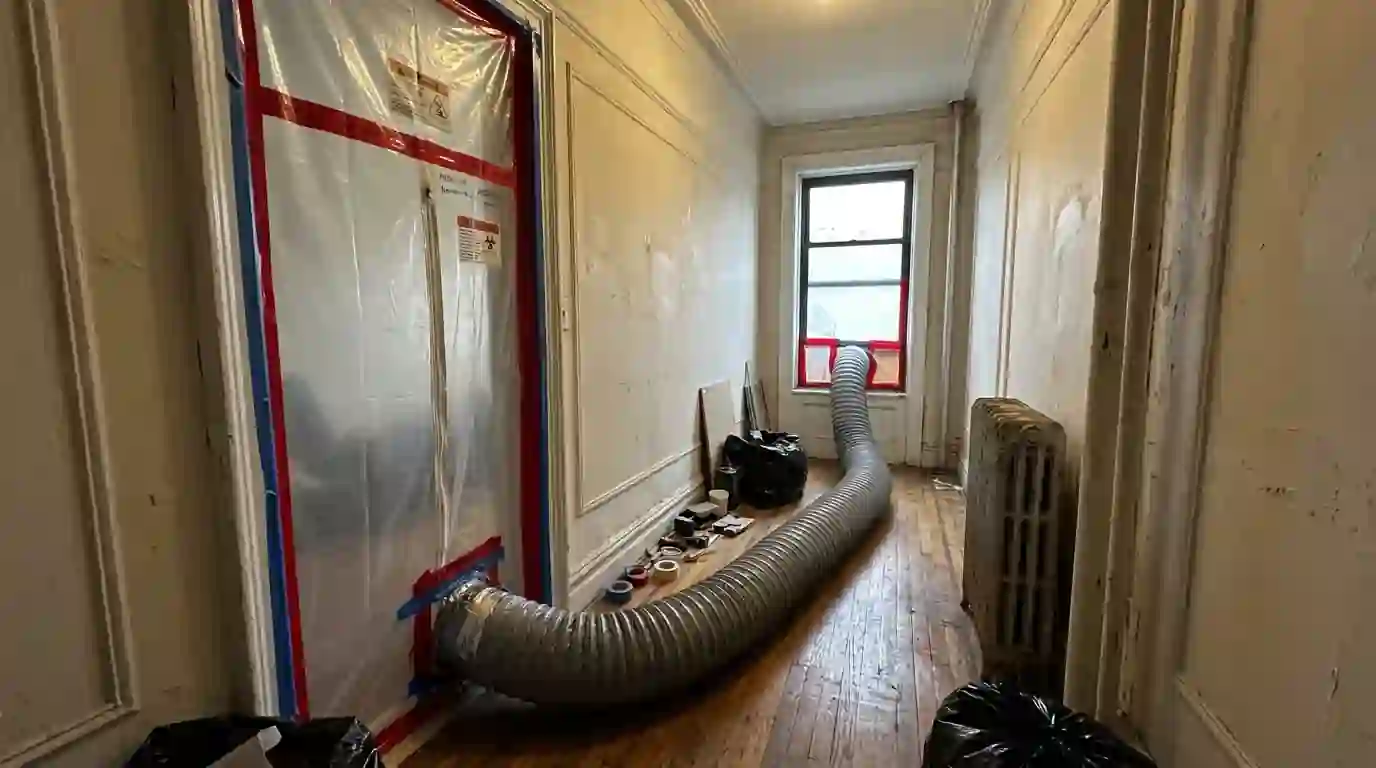
We work around the other trades: containment where occupied space is next door, HEPA vacuuming, sanding or blasting of the stained faces, a meter check, and photos for the file. If the water came from an opening that is still exposed, that gets closed first, or the growth returns after close-in.
Sanding, soda blasting or dry ice
| Option | How it works | Good fit | Trade-off |
|---|---|---|---|
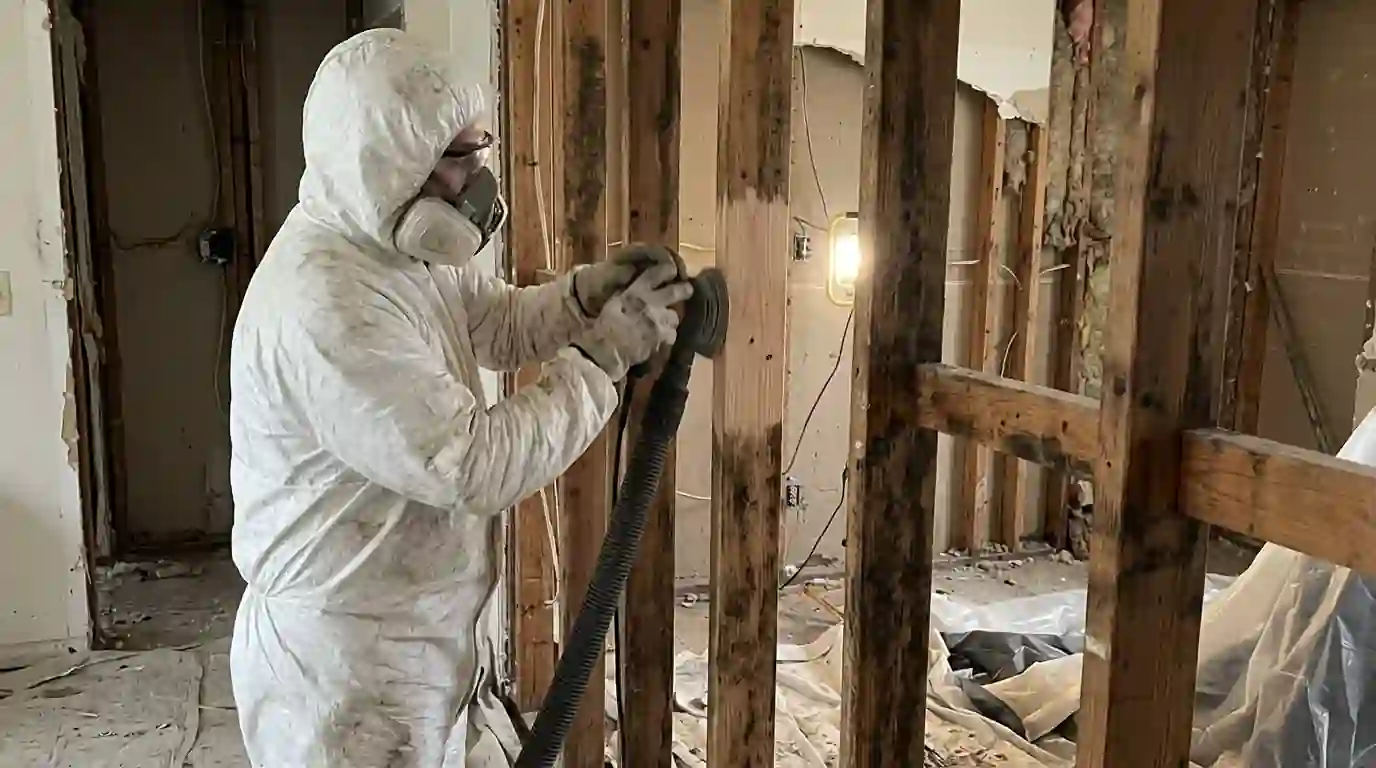
| Sanding | Sanders tied to HEPA vacuums take off the stained surface | Small areas, tight bays, occupied buildings | Slow on large areas |
| Soda blasting | Baking soda media strips growth and staining | Whole floors of framing and heavy staining | Media has to be contained and cleaned up |
| Dry ice blasting | Frozen pellets knock growth off and turn to gas | Large open areas where cleanup time matters | Needs ventilation and costs more to run |
Framing lumber and sheathing
Studs, top plates and the inside face of exterior sheathing carry most new-build growth, especially on the side that faced the weather while the building was open. We HEPA vacuum loose growth first so it does not spread, then sand or blast the stained faces until clean wood shows. Sheathing that has softened or delaminated is a different call: it gets replaced, not cleaned. Each wall section gets a meter reading so you know it is dry, not just clean, before insulation goes in.
Subfloor and joists before close-in
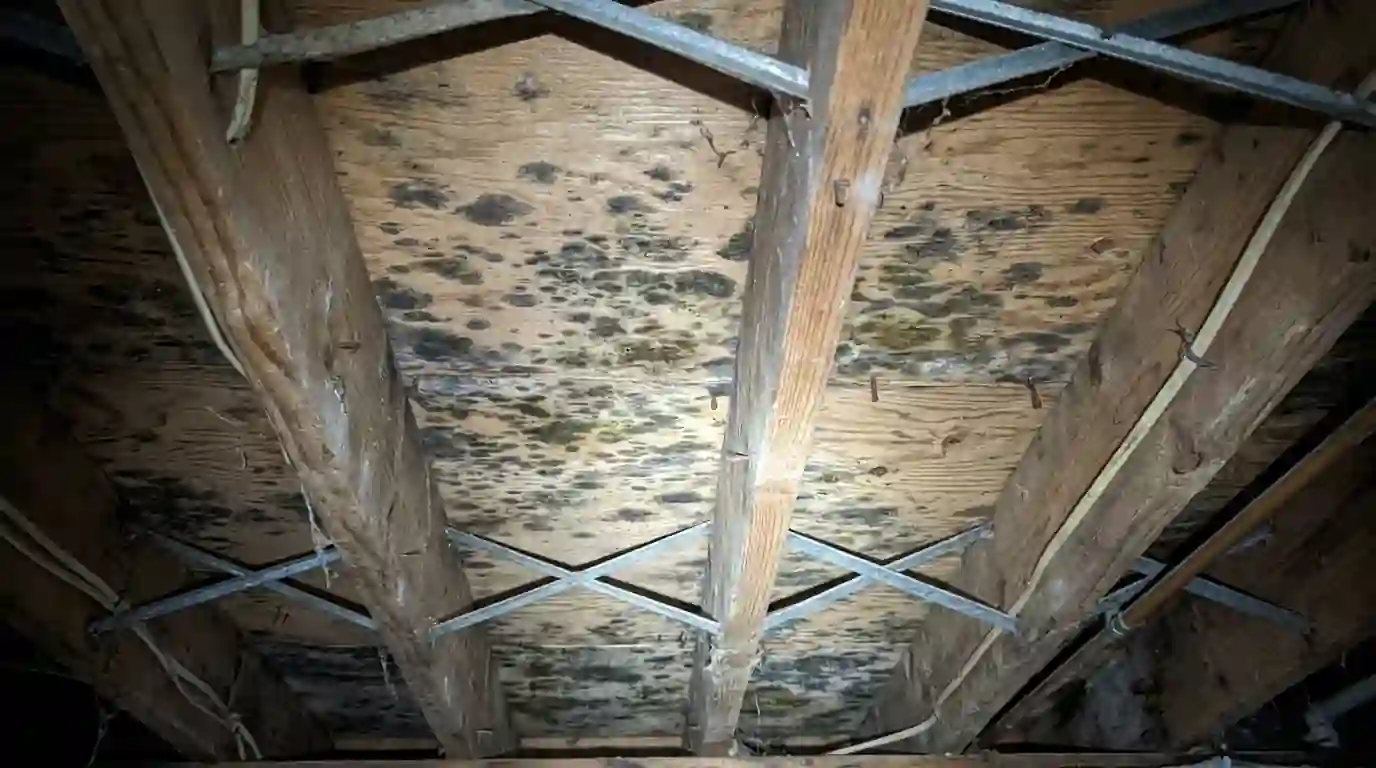
Plywood and OSB soak up rain faster than framing and dry slower, so a floor that stayed wet for days often grows mold on its underside and on the joist tops. We clean the joists and the underside of the panels where we can reach them, read the subfloor with a meter, and flag sheets that have swelled at the edges. Swollen panels are a flooring problem as much as a mold problem, so you hear about it before the finish floor goes down.
Gut renovations
In a gutted brownstone or prewar apartment, the old framing is exposed for the first time in decades and often shows past leaks as dark staining around windows and bathrooms. We separate old, dry staining from active growth, clean what needs cleaning, and mark any wood that is actually rotted for the carpenter. It is also the moment to fix the leak that caused it, because nobody will see that bay again once the wall is closed, and a slow drip behind new tile starts the whole cycle over.
What drives the price on a framing job
We did not find a sourced national range for construction mold cleaning on its own, so we price from the area of affected wood and the method it needs. For reference, national guides put a typical mold remediation project at $1,223 to $3,757.
Area of wood
Two stained bays and a whole floor of framing are different jobs.
Method
Sanding, soda and dry ice carry different labor and cleanup.
Access
Scaffolding, lifts or attic work add time.
Containment
Occupied space next door needs sealed areas and negative air.
Schedule
Night or weekend work around other trades changes the crew plan.
New York conditions
What New York weather does to open framing
NOAA now classifies New York City as a humid subtropical climate, and the storms that pass through bring heavier bursts of rain than they used to. Framing left open through a wet week in summer can pick up surface growth fast, and roof and window openings covered only by tarps let water run straight down the studs. We see it most on jobs where close-in slipped by a few weeks, so we check the wood before the insulation crew arrives rather than after.
How a framing job runs
We work around the other trades on site.
We walk the site with the builder
Where the growth is, what is still open to weather, and when walls close.
We seal off occupied areas
Plastic and negative air wherever neighbors or finished rooms sit close.
We HEPA vacuum first
Loose growth comes off before any sanding or blasting.
We sand or blast the wood
Sanders for bays, soda or dry ice for long runs.
We dry and read it
Dehumidifiers, then a meter check on each section.
We document it
Photos and readings for the builder, lender or owner.
Call (332) 234-9326A person answers, day or night.
How much it slows the schedule
Most of the delay is drying, not cleaning. Once the area is contained, sanding or blasting a floor of framing moves quickly, but wood that is still wet has to be dried with dehumidifiers and air movers and read on a meter before insulation goes in. Give us your drywall date when you call and we plan backward from it.
Questions about new construction mold remediation
Usually not. Surface growth on sound wood is cleaned off. Soft, rotted or delaminated wood gets replaced.
Spraying without removing the growth leaves it in the wall. We clean first, then treat where it helps.
Only in the area we are working. Containment keeps dust out of the rest of the site.
When it makes sense, a coating goes on after cleaning. See prevention and encapsulation.
Yes. We answer 24/7 and schedule around the site calendar.
Before and after photos with locations, plus moisture readings for each area.
Related jobs we handle
Black Mold Removal
Dark growth on long-wet drywall paper, cut out and bagged inside containment.
Restaurant Mold Remediation
Walk-ins, basement prep rooms and dish areas cleaned between services.
Commercial Mold Remediation
After-hours containment so tenants and customers keep using the building.
Apartment Mold Remediation
Occupied-building work with hallway protection and paperwork for the board.
Walls closing soon and the framing is spotted?
Call now. We answer 24/7 and plan the work around your drywall date.
Answered 24 hours a day, 7 days a week