Quick answer
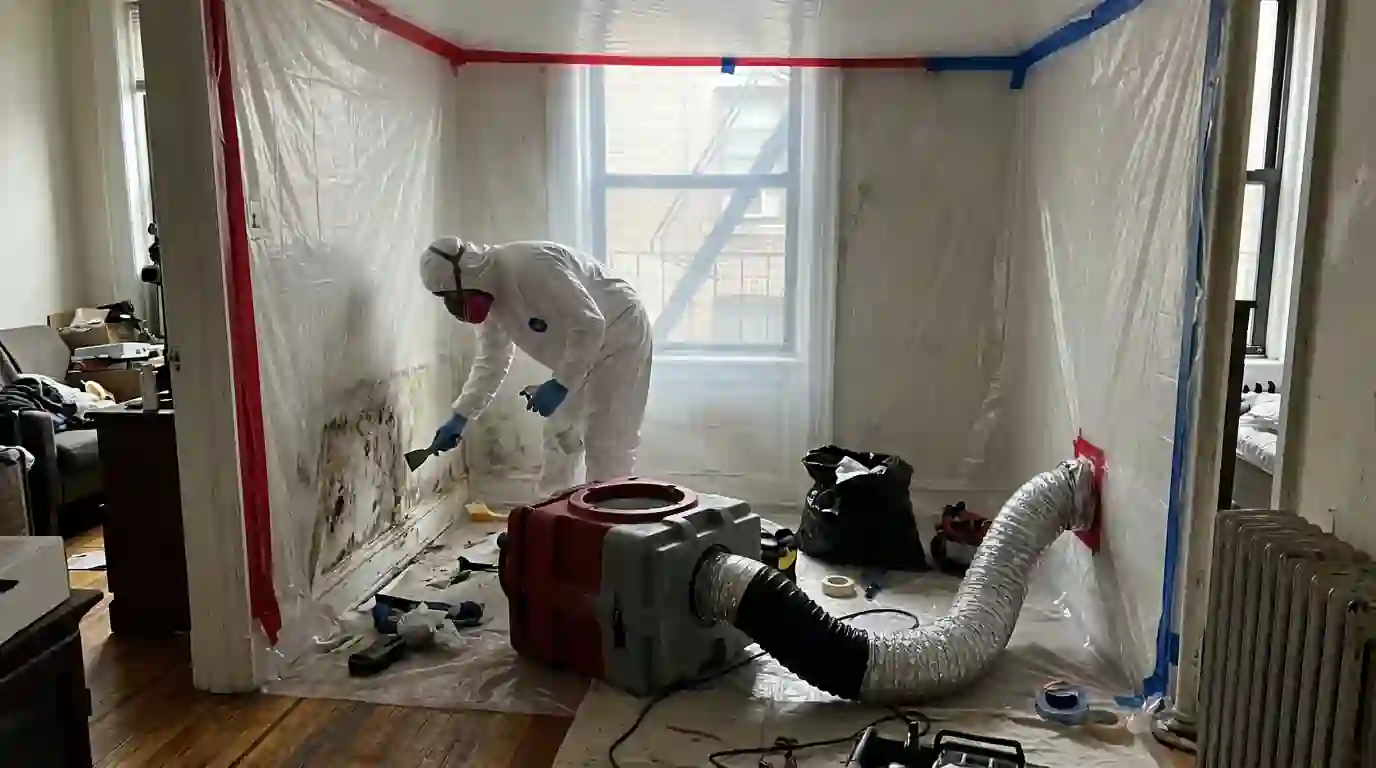
Mold work in Tremont and Belmont is mostly in older rented apartments, plus some two- and three-family houses. The usual causes are slow leaks from old supply and waste lines, water from the unit above, roof leaks and winter condensation in rooms that are rarely aired out. We find the water first, contain the work area, remove the growth, dry the framing and give the owner and tenant the same written record.
Updated September 2026
Local conditions
What drives mold in Tremont and Belmont
Counted by 311 complaints from 2017 to 2022, Tremont averaged about 438 mold reports a year and Belmont about 427, ranking fourth and fifth in the city behind Fordham Heights, Flatbush and University Heights. The Bronx had the most mold complaints of any borough every year since 2019.
The housing is old. More than half of New York City housing units are in buildings from before 1947, and four in five predate 1974. Plumbing stacks run through every floor, so a drip in one kitchen or bathroom often shows up as a stain in the apartment below.
Complaints get acted on. HPD completed 56,198 inspections in fiscal year 2022 in response to indoor allergen complaints, and in buildings with 10 or more units, mold over 10 square feet must be assessed by one company and removed by a separate, independent one.
Jobs we do most in Tremont and Belmont
Older rented apartments bring in most of our calls here. Each job has its own page.
Apartment Mold Remediation
Containment and removal inside a rented unit, with the hallway protected.
Hidden Leak Detection
Following a wet wall or ceiling back to the pipe or the unit above.
Kitchen Mold Removal
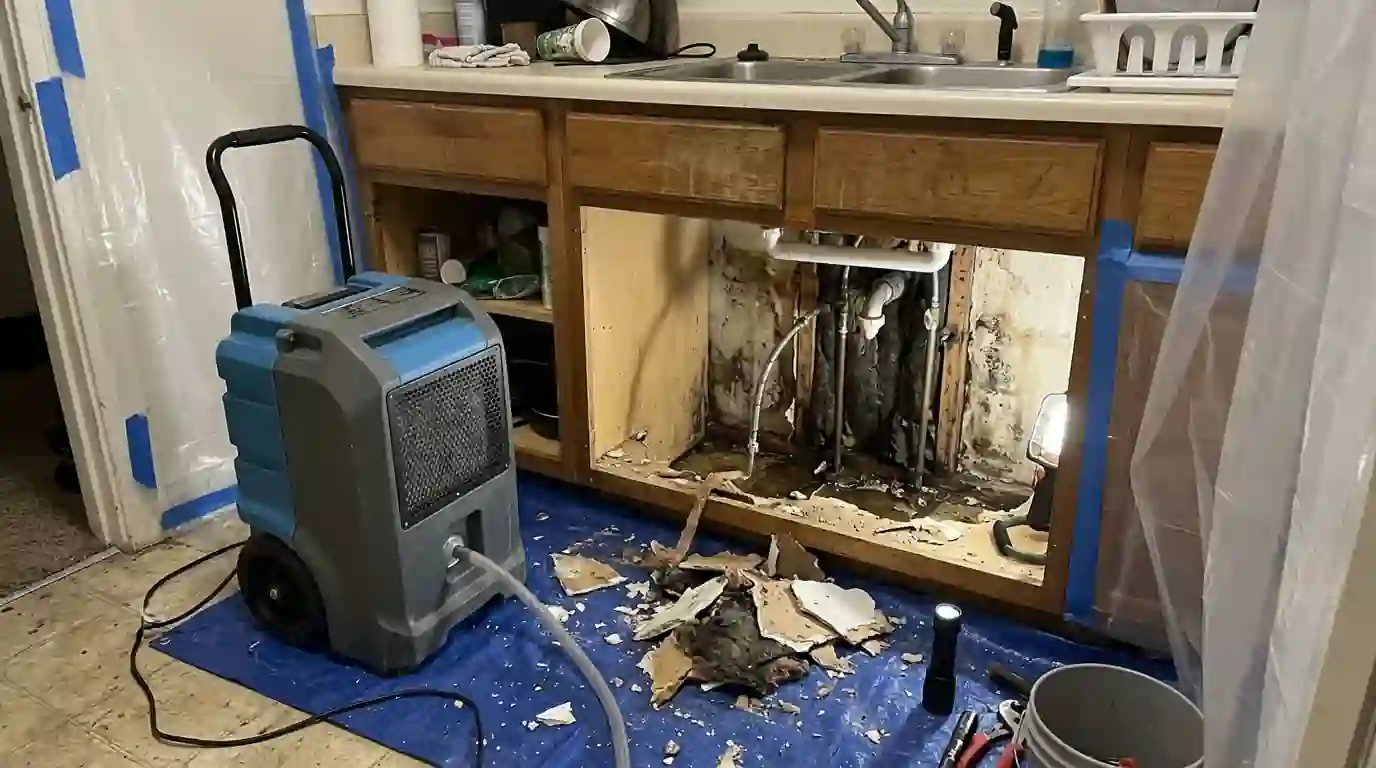
Sink base and wall cavity growth from slow leaks at old supply lines.
HPD Mold Violation Remediation
Correcting a violation before its deadline, with records.
Ceiling Mold Removal
Ceilings opened under leaking bathrooms and roofs, then dried and closed.
Mold Testing
Sampling when an owner, tenant or court needs documented results.
Working in older Bronx buildings
We map moisture floor by floor before opening anything, because in a stacked building the wet spot is rarely where the leak is. The owner gets told which fixture or pipe is responsible, so it is repaired once and the mold does not come back.
In buildings with 10 or more units, where the city requires separate companies for assessment and removal above 10 square feet, we take one role, not both, and keep our records in a form the other company can use.
More in The Bronx
Nearby areas we also cover
University Heights Parkchester Concourse & Highbridge All coverage
Questions from Tremont & Belmont
Common. Both neighborhoods rank in the top five citywide for 311 mold complaints.
Often both. A slow leak wets the wall first; mold follows within days. Readings show how far it goes.
Yes. The owner is responsible for the repair and usually hires the company.
Yes. Basements, bathrooms and kitchens in houses are part of our work here too.