Quick answer
Ceiling mold in New York City almost always comes from water above it: the bathroom or kitchen of the unit upstairs, a roof or parapet leak on the top floor, or a pipe in the ceiling cavity. National guides put ceiling mold removal at $1,000 to $9,000, depending on how much board or plaster has to come down and how far the water spread.
Updated September 2026
Why ceilings grow mold from above
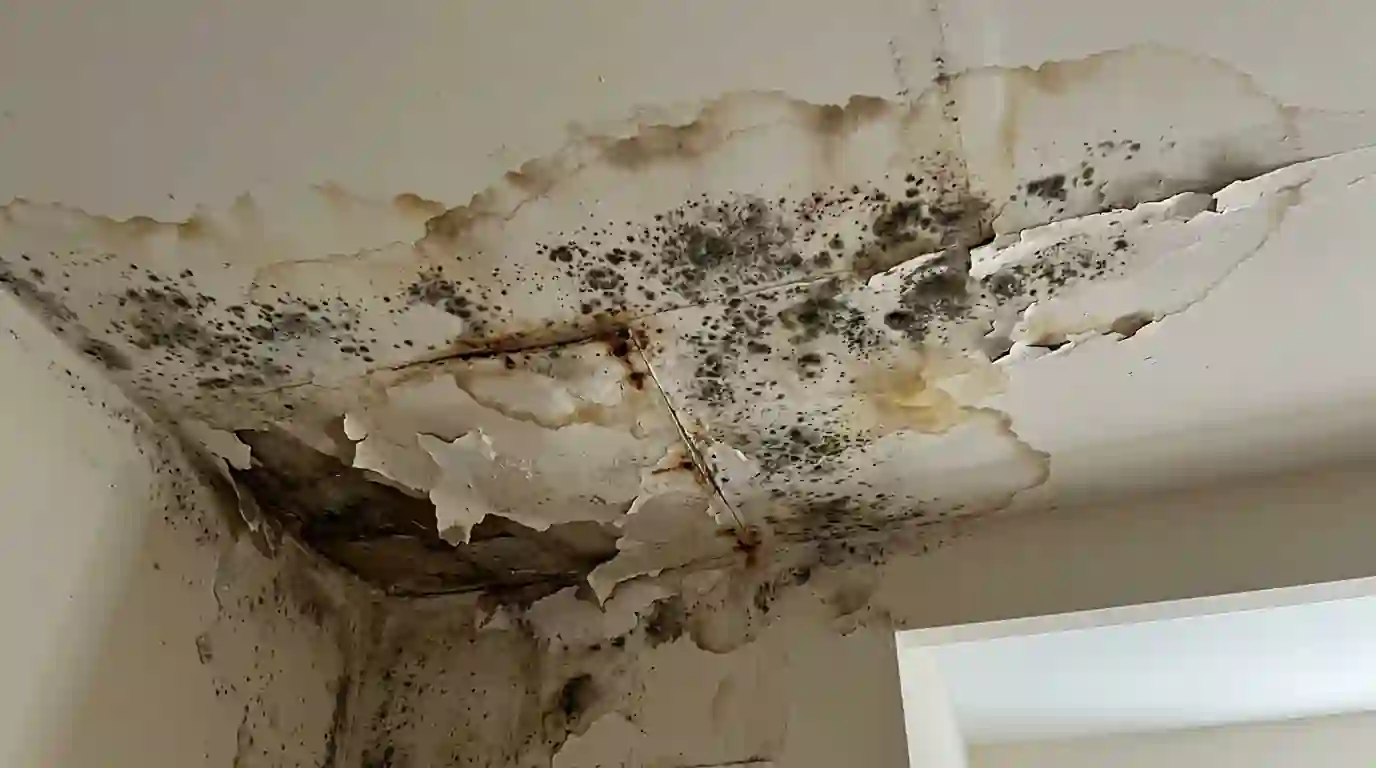
Water from above spreads along the top of the ceiling board or plaster and across joists before it shows as a stain, so the wet area is usually larger than the stain you see. Mold grows on the back of the board first. By the time spots show on the painted face, or the ceiling sags, the cavity has been wet for a while.
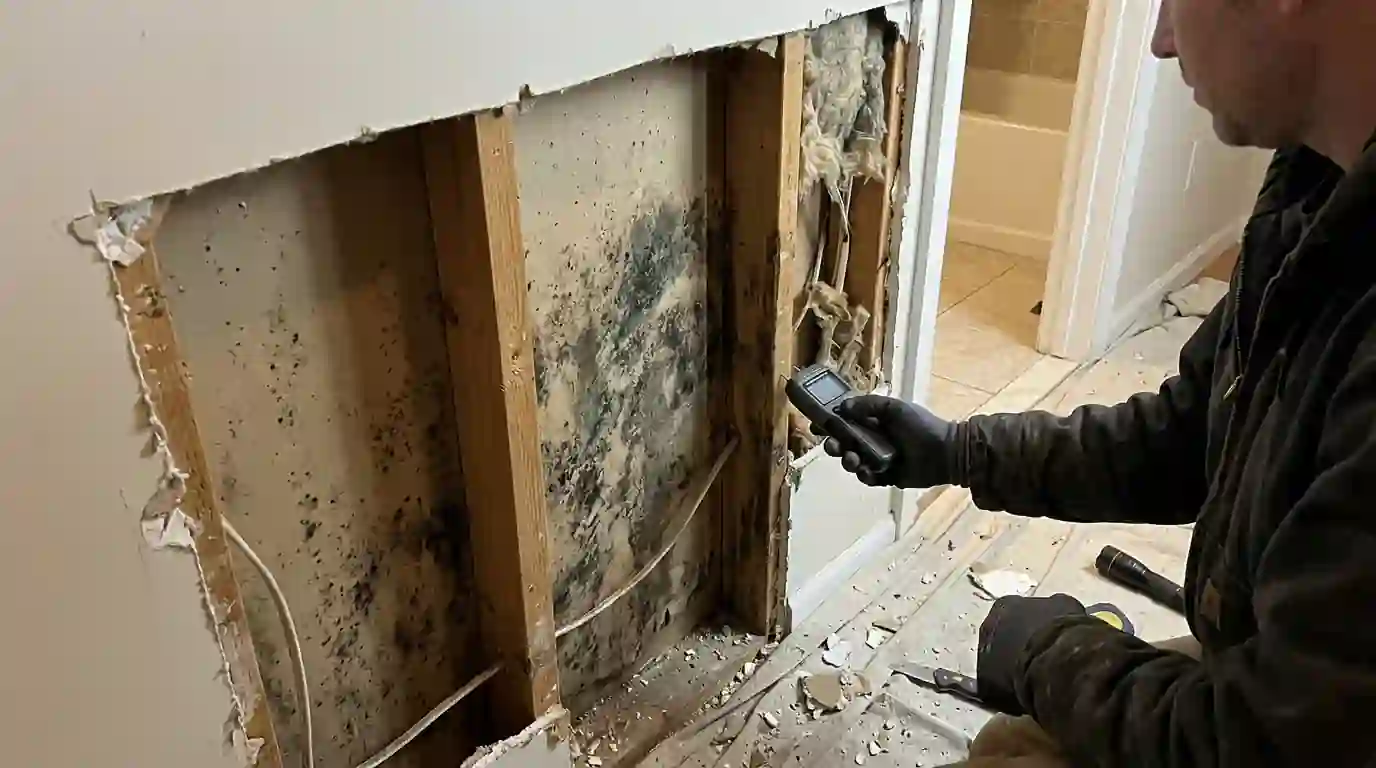
We read the ceiling with a meter and thermal camera to map the wet area, get access to the unit or roof above to find and stop the source, and open the ceiling inside containment so debris does not fall into the room. The cavity is dried, the growth removed, and the ceiling rebuilt through our repair work.
Patch the ceiling or replace a section
| Option | Clean and patch | Cut out and replace |
|---|---|---|
| When it fits | Surface spots from bathroom steam on a dry ceiling | Wet, stained-through or sagging board or plaster |
| What happens | Surface cleaned, primed with a stain blocker, painted | Section removed, cavity dried, new board or plaster |
| Source | Ventilation fix in the room | Leak above found and stopped first |
| Rebuild | Paint only | Board or plaster, finish and paint |
Leaks from the unit above
In an apartment building the most common source is the bathroom or kitchen directly above: a tub overflow, a failed shower pan, a toilet seal or a leaking supply line. We coordinate access with the building and the neighbor, find the source, and make sure it is stopped before we open your ceiling. The wet section comes down inside containment, the cavity is dried, and the growth on joists and the back of the board is cleaned. Photos and readings from both units help sort out responsibility.
Top-floor roof leaks
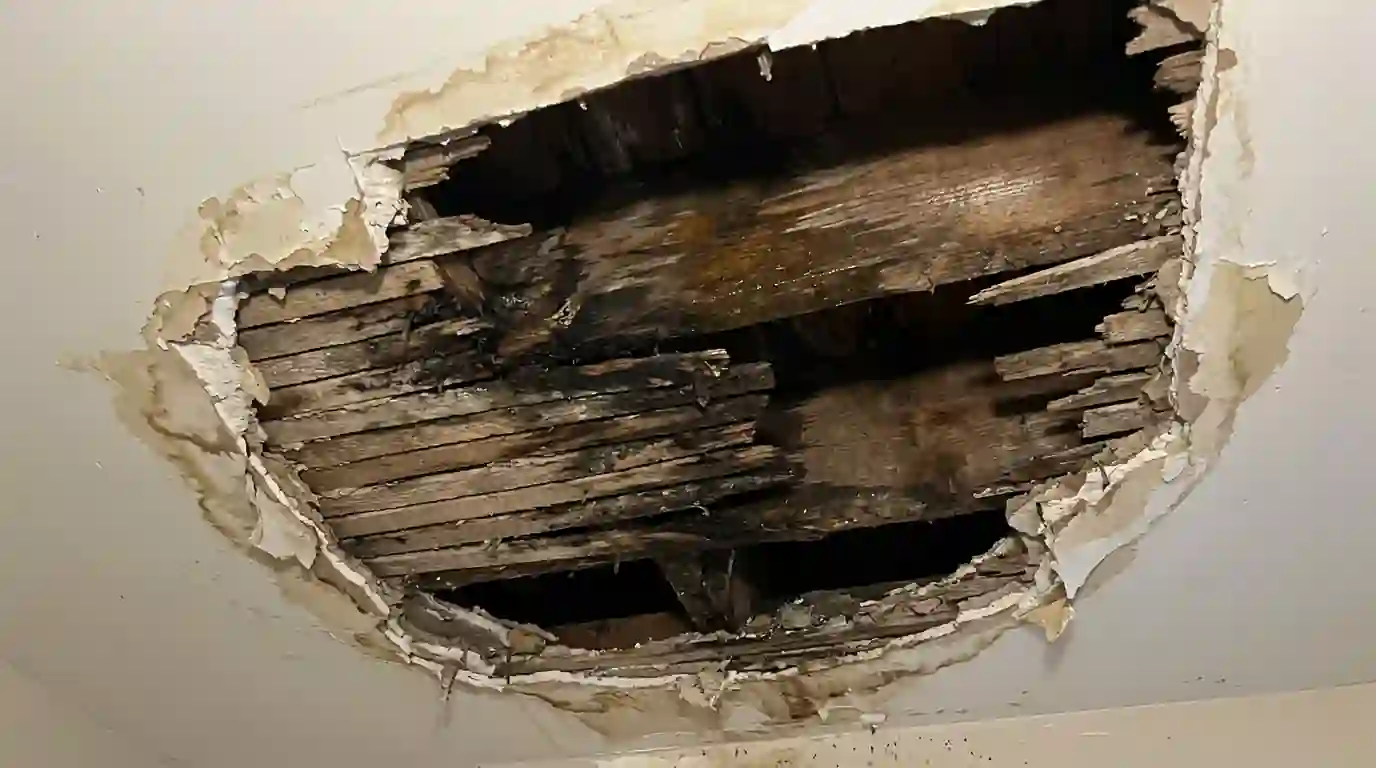
On the top floor, water usually comes from the roof, the parapet, flashing around a bulkhead, or a clogged roof drain that backs up in a heavy storm. The stain may be far from where the water enters, because it travels along the roof deck and joists. We map the wet area from below, flag the likely entry point for the roofer, and open and dry the ceiling once the roof is repaired, since drying a ceiling under an open leak is wasted work.
Bathroom ceilings
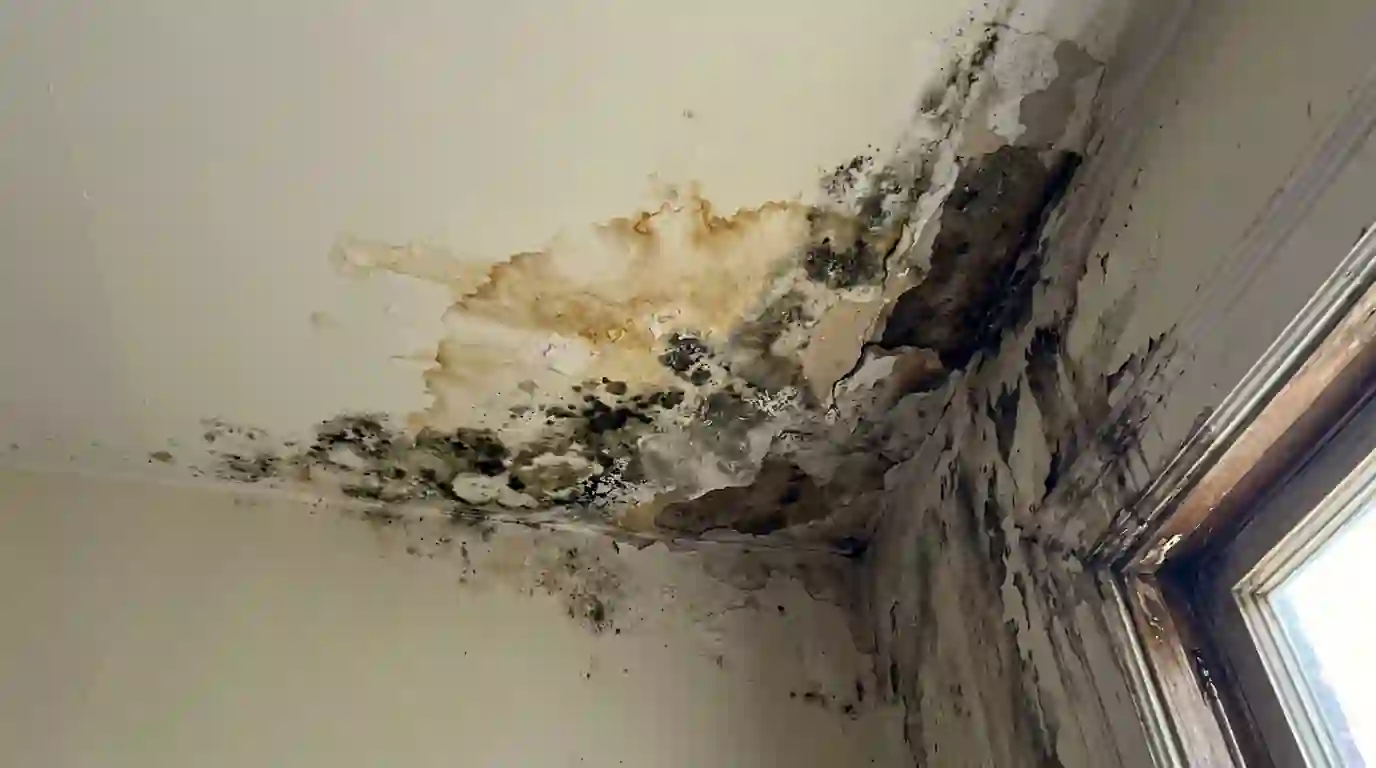
Bathroom ceilings get two kinds of mold. Spots from shower steam on a dry ceiling are surface growth: we clean them, prime with a stain blocker, and fix the fan so it clears the room. A ceiling that is soft, stained through or sagging has water coming from above, and that section comes out. We check the fan duct while the ceiling is open, because a duct that has come loose can drip condensation straight onto the board every winter.
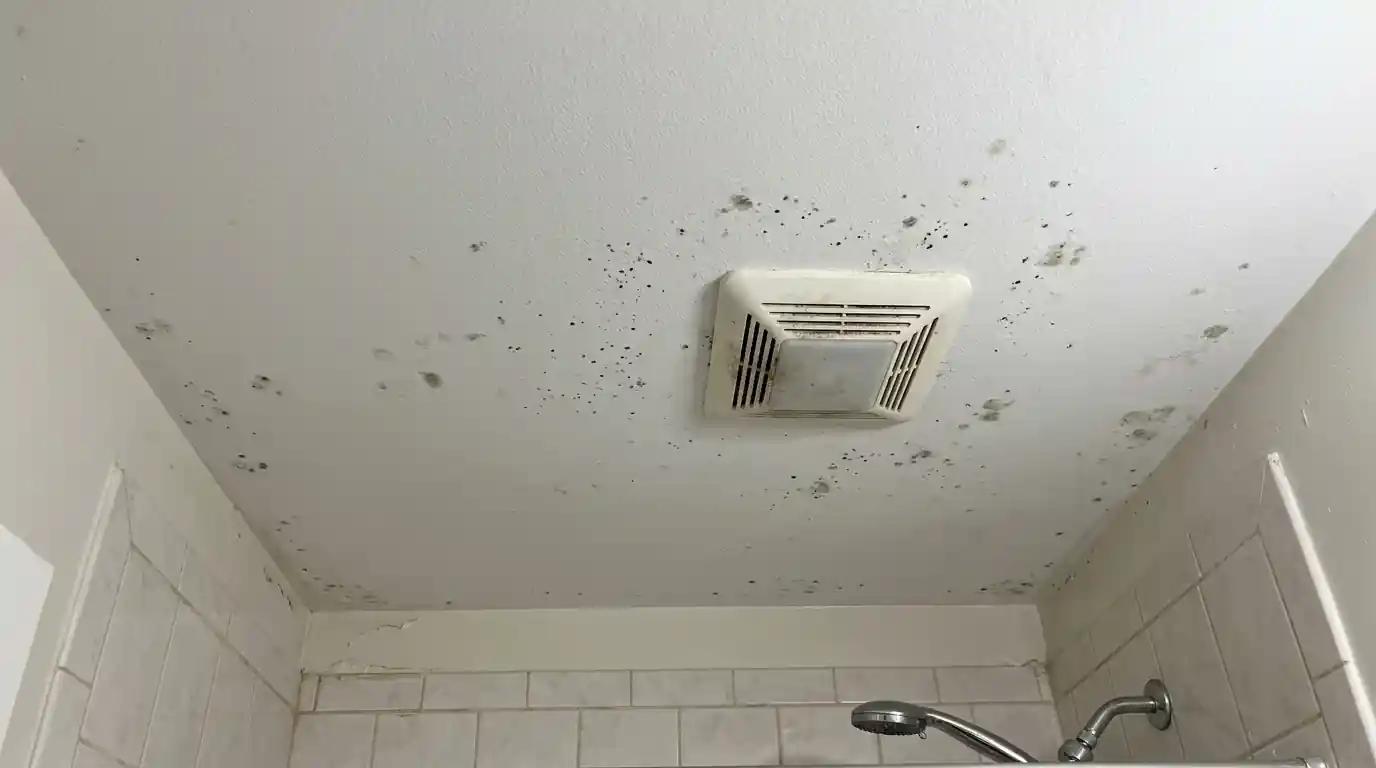
What ceiling mold removal costs
National guides put ceiling mold removal at $1,000 to $9,000. A surface clean of bathroom spots sits at the low end; a ceiling opened under a long-running leak, with plaster repair, sits toward the high end.
Area of ceiling
A few square feet or a whole room.
Plaster or drywall
Plaster takes longer to open and match.
Access above
Coordinating the unit or roof upstairs.
Height
High prewar ceilings need scaffolding or tall ladders.
Finish
Patch and paint, or the whole ceiling repainted.
Signs the ceiling has a hidden problem
A stain that keeps growing
Rings that spread or darken mean water is still arriving from above.
Drips from a light or smoke detector
Water finds fixture openings on its way down.
Spots over a bathroom or kitchen
Growth under a wet room upstairs usually starts on the back of the board.
Bubbling or peeling paint overhead
Moisture behind the paint lifts it off the ceiling.
A sagging section
Water held on top of the board makes it bow; do not stand under it.
A musty smell near the ceiling
Growth in the cavity above can be smelled before it is seen.
New York conditions
Why city ceilings leak from above
About 69 percent of occupied homes in New York City are rented, and in a multi-family building one apartment sits directly over another, so a leak upstairs becomes a ceiling problem downstairs. Local Law 55 requires owners of buildings with three or more apartments to inspect units each year for mold and fix the underlying cause, which in a ceiling usually means the bathroom or kitchen above. Sorting access between the two units is often the slowest part of the job.
How a ceiling job runs
The source above gets stopped before the ceiling below comes down.
We map the wet area
Meter and thermal readings across the ceiling.
We find the source above
Access to the unit, roof or pipe chase upstairs.
We seal the room
Containment and covered floors before opening.
We open the ceiling
Wet and moldy board or plaster removed past the edge.
We clean and dry
Joists cleaned, cavity dried to readings.
We close and finish
New board or plaster, primer and paint.
Call (332) 234-9326A person answers, day or night.
Questions about ceiling mold removal
It can fall. Keep people out from under it and call right away.
Only once the source is fixed and the board reads dry, with a stain-blocking primer.
That depends on the building and the cause; our photos and readings help sort it out.
Usually, to find and confirm the source is stopped.
Yes, with a plaster patch or skim coat that blends in.
Until the cavity reads dry, then it is closed and finished.
Related jobs we handle
Bathroom Mold Removal
Ceilings over the shower, walls behind tile and floors under the toilet.
Basement Mold Removal
Foundation walls, framing and finished basements dried and cleared.
Kitchen Mold Removal
Sink bases, appliance line leaks and the wall behind the backsplash.
Wall Mold Removal
Opening walls in the right place and cutting only what the mold reached.
Stain spreading across the ceiling?
Call now. We answer 24/7 and start by finding the water above.
Answered 24 hours a day, 7 days a week