Quick answer
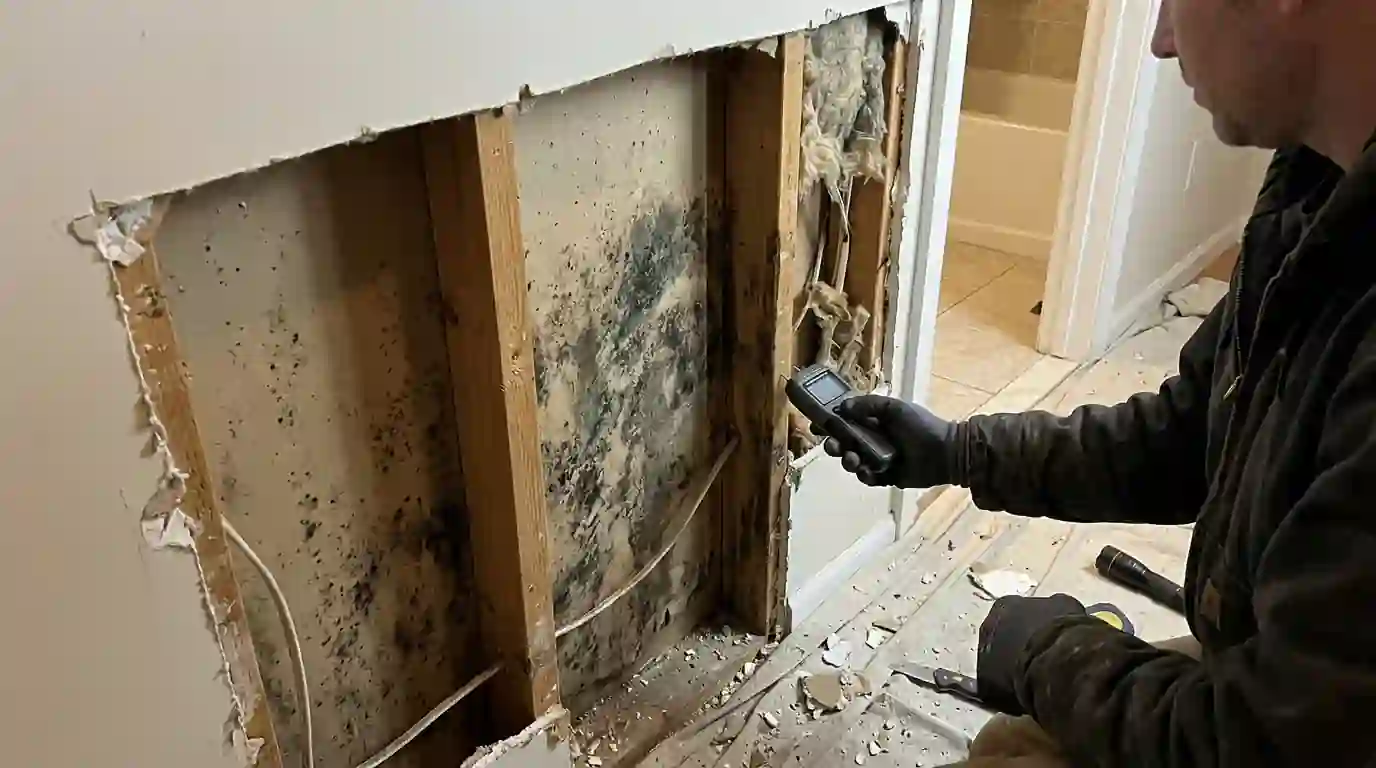
Crawl space mold in New York City shows up on joists, sill plates and the underside of the subfloor in houses and additions built over a shallow space, and national guides put removal at $500 to $2,000. It lasts only when the bare ground is covered with a vapor barrier and the space is kept dry afterward.
Updated September 2026
Why crawl spaces grow mold
Bare soil gives off moisture all year, and a crawl space has almost no air movement to carry it away. Add a plumbing leak, a downspout that dumps next to the foundation, or vents that let humid summer air in to condense on cool wood, and the joists and subfloor stay damp long enough to grow. The first thing most people notice is a smell in the rooms above, or cupping in the floorboards.
We go in with lights, a meter and HEPA gear, clean or sand the framing, remove old insulation and ground cover that grew, and lay a new vapor barrier. When the space stays damp through the summer, a small crawl space dehumidifier with a real drain line keeps it that way.
Joists and sill plates
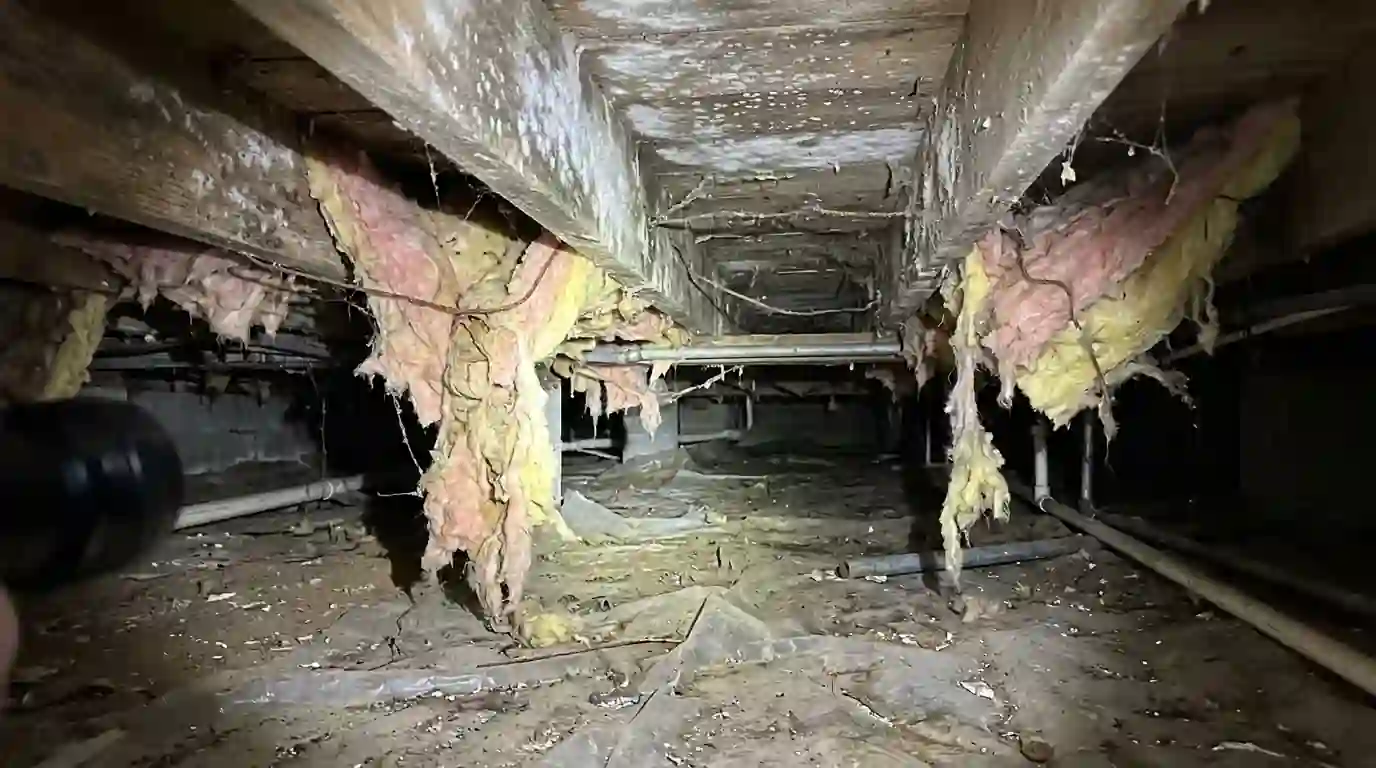
Growth on crawl space framing is usually surface mold on the lower edges of the joists, the rim joist and the sill plate that sits on the foundation. We HEPA vacuum it first, then clean or sand the stained wood and treat it once it is dry. We probe the sill plate and the joist ends with a screwdriver as we go, because long-wet wood can soften, and softened framing is a carpentry repair rather than a cleaning job. You get photos of anything that needs a carpenter.
Vapor barrier replacement
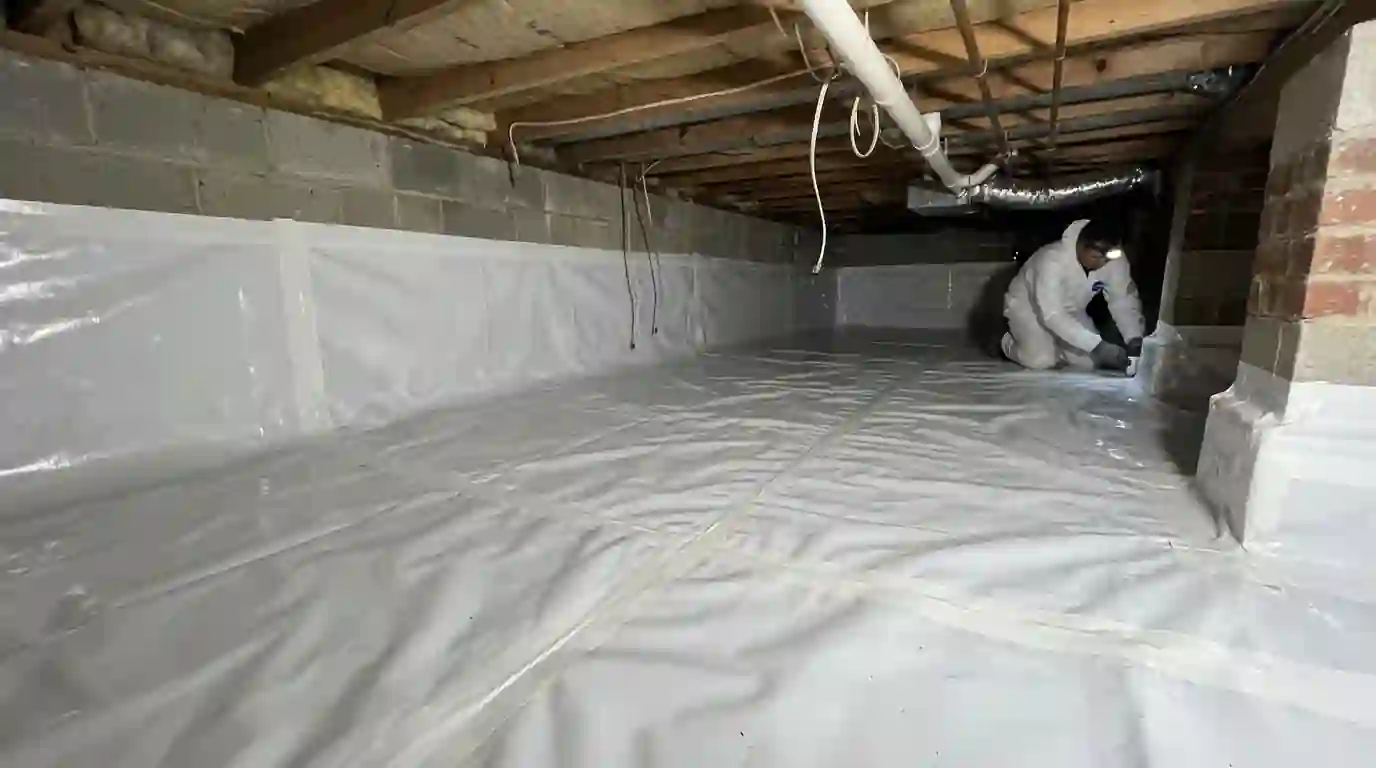
The single biggest fix in most crawl spaces is covering the ground. A torn, thin or missing sheet lets soil moisture rise straight into the space. We remove the old plastic and any debris under it, lay a heavier barrier with the seams overlapped and taped, and run it up the foundation walls a short distance so moisture cannot come in at the edges. It also makes future inspections cleaner, because anything that drips shows up on the plastic right away.
Crawl spaces under additions and porches
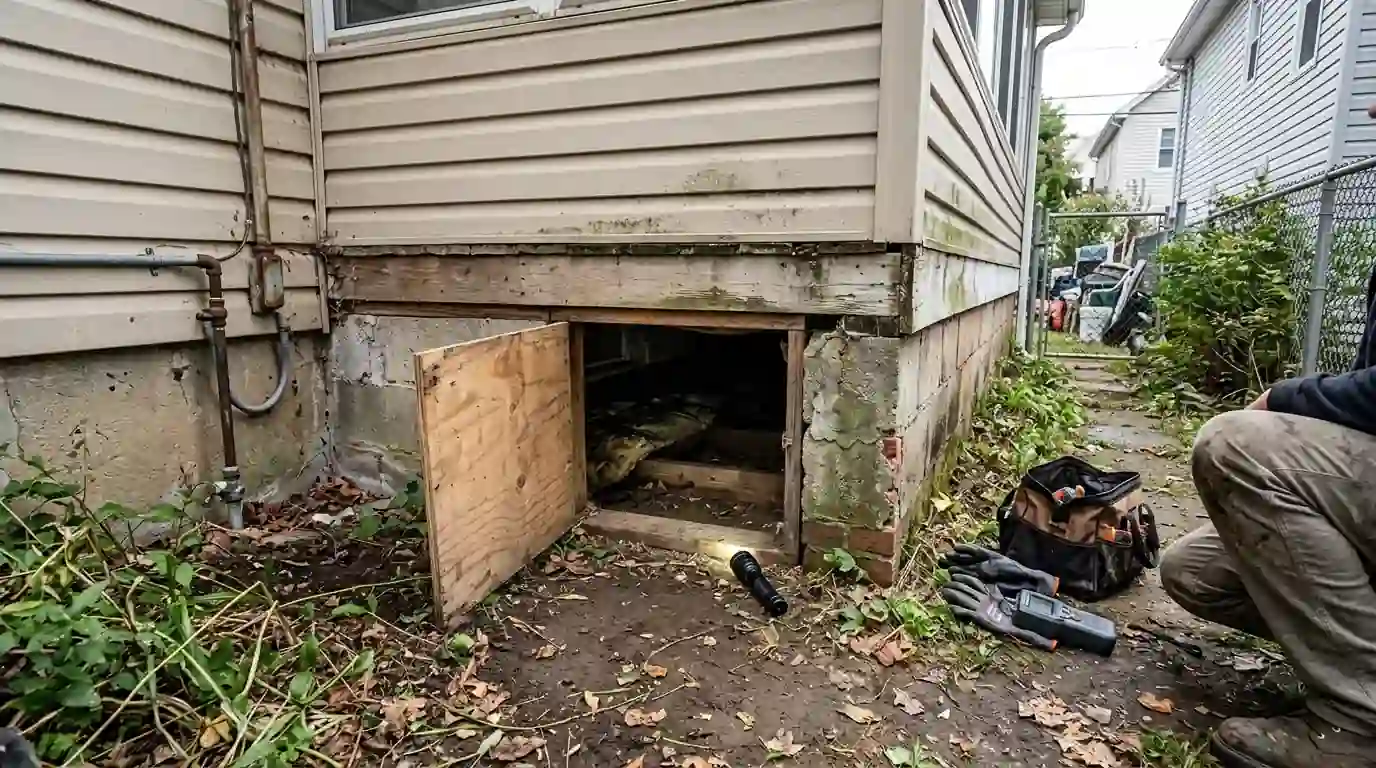
Many city houses have a full basement under the original structure and a shallow crawl space under a later addition, sunroom or enclosed porch. Those spaces are often unvented, hard to reach and forgotten, and they are where the musty smell in a back room usually comes from. We reach them through the existing hatch or cut a small access where there is none, clean and dry the framing, and cover the ground so the addition stops smelling different from the rest of the house.
What crawl space mold removal costs
National guides put crawl space mold removal at $500 to $2,000. Tight clearance, standing water and a full new vapor barrier push a job toward the top of that range.
Size and clearance
Low, tight spaces take longer to work in.
Standing water
It has to be removed and the source fixed first.
Insulation
Wet batts come out and may be replaced.
Vapor barrier
A full new ground cover adds materials and labor.
Dehumidifier
Added when the space stays damp all summer.
Signs the crawl space has mold
Musty smell in rooms above
Air from the crawl space rises into the house through gaps in the floor.
Cupped or soft floorboards
Wood flooring that curls at the edges is taking on moisture from below.
Water on the ground cover
Standing water or wet plastic means the space is getting more water than it loses.
Insulation hanging down
Wet batts sag out of the joist bays and hold moisture against the wood.
White or dark spots on joists
Surface growth on the framing is visible with a flashlight from the access hatch.
Condensation on pipes
Sweating pipes and ducts show the air down there is near its dew point.
New York conditions
Low ground and older houses around the city
Staten Island has the highest homeownership rate of the five boroughs, 61.7 percent in the 2017 city survey. In neighborhoods like Oakwood Beach, many homes were bungalows built between 1930 and 1950 on former salt marsh, where the ground under a house rarely dries out, and 196 of them were bought out and demolished after Sandy. On low ground like that, covering the soil under a crawl space comes first, before any cleaning, because the moisture coming up from below never stops.
What you can check, and what needs us
What you can safely do
- Look from the hatch with a flashlight for water, sagging insulation or spots
- Make sure downspouts discharge away from the foundation
- Report any plumbing leak you can see
Where it needs us
- Cleaning or sanding growth on joists and sill plates
- Removing wet insulation and old ground cover
- Working in a space with standing water or tight clearance
- Laying and sealing a new vapor barrier
How a crawl space job runs
The same steps for a small porch crawl or a whole-house one.
We look from the hatch first
Water, insulation, framing and how much room there is to work.
We fix the water source
Plumbing leaks and downspouts before cleaning starts.
We remove what grew
Wet insulation, old plastic and debris are bagged and taken out.
We clean the framing
HEPA vacuuming, then cleaning or sanding the joists and sills.
We lay a new barrier
Heavier plastic, taped seams, run up the walls.
We keep it dry
Readings, and a dehumidifier where the space needs one.
Call (332) 234-9326A person answers, day or night.
Questions about crawl space mold removal
The smell and spores travel up into the living space, and long-wet framing can soften over time.
It depends on the space. Vents that let humid summer air in can make things worse; we assess yours.
We identify them and document them; structural repair is carpentry work we coordinate.
Heavier than the thin sheet most crawl spaces have; we choose it for the space and how it is used.
Yes. We cut a small access in a closet floor or from outside where it makes sense.
Not over bare soil. The ground has to be covered first.
Related jobs we handle
Carpet and Floor Mold Removal
Carpet, pad, hardwood and the subfloor underneath, checked and cleared.
Basement Mold Removal
Foundation walls, framing and finished basements dried and cleared.
Kitchen Mold Removal
Sink bases, appliance line leaks and the wall behind the backsplash.
Attic Mold Removal
Roof sheathing and insulation cleaned or replaced, and the ventilation fixed.
Floors smell musty from below?
Call now. We answer 24/7 and start with a look from the hatch.
Answered 24 hours a day, 7 days a week