Quick answer
A mold inspection in New York City maps moisture before anything is opened, and national cost guides put one at $303 to $1,045. Meters and a thermal camera find wet drywall, plaster and framing, the likely source gets checked, and you learn whether you need drying, sampling or removal.
Updated September 2026
What an inspection actually finds
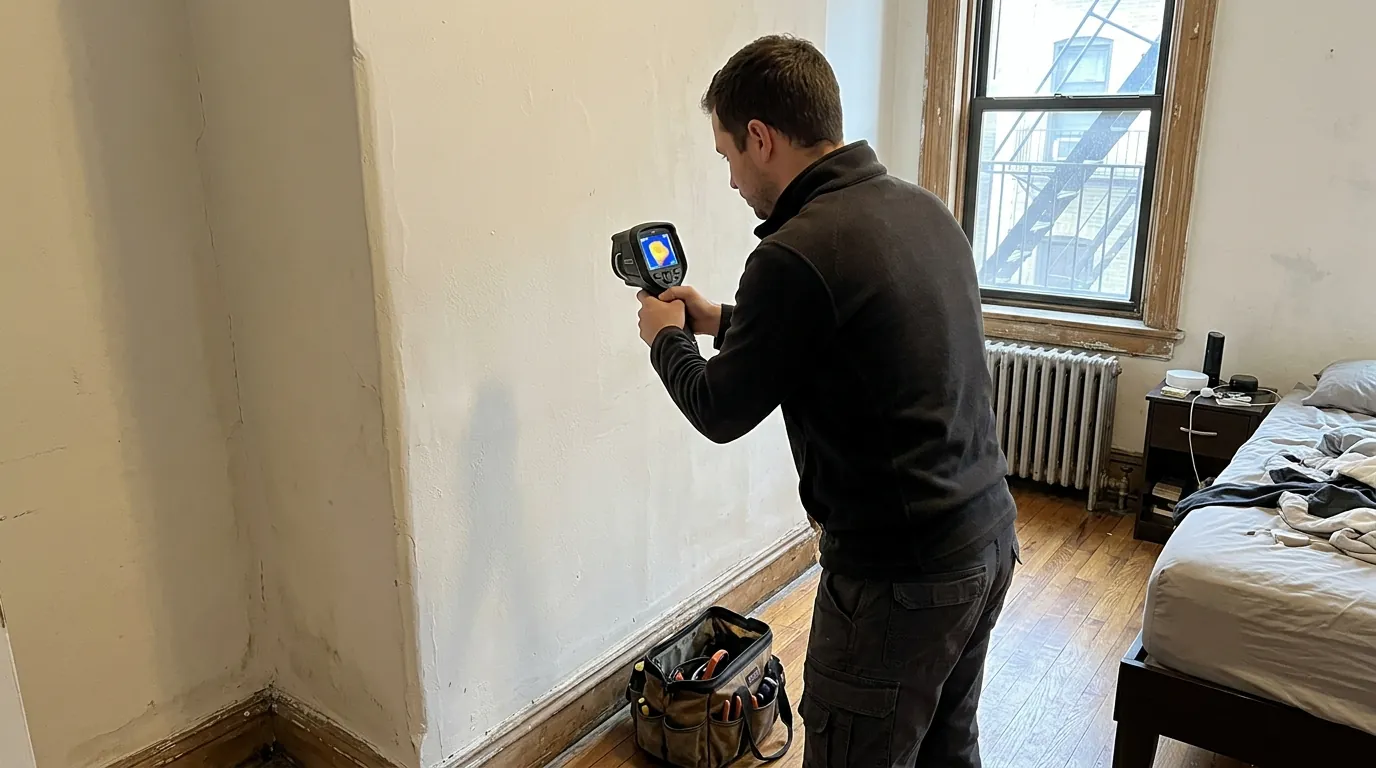
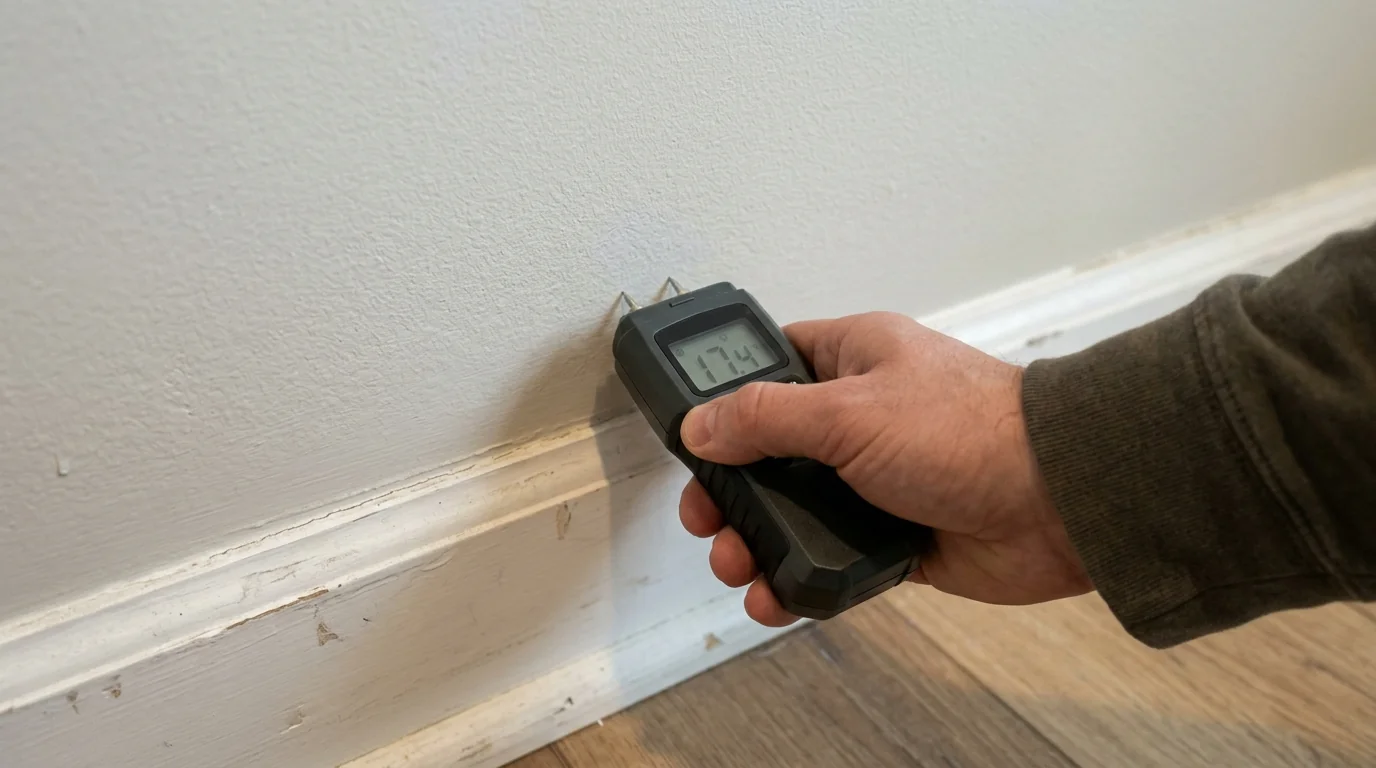
Most calls start with a clue, not a patch of mold: a smell in one closet, a ceiling stain that came back after painting, a room that stays damp. An inspection turns that clue into a map. We read drywall, plaster, trim and subfloor with pin and pinless meters, scan for the cool patches wet material leaves, and check the usual sources, from bathroom risers and window heads to the apartment above.
You get photos, readings, the likely source and a plain next step. Sometimes that is drying and watching. Sometimes it is air and surface sampling before anyone cuts, and sometimes it is removal under containment.
What the visit covers
- Moisture readings on walls, ceilings, trim and floors
- A thermal scan for wet areas behind finished surfaces
- The likely sources: risers, fixtures, windows, roof or the unit above
- Cavities you can reach: closets, sink bases, around AC and PTAC units
- Room humidity, and common areas when they matter
- Photos of everything we find, labeled by location
- A written summary of readings, source and next step
- A straight answer on whether sampling is worth paying for
Hidden mold behind walls
The usual sign is a smell with no visible growth, or paint bubbling along a baseboard. Behind the wall, mold grows on the back of the drywall paper and on the studs, fed by a slow leak or by condensation on a cold outside wall. We find it from the room side first: meter readings along the wall, thermal images, and a check of what runs through that cavity. When readings point to growth, a small opening at an outlet box confirms it without tearing the room apart.
Pre-purchase and pre-lease checks
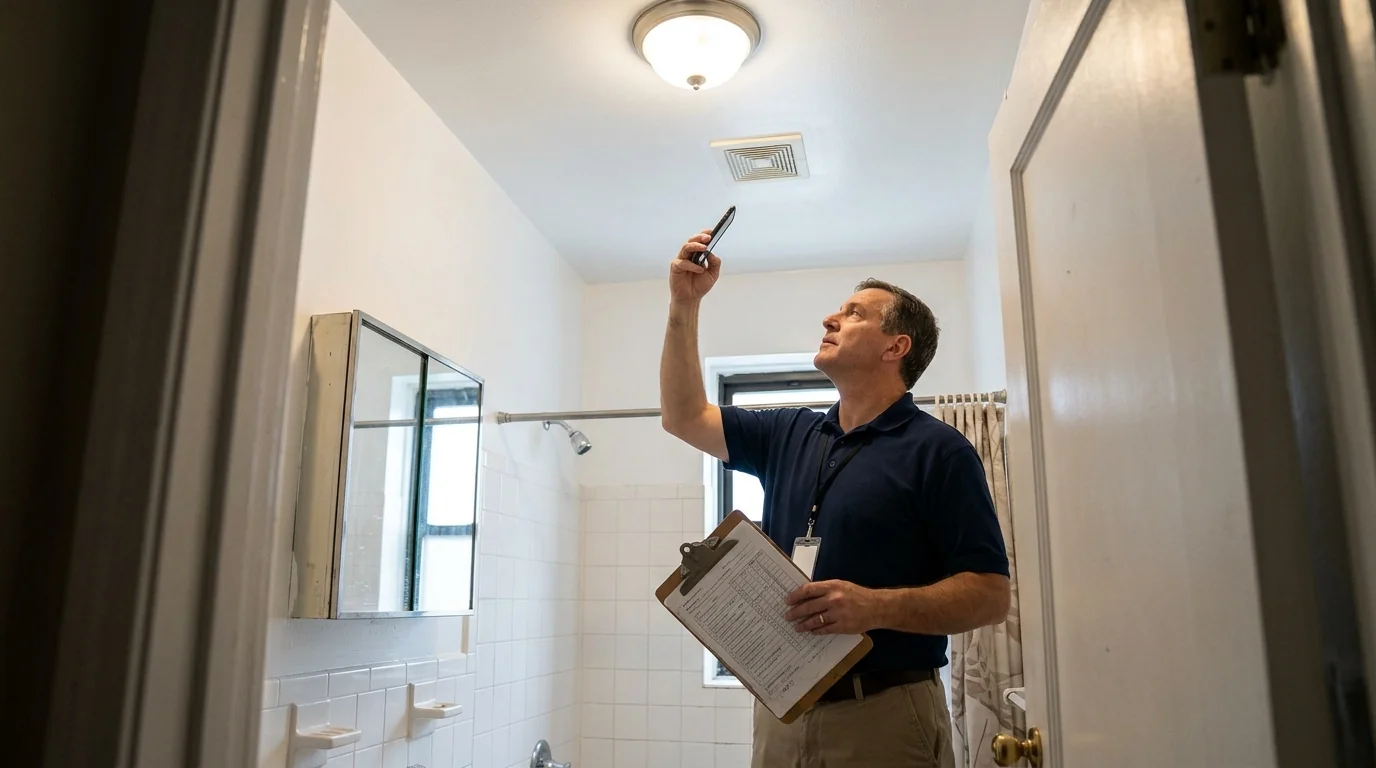
Buying a co-op, condo or house, or signing for a garden apartment, is the cheapest moment to find a moisture problem. A general home inspection notes stains; it rarely maps moisture. We look where sellers and landlords repaint: bathroom ceilings, window returns, closets on outside walls, the basement and the ceiling under any bathroom above. You leave with readings and photos to take back to the seller, the board or your attorney. Purchase deadlines are tight, so tell us yours when you call.
Moisture mapping and thermal imaging
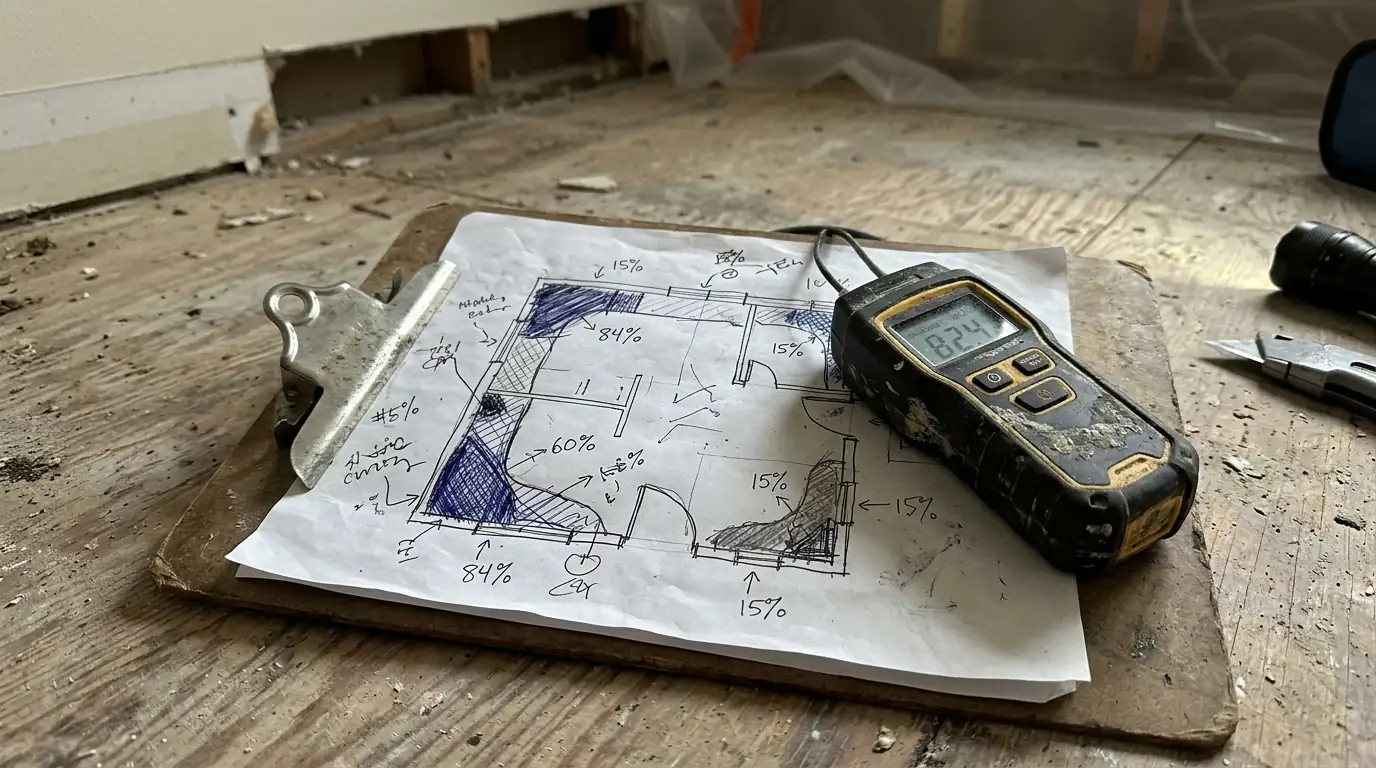
A thermal camera does not see mold. It sees temperature, and wet material usually reads cooler than dry, so it tells us where to put the meter. The meter then confirms whether a cool patch is water, a cold spot on an outside wall, or nothing. We mark the wet boundary on a sketch of the room, and that line decides how much drywall or flooring comes out later if removal follows. On bigger jobs the same map becomes the drying plan.
New York conditions
Why inspections here start at the source
More than half of the housing units in New York City are in buildings put up before 1947, so the water behind a stain often comes from shared plumbing, a roof several floors up or a bathroom next door rather than anything in your unit. That is why we trace the source before recommending work. Size matters too: in buildings with 10 or more units, mold over 10 square feet has to be assessed and removed by two independent companies, and an inspection tells you early which side of that line you are on.
Inspection alone or with sampling
| Option | Inspection only | Inspection with sampling |
|---|---|---|
| What it answers | Where the water is, how far it spread, what needs to happen | All of that, plus what the lab finds in the air or on surfaces |
| Right for | Visible growth with a known leak | A smell with nothing visible, health concerns, or a dispute with a landlord or seller |
| National cost | $303 to $1,045 for the inspection | Adds lab fees; testing runs $250 to $350 |
| You receive | Readings, photos, source and next step | The same, plus a lab report we explain |
How an inspection visit runs
The order is the same for a studio or a whole house.
We ask what you have noticed
Smell, stain, leak history, and recent work above or below.
We read the rooms
Meters on walls, ceilings, trim and floors, plus humidity in each room.
We scan for hidden moisture
Thermal images show cool patches; the meter confirms which ones are wet.
We check the likely sources
Risers, fixtures, windows, roof drains and AC units.
We sample only when it helps
Air or surface samples go to an outside lab when they answer a real question.
We explain before we leave
Readings, photos, the likely source and a clear next step, in writing.
Call (332) 234-9326A person answers, day or night.
What a mold inspection costs
National cost guides put a professional mold inspection at $303 to $1,045, averaging $671, with lab testing at $250 to $350 when it is added. Treat those as planning figures, not our price.
Size of the space
A studio and a four-story house are different visits.
Access
Locked neighboring units, drop ceilings and packed closets add time.
Number of samples
Each sample adds lab cost, so we take only the ones that matter.
Building type
Shared risers can mean checking several floors, not just yours.
Paperwork
A letter for a board, landlord or insurer takes more documentation.
Questions about mold inspection
National figures run $303 to $1,045. Home size, rooms checked and lab samples move the number.
If you can see the growth and know the source, usually an inspection. Sampling helps when you smell mold but cannot find it.
We can usually find the moisture feeding it, and a small opening at an outlet confirms growth when needed.
On many jobs, yes. Larger buildings with over 10 square feet of mold need separate companies for assessment and removal, and we explain which applies at the first visit.
No. Paint hides the stain and traps moisture. Leave it visible, keep the room ventilated and take photos.
Yes. Give us your contract deadline when you call.
Related jobs we handle
Hidden Leak Detection
Meters, thermal imaging and a methodical search to find water before it becomes mold.
Mold Testing
Air and surface samples read by an outside lab, explained in plain words.
Indoor Air Quality Testing
Humidity logging and particle counts for rooms that feel stuffy or smell.
Ceiling Mold Removal
Stains from the unit above or the roof, opened, dried and rebuilt.
Want to know what is behind the smell?
Call now. We answer day and night and help you decide whether you need an inspection, testing or neither.
Answered 24 hours a day, 7 days a week