Quick answer
Commercial mold remediation in New York City is removal done around a working building: the affected area is sealed and kept under negative air, the work runs after hours or on weekends where tenants need it, and owners get photos, readings and a written scope. Most jobs trace back to a roof, riser, condensate or HVAC leak that has to be fixed first.
Updated September 2026
How commercial jobs differ from homes
In an office or store, the mold is usually above a drop ceiling, behind a cabinet run, around an AC unit or in a back room nobody visits. The source is almost always a building system: a roof drain, a riser, a sprinkler line, or an air handler whose drain pan overflows. We find it first, then plan the removal around the people who still need to use the space.
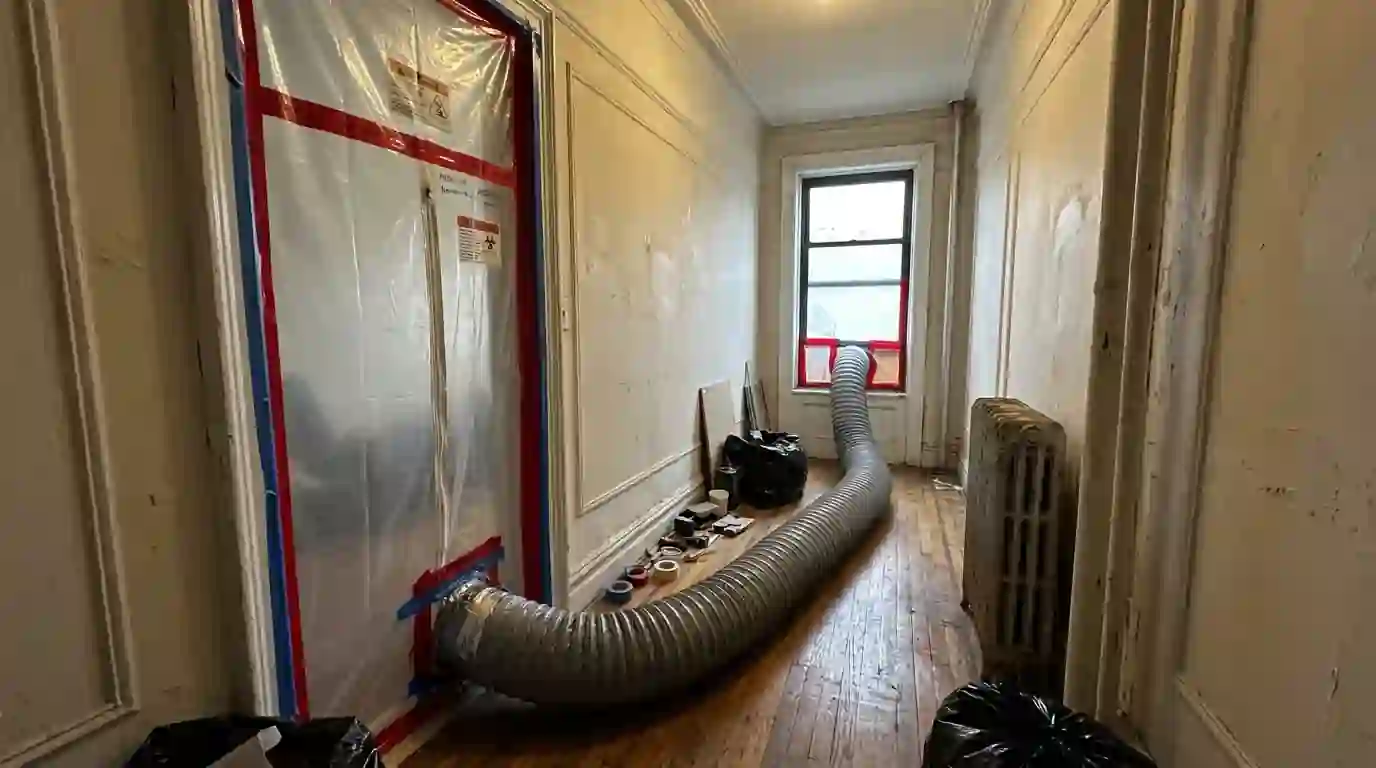
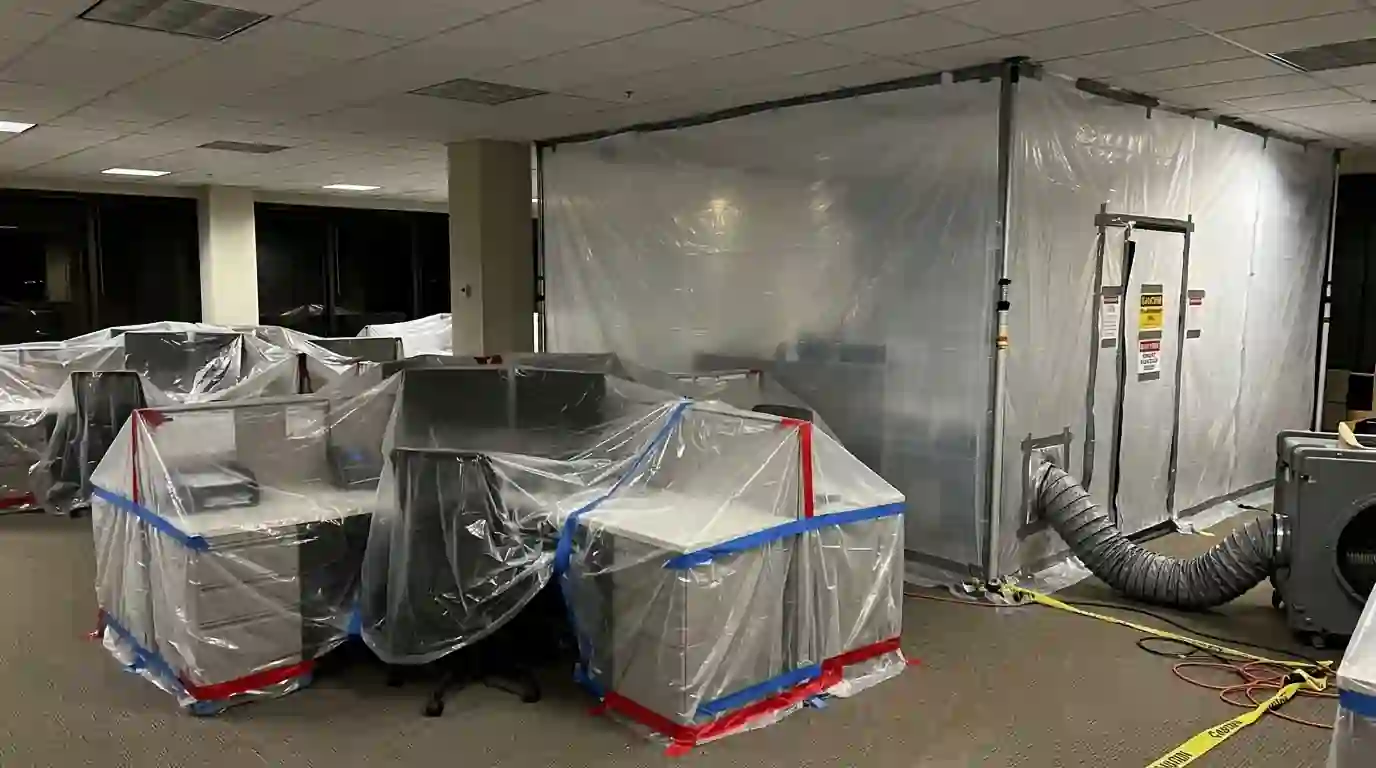
That means sealed work zones with zipper doors, negative air exhausted away from occupied areas, quiet work during business hours and louder work at night. It also means paperwork: photos, moisture readings and a written scope the owner, the manager and the insurer can all use. Where the ducts are involved, we clean them as part of the job through our HVAC mold work.
Offices and suites
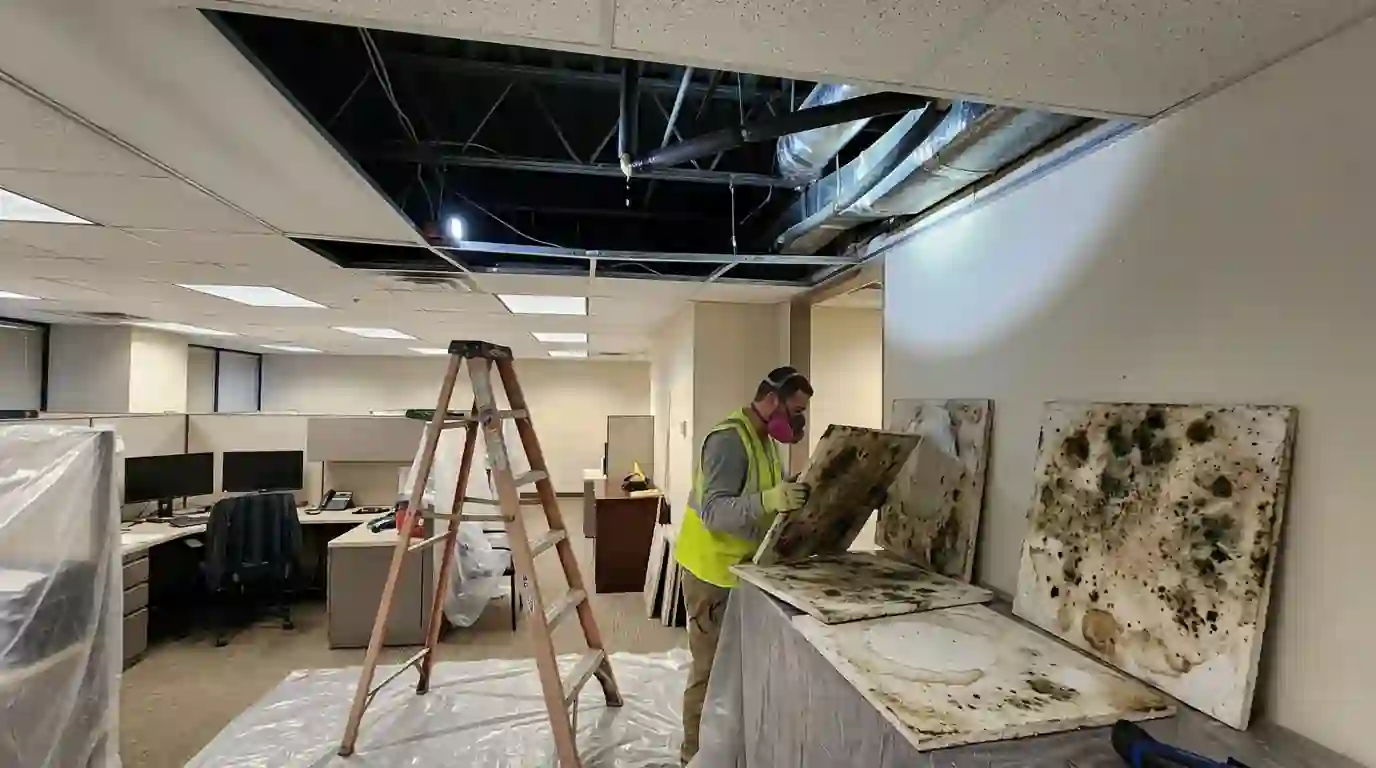
Office mold hides above ceiling tiles, inside window returns on the building perimeter, and behind kitchenette cabinets where a dishwasher or coffee machine line leaks slowly. We work with building management on access, freight elevator bookings and after-hours entry, seal the affected suite or zone, and remove ceiling tiles, drywall and insulation that grew. Workstations nearby are covered or moved. The area is cleaned, dried and documented before the ceiling goes back, so the next tenant does not inherit the problem.
Retail and storefronts
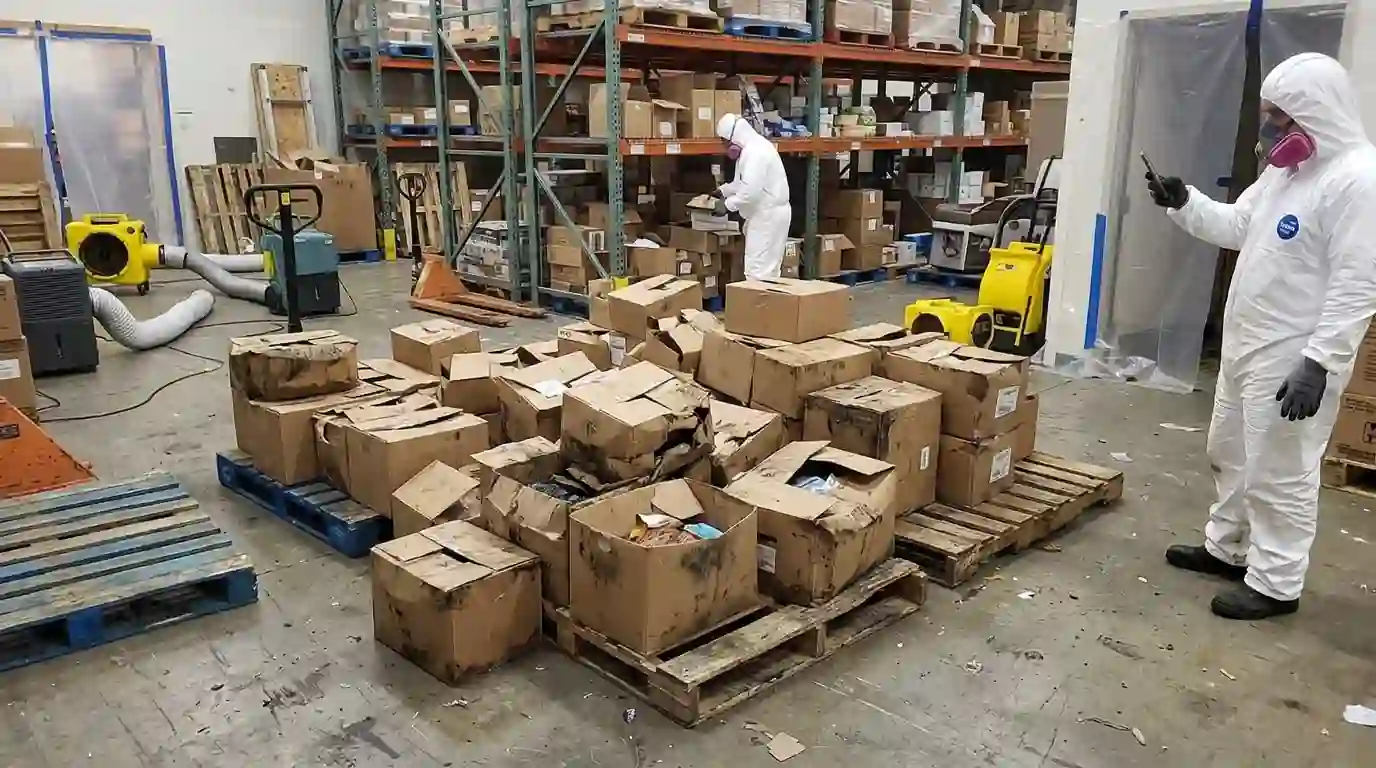
Stores tend to have mold in the stockroom, under display fixtures near the entry where rain and snow track in, and in basements used for storage. Closing the sales floor costs money, so we sequence the job: stockroom and basement work during open hours behind containment, sales floor work after closing. Damaged stock and packaging are separated and photographed before disposal for the insurance claim. We reset fixtures where the work allows, and leave readings showing the area is dry.
Schools, gyms and houses of worship
Buildings full of people, often children, need the work scheduled around them and the air kept clean where they are. Gym locker rooms and showers, basement classrooms, and the lower halls of older churches and community buildings are the usual places. We plan the work for closed days or evenings, keep containment and negative air in place until clearance, and give the administrator a written description of what was done and where, for parents, congregations or boards who ask what happened in their building.
What drives the cost of commercial work
We did not find a sourced national range for commercial mold remediation; residential jobs run $1,223 to $3,757 on national figures, and commercial scope varies far more. We price after walking the space.
Area affected
One ceiling bay or a whole suite.
Work hours
Night and weekend shifts change the crew plan.
Building systems
HVAC or duct cleaning adds scope.
Access
Freight elevators, loading docks and security add time.
Documentation
Scopes, photo logs and clearance paperwork.
New York conditions
Why summer brings commercial calls
July nights in Central Park average near 70 degrees, so buildings run their air conditioning hard through the summer, and that is when condensate problems show up. A clogged drain line or an overflowing pan above a ceiling can drip onto tiles for weeks before anyone notices a stain, and suites that shut the cooling off over a long weekend come back to damp, still air. In New York City offices, a brown ring on a ceiling tile in late summer is often the first sign.
How a commercial job runs
Planned with management before anything starts.
We walk it with management
Source, scope, access and when the space is in use.
We fix or flag the source
Roof, riser, sprinkler or condensate, with the right trade.
We set containment
Sealed zones and negative air exhausted away from occupants.
We remove and clean
Tiles, board, insulation and contents that grew, then HEPA cleaning.
We dry and verify
Readings until the area is dry, and clearance where required.
We hand over the file
Photos, readings and a written scope for owners and insurers.
Call (332) 234-9326A person answers, day or night.
How long a commercial job takes
The removal itself is rarely the long part. Access, scheduling around business hours, and drying time decide the calendar, and a job split into nightly shifts runs longer in days but keeps the space open. We agree the schedule with management before containment goes up, and we flag any part of the work that needs the area closed during business hours.
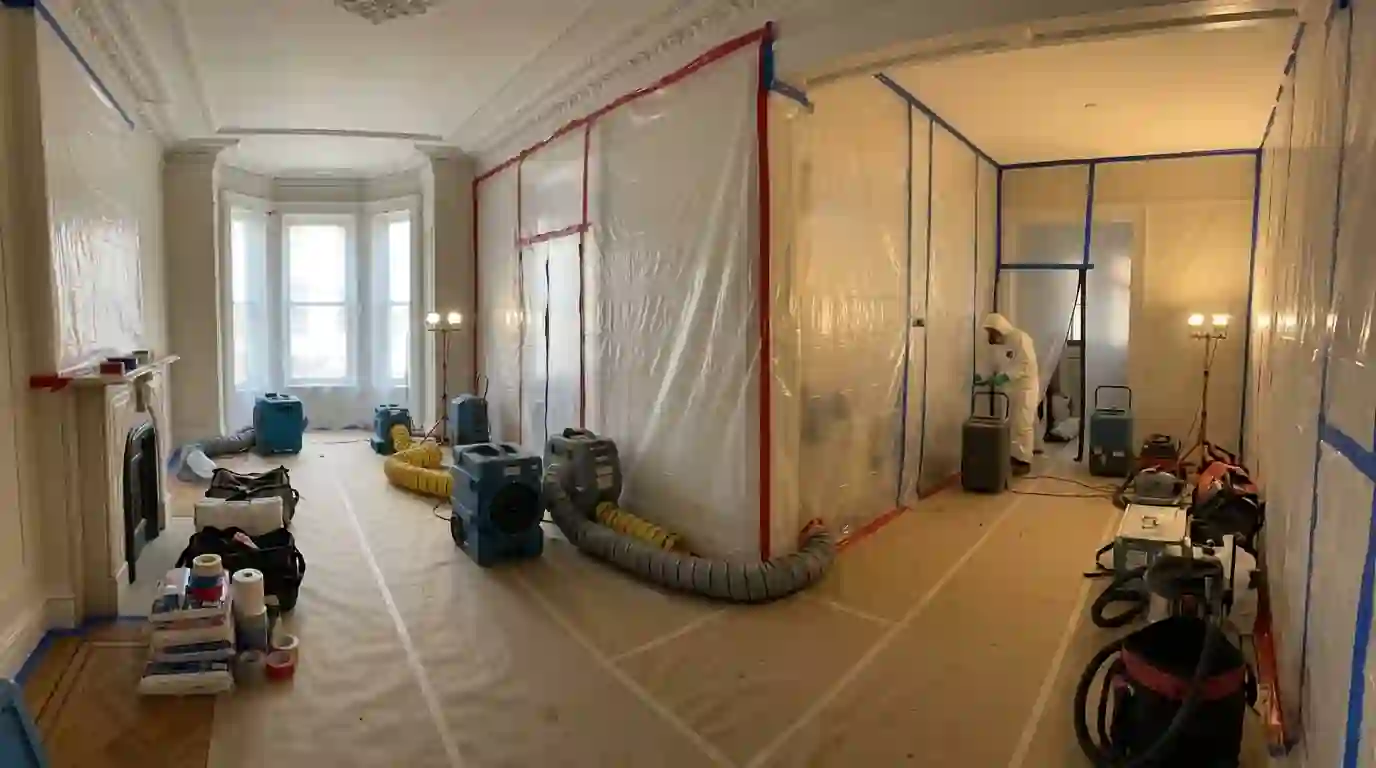
Containment lets the rest of the building stay open while one zone is sealed off and cleaned.
Talk to us nowQuestions about commercial mold remediation
Usually not. We contain the affected zone and schedule loud work outside business hours.
Yes. We answer 24/7 and schedule around the building.
We find it and either fix it or bring in the right trade before removal.
Yes, when the system is involved. See HVAC and duct mold removal.
Photos, moisture readings and a written description of the work.
Yes. See restaurant mold remediation for how we work around service.
Related jobs we handle
Restaurant Mold Remediation
Walk-ins, basement prep rooms and dish areas cleaned between services.
Mold Remediation
Full removal inside sealed containment, from one room to a whole floor.
Black Mold Removal
Dark growth on long-wet drywall paper, cut out and bagged inside containment.
HPD Mold Violation Remediation
Tracing the leak, removing the mold and documenting the work for the correction.
Mold showing up in your building?
Call now. We answer 24/7 and plan the work around your tenants and staff.
Answered 24 hours a day, 7 days a week