Quick answer
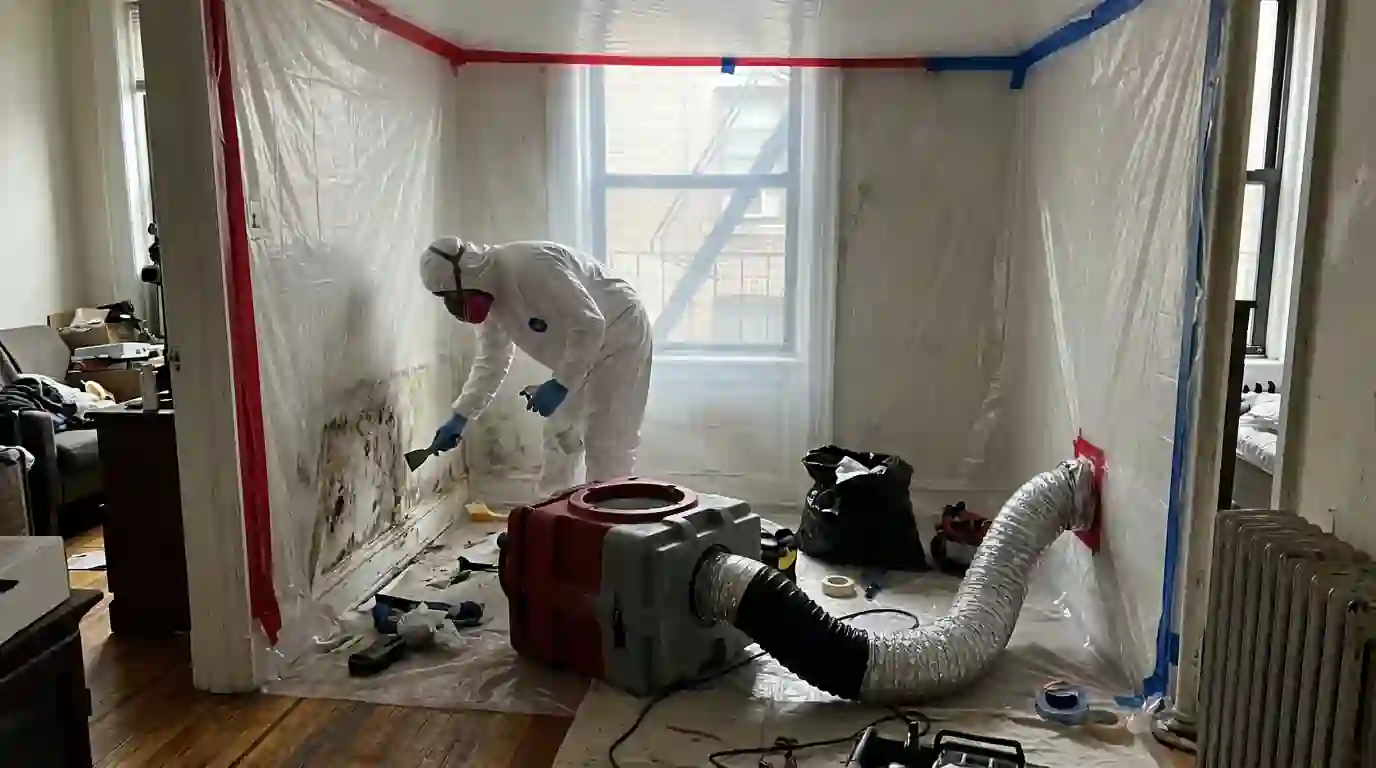
Mold removal in Nassau County often starts under the floor: in slab-on-grade houses, leaks from buried heating pipes and moisture from below soak carpet and wood floors, while South Shore homes carry storm flooding in their walls. We read the slab and walls, remove what grew and dry to readings; national guides put a typical remediation at $1,223 to $3,757.
Updated September 2026
Local conditions
What drives mold in Nassau County homes
Levittown was built as 17,447 slab-on-grade houses between 1947 and 1951, with no vapor barrier under the slab and copper radiant heating pipes set in the concrete. Those pipes corroded over the decades, and leaks often soaked into the ground unnoticed, wetting the floor finishes above from below.
The South Shore faces a different problem. Freeport reported 3,500 homes flooded by Sandy, with the surge coming in through Jones Inlet and Reynolds Channel, and water that stood in basements and first floors can still be in walls that were patched rather than opened.
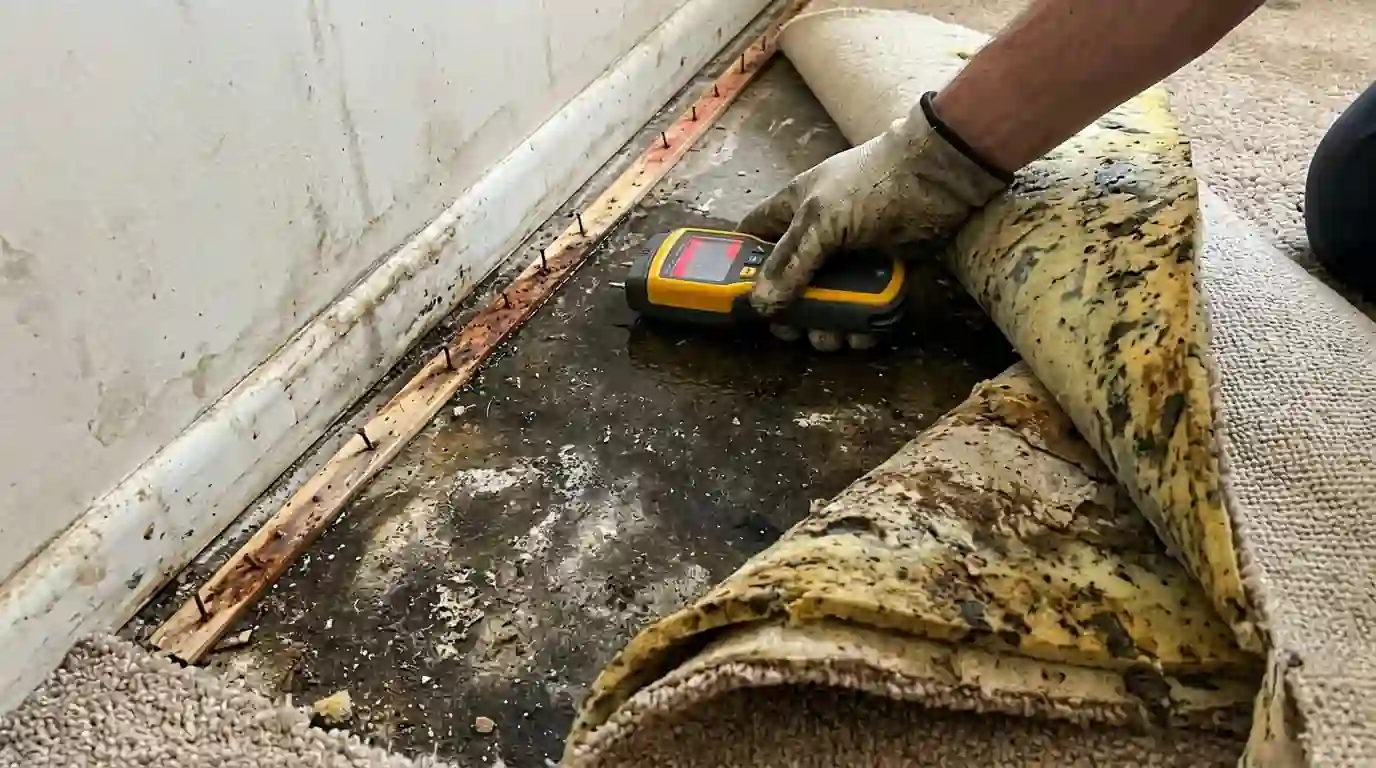
Between the two, Nassau jobs often mean reading the slab as well as the walls, and pulling back flooring to see what the concrete underneath is doing.
Jobs we do most in Nassau County
Nassau calls usually involve a house, a floor and a water source that is hard to see.
Carpet and Floor Mold Removal
Carpet, pad and wood floors over slabs that draw moisture from below.
Water Damage Restoration
Radiant and supply line leaks traced and dried before mold starts.
Flooded Basement Cleanup
Pump-out and tear-out after storm and tide water.
Basement Mold Removal
Growth behind finished basement walls that flooded before.
Attic Mold Removal
Roof deck staining from winter condensation in single-family houses.
Dehumidifier Installation
Drained units that keep basements and crawl spaces dry.
Working in Nassau County houses
On a slab house we read the floor in a grid before pulling anything up, because moisture from a buried pipe spreads in a pattern the meter can follow back to the leak. The pipe repair is a plumber's job; drying and removing what grew is ours.
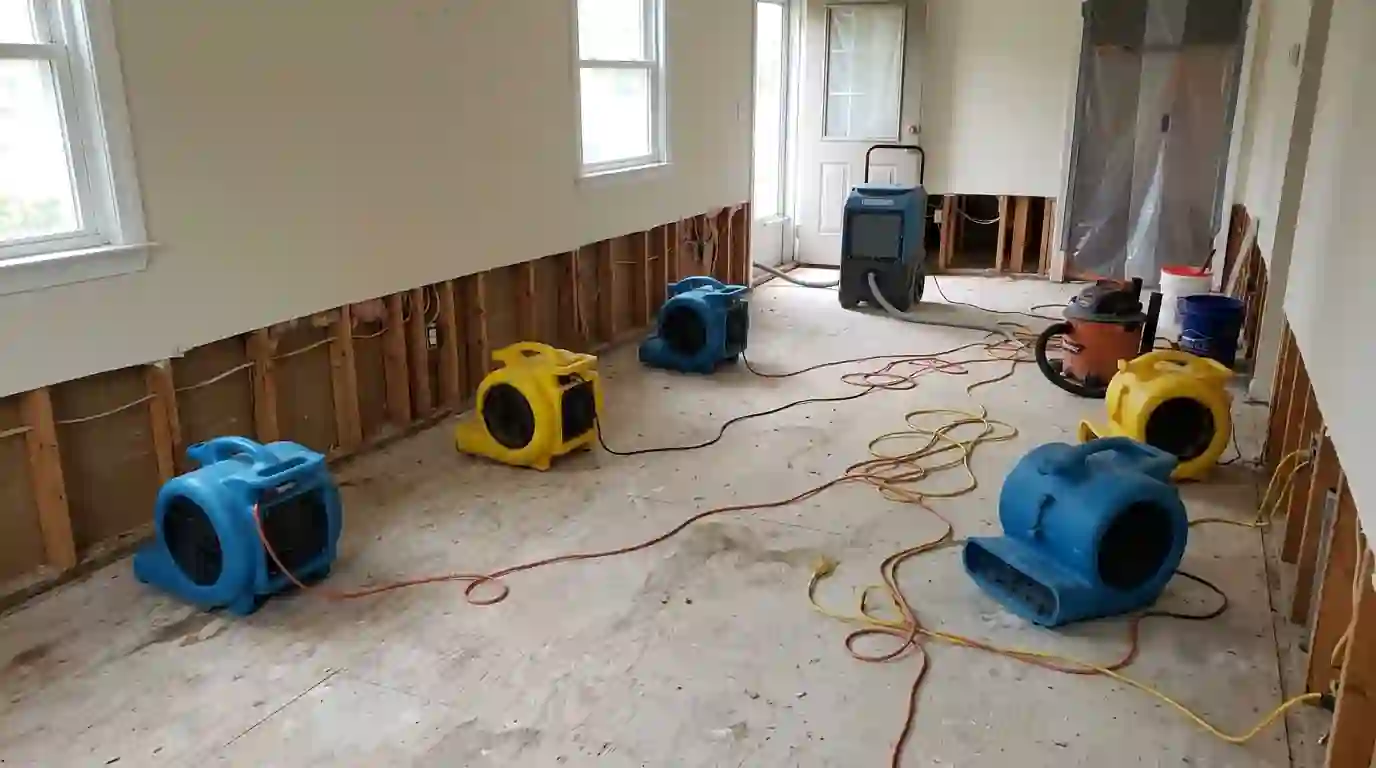
In South Shore homes that flooded, we check the bottom of walls and the framing behind finishes even when paint looks fine. A small inspection opening tells us whether an old flood is still there.
Nearby areas we also cover
Questions from Nassau County
Yes. Water from a buried pipe wets the flooring from below, and carpet pad or wood can grow mold before you see anything.
Yes, from the city line to the county border, answered 24/7.
If the walls were never opened and dried, it is worth a moisture reading and a small opening.
That is plumbing work. We find where it is wet, dry it and remove what grew.