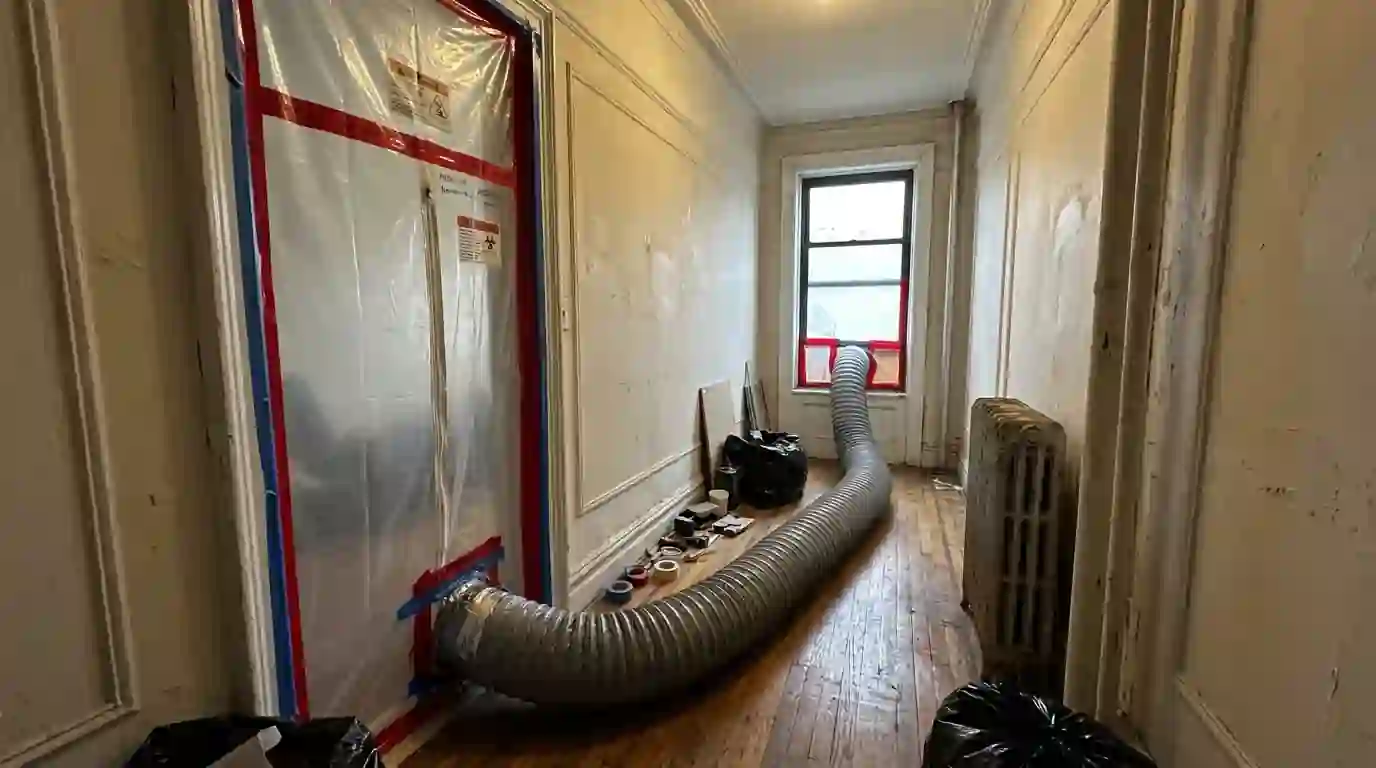
Quick answer
Black mold in New York City almost always means drywall, ceiling board or wood that has been wet for weeks, and it is removed by cutting out the affected material inside containment rather than by spraying it. National guides put a typical remediation at $1,223 to $3,757, rising with how much wall has to come out.
Updated September 2026
What black mold tells you about the wall
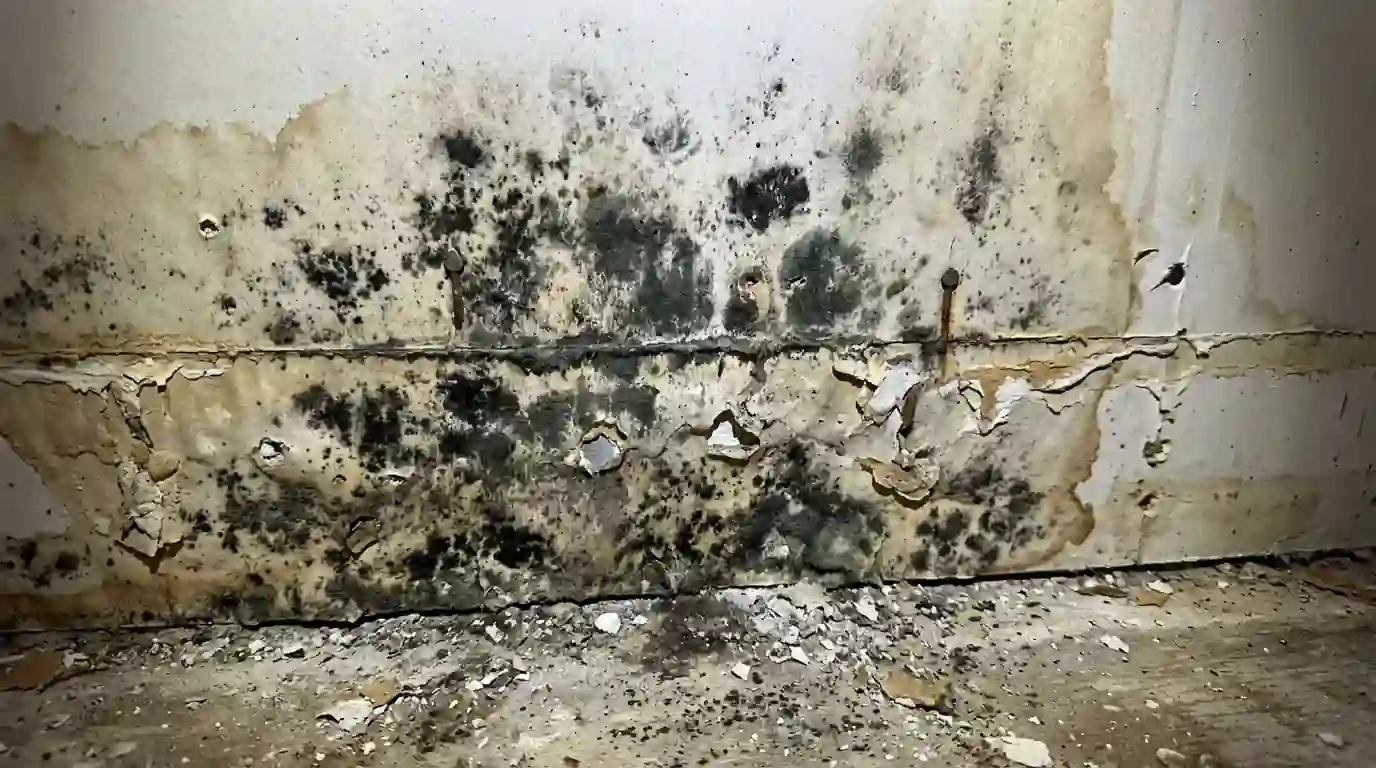
The dark, slimy or sooty growth people call black mold favors materials that hold water for a long time, especially the paper on drywall and ceiling board. That makes it a signal: the leak behind it has been running, or the wall has stayed wet since a flood. Some dark growth is a different, more common mold, and a lab can tell them apart; either way, growth on a porous material comes out.
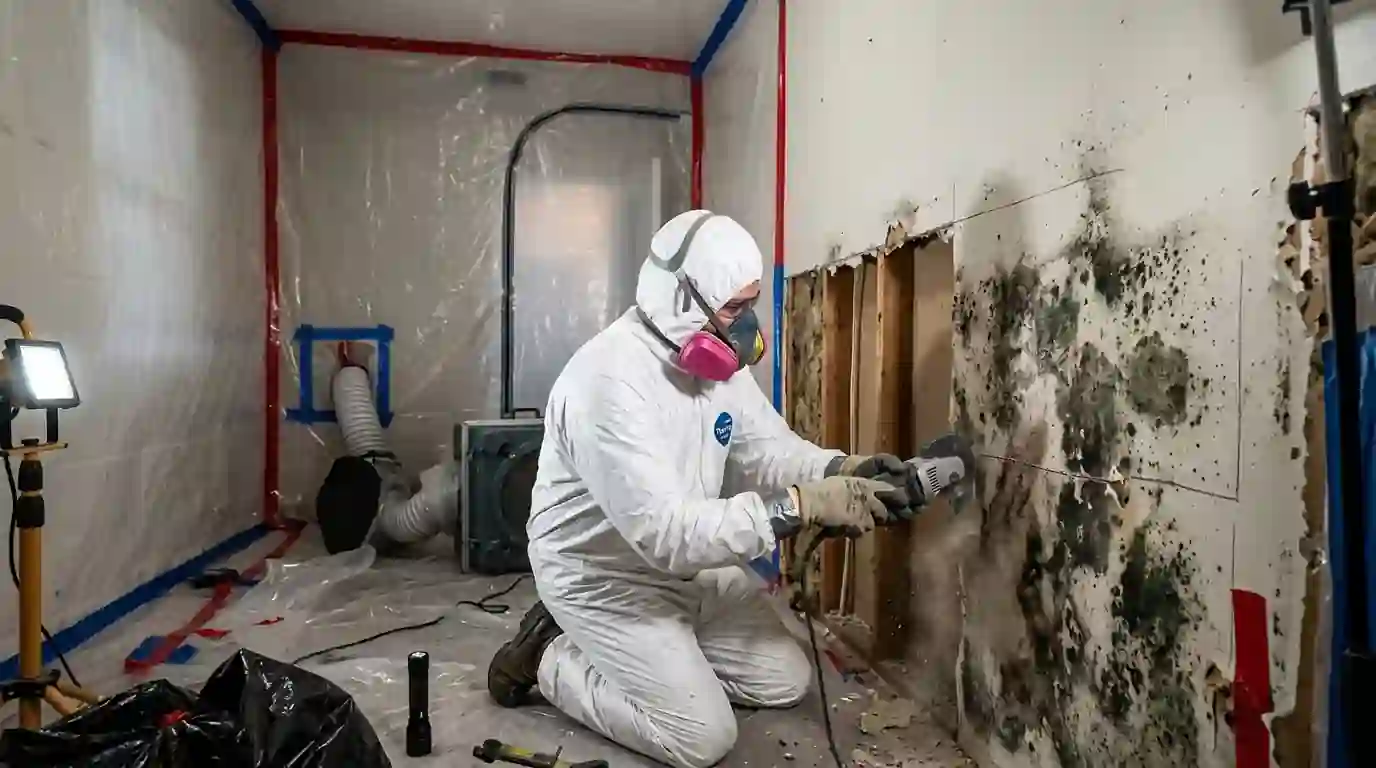
We treat every dark growth job the same careful way: containment and negative air before any cutting, protective gear, the material bagged inside the sealed area, the framing cleaned, and the wall dried to readings before it is rebuilt. If you want to know the species first, mold testing answers that.
Black mold or everyday mold on the surface
| Option | Black mold on wet drywall | Surface mold on tile or glass |
|---|---|---|
| Where it grows | Paper-faced board, wood and ceiling tiles that stayed wet | Grout, caulk, window glass and painted trim |
| What it signals | A long-running leak or flood water in the wall | Condensation and poor ventilation |
| How it is handled | Material cut out inside containment | Cleaned with detergent, then the moisture managed |
| Typical scope | Wall or ceiling opening plus rebuild | Cleaning and ventilation fixes |
Black mold on drywall paper
Drywall paper is cellulose, and cellulose that stays wet is exactly what black mold grows on. When it shows on the face of a wall, the back of the board is usually worse, and the growth has often reached the studs. Scrubbing the face or painting over it leaves the growth in the wall. We cut the board out past the edge of the growth and the wet readings, bag it inside containment, clean and dry the framing, and only then close the wall with new board.
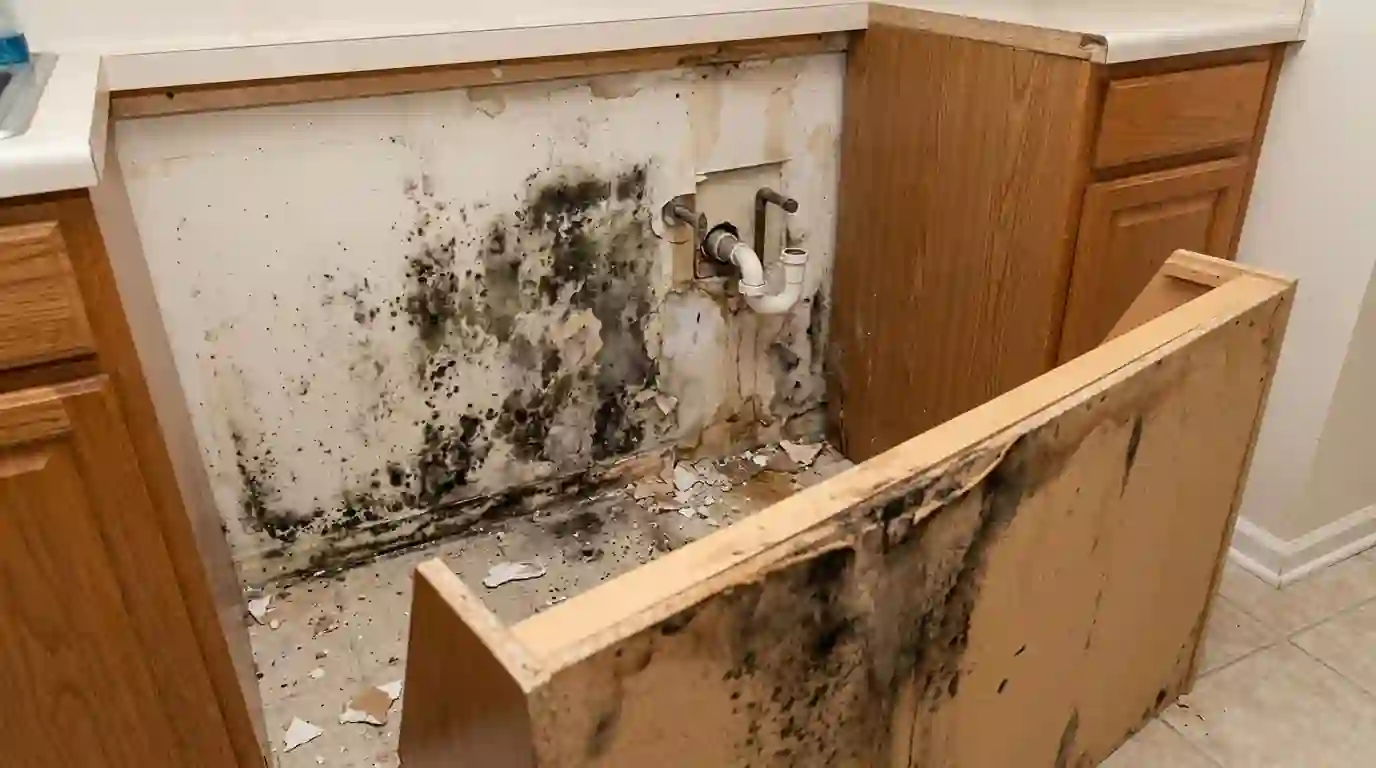
Growth behind baseboards and cabinets
Baseboards and cabinet backs hide the lowest part of the wall, which is where water collects after a leak or a flood. When we pull a baseboard and find black growth behind it, the bottom of the drywall and the bottom plate are usually involved too. Cabinets come off the wall so we can see the full extent, the affected board and any soaked cabinet backs are removed, and the cabinets go back once the wall is dry and rebuilt.
Dark spots on grout and caulk
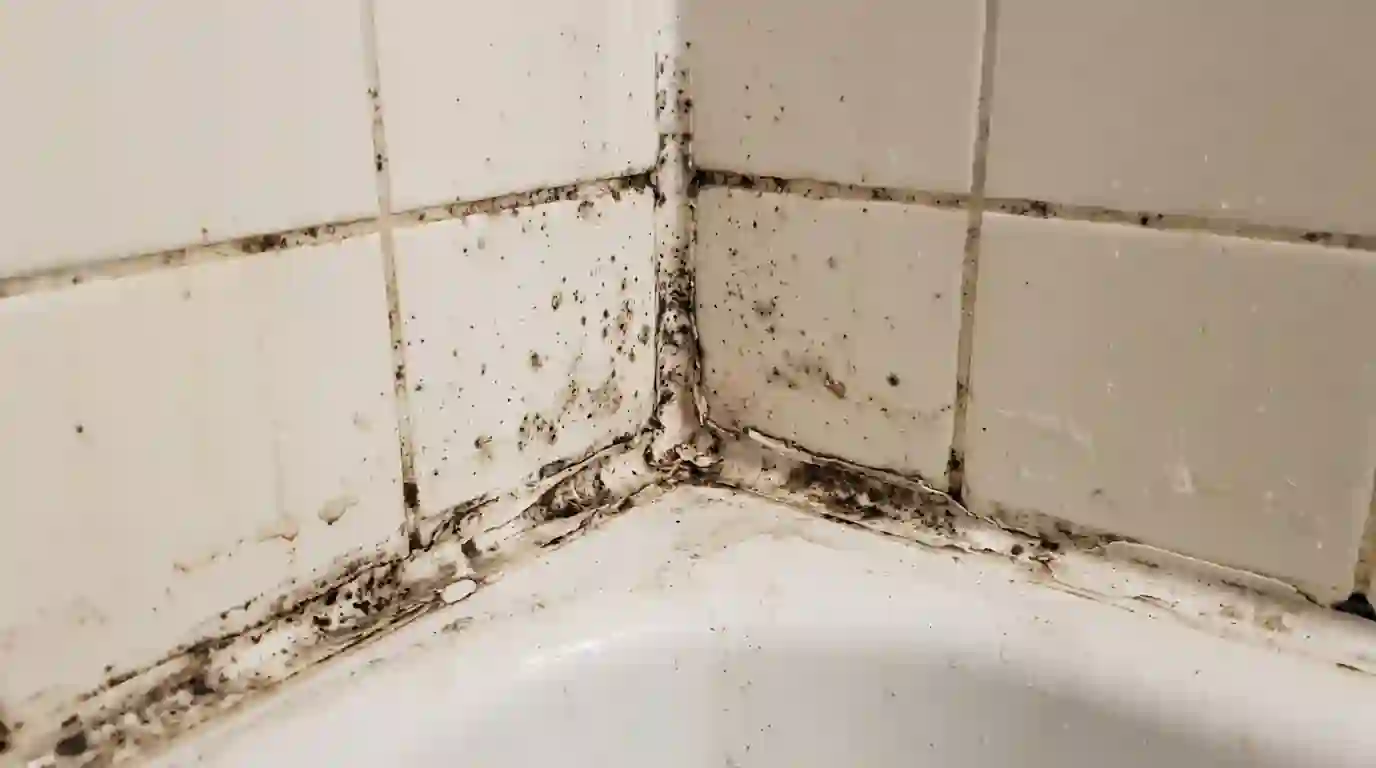
Not every dark spot is a wall problem. Black specks in shower grout and caulk are usually surface growth feeding on soap film and constant moisture, and they clean up or come out with the caulk. The question we answer on site is whether it stops at the surface. If the tile is loose, the grout keeps cracking, or the wall behind reads wet, the growth may be behind the tile too, which turns a cleaning job into a bathroom wall repair.
What black mold removal costs
National guides put a typical mold remediation at $1,223 to $3,757 and drywall mold removal at $1,000 to $20,000. Black mold jobs often involve more material removal because the growth follows long-wet board.
Area of growth
How much board has to come out.
Where it is
Behind cabinets and tile takes more work to reach.
Containment
Bigger rooms and occupied homes need more setup.
Water source
A leak repair may be part of the job.
Rebuild
New board, trim and paint after drying.
Signs of black mold, and where to look
Sooty or slimy dark patches
Dark growth on drywall paper, often at the bottom of a wall or around a stain.
A leak that ran for weeks
Slow drips behind walls and under sinks give it the time it needs.
Behind furniture on outside walls
Cold walls with a bed or dresser against them trap damp air.
Under sinks and behind cabinets
Supply line and drain leaks soak cabinet backs and the wall behind.
A strong earthy smell
Heavy growth has a musty, earthy odor even before you see it.
Ceiling stains below a bathroom
Board that stayed wet from a leak above can grow on its hidden side.
New York conditions
How storms leave black mold in city walls
City sewers are generally built for 1.5 to 1.75 inches of rain an hour, and recent storms have blown past that: 1.94 inches in an hour during Henri, 3.15 during Ida, and 2.5 on September 29, 2023. NOAA now classifies New York City as humid subtropical. When a basement or ground floor takes water in a storm like that and the walls are only wiped down, the drywall stays wet inside, and weeks later black growth shows along the baseboards.
How black mold removal runs
Containment goes up before anything is cut.
We find the water
The leak or flood path behind the growth, with readings.
We seal the room
Plastic walls, covered vents and negative air to outside.
We cut out the material
Board and insulation removed past the growth and wet line.
We clean the framing
HEPA vacuuming, then cleaning or sanding the studs.
We dry it to readings
Dehumidifiers until the framing reads dry.
We close and document
New board, primer, and photos of each step.
Call (332) 234-9326A person answers, day or night.
Questions about black mold removal
All indoor mold growth should be removed. Growth on porous material comes out whatever the species.
No. Bleach does not reach growth inside the board and adds water to it.
Only if you want the species confirmed. The removal method is the same.
Usually, with the work area sealed and under negative air.
Because the growth was in the board and the moisture never stopped.
As soon as you see it. The longer the water runs, the more wall comes out.
Related jobs we handle
Restaurant Mold Remediation
Walk-ins, basement prep rooms and dish areas cleaned between services.
Commercial Mold Remediation
After-hours containment so tenants and customers keep using the building.
Apartment Mold Remediation
Occupied-building work with hallway protection and paperwork for the board.
Mold Remediation
Full removal inside sealed containment, from one room to a whole floor.
Found black mold on a wall?
Call now. We answer 24/7 and start by finding the water behind it.
Answered 24 hours a day, 7 days a week