Quick answer
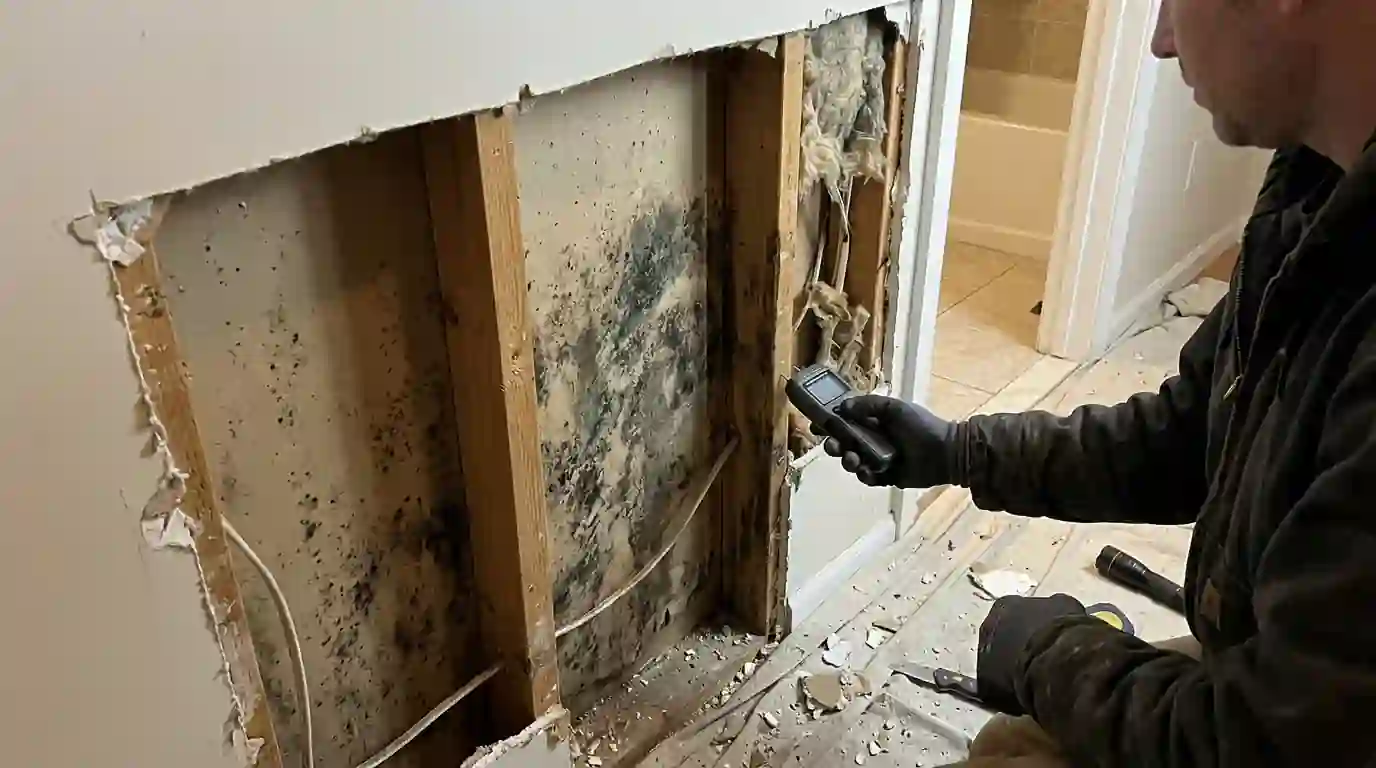
Window condensation mold in New York City grows on sills, frames and the cold wall around them from December through March, when warm, moist indoor air meets glass and exterior walls near freezing. Most of it is surface growth that cleans up, but it returns every winter unless the room humidity comes down or the cold surface warms up.
Updated September 2026
Why the same window grows mold every winter
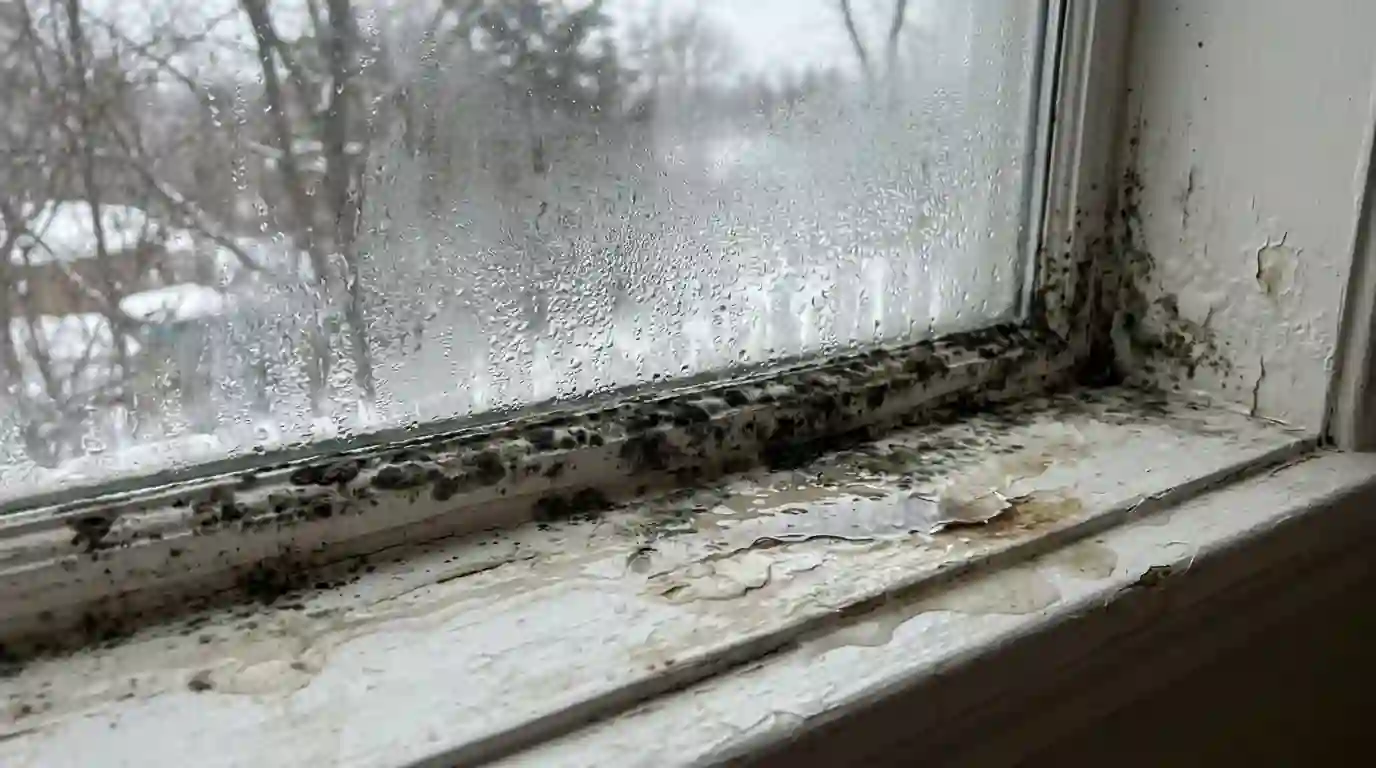
Glass and old frames are the coldest surfaces in a heated room. When warm air carrying moisture from showers, cooking, drying laundry and steam radiators touches them, it condenses into water that runs down onto the sill. Painted wood, caulk and plaster that stay wet for hours a day grow mold, and closets and corners on outside walls do the same because air barely moves there.
We clean the growth, replace caulk and glazing putty that has grown mold, and check the plaster or drywall under the window with a meter. When the wall reads wet below the sill, water may be getting in from outside too, and that is a wall repair rather than a cleaning. Then we look at why the room is so damp and what will bring it down.
Window sills and frames
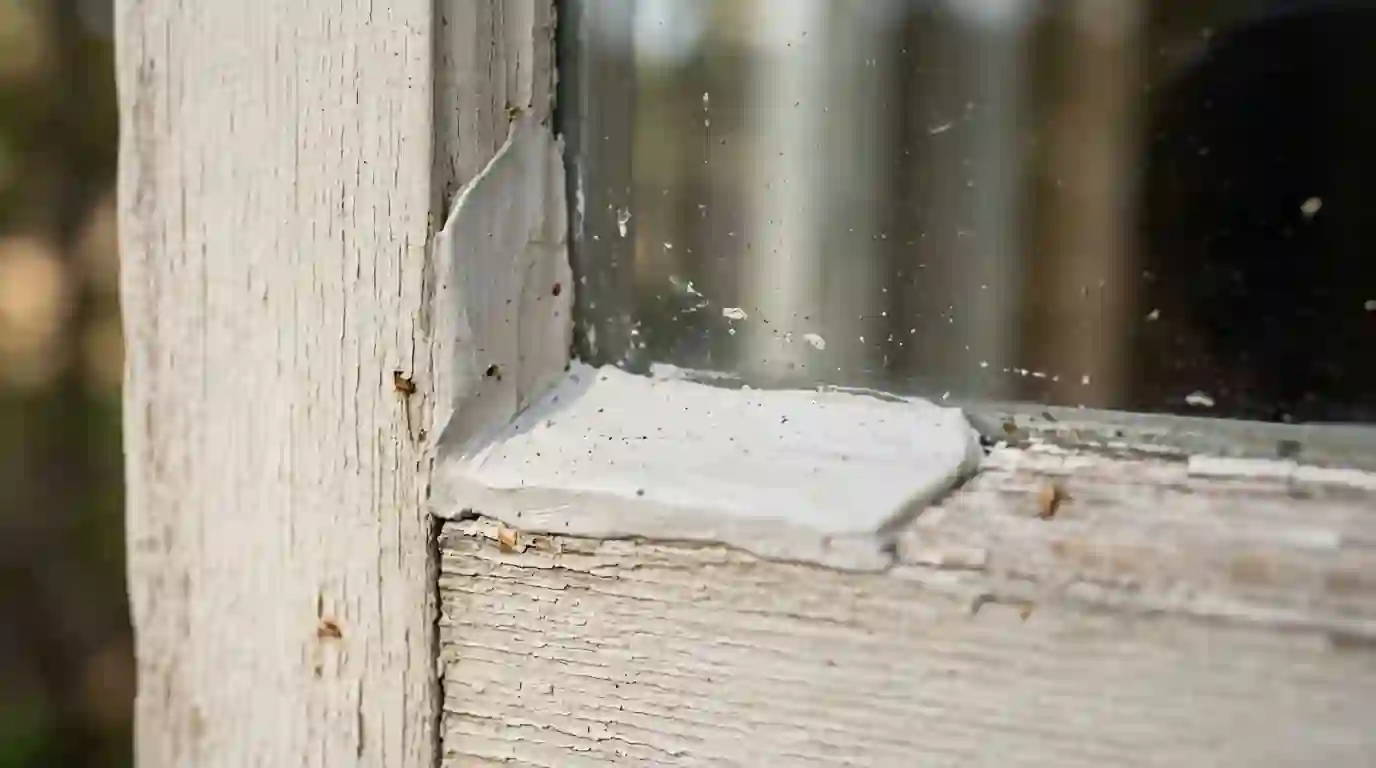
Sills and frames take the water that runs off the glass, and old painted wood, caulk and glazing putty soak it up. We clean the painted surfaces, remove caulk and putty that has grown mold rather than trying to scrub it, let the joint dry, and seal it again. Wood that has softened is flagged for repair. If the sill has pulled away from the wall, we seal that gap too, because condensation running into it wets the wall below where you cannot see.
Walls behind radiators
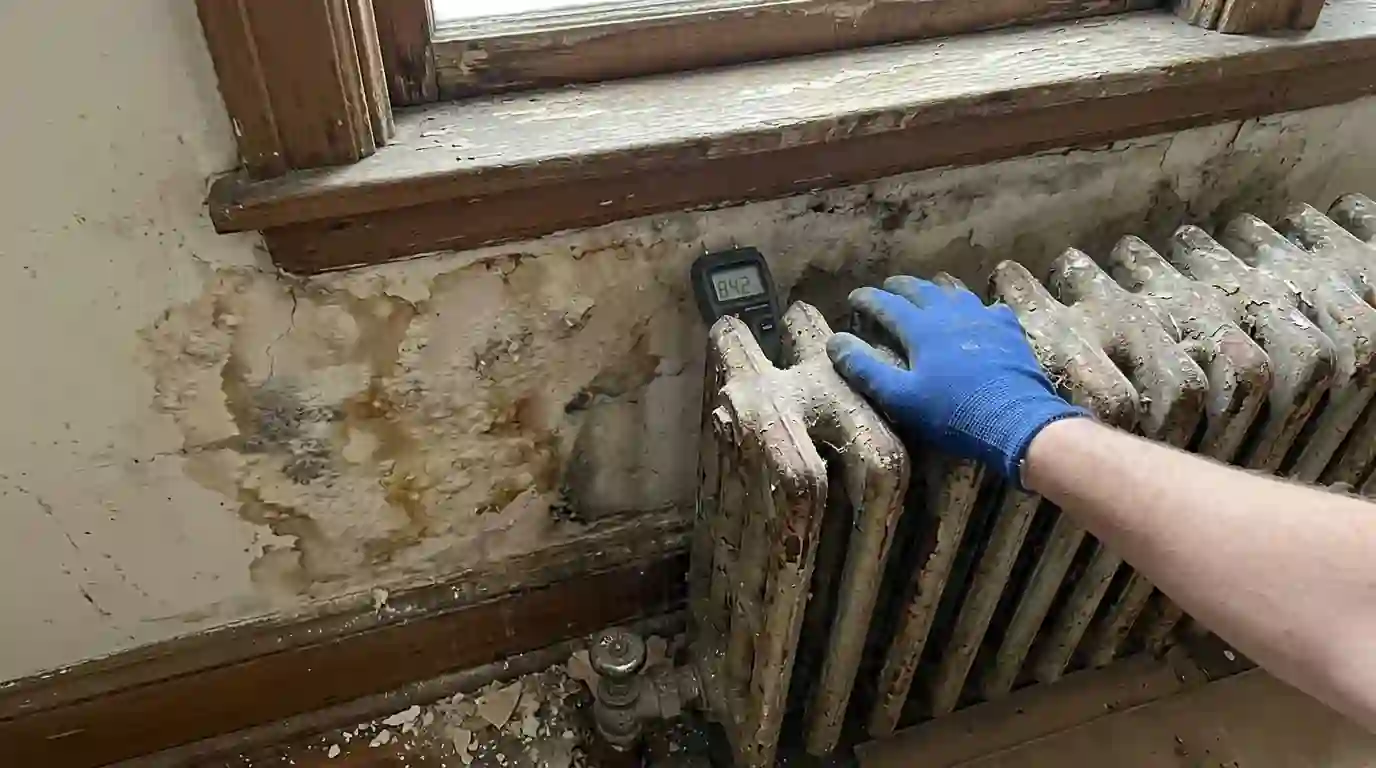
Radiators usually sit under windows on the outside wall. The wall behind them is hard to reach, rarely painted well, and gets both condensation running down from the window and moisture from steam vents on the radiator. We check the plaster behind the radiator with a meter, clean surface growth where we can reach it, and flag a leaking steam valve or air vent, which can put a surprising amount of water into the room over a winter and is a quick fix for the super.
Closets on exterior walls
A closed closet on an outside wall is one of the coldest, stillest spaces in an apartment, and clothes packed against the back wall trap moisture. The result is gray or black growth on the back wall and on the clothes and bags touching it. We clean the wall, check it with a meter, and suggest simple changes: leaving space behind the clothes, keeping the door open part of the day, and moving shoes and bags off the floor. Affected belongings go to contents cleaning.
What window mold removal costs
We did not find a sourced national range for window condensation mold on its own. For context, a typical mold remediation runs $1,223 to $3,757 nationally, and most window jobs are much smaller in scope unless the wall below is involved.
Number of windows
One bedroom window or a whole apartment.
Caulk and putty
Removing and resealing adds time per window.
Wall below
Wet plaster under the sill turns into a wall repair.
Closets and corners
Other cold spots cleaned at the same visit.
Moisture fixes
Fans, vents or a dehumidifier, if needed.
Signs condensation is feeding mold
Water on the glass in the morning
Streams of water on the inside of the glass mean the room air is carrying too much moisture.
Black lines on caulk and putty
Growth follows the joint where water sits longest.
Peeling paint under the sill
Water running off the sill soaks the wall below.
Spots behind furniture
Beds and dressers against outside walls trap cold, damp air.
A musty closet on an outside wall
Closed closets on exterior walls stay cold and damp.
Radiator steam and a sealed room
Steam heat and windows kept shut raise humidity fast.
New York conditions
What January does to city windows
January nights in Central Park average in the upper 20s, cold enough to chill single-pane glass and older window frames well below the temperature of the room behind them. Inside a steam-heated apartment, where radiators run hot and windows stay shut, the air carries plenty of moisture from cooking, showers and the radiators themselves. That combination is why New York City window mold shows up in December and fades by April, then comes back the next winter in the same corners.
What you can do, and when to call
What you can safely do
- Wipe condensation off the glass and sill each morning
- Run the kitchen and bath fans and crack a window briefly after showers
- Pull furniture a few inches away from outside walls
Where it needs us
- Growth that has spread into plaster or drywall
- Paint peeling and plaster soft under the sill
- Mold in a closet on an outside wall
- Growth that returns within weeks of cleaning
How a window mold visit runs
Clean, check the wall, then cut the moisture.
We read the room
Humidity, and moisture readings on the sill and wall.
We protect the area
Floors and furniture covered around each window.
We clean the growth
Surfaces cleaned; moldy caulk and putty removed.
We check below the sill
The wall under each window, for water getting inside.
We reseal the joints
New caulk and sealing once the wood is dry.
We cut the moisture
Ventilation, radiator vents and humidity fixes explained.
Call (332) 234-9326A person answers, day or night.
Questions about window condensation mold removal
Because the glass and outside walls are cold enough to condense the moisture in warm room air.
Warmer glass helps a lot, but room humidity still needs to come down.
It is surface growth in most cases, but it should be cleaned and the moisture reduced.
Bleach lightens stains but does not stop the water that brings it back.
They can. A leaking air vent or valve adds moisture to the room all winter.
In most rentals, mold and its causes are the owner's responsibility to correct.
Related jobs we handle
Bathroom Mold Removal
Ceilings over the shower, walls behind tile and floors under the toilet.
Wall Mold Removal
Opening walls in the right place and cutting only what the mold reached.
Attic Mold Removal
Roof sheathing and insulation cleaned or replaced, and the ventilation fixed.
Kitchen Mold Removal
Sink bases, appliance line leaks and the wall behind the backsplash.
Same window grows mold every winter?
Call now. We answer 24/7 and help you stop it coming back.
Answered 24 hours a day, 7 days a week