Quick answer
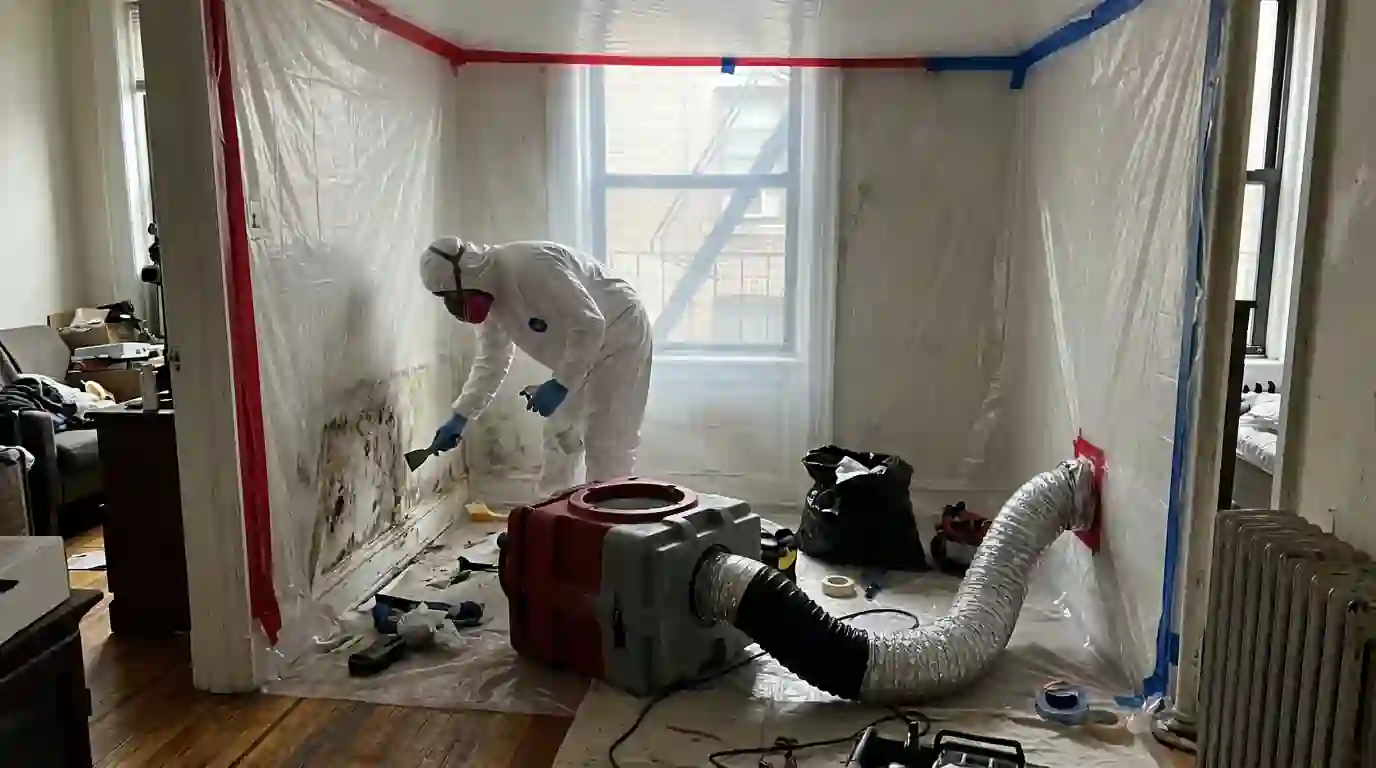
Mold in Astoria usually traces back to one of three things: a slow leak in an older walk-up or two-family house, a basement that took on storm or sewer water, or winter condensation in a small apartment with little ventilation. We find the source with moisture readings, contain the work area, remove what is growing, dry the framing and give the landlord or owner the photos and readings that show it was done.
Updated September 2026
Local conditions
What drives mold in Astoria homes
Astoria is one of the bigger renter neighborhoods in Queens. In 2024 the Astoria and Queensbridge area of Community District 1 had about 177,000 residents and an 18.9 percent homeownership rate. That means the mold is usually found by a tenant, and the fix runs through a landlord or a small owner who lives upstairs.
The building stock is old. More than half of New York City housing units are in buildings from before 1947, and four in five predate 1974. In an older Astoria walk-up or attached two-family house, a cracked waste line or a worn tub seal can wet the ceiling below for weeks before a stain shows.
Basements are the second risk. During Ida, eight of the nine overnight deaths in the city were in Queens basement homes, including in nearby Woodside. About 60 percent of the city runs on combined sewers, and a basement without a backwater valve can take on sewer water in a heavy storm.
Jobs we do most in Astoria
Rented apartments and basements bring in most of our Astoria calls. Each job has its own page.
Apartment Mold Remediation
Containment and removal inside a rented unit, with the hallway protected.
Bathroom Mold Removal
Growth around tubs, behind tile and in the ceiling of the unit below.
Flooded Basement Cleanup
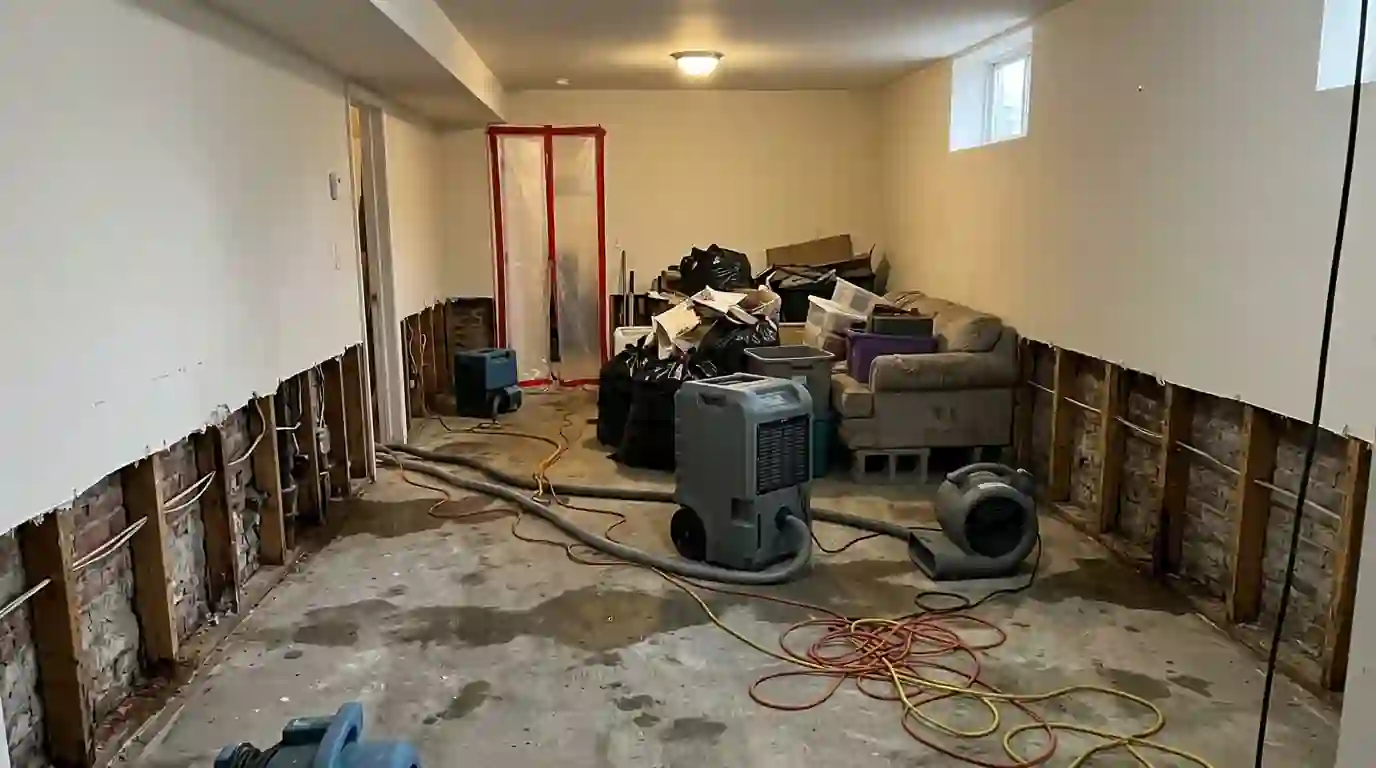
Pump-out, tear-out and drying after a storm floods a basement.
Sewage Backup Cleanup
Floor drain backups cleaned and disinfected before anything is rebuilt.
Kitchen Mold Removal
Sink base and wall cavity growth from slow leaks at old supply lines.
Musty Odor Removal
Finding and removing the source when a unit smells musty and nothing shows.
Working in two-family houses and walk-ups
In a two-family house the owner often lives on one floor and rents the other, so the job is scheduled around both households. We keep the work inside sealed containment, protect the shared stairs, and explain to both what we found and where the water came from.
When a basement floods, we pump and dry first, then decide what has to come out. Porous material soaked by sewer water is removed; everything else is cleaned, disinfected and dried to readings before any rebuild starts.
More in Queens
Nearby areas we also cover
Questions from Astoria
Either of you can call. The landlord is responsible for the repair, and we can work with both of you.
Mold can establish within 24 to 48 hours on wet materials, so drying should start right away.
Yes. Moisture readings and a look at the plumbing above usually show where it starts.
Yes. We clean, disinfect and dry, then remove any mold that followed.