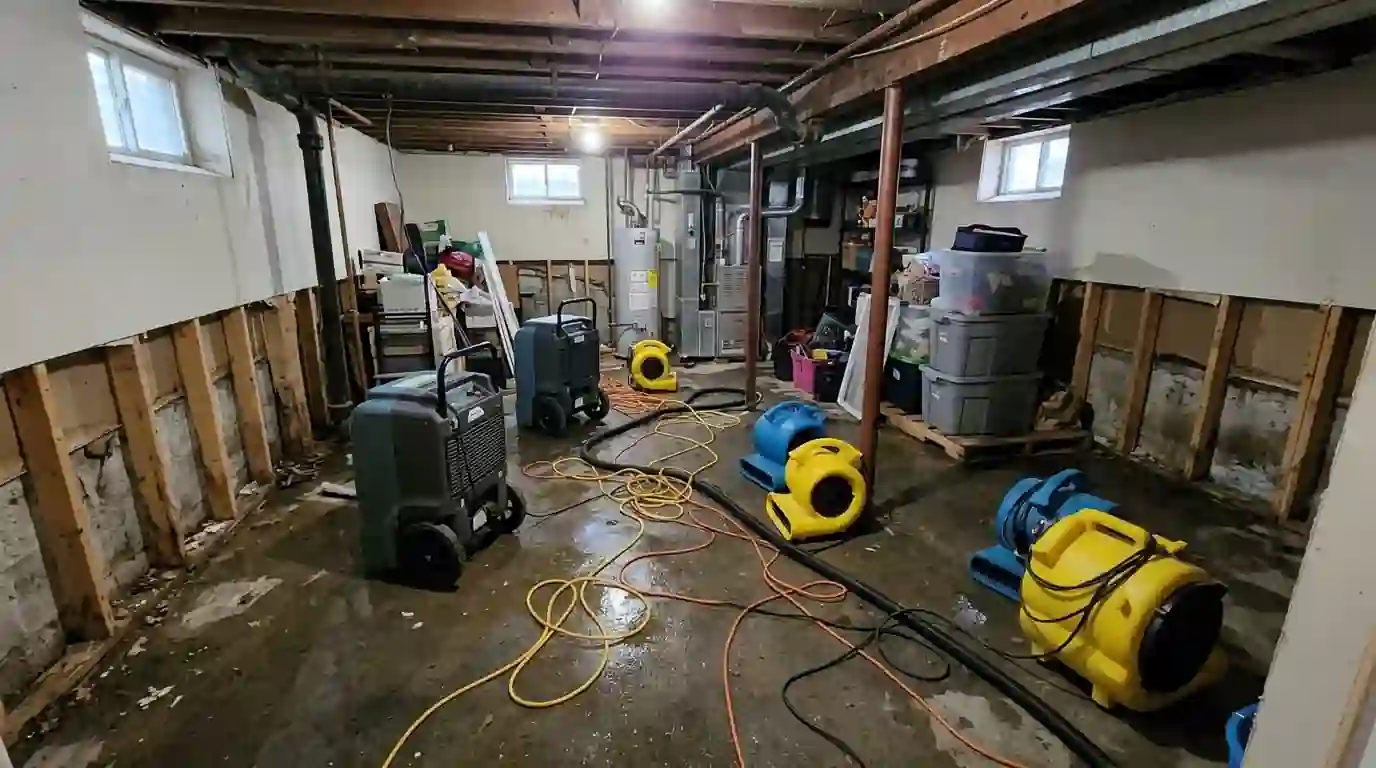
Quick answer
Water damage restoration in New York City means removing standing water, opening wet cavities and drying the building to meter readings, ideally starting within the first 24 to 48 hours before mold can take hold. National figures put it at $450 to $16,000, averaging $3,865, with the water source and how far it spread setting the price.
Updated September 2026
Signs water got further than you think
A ceiling stain that keeps growing
Water is still arriving from above, or pooling on the ceiling board.
Floors that cup or feel soft
Water is under the finish floor and in the subfloor.
Baseboards that swell or separate
The bottom of the wall has wicked water up from the floor.
Drips from light fixtures
Water is running along joists above the ceiling.
A musty smell after a day or two
Wet materials are starting to sour.
Condensation on windows after a leak
The room air is loaded with evaporating water.
What drying actually involves
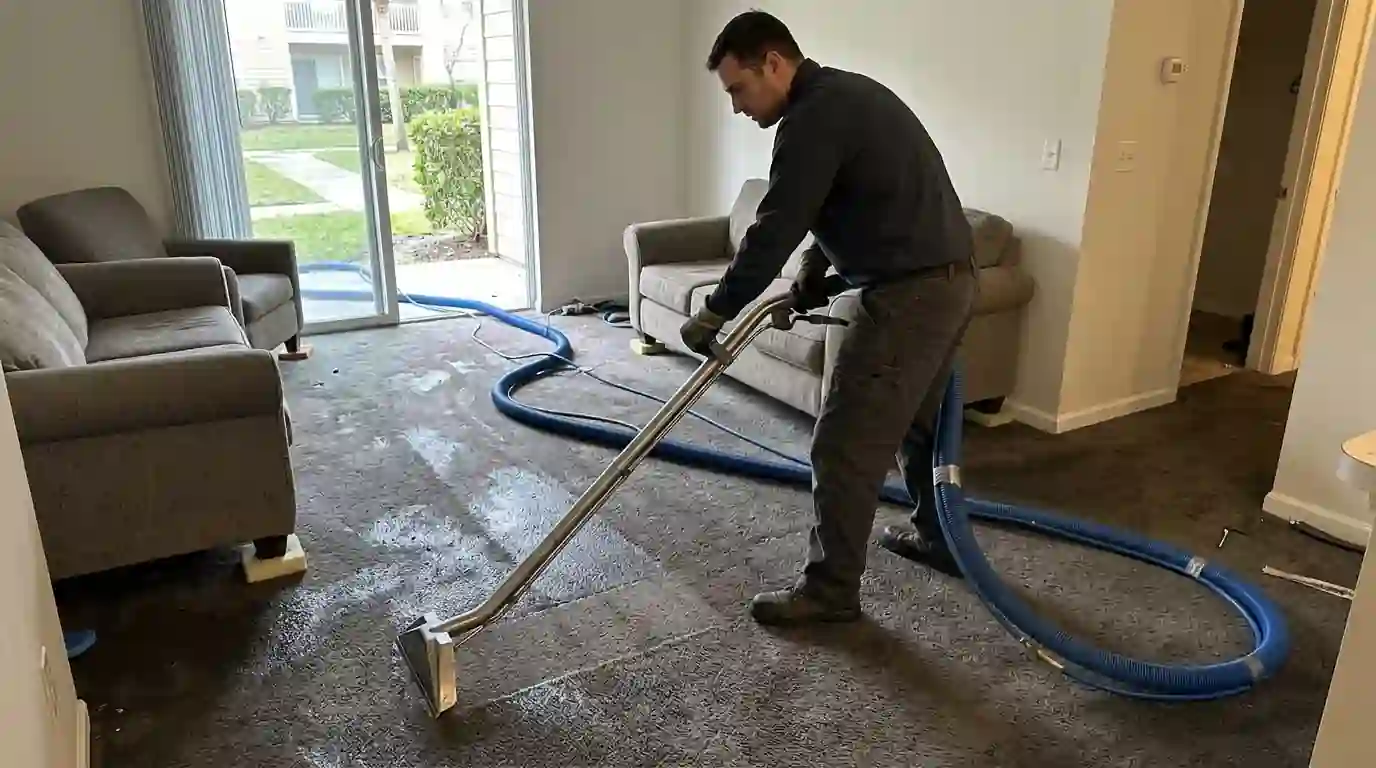
Mopping up the visible water is the easy part. The water that matters is the part that soaked into drywall, insulation, the subfloor and the ceiling below, and it stays there long after the floor looks dry. We map it with meters and a thermal camera, extract what is standing, and remove only what cannot be dried, such as soaked pad or ceiling board that is sagging.
Then air movers and dehumidifiers run until the materials read dry, checked on every visit. That is what stops a mold job from following the leak. When the water was dirty, from a toilet or a sewer, it is handled as a contaminated cleanup instead.
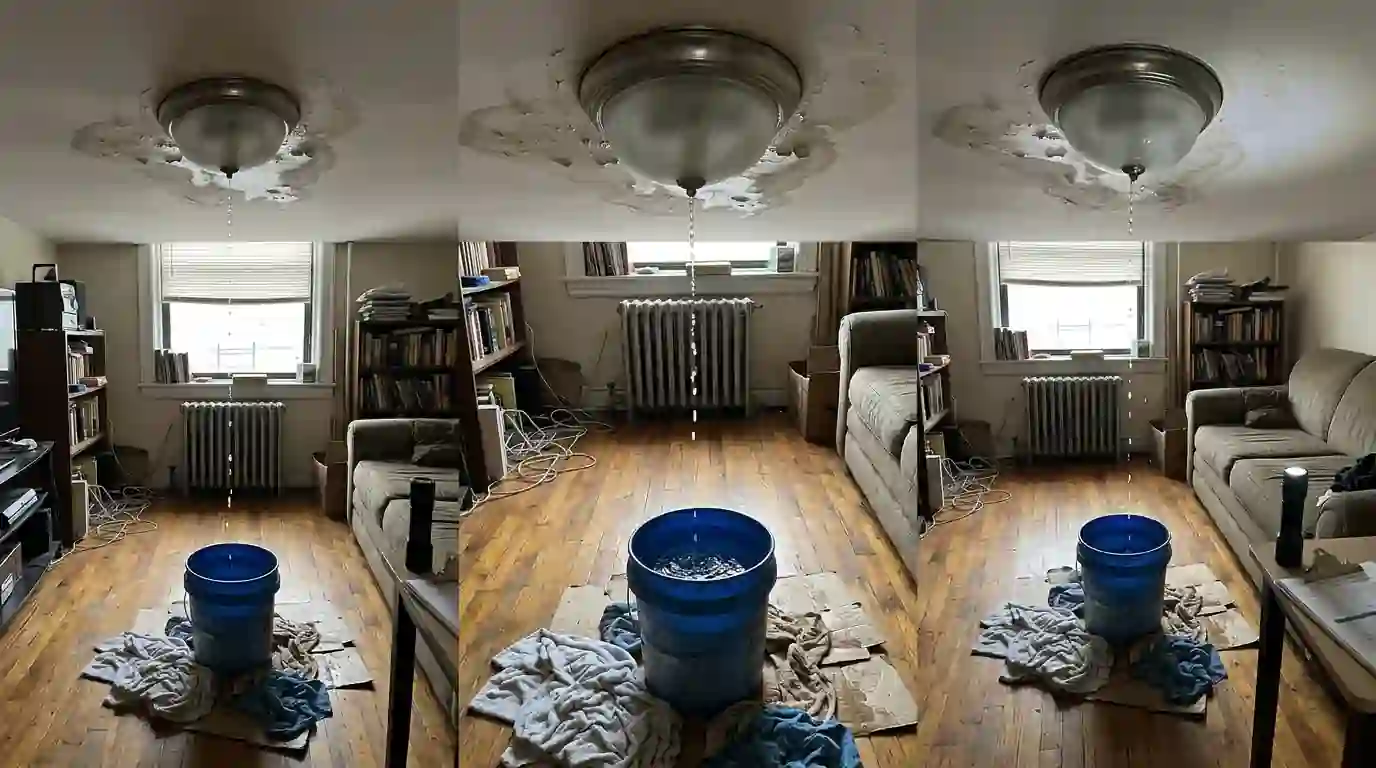
Leaks from the apartment above
The most common water call in the city starts with a stain on the ceiling and water dripping from a light fixture. The source is upstairs: an overflowing tub, a failed supply line, a leaking shower pan. We get access through the building to stop it, protect your belongings, open sagging ceiling board so it does not fall, and dry the ceiling cavity and the walls below. Photos and readings from both units help the building, the neighbor and the insurers sort out the claim.
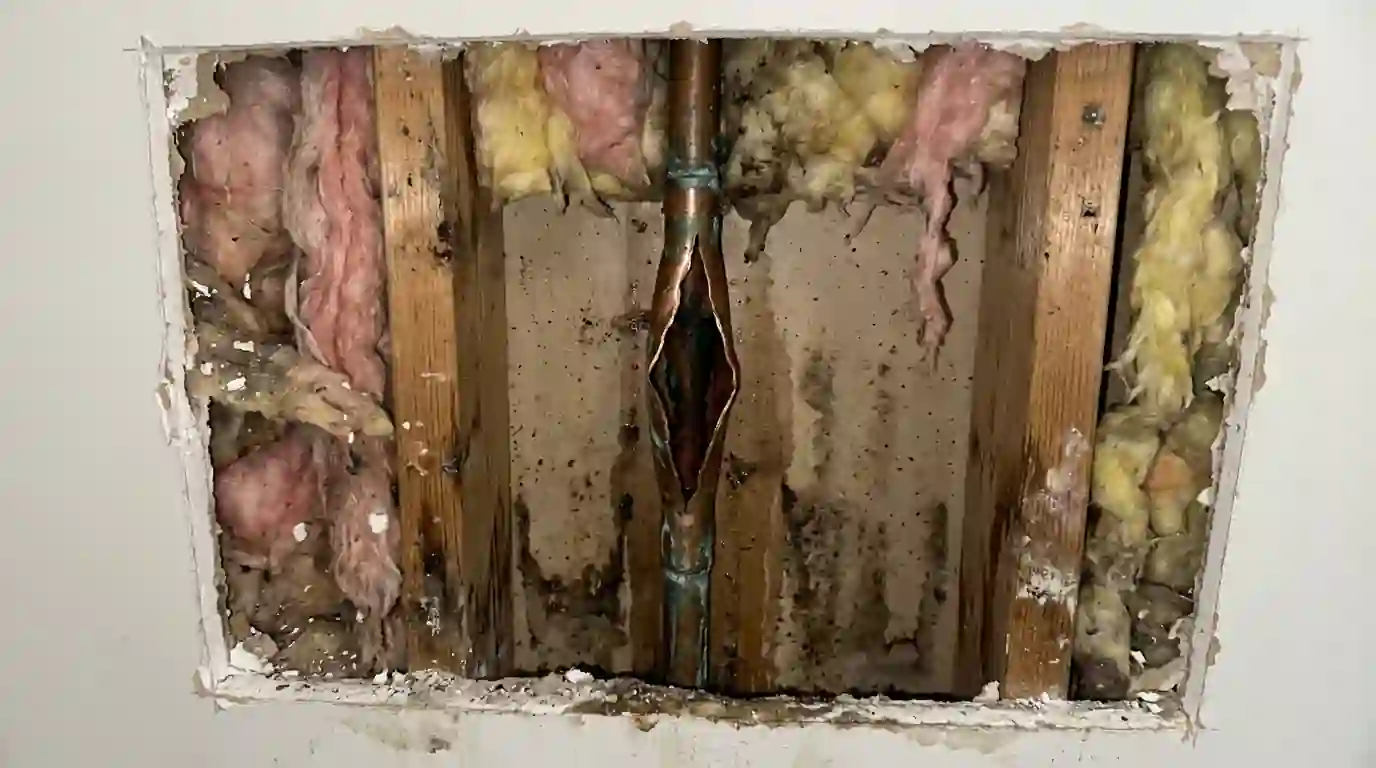
Burst and frozen pipes
Pipes in outside walls, unheated basements and building perimeters can freeze and split in a cold snap, and the leak often shows only when the pipe thaws. By then water may have run inside the wall for hours. We extract, open the wall where the break is so the plumber can reach it, and dry the cavity and floor. In winter, drying goes faster with the heat on, which also keeps the next pipe from freezing while the wall is open and exposed to the cold.
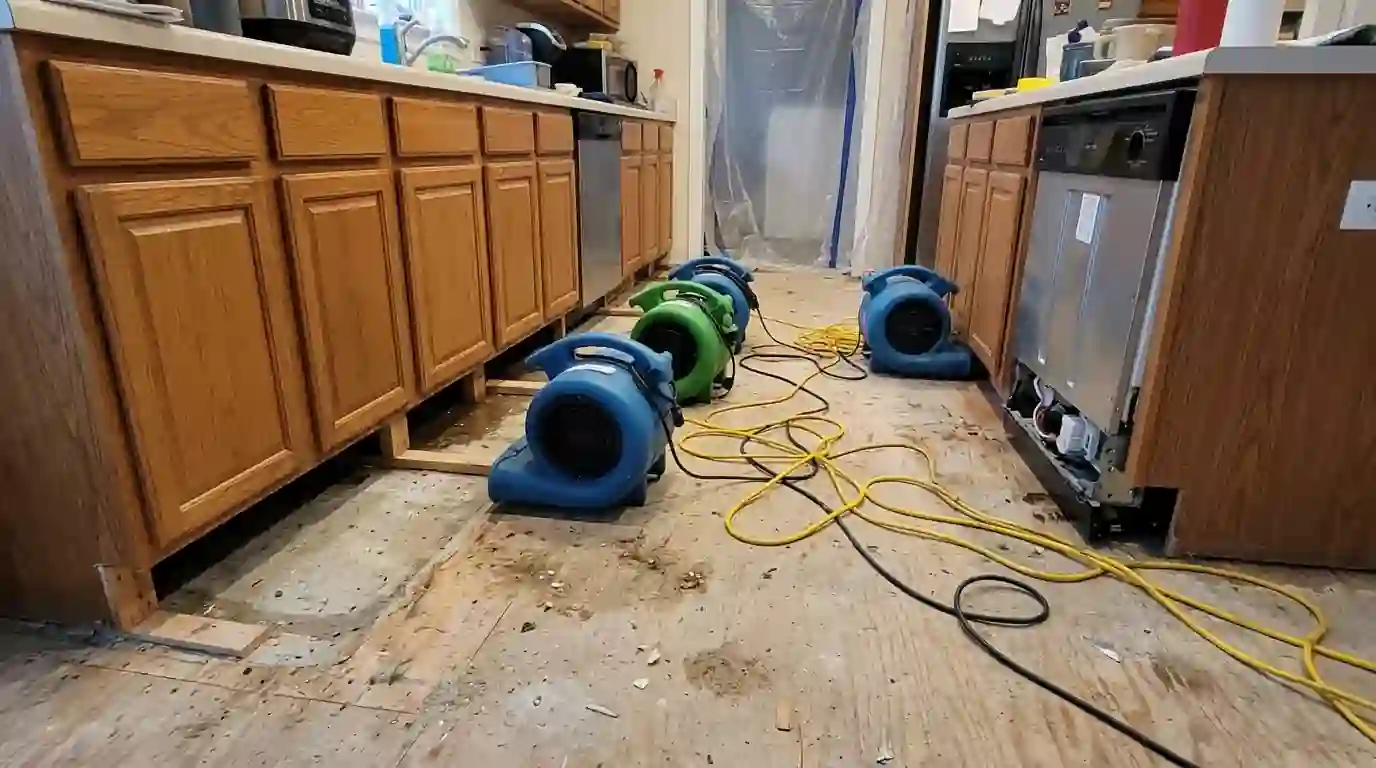
Appliance and supply line leaks
Washing machine hoses, dishwasher lines, refrigerator ice-maker lines and toilet supplies fail without warning, and a burst hose can release a lot of water before anyone notices. The water spreads under cabinets and flooring and into the ceiling below. We extract, pull the toe kicks and sometimes the dishwasher so the cabinet bases can dry, and read the subfloor under the kitchen or laundry. A replacement braided line is a small, cheap fix worth making on every appliance in the home afterward.
How long drying takes
Extraction and setup happen on the first visit. Drying runs until every wet material reads dry, which depends on how much soaked in, what it soaked into, and whether the heat or air conditioning can run. Plaster, hardwood and slabs dry slower than drywall. We check the readings on each visit and remove the equipment once the numbers say so, not before.
How a water damage call runs
Tell us whether water is still coming in when you call.
We stop the source
Shut-offs, access upstairs, or a plumber on the way.
We make it safe
Power checked, sagging ceilings opened, belongings moved.
We extract the water
Standing water pulled from floors and carpet.
We map the moisture
Meters and thermal imaging show where it spread.
We dry to readings
Air movers and dehumidifiers, checked each visit.
We document for insurance
Photos, readings and a list of what was removed.
Call (332) 234-9326A person answers, day or night.
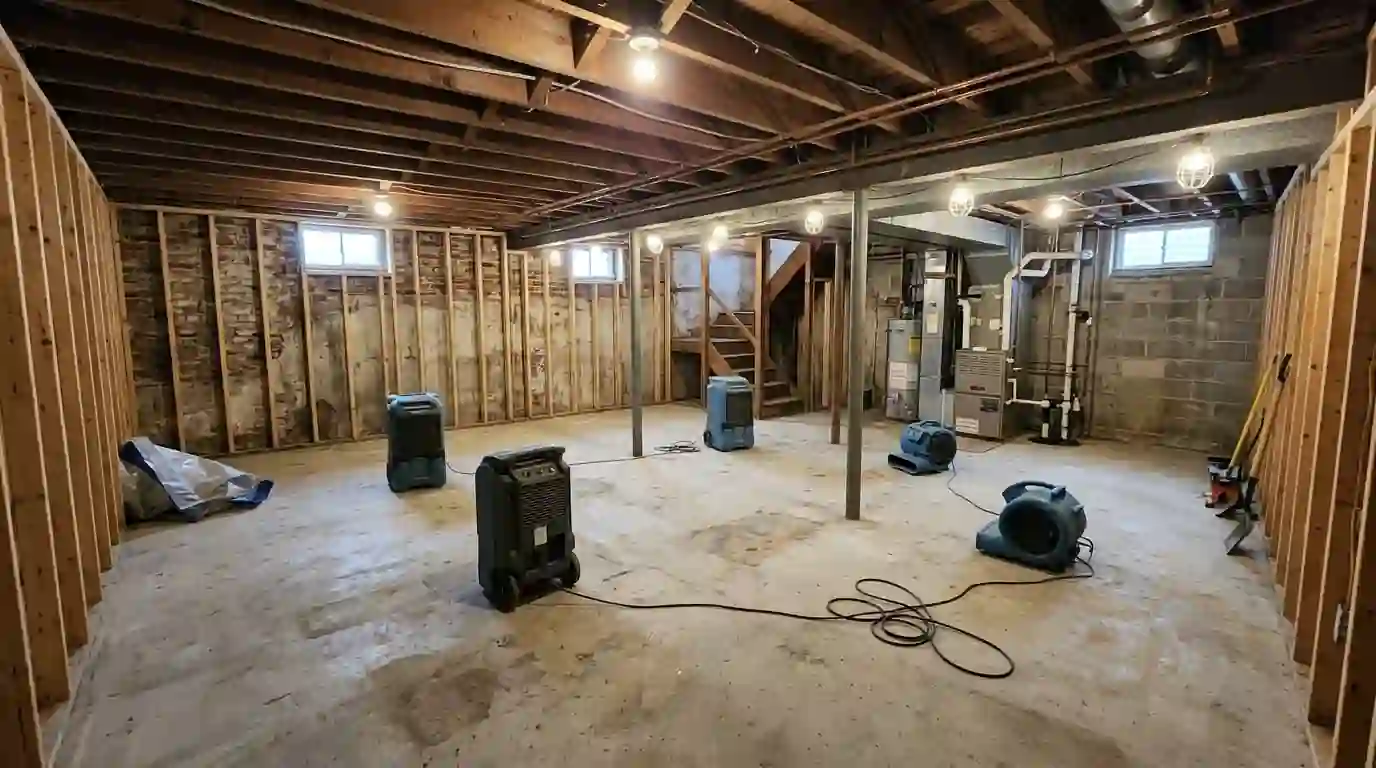
Drying equipment stays until the meter says dry, not until the floor looks dry.
Talk to us nowNew York conditions
What recent storms taught city homeowners
City sewers are generally built for 1.5 to 1.75 inches of rain an hour, and storms like Henri, Ida and the September 2023 downpour went past that. During Ida, most of the deaths reported overnight in the city were in Queens, in basement homes in neighborhoods including Woodside, Flushing, Hollis and Jamaica. After storms like that, the homes that avoid mold weeks later are the ones where water was removed and the walls dried in the first days, not just mopped.
What water damage restoration costs
National figures put water damage restoration at $450 to $16,000, averaging $3,865. Clean water runs about $3.50 per square foot, gray water about $5.25 and sewage about $7.50.
Water source
Clean, gray or sewage water changes what can be kept.
Area affected
One room or several floors of an apartment building.
Materials removed
Ceilings, pad and drywall that cannot be dried.
Drying time
Plaster, hardwood and slabs take longer.
Rebuild
Priced once drying is finished.
Questions about water damage restoration
Right away. Drying in the first day or two is what prevents mold.
Only if you can reach the panel without standing in water. Otherwise wait for us or the building.
Sudden leaks often are; it depends on your policy. We document everything for the adjuster.
Often, if it was clean water and dried quickly. Sagging or long-wet board comes out.
Usually not. The equipment is noisy but safe to live with.
We check it and dry it too when the water reached it.
Related jobs we handle
Flooded Basement Cleanup
Pump-out, tear-out of wet finishes and drying after a storm.
Dehumidifier Installation
Sized dehumidifiers with a drain line, so the basement stays under 50 percent.
Sewage Backup Cleanup
Contaminated water removed, porous materials bagged and every surface disinfected.
Apartment Mold Remediation
Occupied-building work with hallway protection and paperwork for the board.
Water coming through the ceiling right now?
Call now. We answer 24/7 and get the drying started before mold can.
Answered 24 hours a day, 7 days a week