Quick answer
Mold testing in New York City means collecting air, surface or material samples and having an outside lab count and identify the mold, and national guides put it at $250 to $350. It is worth paying for when you smell mold but cannot find it, when health is a concern, or when a landlord, seller or insurer needs lab results.
Updated September 2026
When testing is worth it, and when it is not
If you can see mold on a wet wall and you know where the water came from, a test adds cost without changing the plan: the growth comes out either way. Testing earns its fee in three situations. You smell mold but cannot find it. Someone in the home has health concerns and wants to know what is in the air. Or you need a lab report for someone else, such as a landlord, a seller, a board or an insurer.
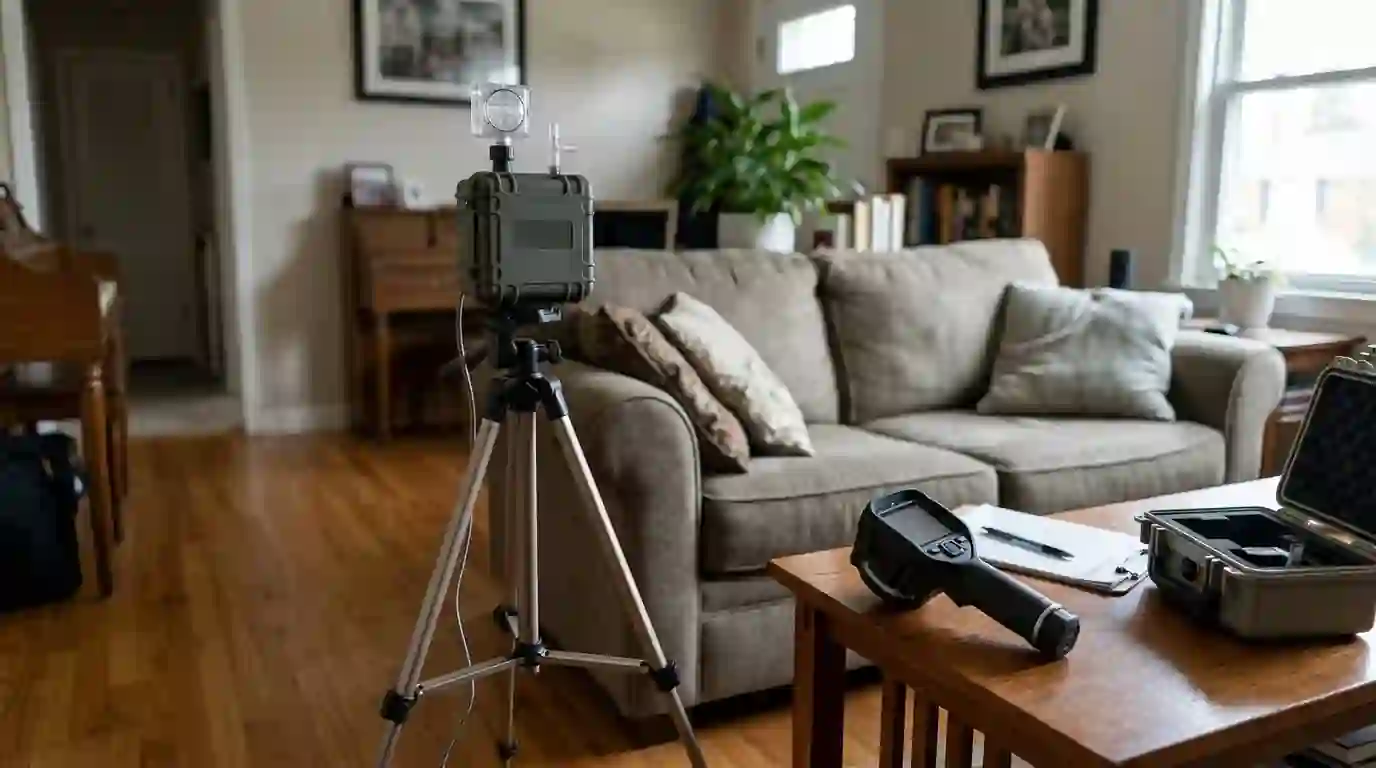
We always pair sampling with a moisture check, because a lab report without knowing where the water is leaves you with numbers and no plan. If the results point to hidden growth, the next step is usually a moisture-mapping inspection of the area the samples flagged.
What a testing visit includes
- A short conversation about what you want answered
- Moisture readings around the area of concern
- An outdoor air sample for comparison when air is tested
- Indoor samples placed where they answer the question
- Chain-of-custody paperwork sent with the samples
- Analysis by an outside lab
- The lab report plus our explanation in plain words
- A clear next step: nothing, drying, or removal
Air sampling
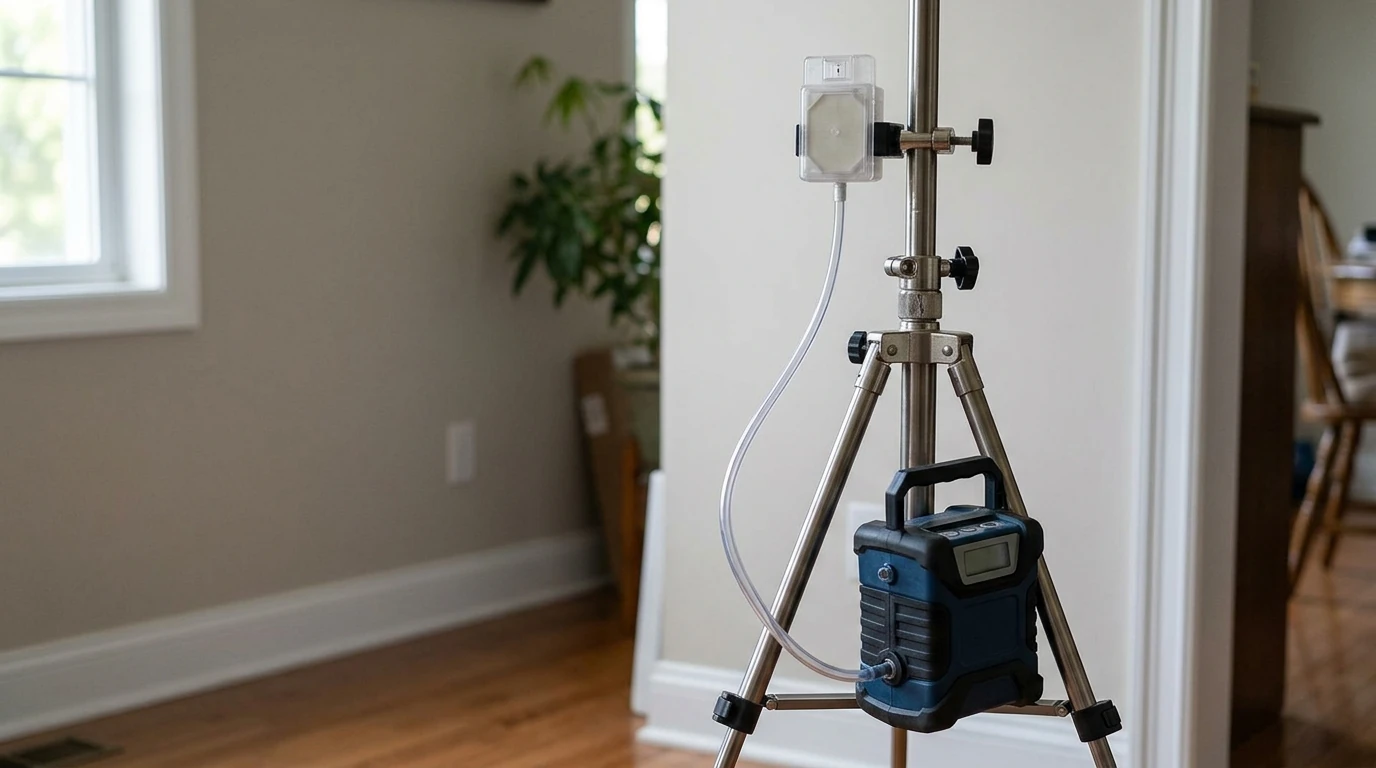
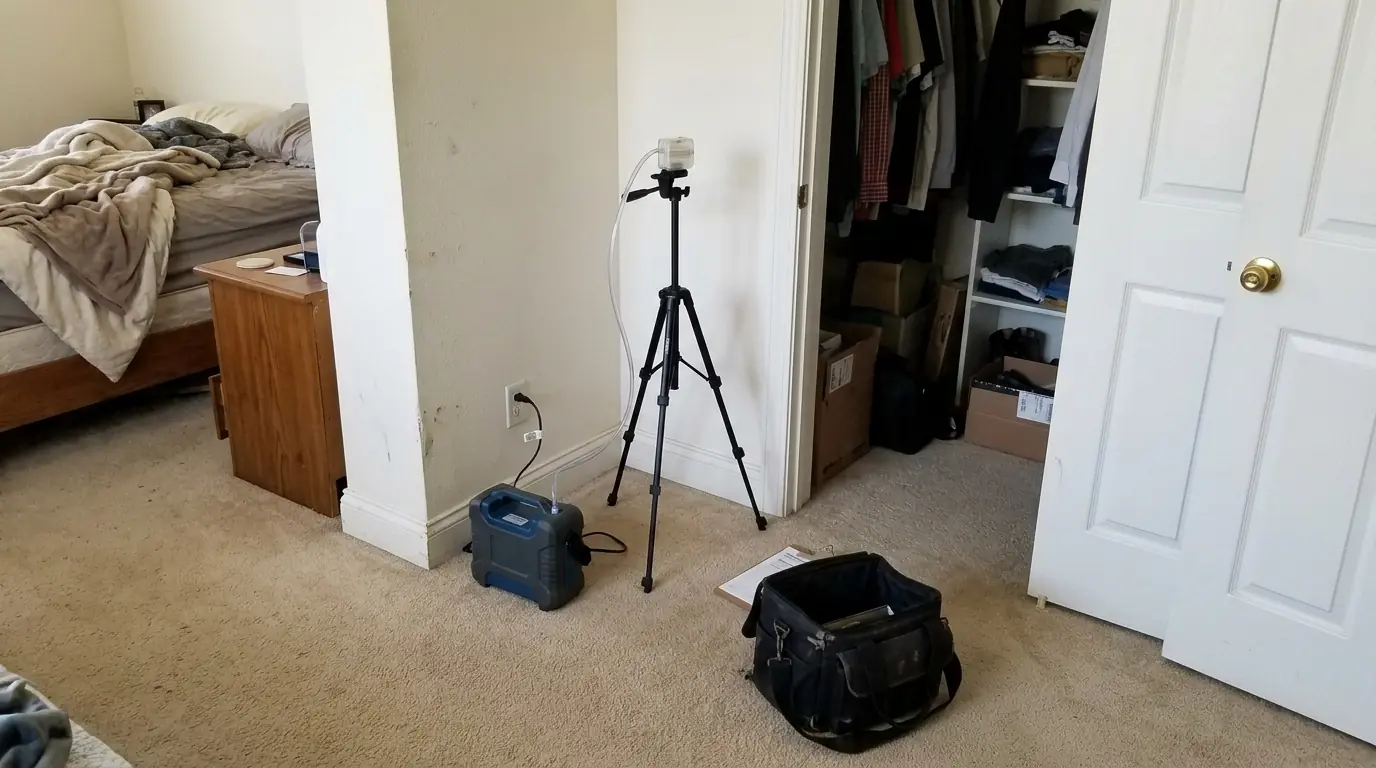
An air sample pulls a measured volume of room air through a small cassette that traps spores. We take one outside at the same time, because outdoor air always carries spores and the comparison is what matters: indoor counts well above outdoor, or indoor types that are not outside at all, point to a source inside. Air samples are the right tool when you smell mold with nothing visible, and the wrong tool for confirming growth you can already see on a wet wall.
Swab and tape lift samples
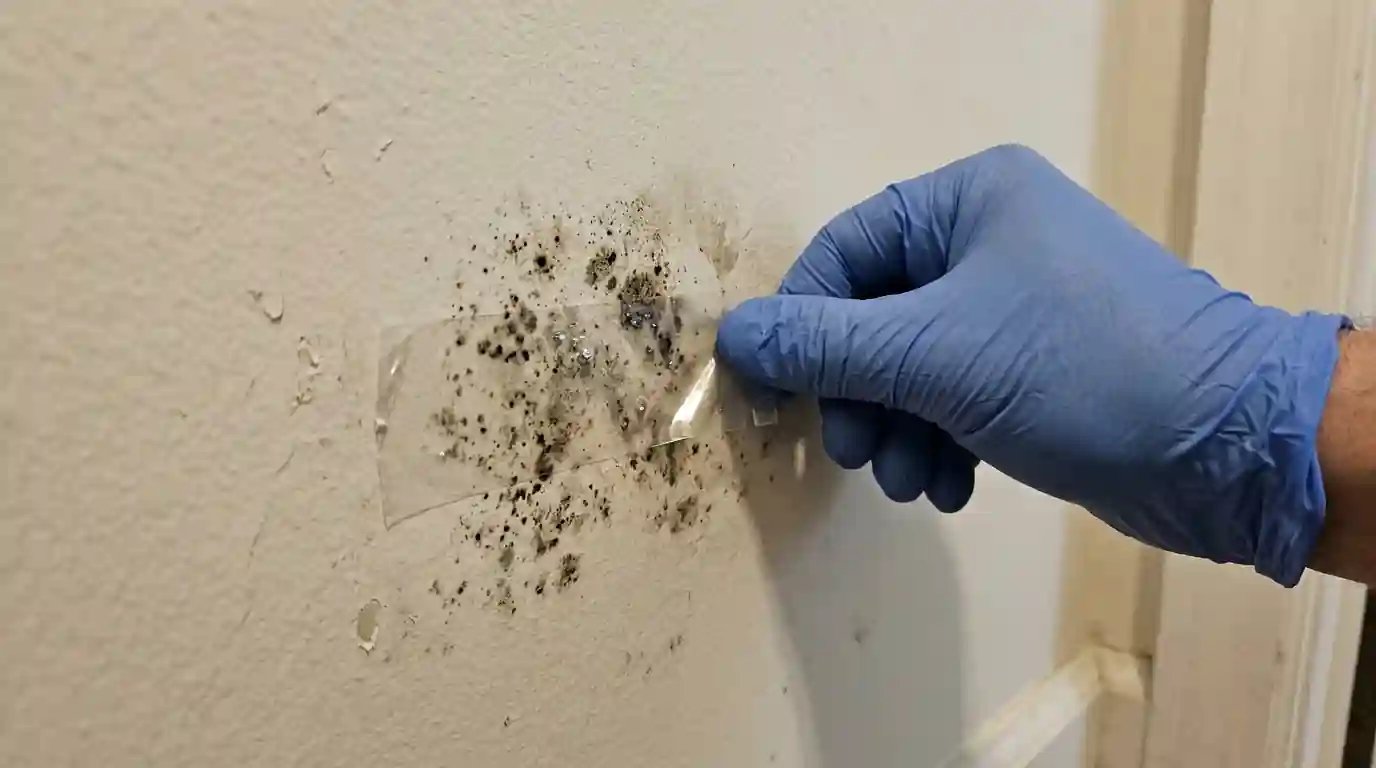
A swab or a strip of clear tape pressed to a surface picks up whatever is growing there, and the lab identifies it under a microscope. It is the quickest way to answer whether a dark stain on a wall, a spot on furniture or a patch on a window frame is mold at all, and what type. It speaks only for that spot, so we choose the surface carefully and pair it with meter readings on the material around it.
Bulk material samples
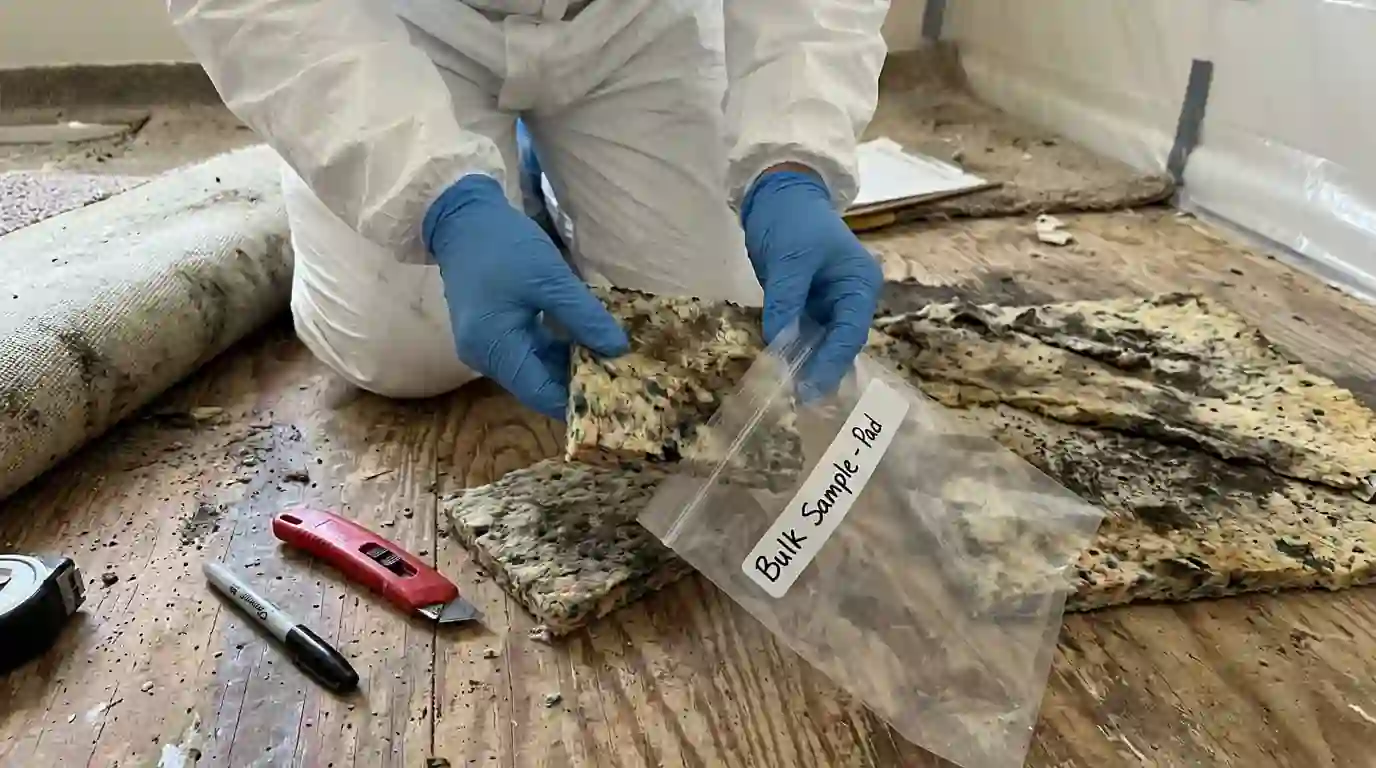
A bulk sample is a small piece of the material itself: a square of carpet, a handful of insulation, a cut of drywall. The lab looks inside it rather than on the surface. We use it when you are deciding whether to keep something porous that got wet, or when a surface sample leaves the question open. The piece is small, but it is a piece, so we agree where it comes from before we take it, usually somewhere hidden like a closet corner or the back of a cabinet.
New York conditions
Why lab results matter in New York rentals
In buildings with 10 or more units, mold over 10 square feet has to be assessed and removed by two independent companies, and results and documentation carry weight in that process. HPD completed 56,198 inspections in fiscal year 2022 in response to indoor allergen complaints, most of them reported through 311. When a tenant, an owner or a board needs to show what is in an apartment, a lab report from samples taken the right way is stronger than a photo.
Air, swab or bulk sample
| Option | What it tells you | Right for | Limit |
|---|---|---|---|
| Air sample | Spore types and counts in the room, compared with outdoors | A smell with nothing visible, or a room people react to | A snapshot of that moment and that room |
| Swab or tape lift | What is growing on a specific surface | A stain or spot you want identified | Only speaks for the spot sampled |
| Bulk sample | Growth inside a piece of material | Carpet, insulation or board you are deciding to keep | Needs a small piece removed |
How a testing visit runs
The question comes first, then the samples.
We agree the question
What you need to know and who needs to see the result.
We take moisture readings
So the results can be tied to a source.
We take the outdoor baseline
An outside air sample when air is being tested.
We sample inside
Air, swab or bulk samples where they answer the question.
We send them to a lab
With chain-of-custody paperwork.
We explain the report
What the numbers mean and what to do next.
Call (332) 234-9326A person answers, day or night.
What mold testing costs
National guides put mold testing at $250 to $350 and a full inspection at $303 to $1,045. The number of samples and whether an inspection is needed move the total.
Number of samples
Each air, swab or bulk sample adds lab cost.
Lab turnaround
Faster results cost more.
Inspection added
Moisture mapping alongside the samples.
Size of the home
More rooms can mean more samples.
Report needs
A letter for a board, landlord or insurer.
Questions about mold testing
Settle-plate kits almost always grow something, because spores are everywhere. They do not tell you where it comes from or how much.
It depends on the lab turnaround you choose. We tell you when you book.
Only if the answer would change the plan, or someone needs the report.
Yes, to show the room is back to normal. On larger jobs in bigger buildings, the independent assessor does this.
We find the source with moisture mapping and plan removal from there.
Keep windows closed and avoid cleaning or running air purifiers before air sampling.
Related jobs we handle
Hidden Leak Detection
Meters, thermal imaging and a methodical search to find water before it becomes mold.
Indoor Air Quality Testing
Humidity logging and particle counts for rooms that feel stuffy or smell.
Mold Inspection
Meters and thermal imaging to find the wet material before anything is cut.
Sewage Backup Cleanup
Contaminated water removed, porous materials bagged and every surface disinfected.
Need to know what is in the air?
Call now. We answer 24/7 and tell you whether a test will actually answer your question.
Answered 24 hours a day, 7 days a week