Quick answer
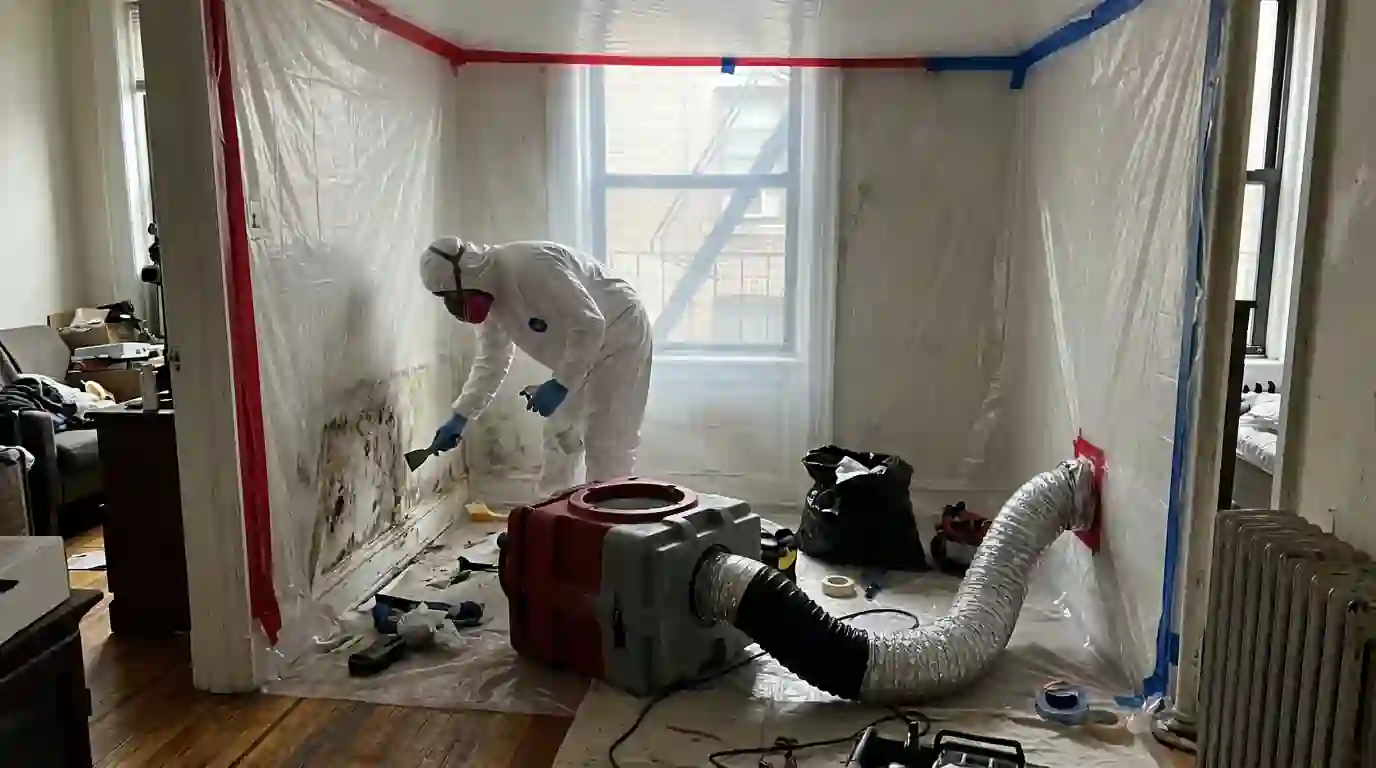
Mold work in Bedford-Stuyvesant is mostly in brownstones, row houses and small walk-up buildings, many of them rented. The usual causes are roof and parapet leaks on the top floor, slow drips from old bathroom plumbing into the ceiling below, and damp cellars. We find the water first, contain the work area, remove the growth, dry the framing and give tenants, owners and HPD inspectors the written record they need.
Updated September 2026
Local conditions
Why Bedford-Stuyvesant buildings grow mold
Bedford-Stuyvesant was the city's 14th largest neighborhood by population in 2024, with about 182,000 residents, and only 19.7 percent of homes were owner-occupied against 32.7 percent citywide. That means most mold here is found by a tenant and fixed by a landlord.
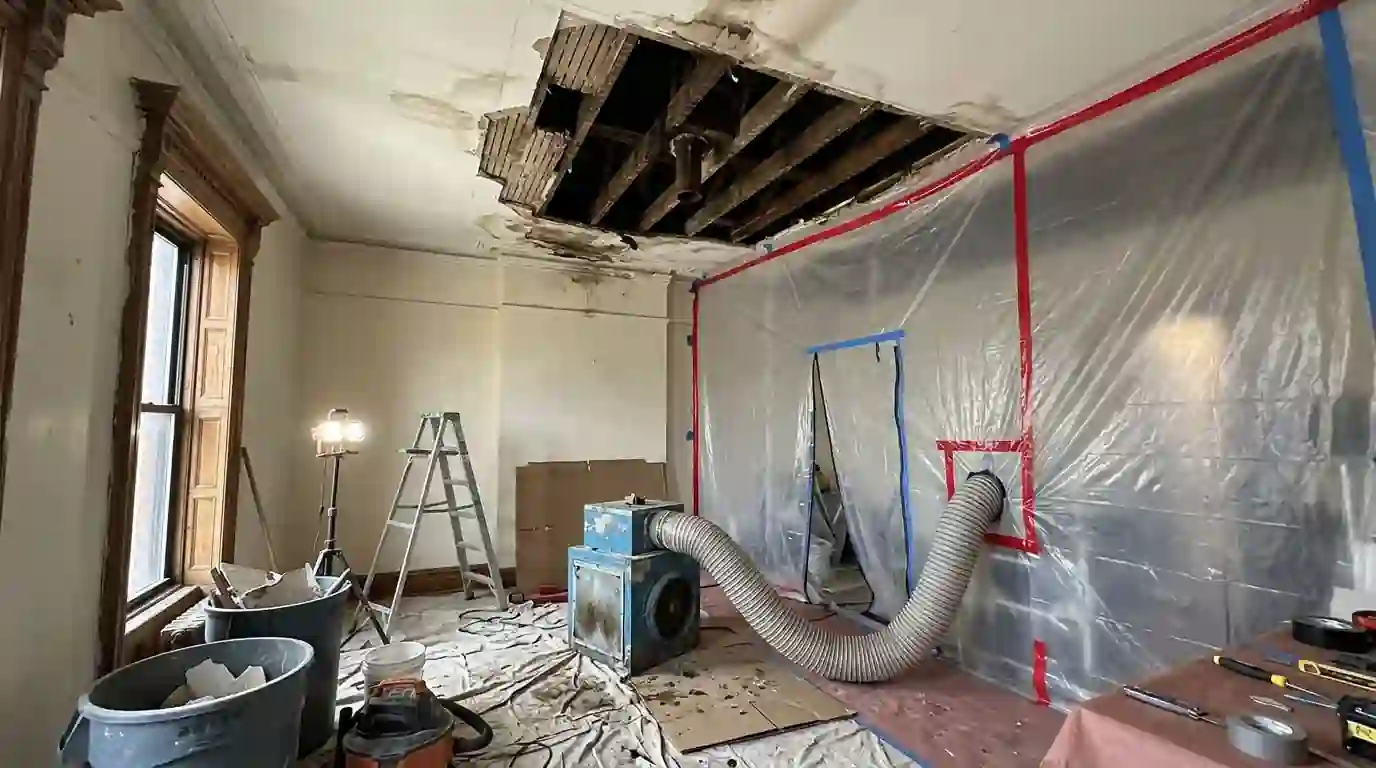
The housing is old. Census figures cited by housing advocates put 54.2 percent of Bedford-Stuyvesant homes in buildings from before 1930. In a century-old brownstone, a tired roof drain, a cracked parapet or a corroded waste line can wet a ceiling for months before anyone sees a stain.
Code enforcement reflects it. The neighborhood logged 111.3 serious housing code violations per 1,000 privately owned rental units in 2025. Local Law 55 requires owners of buildings with three or more apartments to inspect for mold every year and fix the cause, and HPD gives a Class B mold violation 60 days and a Class C one 24 hours.
Jobs we do most in Bedford-Stuyvesant
Rental apartments and old brownstone shells bring in most of our calls here. Each job has its own page.
HPD Mold Violation Remediation
Correcting the mold and its cause before the violation deadline, with records for the reinspection.
Apartment Mold Remediation
Containment and removal inside a rented unit while the rest of the building stays in use.
Hidden Leak Detection
Following a ceiling stain back to the roof, the parapet or the bathroom upstairs.
Ceiling Mold Removal
Top-floor and below-bathroom ceilings opened, cleaned, dried and closed.
Basement Mold Removal
Damp brownstone cellars with growth on joists, walls and stored belongings.
Mold Inspection
Moisture mapping when the smell is there but the source is not obvious.
Working with tenants and small landlords
Many Bed-Stuy buildings have one owner and two to six units, often with the owner living on one floor. We schedule around the household, keep the work inside sealed containment, and explain to both the tenant and the owner what we found and where the water came from.
When the job is tied to an HPD violation, we document the cause, the repair, the removal and the final condition with photos and readings, so the owner can show HPD the violation was corrected and the tenant can see it was done properly.
More in Brooklyn
Nearby areas we also cover
Questions from Bedford-Stuyvesant
Yes. We fix the cause with the owner, remove the mold and provide the records the reinspection asks for.
Usually a roof, parapet or flashing leak keeps the ceiling wet. The mold comes back until that water stops.
Yes. The work stays inside containment and the stairs and hallway are protected and cleaned each day.
It can be. Moist cellar air rises into the house, so we dry the cellar and remove growth on the joists.