Quick answer
A basement dehumidifier in New York City should be sized to the space and connected to a floor drain or condensate pump, because a unit that fills a bucket gets unplugged within a month. Kept running through the humid season, it holds the air dry enough that the mold we remove from basements does not come back.
Updated September 2026
Why a store-bought unit usually is not enough
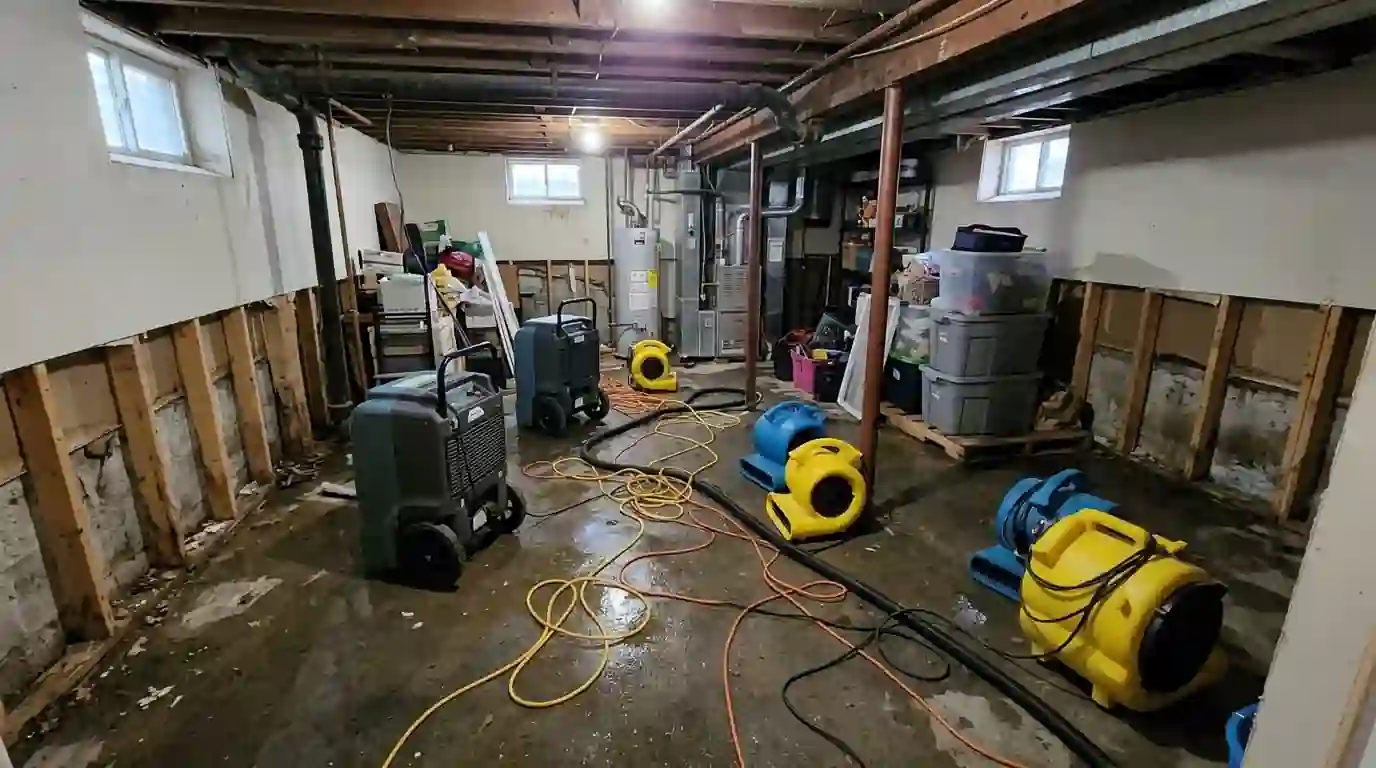
Portable dehumidifiers work until the bucket fills, which in a damp city basement can be the same afternoon. Then they shut off, the space climbs back up, and the musty smell returns. A basement that has already had mold needs a unit that runs every day of the humid season without anyone emptying it.
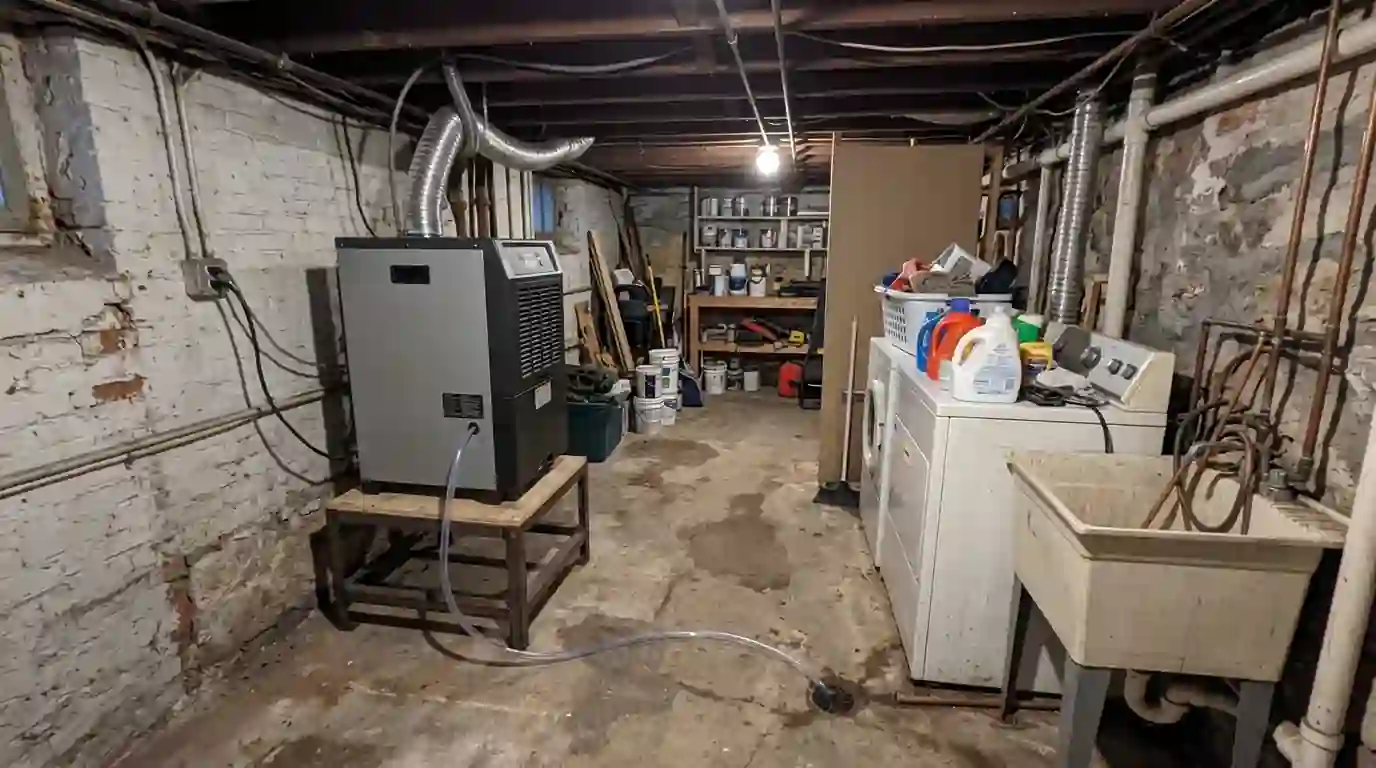
We measure the space, look at how it is used, and pick a unit that can keep up. It goes on a stand off the floor, with a drain line to a floor drain, a sump or a condensate pump, and we set the humidity target with you before we leave. After basement mold removal, this is the step that keeps the job done.
What an installation includes
- Humidity and temperature readings before we choose a unit
- A unit sized to the square footage and how damp the space runs
- A raised stand or wall mount off the floor
- A drain line to a floor drain, sump or condensate pump
- A dedicated outlet check with you or your electrician
- Humidity set point agreed with you on the day
- A walk-through of the filter and how to clean it
- Readings taken again once the unit has run
Whole-basement dehumidifiers
For a finished or partly finished basement, one ducted or free-standing unit usually covers the space better than several portables. It sits in the dampest area, often near the laundry or the foundation wall with the most staining, and pulls air from the whole basement. We place it where air can reach it, keep it off the slab, and route the drain so nobody trips over hoses. In basements with a history of mold, we pair it with a check of the walls behind finishes.
Crawl space units
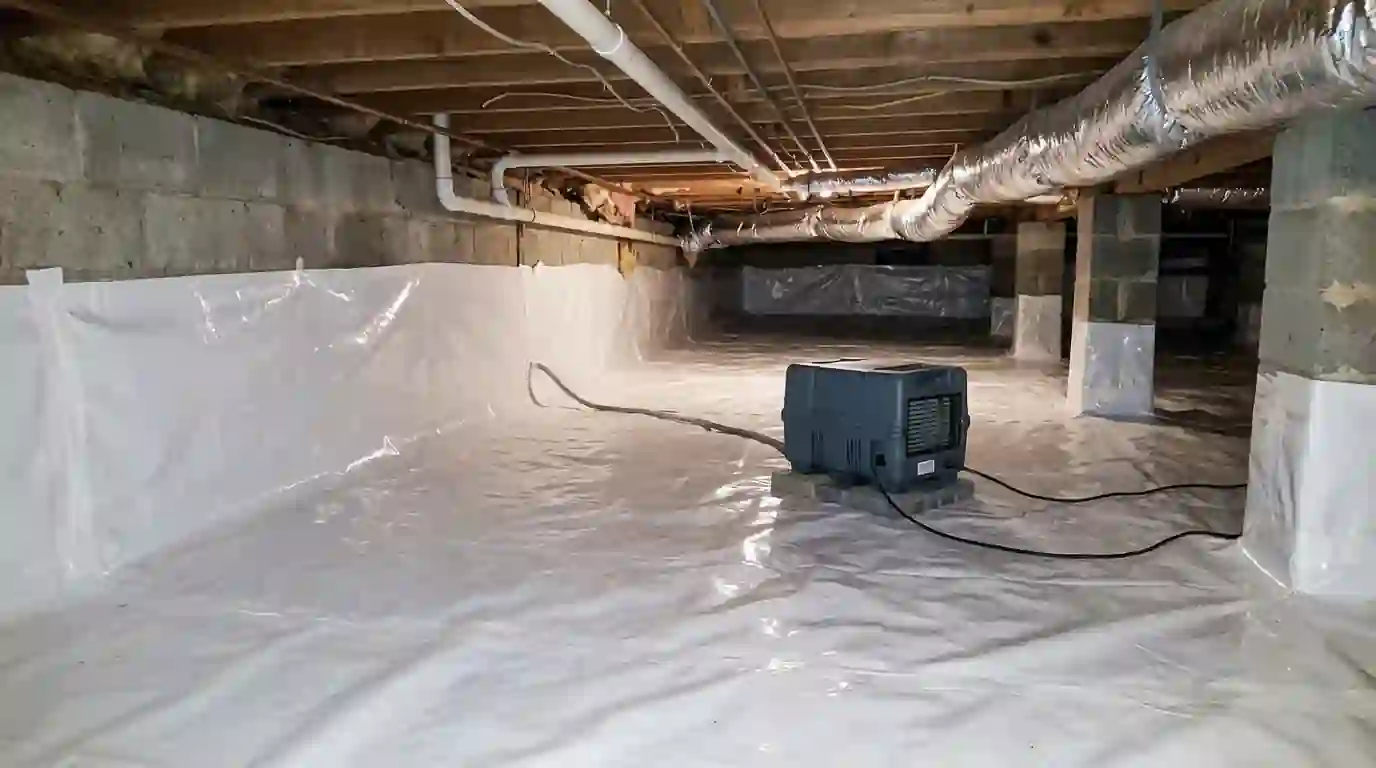
Crawl spaces under additions, porches and older houses stay damp because air barely moves in them. A compact unit made for tight spaces can dry them out, but only if the ground is covered first; a dehumidifier cannot keep up with bare soil. We check the vapor barrier, replace torn or missing sections, and then install the unit with its drain run to daylight or a pump. See our crawl space mold work when growth is already on the joists.
Condensate drainage
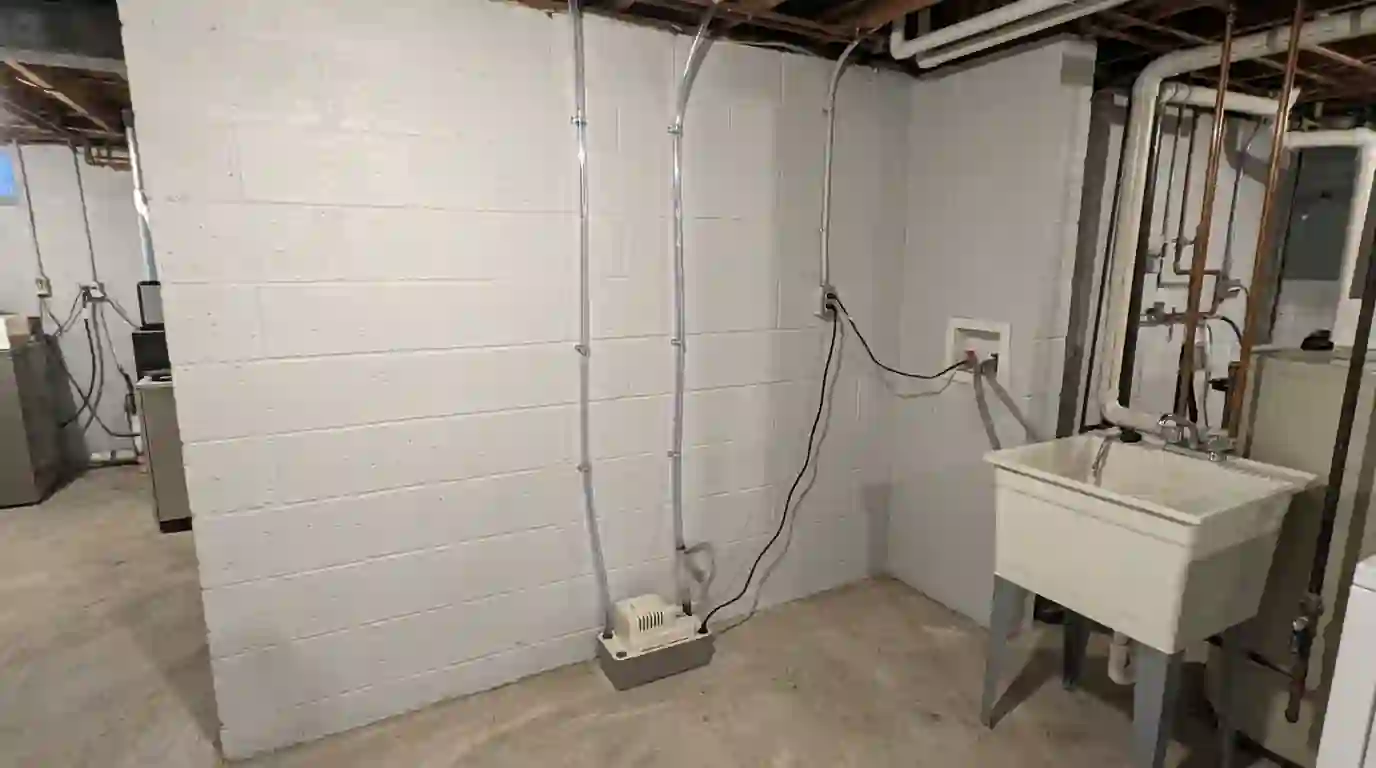
A dehumidifier pulls gallons of water out of the air on a humid day, and that water needs somewhere to go. Where there is a floor drain, a short hose does it. Where there is not, a small condensate pump lifts the water to a laundry sink or an outside line. We test the drain before we leave by running the unit and watching the water move, because a drain that backs up puts the water right back on the floor next to the machine.
New York conditions
Why so many city basements stay damp
One- and two-family buildings hold about 26 percent of New York City housing units, and most of them sit on a basement or cellar that was never meant to be living space. Brooklyn alone holds about 30 percent of the city housing units. Those basements now hold laundry rooms, storage, offices and bedrooms, and they stay damp through the summer because the foundation walls are cool and the outside air is humid. A dehumidifier sized for the space is the simplest way to keep that damp from turning into growth.
Portable unit or installed dehumidifier
| Option | Portable unit | Installed dehumidifier |
|---|---|---|
| Drainage | Bucket that has to be emptied | Hose to a drain, sump or condensate pump |
| Coverage | One room at a time | A whole basement or crawl space |
| Runs unattended | Stops when the bucket is full | Runs through the season |
| Right for | A small room with a short damp spell | A basement or crawl space that stays damp all summer |
How an installation runs
Most installs are done in one visit once the unit is on site.
We measure the space
Square footage, humidity readings and where the damp sits.
We pick the unit
Sized to the space, with a drain plan that fits the basement.
We set the stand
Off the slab, where air can reach it.
We run the drain
To a floor drain, sump or condensate pump.
We test it running
Water moves, the unit cycles, nothing leaks.
We set the target with you
Humidity set point, filter cleaning and what to watch.
Call (332) 234-9326A person answers, day or night.
What affects the price of an installation
We did not find a sourced national range for installed basement dehumidifiers, so we quote after measuring the space. These are the things that move the number.
Unit size
Larger spaces need higher-capacity units.
Drainage
A floor drain is simple; a condensate pump adds parts.
Crawl space prep
A new vapor barrier comes before the unit.
Electrical
A dedicated outlet may be needed.
Access
Tight stairs and finished rooms add time.
Dehumidifier and air system brands we set up and service
- Friedrich
- GE Zoneline
- Amana
- Islandaire
- Carrier
- Trane
- Lennox
- Mitsubishi Electric
- Daikin
- LG
- Fujitsu
- Aprilaire
- Santa Fe
- AlorAir
We install and service whole-basement units from Santa Fe, Aprilaire and AlorAir, and we look at the air handlers and through-wall units nearby, from Carrier and Trane systems to Friedrich and Amana PTACs, because a coil that drains badly can undo a good dehumidifier.
Questions about dehumidifier installation
We agree a set point with you on the day based on the space and how it is used, and check it again after the unit has run.
Sometimes, if it is sized right and can drain to a hose. We check it before recommending a new one.
Into a floor drain, a sump or a condensate pump that sends it to a sink or outside.
No. Existing growth has to be removed first; the dehumidifier keeps it from coming back.
Larger units often do. We check the circuit with you or your electrician.
We show you how and how often for your unit on the day we install it.
Related jobs we handle
Flooded Basement Cleanup
Pump-out, tear-out of wet finishes and drying after a storm.
Water Damage Restoration
Extraction and drying within hours, so a leak never becomes a mold job.
Sewage Backup Cleanup
Contaminated water removed, porous materials bagged and every surface disinfected.
New Construction Mold Remediation
Mold on framing and sheathing removed before the walls close.
Basement damp again this summer?
Call now. We answer 24/7 and can measure the space before you buy anything.
Answered 24 hours a day, 7 days a week