Quick answer
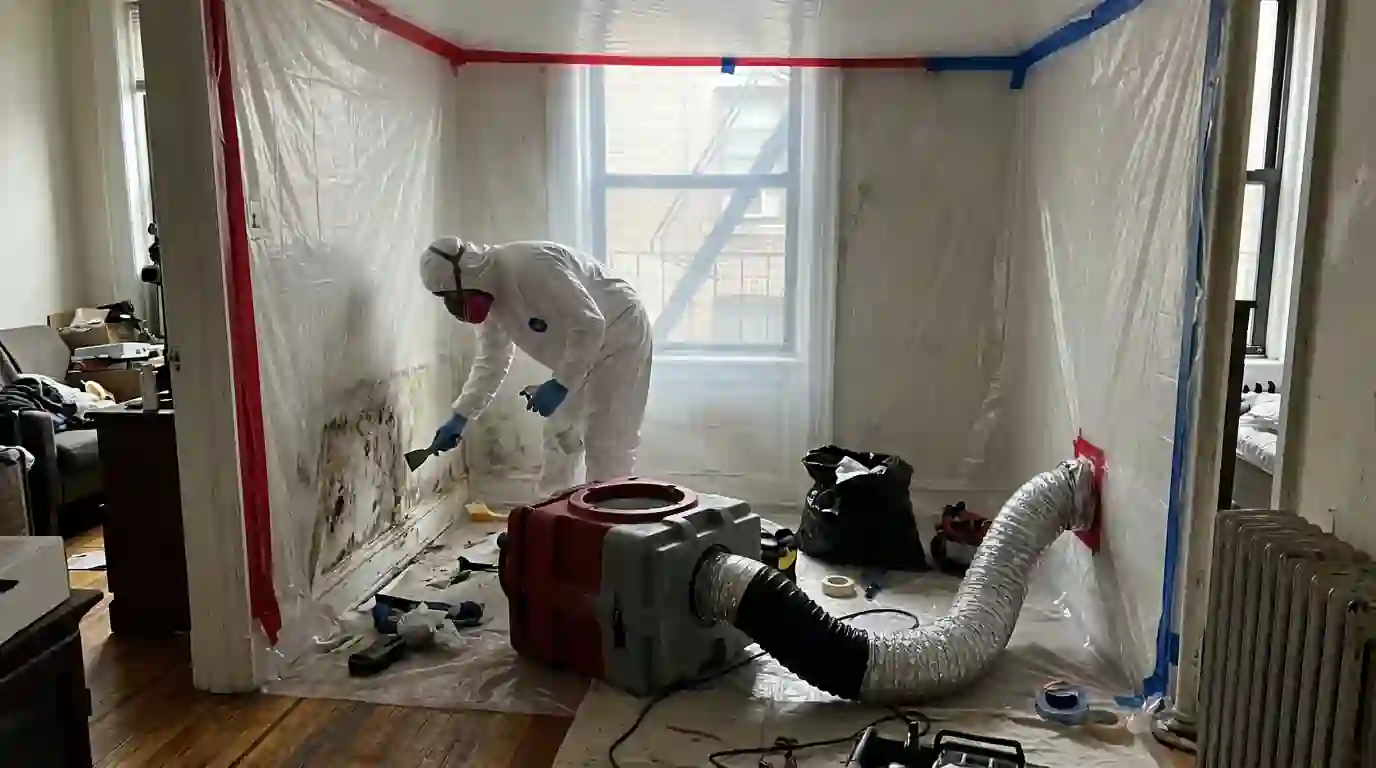
Mold remediation in Manhattan often means apartment and building work: leaks between stacked units, bathrooms with weak ventilation, winter condensation on prewar windows, and mold covered by building and city rules. From our Midtown office we contain the unit, protect the building and remove what grew; a typical remediation runs $1,223 to $3,757 nationally.
Updated September 2026
Local conditions
What drives mold in Manhattan buildings
Half of all housing units in Manhattan are studios or one-bedrooms, where one room carries the cooking, showering and sleeping for a household, and more than half of the city housing units sit in buildings put up before 1947. Small rooms, old plaster, steam heat and bathrooms stacked floor over floor make leaks between units and moisture with nowhere to go common causes of mold.
Winter adds condensation. January nights at Central Park average in the upper 20s, cold enough to sweat single-pane windows and uninsulated outside walls in steam-heated apartments. Storms add the rest: Ida dropped 3.15 inches of rain on Central Park in a single hour in 2021, and roof drains, parapets and basements took the overflow.
City rules shape the work too. In buildings with 10 or more units, mold over 10 square feet has to be assessed and removed by two independent companies, and we tell you at the first visit which side of that line your job is on.
Jobs we do most in Manhattan
These are the jobs Manhattan residents, boards and managers call us about most.
Apartment Mold Remediation
Co-op, condo and rental units with hallway and elevator protection.
Hidden Leak Detection
Tracing water from the unit above, a riser or the facade.
Ceiling Mold Removal
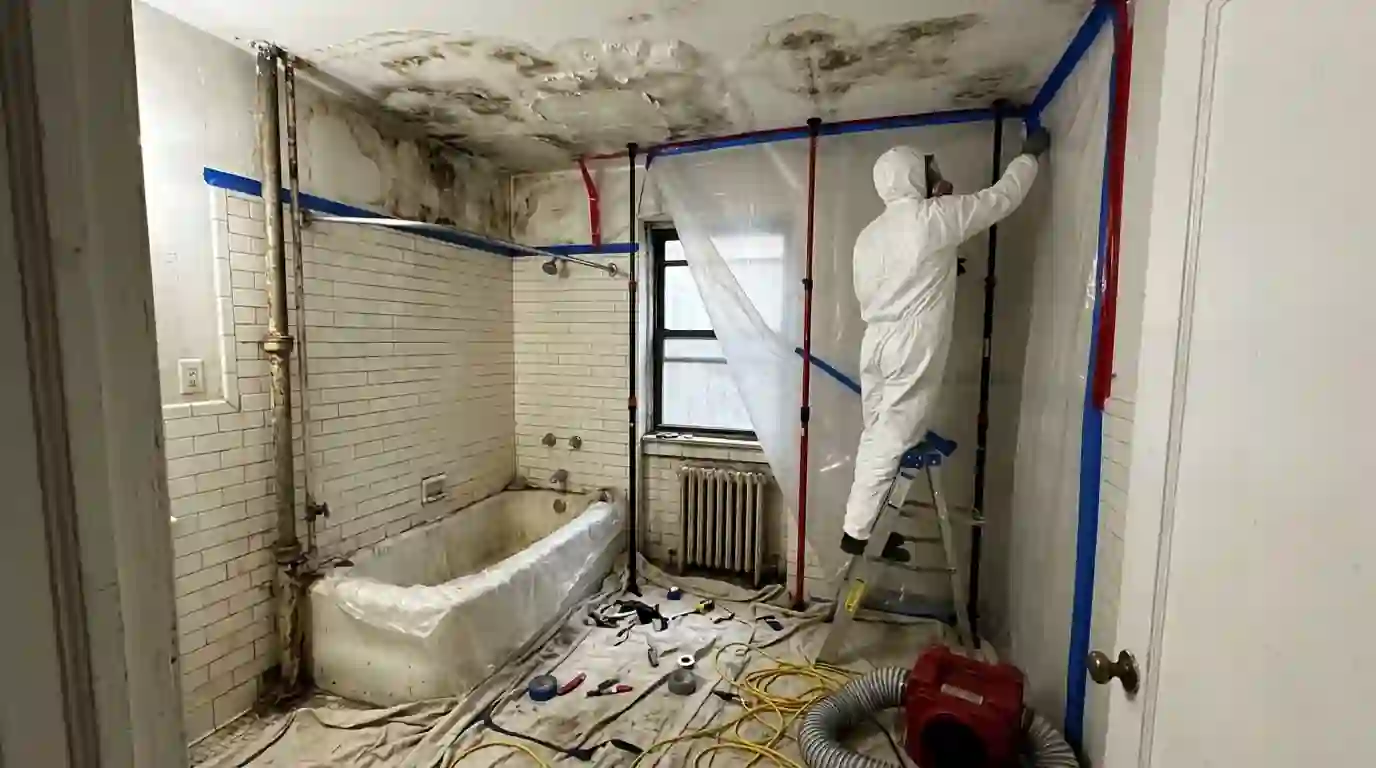
Ceilings under bathrooms and kitchens in stacked buildings.
Bathroom Mold Removal
Windowless bathrooms and shower walls with leaks behind tile.
HVAC and Duct Mold Removal
Through-wall units, PTACs and air handlers that smell musty.
Commercial Mold Remediation
Office suites and storefronts, worked after hours.
Working in Manhattan buildings
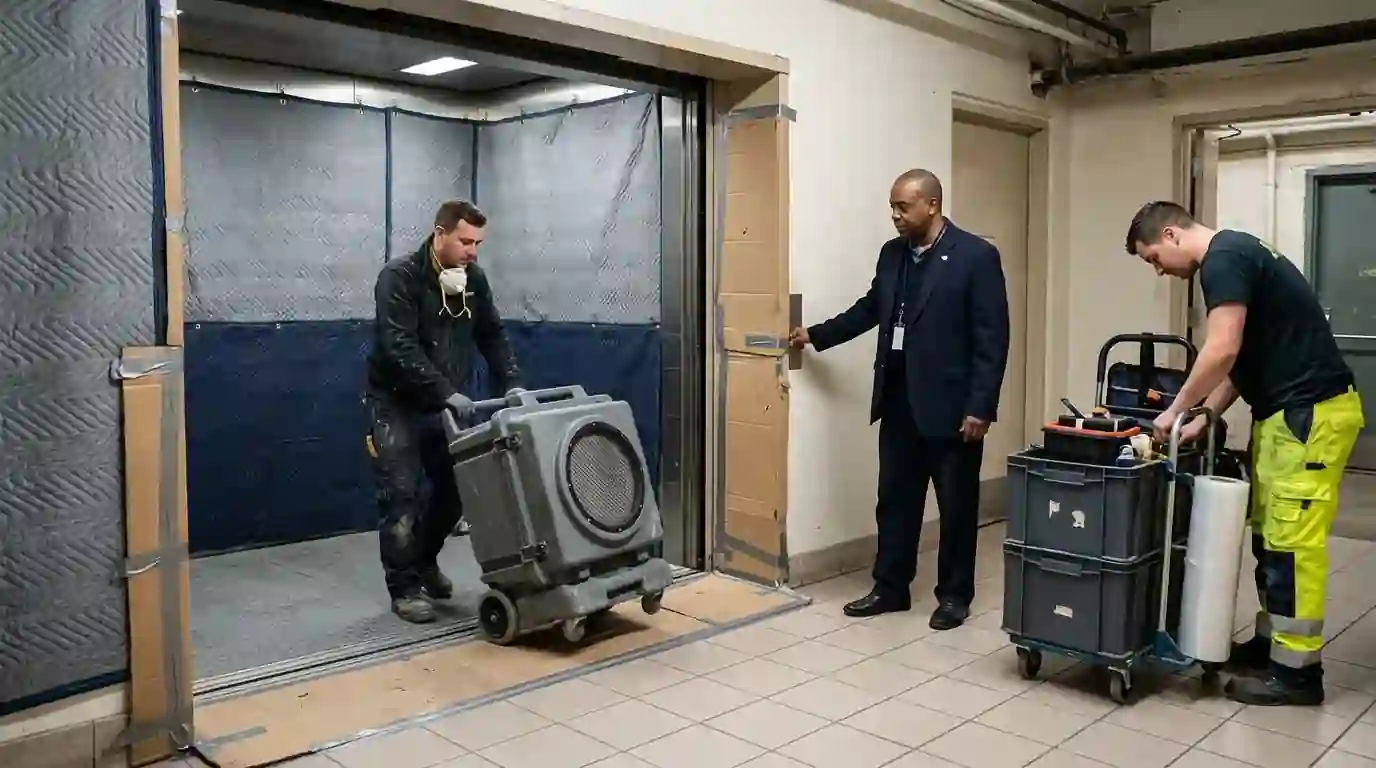
Co-op and condo boards usually want paperwork and a written scope before work starts, and most buildings set work hours and require elevator bookings. We prepare what the board and managing agent ask for, protect the hallway and elevator, and keep containment inside the unit so neighbors see as little of the job as possible.
When the source is upstairs or in a riser, we trace it through the building before opening your ceiling, and share readings with management so the right unit or the building fixes it.
Neighborhoods with their own page in Manhattan
Nearby areas we also cover
Questions from Manhattan
Yes. We work within building rules on hours, elevators and paperwork.
We answer 24/7 and give you a real arrival window on the phone; active leaks go first.
We trace it through the building and coordinate with management before opening your ceiling.
Yes, with after-hours work so the business stays open.