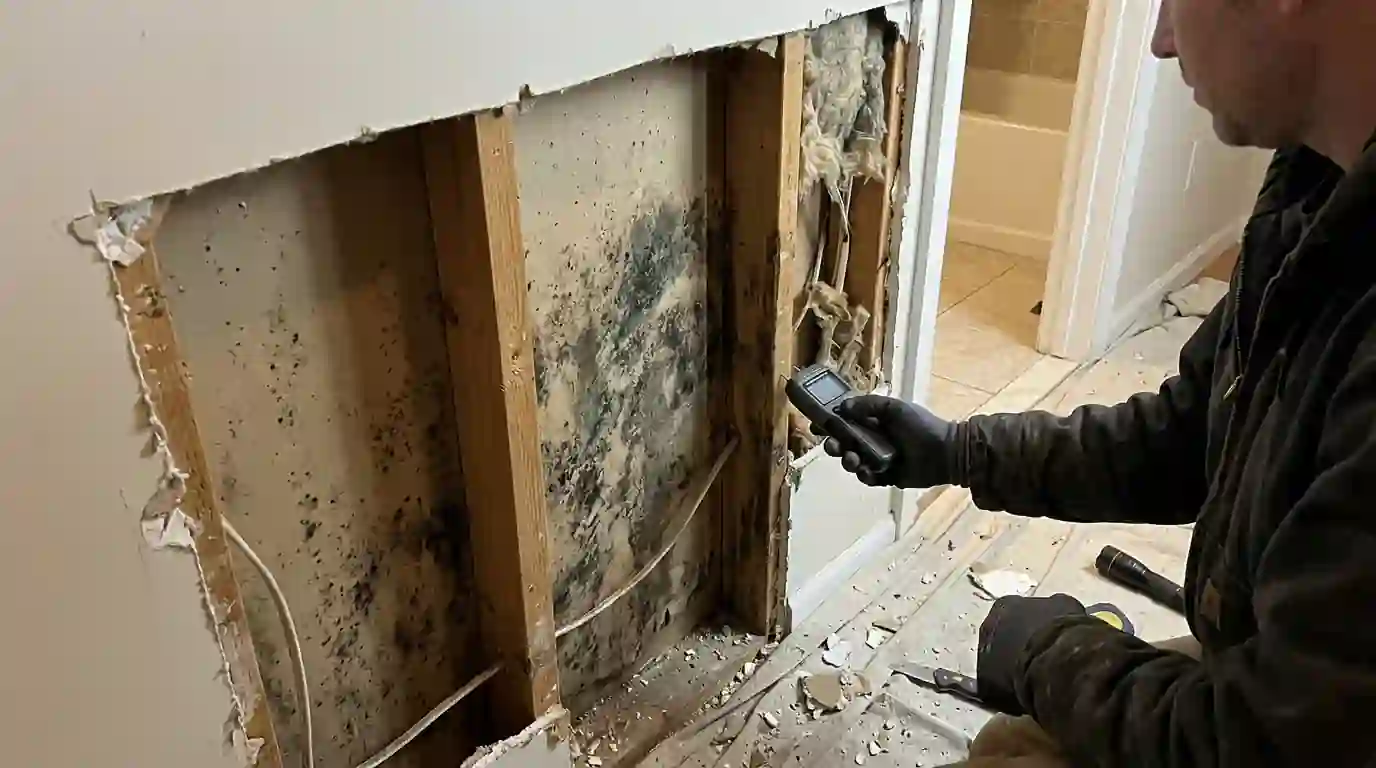
Quick answer
Attic mold in New York City is usually dark staining on the underside of the roof sheathing, caused by warm household air condensing on cold wood in winter, and national guides put attic mold removal at $1,000 to $4,000. Removal only holds if the moisture source is fixed, most often a bath fan venting into the attic or blocked roof vents.
Updated September 2026
Why attics grow mold in winter
An attic is supposed to stay close to outdoor temperature and dry. When warm, moist air from the house leaks up through light fixtures, attic hatches, plumbing chases and bath fans that dump into the attic, it meets roof sheathing that sits near freezing and condenses. Night after night, the wood stays damp long enough to grow mold, usually on the north side and near the peak where air is stillest.
We look for the air leaks and venting problems first, because cleaning without fixing them buys one winter at most. Then the sheathing is HEPA vacuumed and cleaned or blasted, wet or contaminated insulation is removed and replaced, and fans are ducted to the outside. If an actual roof leak is involved, it is a ceiling job as well.
Roof sheathing
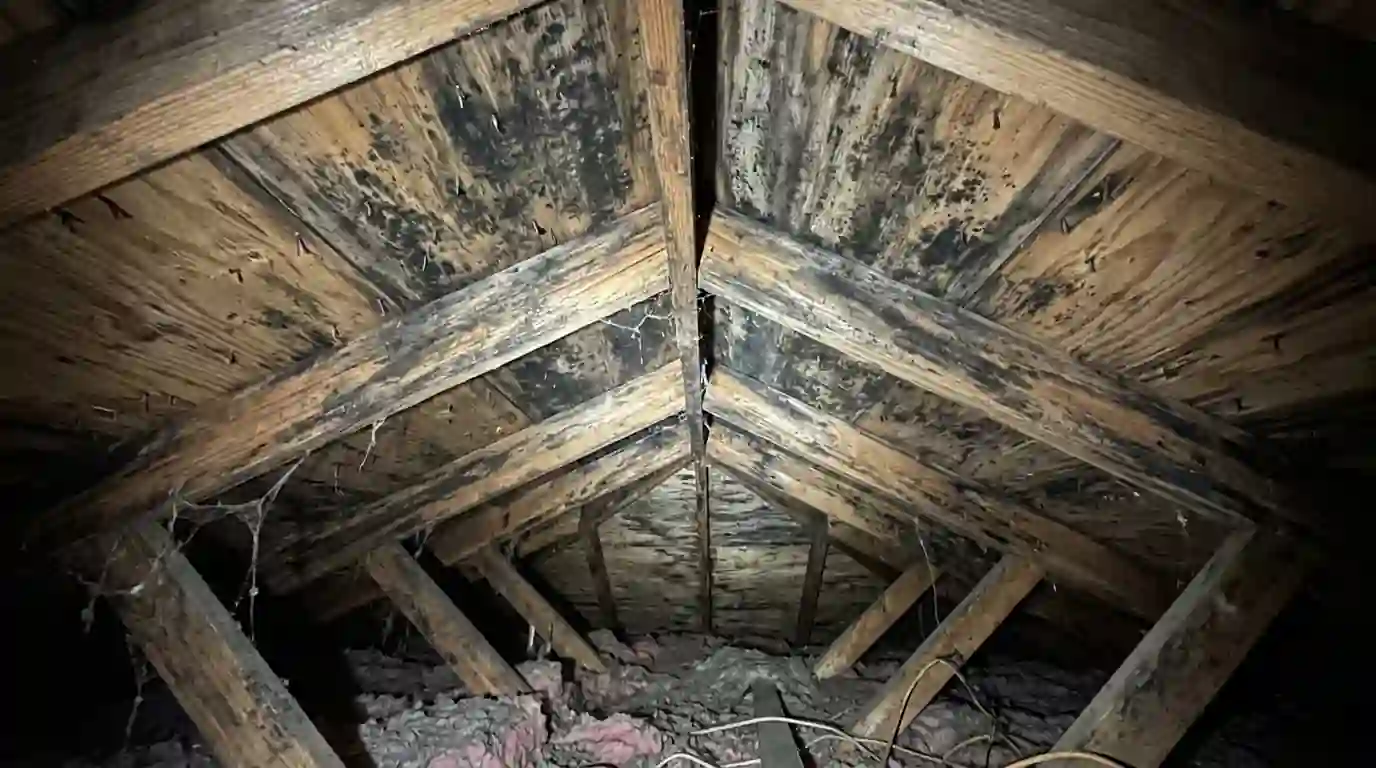
Most attic mold sits on the underside of the plywood or plank sheathing and on the rafters near it. It is usually surface growth and staining rather than rot, so the wood is cleaned rather than replaced. We HEPA vacuum first, then clean, sand or blast the growth depending on how much there is and how the attic is laid out, and seal the cleaned wood once it reads dry. Soft or delaminated sheathing is flagged for a roofer, because that is a roof repair.
Wet insulation
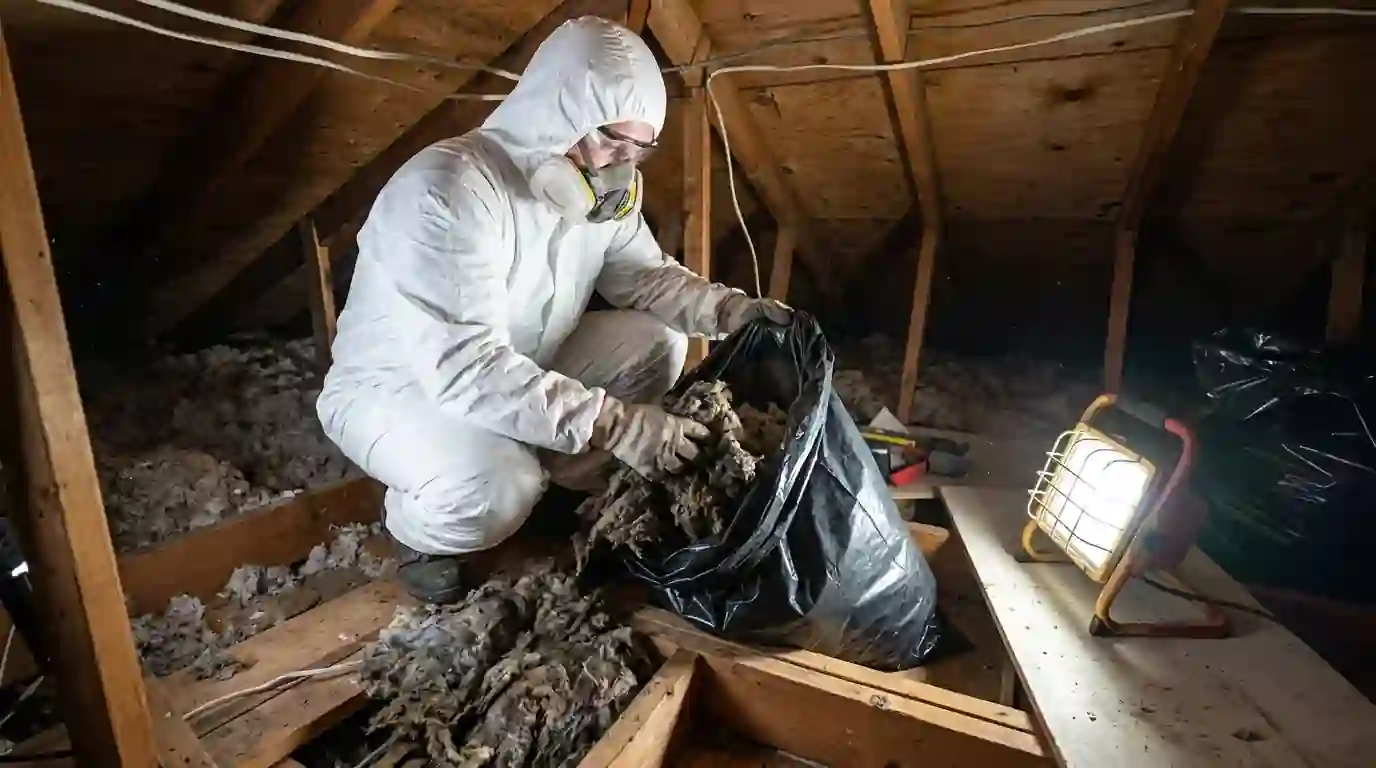
Insulation that has been soaked by condensation or a leak loses its value and holds moisture against the ceiling drywall below. Loose fill and batts with mold on them come out, bagged inside the attic and taken down through containment so debris does not end up in the bedrooms. Once the sheathing is clean and the air leaks from below are sealed, new insulation goes in at the depth the attic needs, keeping the vents at the eaves clear so the attic can breathe again.
Fans venting into the attic
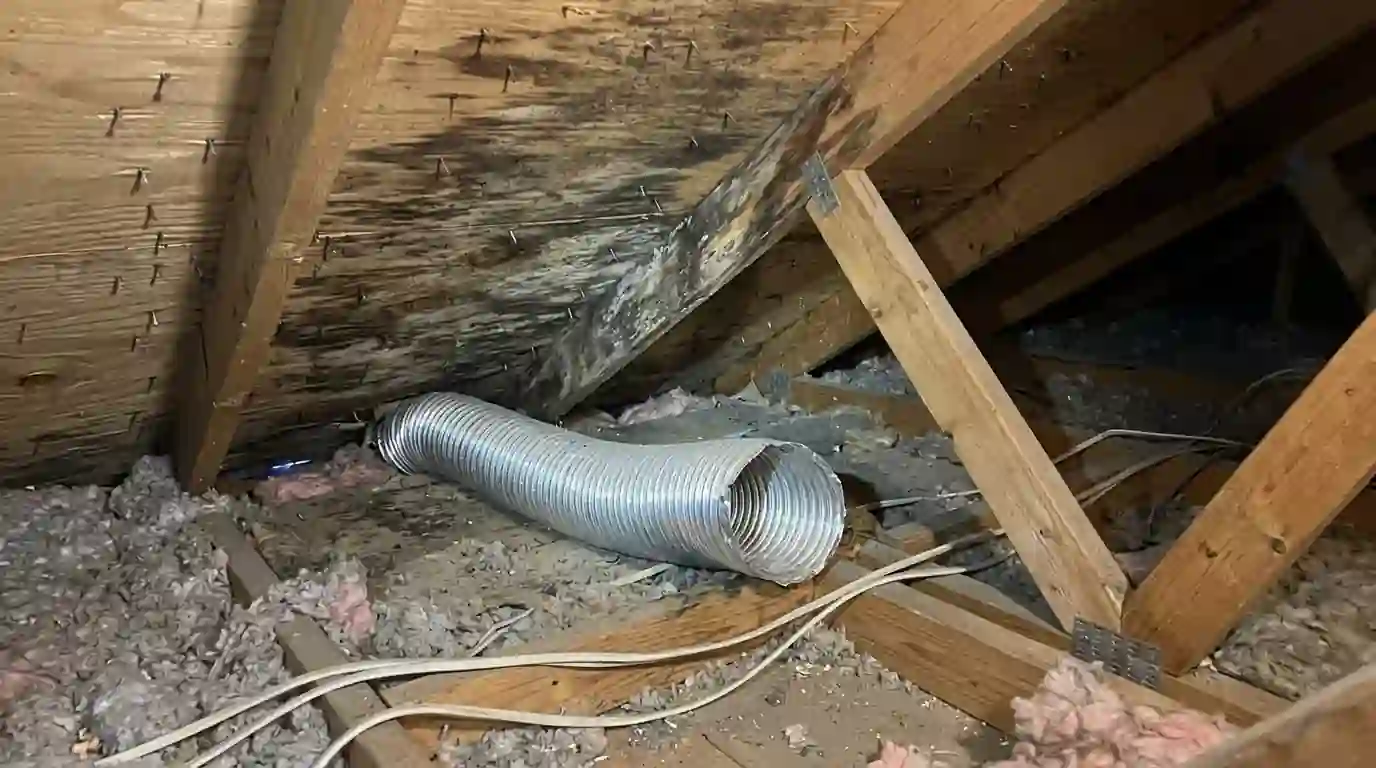
A bathroom fan that stops at the attic floor, or a duct that has fallen off its roof or wall vent, sends every shower worth of steam straight onto the sheathing. It is a common cause of attic mold, and one of the easiest to fix. We run the duct to a proper exterior vent, insulate it so it does not drip condensation back into the fan, and check kitchen and dryer vents while we are up there, since they cause the same problem.
What attic mold removal costs
National guides put attic mold removal at $1,000 to $4,000. Tight attics, large roof areas and full insulation replacement push toward the top of that range.
Roof area affected
Part of one slope or the whole attic.
Access
Low, tight attics take longer to work in.
Insulation
Removal and replacement is a large part of the cost.
Method
Hand cleaning, sanding or blasting.
Venting fixes
Ducting fans outside and sealing air leaks.
Signs of mold in the attic
Dark staining on the sheathing
Black or gray stains on the underside of the roof deck, often worse on the north side.
Frost or drips in winter
Frost on nails and sheathing that melts and drips on warm days.
Bath fan ducts ending in the attic
A fan that blows shower air into the attic instead of outside.
Damp or matted insulation
Insulation that feels damp or has dark patches has been getting wet.
A musty smell at the hatch
The first breath when you open the attic tells you a lot.
Stains on top-floor ceilings
Condensation dripping from above can show up as ceiling spots.
New York conditions
What city winters do to attics
January nights at Central Park average in the upper 20s, cold enough to keep roof sheathing near freezing for weeks at a time, while the rooms below stay warm and humid. Staten Island has the highest homeownership rate of the five boroughs, 61.7 percent in the 2017 city survey, and owners are the ones who climb into their own attics and find the staining. By the time it is visible from the hatch, it has usually built up over several winters.
How an attic job runs
Fix the moisture, then clean, then insulate.
We inspect from inside
Sheathing, insulation, vents, fans and air leaks from below.
We protect the rooms below
Containment at the hatch and covered floors on the way up.
We remove wet insulation
Bagged in the attic and carried out through containment.
We clean the sheathing
HEPA vacuuming, then cleaning, sanding or blasting.
We fix the airflow
Fans ducted outside, air leaks sealed, vents cleared.
We insulate and check
New insulation and readings once the wood is dry.
Call (332) 234-9326A person answers, day or night.
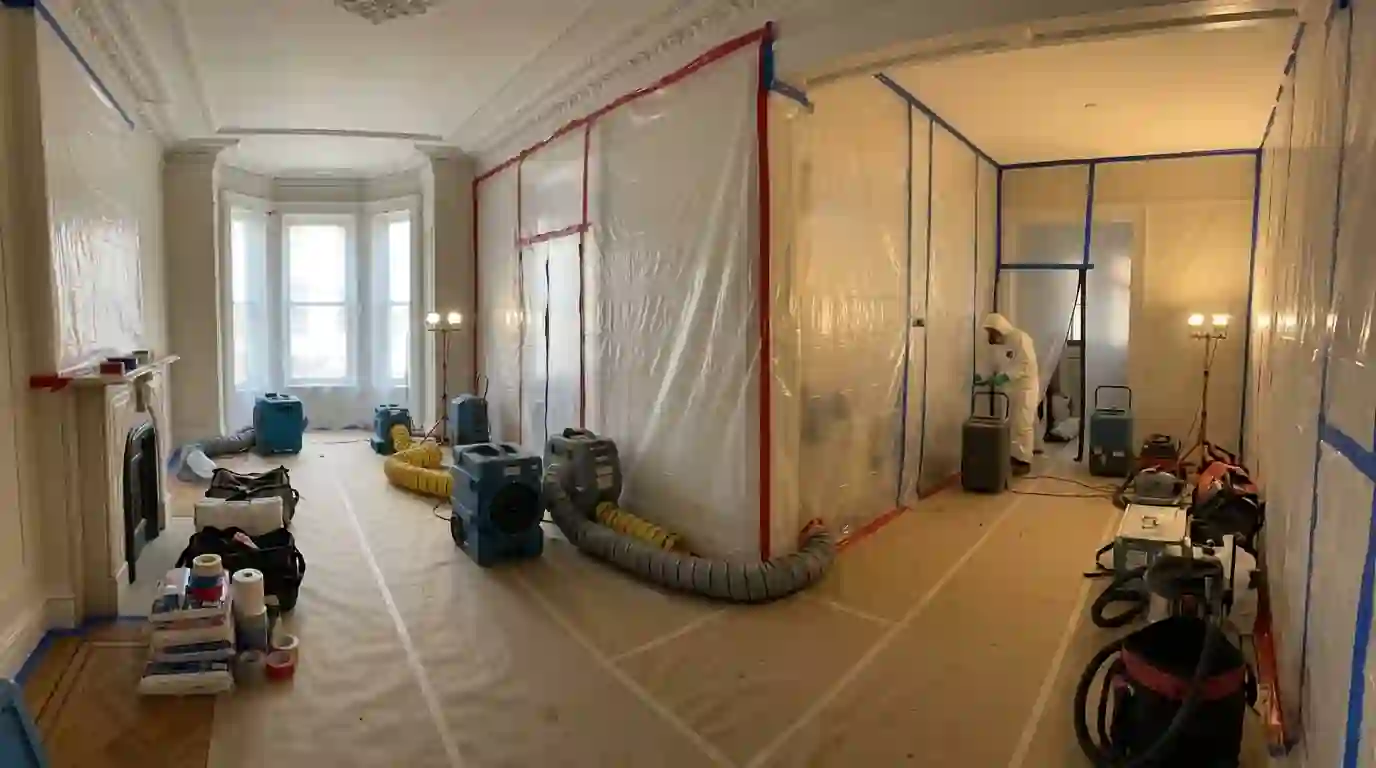
Attic work is contained so dust from the roof deck does not drop into the rooms below.
Talk to us nowQuestions about attic mold removal
Usually not. Most attic mold comes from household moisture condensing on the sheathing.
Only with the moisture source fixed. Otherwise it returns next winter.
Rarely. Surface growth is cleaned; soft or delaminated wood is a roof repair.
Spores and smell can move down through gaps around fixtures and the hatch.
Look where the duct ends. We check it as part of every attic job.
Any time works, but before winter is ideal, so it does not build up again.
Related jobs we handle
Basement Mold Removal
Foundation walls, framing and finished basements dried and cleared.
Window Condensation Mold Removal
Sills, frames and cold corners that stay wet all heating season.
Wall Mold Removal
Opening walls in the right place and cutting only what the mold reached.
Carpet and Floor Mold Removal
Carpet, pad, hardwood and the subfloor underneath, checked and cleared.
Stains on the roof deck or a musty attic?
Call now. We answer 24/7 and fix the airflow along with the mold.
Answered 24 hours a day, 7 days a week