Quick answer
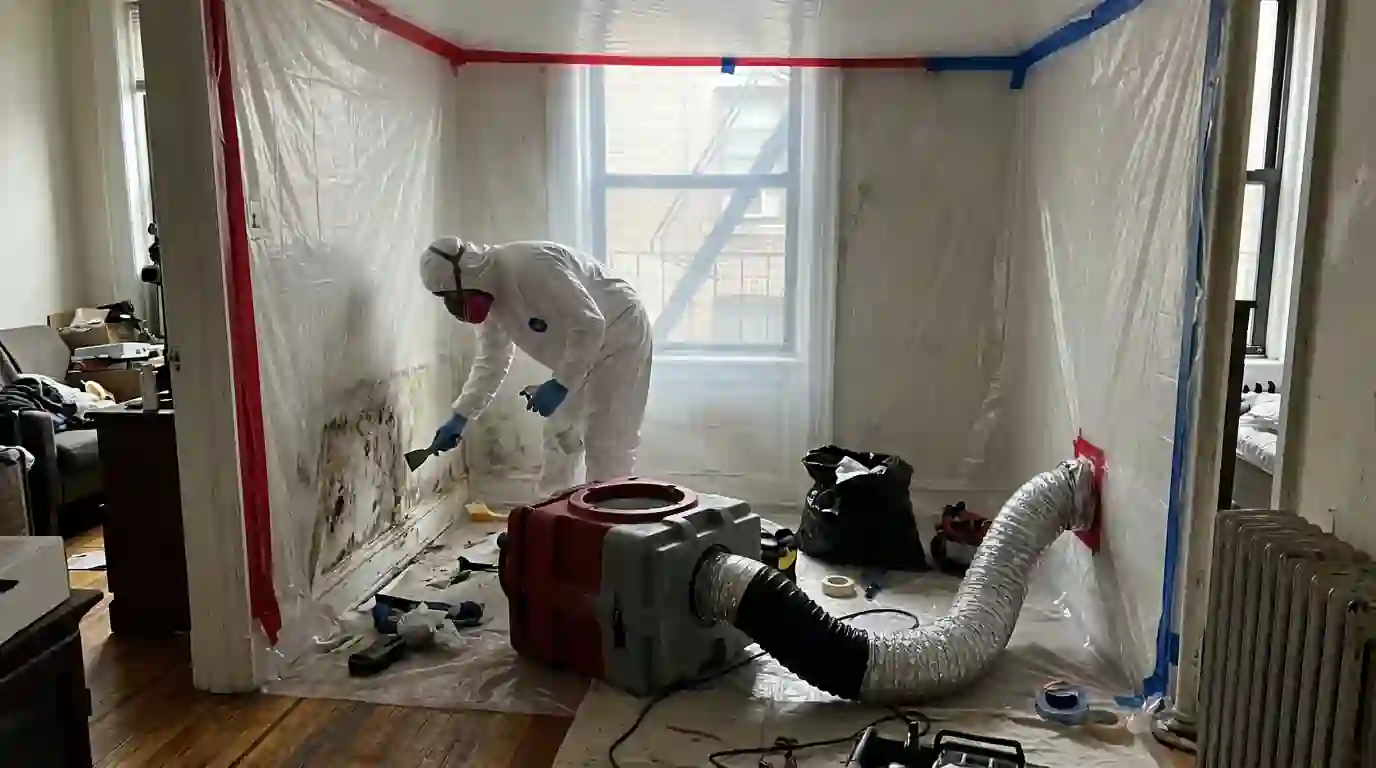
Mold in Crown Heights is usually a leak problem: a bathroom upstairs dripping into the ceiling below, a roof or parapet leak on the top floor of a walk-up, or water getting into the back wall of a row house. We trace the water, contain the work area, remove the growth and wet material, dry the framing, and document the cause so the owner can repair it and the tenant can see it was fixed.
Updated September 2026
Local conditions
What drives mold in Crown Heights homes
Crown Heights and Prospect Heights had an 18.3 percent homeownership rate in 2021, and the district logged 164.8 serious housing code violations per 1,000 privately owned rental units that year. Most mold here is found by a tenant, reported, and fixed by an owner working against a deadline.
The buildings are old. More than half of New York City housing units are in buildings from before 1947, and Crown Heights is full of them: brick and brownstone row houses split into apartments, and four- to six-story walk-ups. Plumbing stacks run through every floor, so a leak in one unit often shows up two floors down.
Winter makes it worse. Central Park January normals run about 39 to 41 degrees by day and 27 to 30 at night, cold enough to sweat old windows and exterior walls. And when HPD writes a mold violation, the order usually directs the owner to repair the source as well as remove the mold.
Jobs we do most in Crown Heights
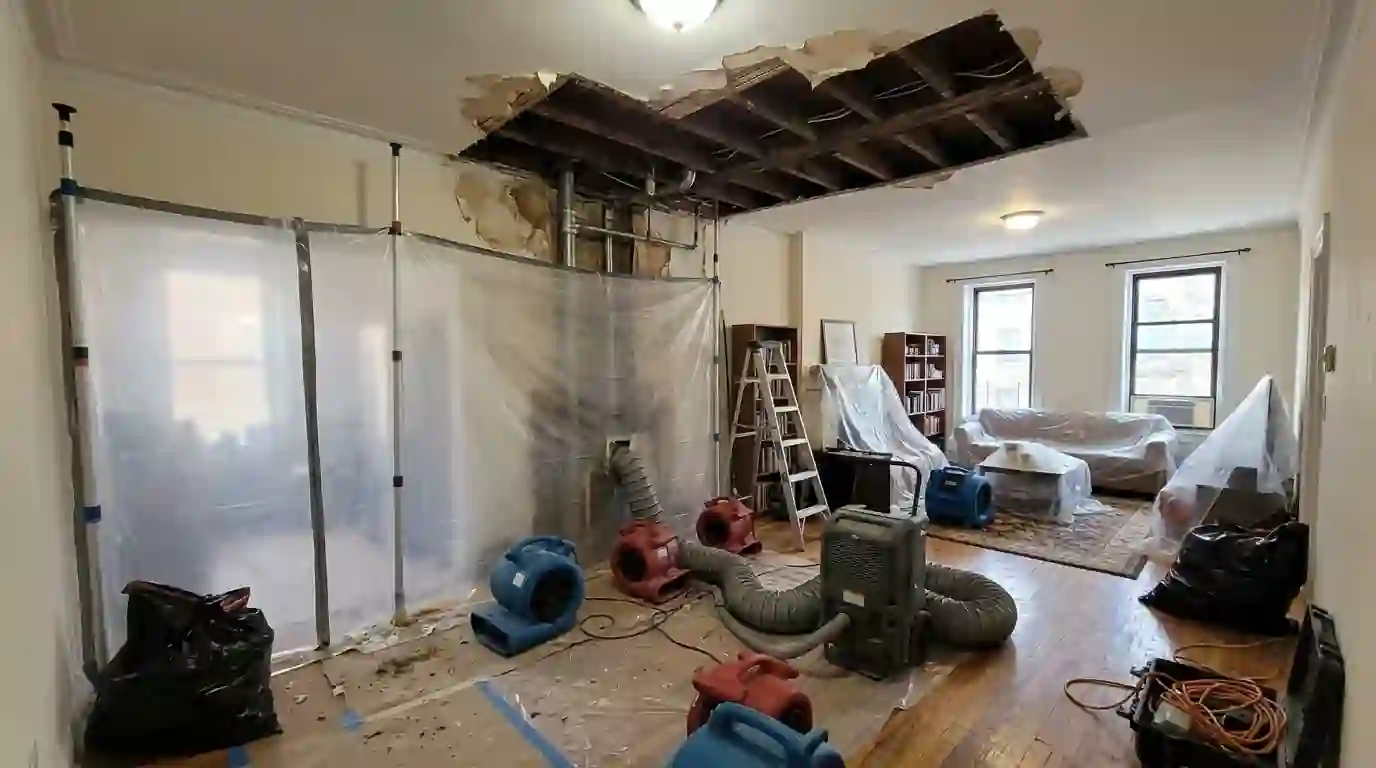
Leaks from above and violation work make up most of our Crown Heights calls. Each job has its own page.
Ceiling Mold Removal
Ceilings opened under leaking bathrooms and roofs, then dried and closed.
Hidden Leak Detection
Following the stain up the plumbing stack to the unit where it starts.
Apartment Mold Remediation
Containment and removal inside a rented unit while neighbors stay home.
HPD Mold Violation Remediation
Cause and mold corrected before the HPD deadline, with records.
Window Condensation Mold Removal
Black spotting on sills and cold walls in winter.
Mold Damage Repair
Drywall, plaster patches and paint put back once the framing reads dry.
Working in row houses and walk-ups
A row house split into apartments usually has one plumbing stack serving every bathroom. When a ceiling stains, we check the units above with readings before opening anything, and we tell the owner which fixture or pipe is leaking so the repair is done once.
In buildings with 10 or more units, mold over 10 square feet must be assessed by one company and removed by a different, independent one. We take one role, not both, and our records are written to work with the other company's.
More in Brooklyn
Nearby areas we also cover
Bedford-Stuyvesant Flatbush & Midwood East Flatbush All coverage
Questions from Crown Heights
The leak gets stopped upstairs. Then we open and dry your ceiling and remove any mold.
The moisture can. Mold grows wherever the shared wall or ceiling stays wet, which is why we trace the source.
Yes. Once the framing reads dry, we can close and finish the ceiling.
Often it is condensation on cold walls and windows. Readings tell the two apart.