Short answer
Cleaning mold yourself in New York City makes sense for small patches, under about 10 square feet, on hard surfaces such as tile, glass and painted trim, once the moisture is fixed. City rules draw the same line: in buildings of 10 or more units, mold over 10 square feet has to be assessed and removed by two independent companies.
Where the 10 square foot line comes from
Ten square feet is roughly a three-by-three patch. It is the size most mold guidance uses to separate small jobs from larger ones, and New York City rules use it too: in buildings with 10 or more units, mold over 10 square feet has to be assessed and removed by two independent companies.
Owners of smaller buildings can handle small jobs themselves as long as they follow the city work practices: correct the moisture, limit dust, HEPA vacuum at the point of work, clean with soap or detergent and water, and finish with wet cleaning or HEPA vacuuming.
A quick decision guide
Match what you see to the right response.
| What you see | Reasonable response |
|---|---|
| Black specks on shower grout | Clean with detergent; replace moldy caulk; run the fan |
| Spots on a painted bathroom ceiling | Clean, prime with a stain blocker, fix the fan |
| Gray mold behind a bed on an outside wall | Clean, move furniture off the wall, lower humidity |
| Growth at the bottom of drywall after a leak | Call; the board likely needs to come out |
| Mold after a flood or backup | Call; porous materials need removal and disinfection |
What you can reasonably handle
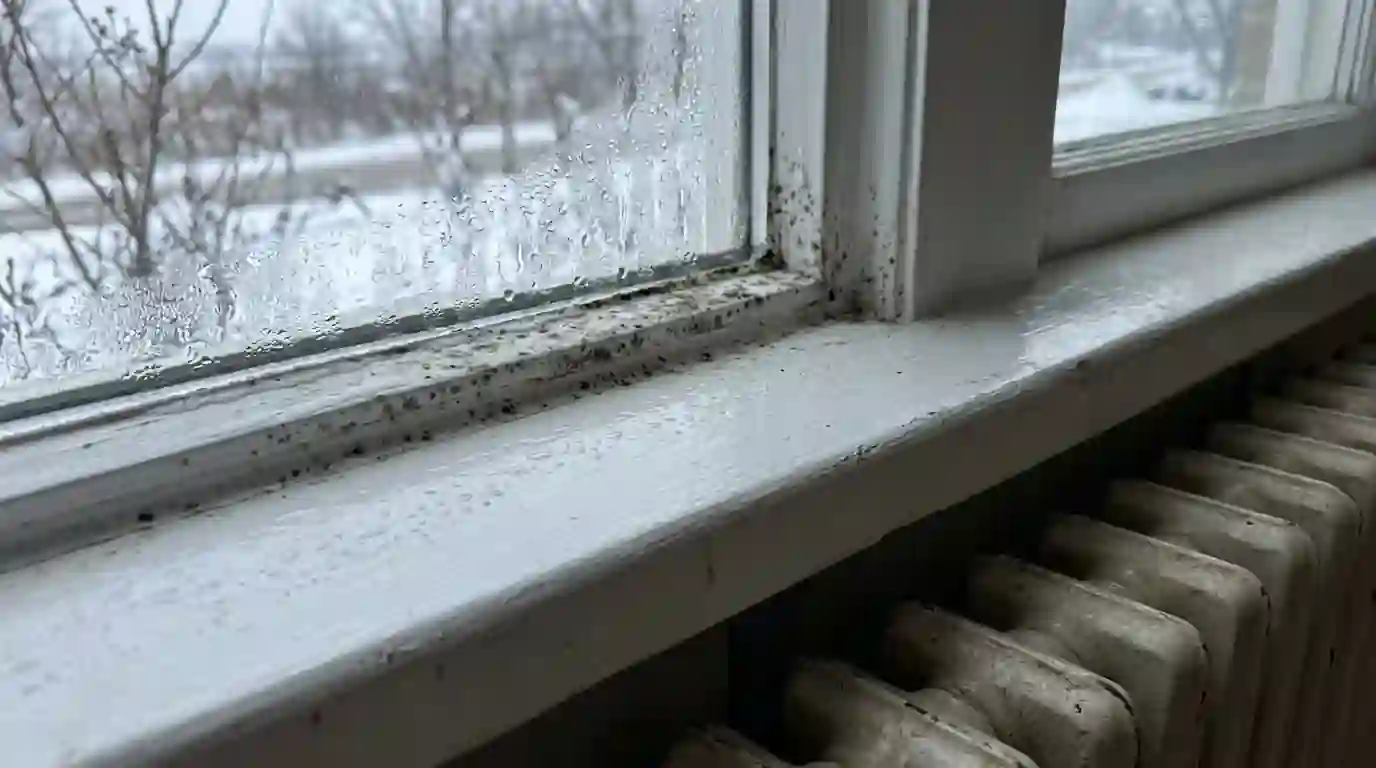
If all of these are true, a careful homeowner or tenant can usually clean it.
- The patch is small, well under 10 square feet
- It is on a hard, non-porous surface: tile, glass, sealed wood, painted trim
- The water source is known and fixed, such as shower steam or window condensation
- Nobody in the home has asthma, allergies or other health concerns about exposure
- The material underneath is solid, not soft, bubbling or stained through
Not sure which side of the line you are on? Describe it on the phone and we will tell you honestly.
Talk to us nowHow to clean a small patch safely
Take your time and keep it contained.
- Fix the water first. Otherwise it grows back in the same spot.
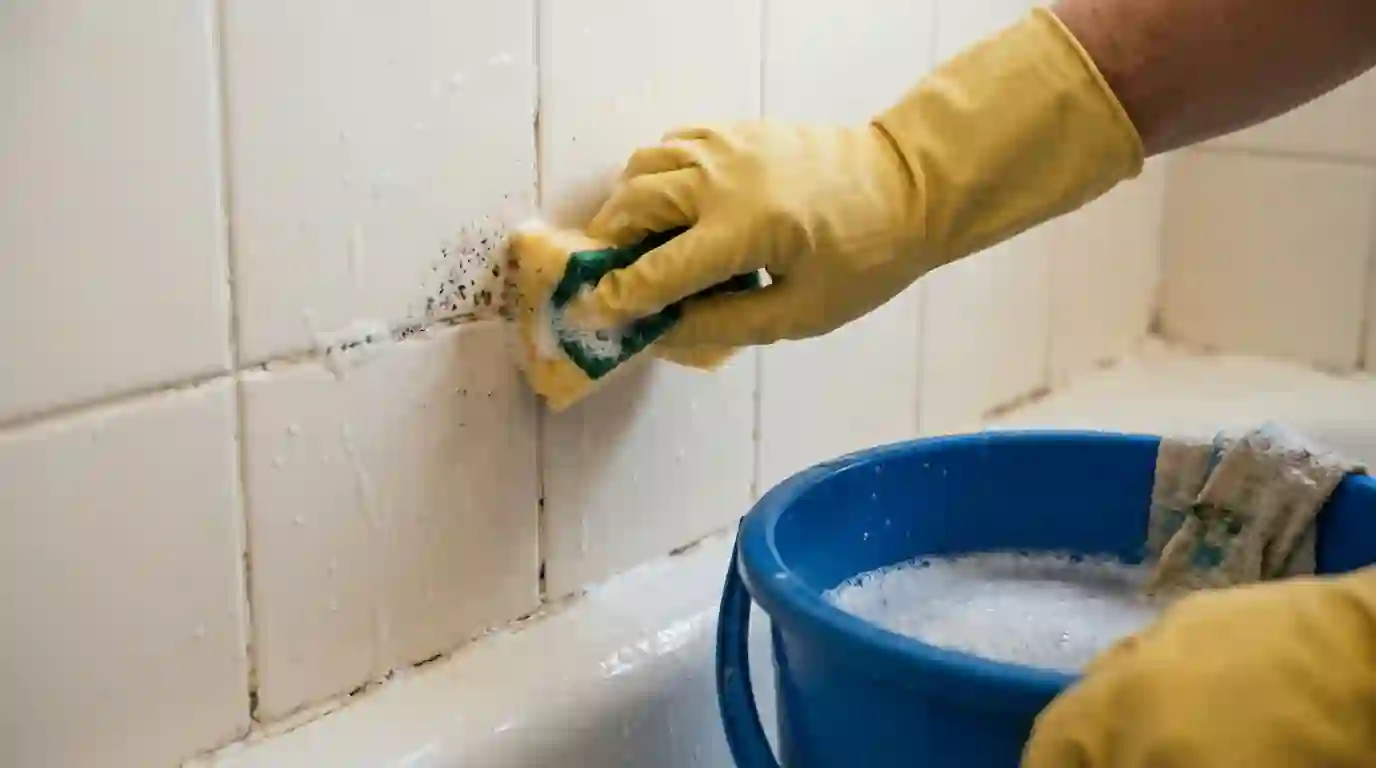
- Protect yourself. Gloves, goggles and a well-fitting mask.
- Do not dry-brush or sand it. That puts spores in the air.
- Clean with detergent and water. Scrub gently, rinse and wipe dry.
- Bag the rags and wipes. Seal them before carrying them through the home.
- Dry the area completely. Run a fan or open a window if the air outside is dry.
Why bleach is not the answer
Bleach is the first thing most people reach for, and it is the wrong tool for most mold. On tile and glass it lightens the stain, which makes it look solved. On drywall, wood and caulk it cannot reach the growth inside the material, and it adds water to it. The city work practices call for soap or detergent and water for a reason: the goal is to remove the growth and dry the surface, not to bleach what is left.
When to stop and call
Any one of these is a sign the job is bigger than it looks.
- The growth covers more than about 10 square feet, even in several patches
- It is on drywall, ceiling board, insulation, carpet or wood
- It comes back within a few weeks of cleaning
- It followed a flood or a sewage backup
- You smell mold but cannot find it
- The paint is bubbling or the wall feels soft
The hidden cost of getting it wrong
The risk with a do-it-yourself job is not the cleaning; it is what gets left behind. Growth scrubbed off the face of drywall is often still on the back. Spores knocked loose without containment settle in the next room and in the air conditioner. And a wall painted over while still wet grows again, usually bigger. When a small job comes back twice, the cheapest next step is a moisture check to find out what is really going on behind the surface.
What professionals do differently
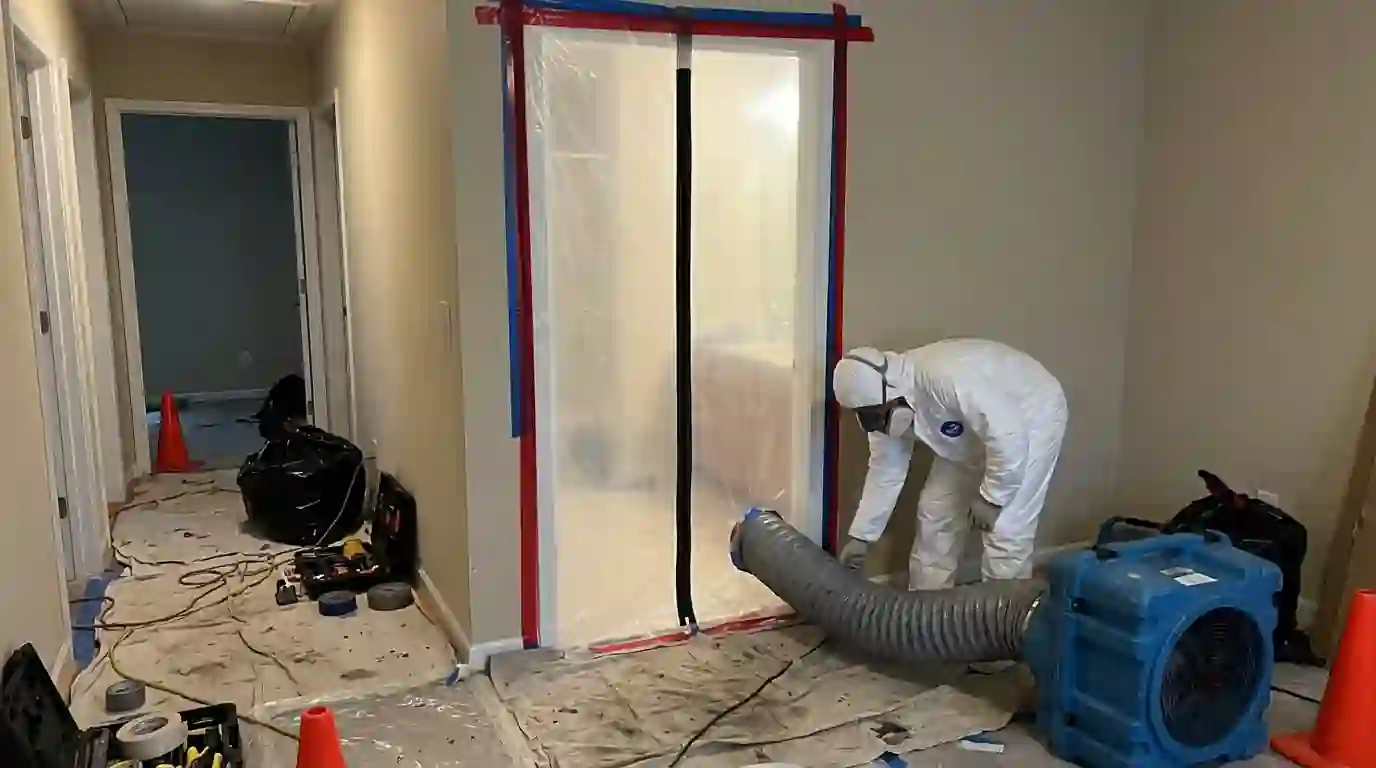
A professional removal is not stronger chemicals; it is containment and removal. The area is sealed and kept under negative air so spores stay inside, the moisture is mapped so the boundary is known, porous material with growth is cut out and bagged, the framing is HEPA vacuumed and cleaned, and the space is dried until it reads dry before anything is rebuilt. That is what makes it last.
Renters, owners and the rules
In a rental, the owner is responsible for correcting mold and the condition behind it; Local Law 55 requires owners of buildings with three or more apartments to inspect units every year and fix the cause. Tenants can clean small surface spots in the meantime, but the leak and anything inside the walls are the owner's to fix.
Owners of buildings under 10 units can do small jobs themselves under the city practices. In larger buildings, anything over 10 square feet goes to an assessor and a separate removal company.