Short answer
After a basement floods in New York City, the first 48 hours decide whether it becomes a mold job: stay out until the power is safe, stop or wait out the water, pump it out, pull soaked carpet, pad, drywall and insulation, and start drying. Treat any water that came up through a floor drain or across the street as sewage.
Hour zero: make it safe
Before anything else, make sure nobody gets hurt. Water and electricity in a basement are a real danger, and flood water is rarely clean.
- Stay out if outlets or appliances are under water. Wait for the power to be shut off.
- Turn off power only from a dry spot. If the panel is in the flooded basement, call the utility or the building.
- Keep children and pets away. Storm and drain water carries sewage and debris.
- Stop using drains that flow to the basement. Sinks, toilets and washers upstairs can push more water down.
Hours 1 to 6: document and call
Once it is safe, take a few minutes to record what happened. It is much harder to do later, and insurers ask for it.
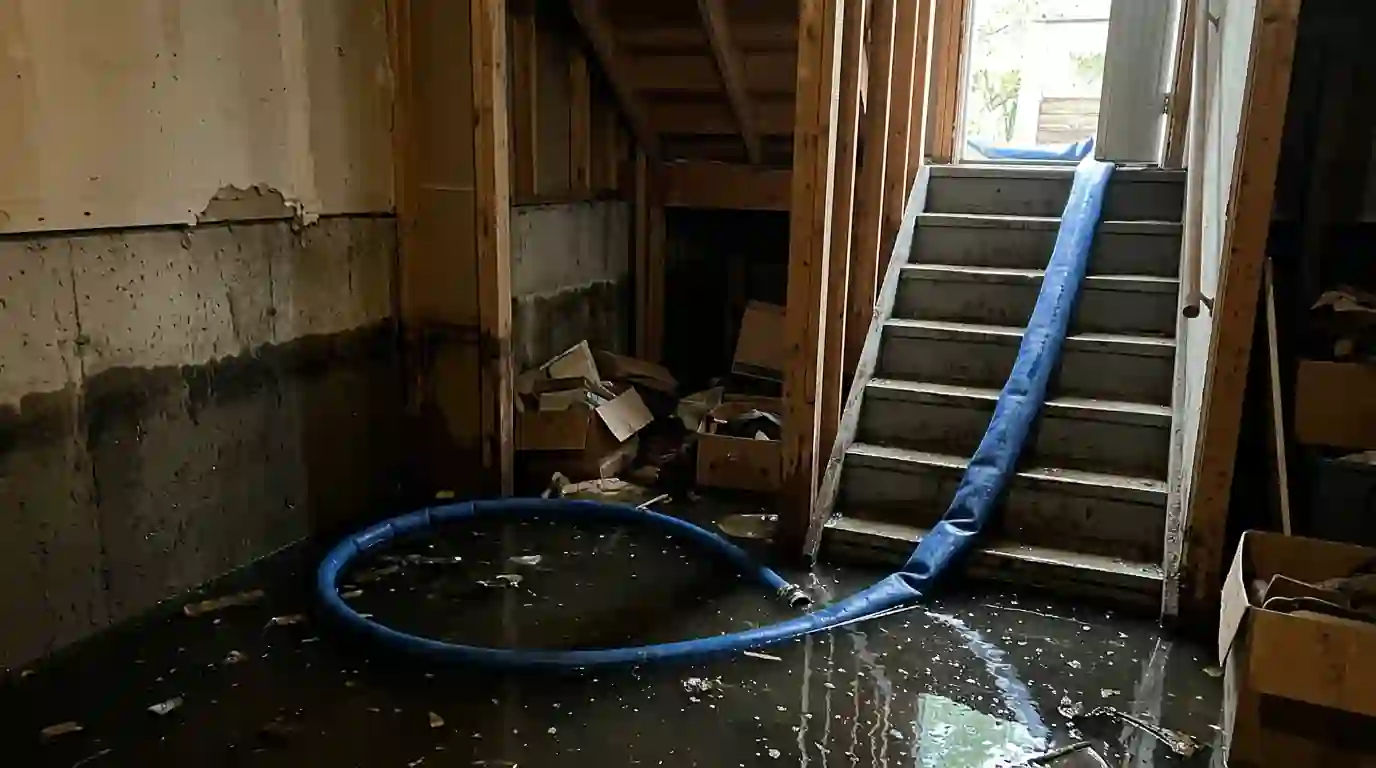
- Photos and video of the water level, including a clear shot of the line on the wall
- Close-ups of damaged belongings before anything is moved
- The time the water came in and where it came from
- A call to your insurer to open a claim, and a call to us to start the cleanup
Why city basements flood so fast
City sewers are generally built to carry 1.5 to 1.75 inches of rain an hour. Recent storms have gone well past that: 1.94 inches in an hour during Henri, 3.15 during Ida, and 2.5 on September 29, 2023. When the sewers are full, water has nowhere to go but into the lowest spaces.
About 60 percent of the city runs on combined sewers, one pipe carrying storm water and building waste, so a basement floor drain without a backwater valve can bring sewage up into the house. That is why flood water in a city basement is treated as contaminated until proven otherwise.
Water in the basement right now? We answer 24/7 and start pumping as soon as we arrive.
Talk to us nowHours 6 to 24: get the water out
Standing water has to go before anything can dry. Deep water needs pumps; shallow water over a slab can come out with extractors. A shop vacuum works for a small, clean puddle, but never use a household vacuum on flood water.
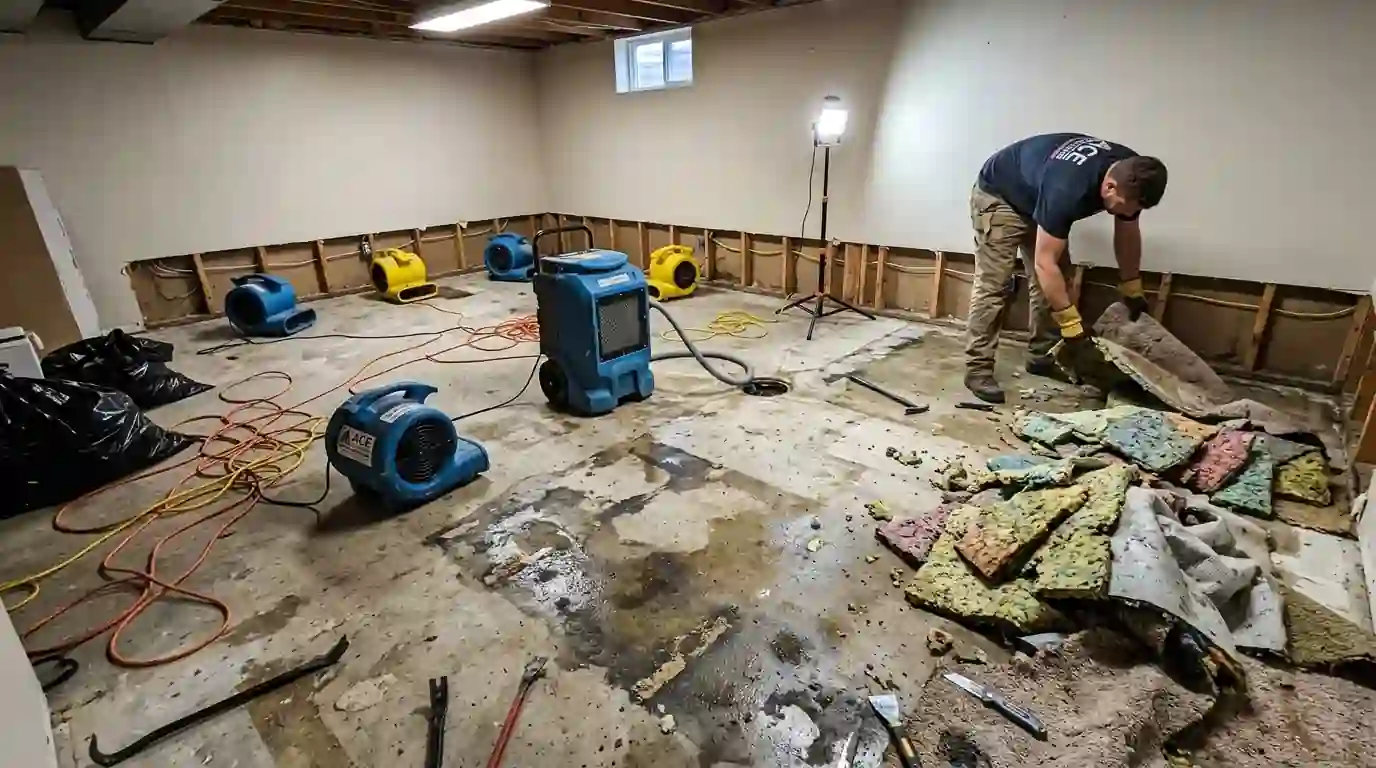
Once the floor is clear, the soaked materials are the next source of water. Carpet pad, the bottom of drywall and fiberglass insulation hold far more water than the slab, and they keep feeding moisture into the room until they come out.
Hours 24 to 48: pull what cannot dry in time
Mold can establish on wet building materials within 24 to 48 hours, so porous materials that will not dry in that window come out.
| Material | Usually | Why |
|---|---|---|
| Carpet pad | Remove | Holds water against the slab |
| Carpet | Remove if sewage touched it | Cannot be reliably disinfected |
| Drywall below the wet line | Cut out with a margin | Wicks water up inside the wall |
| Insulation | Remove | Stays wet and loses its value |
| Cardboard, paper, particleboard | Remove | Feeds mold quickly |
| Concrete, tile, metal, solid wood | Clean and dry | Non-porous or dries well |
What to do with belongings
Move anything still dry up and out first. For things that got wet, sort quickly: hard items like metal, glass and plastic can be cleaned and disinfected; clothing can often be laundered hot; photos and papers should be laid flat to dry or frozen until they can be dealt with. Upholstered furniture, mattresses and cardboard that sat in flood water are usually lost. Photograph everything before it goes to the curb.
What dry actually means
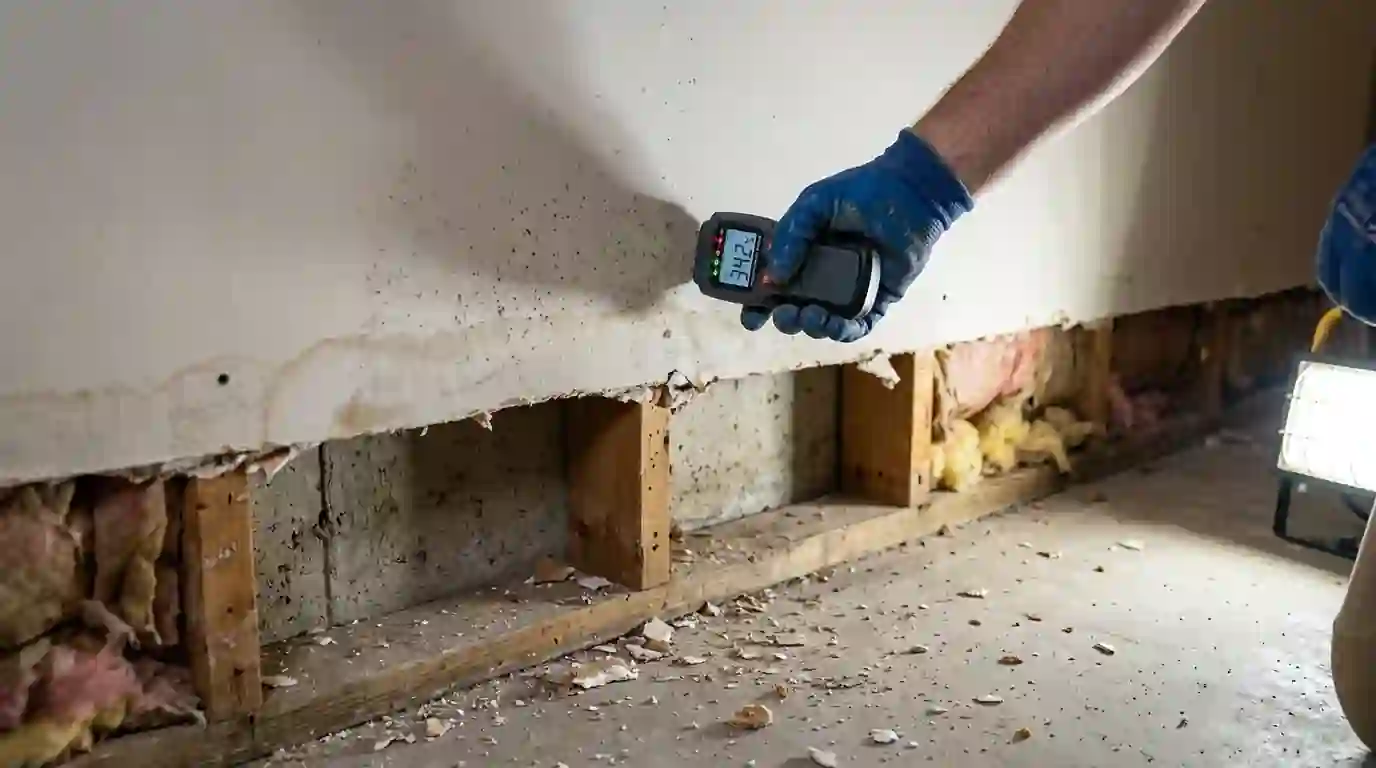
A floor that looks dry is not the finish line. Drywall, framing and the slab have to read dry on a moisture meter, checked on each visit, before anything is closed up or new flooring goes down. Dehumidifiers and air movers run until they do. Keep basement windows shut on humid days, because outdoor air in summer carries more moisture than the equipment is trying to remove.
Mistakes that turn a flood into a mold job
These are the shortcuts that lead to a second call a month later.
- Mopping up and leaving the carpet and pad in place
- Wiping down walls instead of cutting out wet drywall
- Turning off the dehumidifiers when the floor looks dry
- Repainting or putting new flooring over a wet slab
- Storing belongings back against damp walls
After it is dry
Rebuild with materials that handle the next flood better: moisture-resistant board held off the slab, and flooring that tolerates water. Ask a plumber about a backwater valve if the water came up through a drain. A drained dehumidifier keeps the space from sitting damp all summer, which is how most basement mold starts in the first place.