Short answer
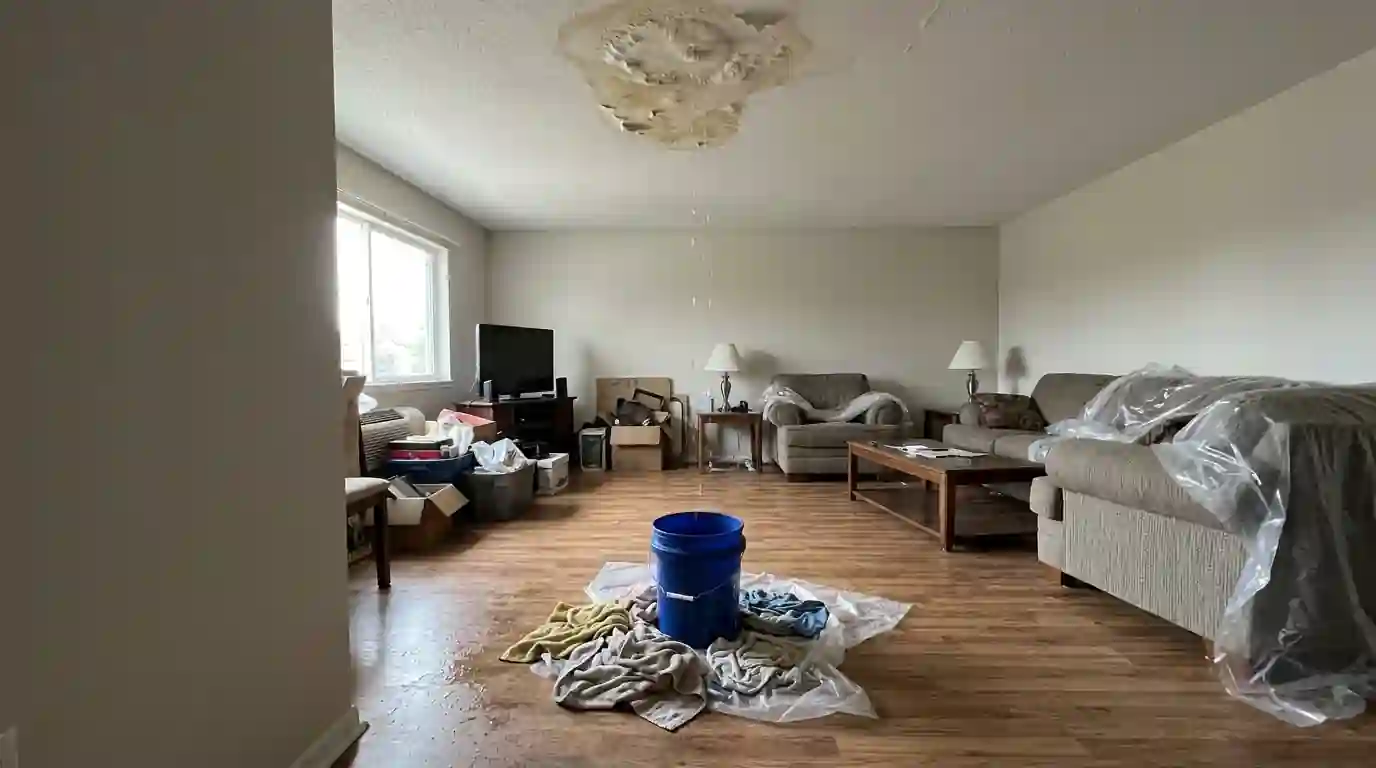
When water comes through your ceiling from the apartment upstairs in New York City, stop the source first by reaching the neighbor, the super or the managing agent, protect your belongings, and photograph everything. Who pays usually depends on where the leak started and what the building documents and insurance policies say; drying within a day or two is what keeps it from becoming a mold job.
The first hour
Speed matters more than paperwork in the first hour.
- Reach the source. Knock on the door upstairs, then call the super or managing agent if nobody answers.
- Keep away from wet fixtures. Stay clear of ceiling lights and outlets near the water.
- Protect belongings. Move electronics, rugs and furniture; put buckets under drips.
- Photograph and video it. The ceiling, the water, and anything damaged, with the time.
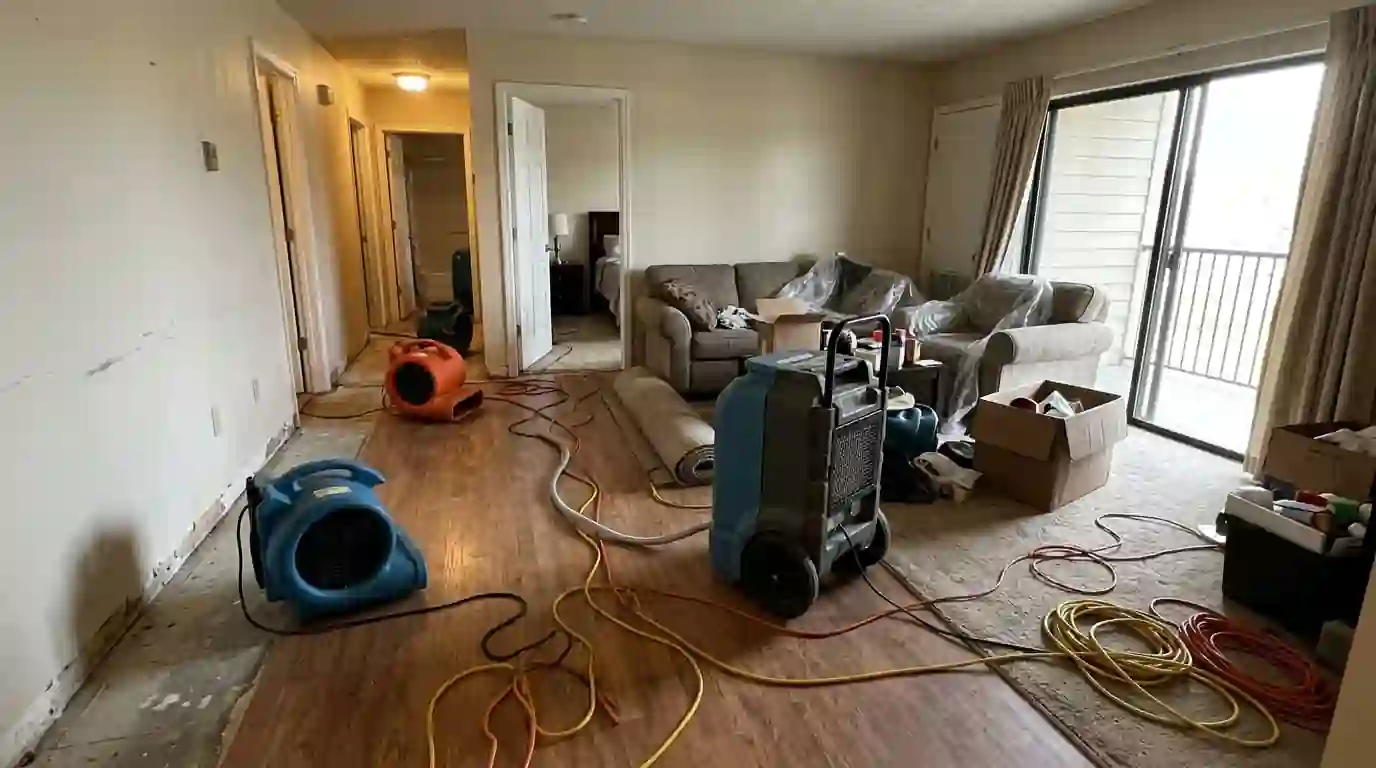
- Call for drying help. Wet ceilings and walls need to start drying the same day.
Why drying cannot wait
Mold can establish on wet building materials within 24 to 48 hours, so a ceiling that is left wet while everyone sorts out responsibility often becomes a mold job. Drying the ceiling cavity and the walls below can start as soon as the water is stopped, even before anyone agrees who pays, and the photos and readings from the drying visit help the claim later.
Who fixes the source
The repair belongs to whoever is responsible for the part that failed. In a rental, the building owner is responsible for fixing leaks and the conditions behind them. In co-ops and condos, the building usually handles common elements such as risers and roof drains, while a leak from a fixture inside the unit above is often the upstairs owner's to repair; the building documents set the exact lines.
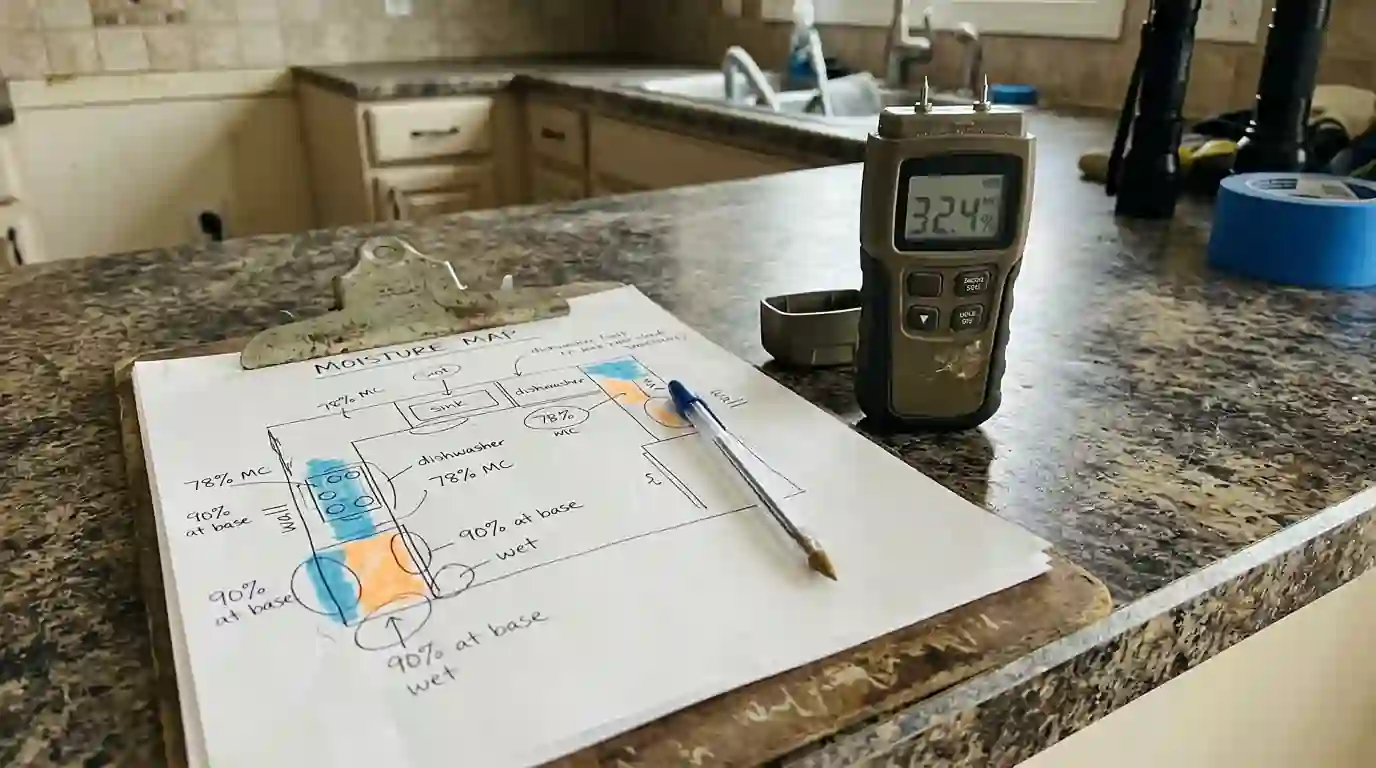
In practice, the managing agent or super is the person who gets access to the unit above and coordinates the plumber. Photos and moisture readings showing where the water started help everyone agree quickly.
Water coming through the ceiling right now? We answer 24/7 and start the drying the same day.
Talk to us nowGetting access upstairs
You cannot enter your neighbor's apartment, but the building can usually arrange access for a leak. Ask management to get the unit opened, and ask for the repair to be documented. If the neighbor is away, the super may have a key or a procedure for emergencies.
Talking to your neighbor
Most leaks from upstairs are accidents, and most neighbors want them fixed as much as you do. Stay factual: what you saw, when it started, and what you need, which is access for the plumber and a stop to the water. Share photos rather than opinions about fault, and let the building and the insurers sort out responsibility. Keeping it friendly usually gets the repair done faster.
Who pays for the damage
Damage to your ceiling, walls, floors and belongings is usually sorted out between insurance policies: yours, your neighbor's and the building's. Renters insurance generally covers your belongings; in co-ops and condos, the building's policy usually covers the structure and a unit-owner policy covers interior finishes. Every policy and building is different, so treat this as a starting point and ask your agent. This guide is general information, not legal or insurance advice.
What to document
A clear record settles most disputes before they start.
- Date and time the leak started and when it stopped
- Photos and video of the ceiling, walls, floors and belongings
- Moisture readings and where they were taken
- Who you notified and when: neighbor, super, managing agent
- Receipts for cleanup, drying and replacement items
- What the plumber found as the source
When the leak keeps coming back
A ceiling that stains again after a repair usually means the real source was never found. Common culprits are a shower pan under the tile, a tub overflow gasket, a toilet seal or a riser in the wall between units, none of which show when the fixture is not in use. Moisture readings taken right after the neighbor showers or runs the tub can catch it, and a leak detection visit traces it through the building before anyone opens your ceiling again.
If mold shows up later
Mold that appears weeks after a leak usually means the ceiling or wall was never dried inside. In a rental, Local Law 55 requires owners of buildings with three or more apartments to fix mold and its underlying cause, and tenants can report it through 311 if it is not fixed. In co-ops and condos, the same documentation from the leak helps decide who handles the removal.
How we help
We answer 24/7, trace the water with meters and a thermal camera, coordinate with management to confirm the source upstairs, open sagging or soaked ceiling board, and dry the cavity to readings. Then we check for mold and give you photos, readings and a written summary for the building and the insurers.