Short answer
A mold inspection in New York City maps moisture with meters and a thermal camera to find where water is and how far it spread, and runs $303 to $1,045 nationally. Mold testing sends air, surface or material samples to a lab to identify and count mold, at $250 to $350. Start with an inspection when you need to know where; add testing when you need to know what.
What an inspection does
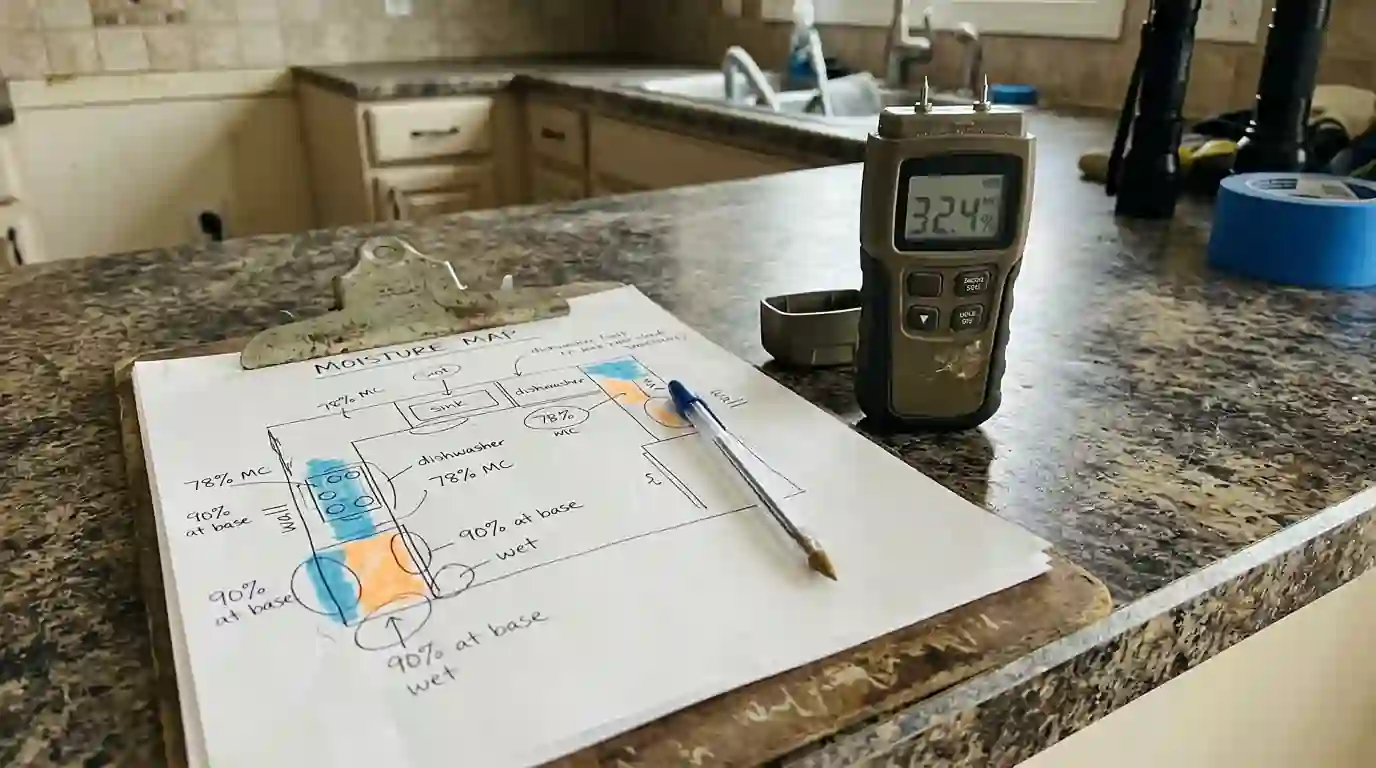
An inspection answers where. We read walls, ceilings, floors and trim with pin and pinless meters, scan with a thermal camera for cool, wet patches, and check the likely sources: risers, windows, the roof and the unit above. You get photos, readings, the likely source and a next step. Most mold problems are solved by finding the water, which is why this usually comes first.
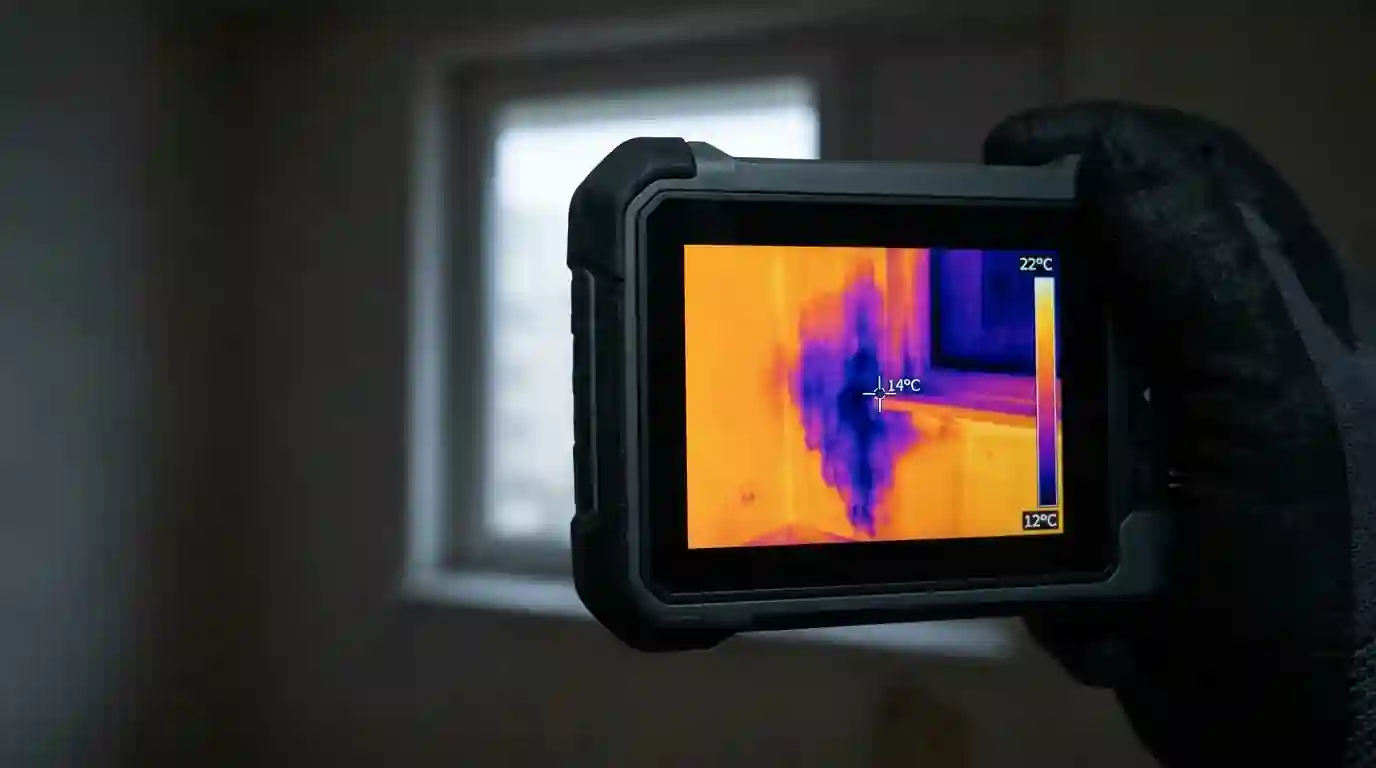
What an inspection report should include
Whoever you hire, the result should leave you knowing more than you did, in writing.
- Moisture readings with locations, not just a pass or fail
- Photos of each problem area
- The likely water source and whether it is still active
- A clear boundary of what is wet and what is dry
- A next step: nothing, drying, sampling or removal
What testing does
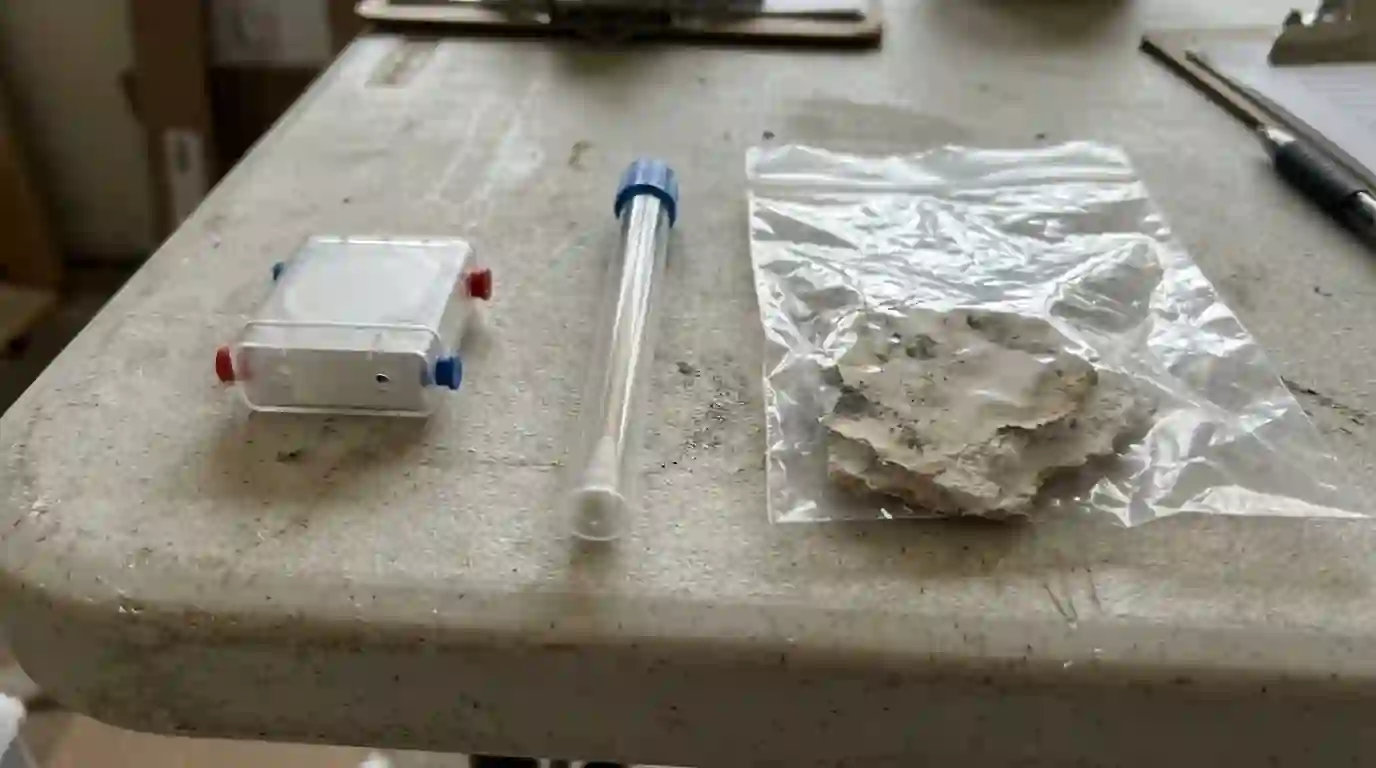
Testing answers what. Samples go to an outside lab, which identifies the types of mold and how much is present.
| Sample | What it tells you | Limit |
|---|---|---|
| Air sample | Spore types and counts compared with outdoor air | A snapshot of one room at one time |
| Swab or tape lift | What is growing on a specific surface | Only speaks for that spot |
| Bulk sample | Growth inside a piece of material | Needs a small piece removed |
Most calls start with an inspection. We tell you on the phone whether testing is worth adding.
Talk to us nowHow to read a lab report
Lab reports list mold types and counts, and they are easy to over-read. For air samples, the key comparison is indoor against outdoor: indoor counts well above the outdoor sample, or types indoors that are rare outside, point to a source inside. A single high number on its own says little without that comparison.
Surface and bulk results answer a narrower question: what is growing on this spot or in this material. They do not tell you how far the problem goes, which is why they belong alongside moisture readings rather than instead of them.
Which one you need
Match the step to the question you are asking.
- You can see mold and know where the water came from: often neither; go straight to a removal plan.
- You see a stain but do not know the source: an inspection.
- You smell mold but cannot see it: an inspection first, then testing if it finds nothing.
- Someone needs a lab report: testing, paired with moisture readings.
- You are buying or leasing: an inspection focused on the places sellers repaint.
How long each one takes
An inspection is usually a single visit: readings, a thermal scan, a check of the likely sources and an explanation before we leave. Larger homes and buildings with shared plumbing can take longer, especially when we need access to the unit above. Testing adds the time the lab needs to analyze the samples, which depends on the turnaround you choose, and a short follow-up to walk through the report.
If you are working to a deadline, such as a purchase contract, a lease signing or an HPD correction date, tell us when you call. We plan the visit and the lab turnaround around it rather than the other way round.
The rule for larger buildings
In New York City buildings with 10 or more units, mold over 10 square feet has to be assessed and removed by two independent companies. The assessment, which includes an inspection and often sampling, is done by one; the removal by another. Knowing early which side of that line you are on keeps the job moving.
What to ask before you book
A few questions make sure you pay for the right thing.
- Will you take moisture readings as well as samples?
- How many samples, and why each one?
- Is there an outdoor comparison sample for air tests?
- Who analyzes the samples?
- Will you explain the report and give a next step?
Mistakes to avoid
A few common missteps waste money on either service.
- Testing growth you can already see on a wet wall, instead of fixing the water
- Relying on a home test kit that grows something from any room
- Air sampling after cleaning or running a purifier, which skews the result
- Taking lab numbers without an outdoor comparison
- Booking removal before anyone knows where the water is coming from
What happens after the results
Whichever you book, the result should lead somewhere concrete. If the readings are dry and nothing grew, you are done. If they find a leak, the next step is stopping it and drying the area before anything grows. If they find growth, you get a removal plan sized to what the readings show, and in a larger building, the independent assessment the rules call for.