Short answer
A musty smell with no visible mold in a New York City home almost always means growth somewhere hidden: a wet carpet pad, the back of drywall, a closet on a cold outside wall, an air conditioner drain pan or a damp basement. The smell comes from compounds mold gives off as it grows, so removing the source, not masking the air, is what ends it.
What the smell is telling you
The earthy, stale smell people call musty comes from gases mold and bacteria release as they grow on damp material. It tells you two things: something is wet, and something is growing on it. It does not tell you where, and the smell can travel through a home on air currents, so the strongest spot is a clue, not an answer.
Clues from timing
When the smell shows up tells you a lot. A smell that is strongest when the air conditioner runs points to the unit or the ducts. One that appears after rain points to a basement, a foundation wall or a roof leak. One that gets worse in winter points to condensation on cold outside walls and closets. One that is worst first thing in the morning in a closed room points to something damp in that room. Keep a note for a few days; it narrows the search.
Where it usually hides
These are the places we find it most often in city homes.
- Carpet pad under a rug or wall-to-wall carpet that once got wet
- The back of drywall behind a bathroom or kitchen
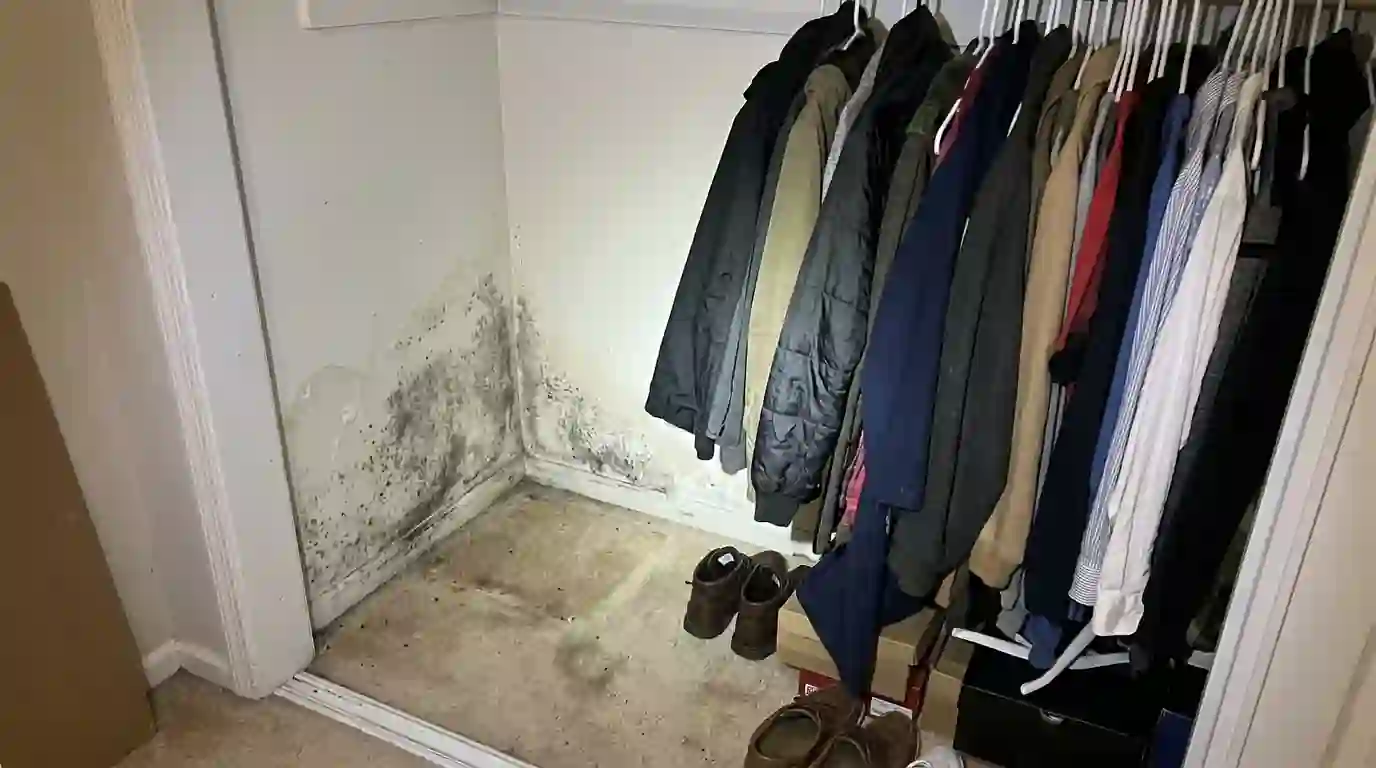
- Closets on outside walls, especially behind packed clothes
- Under the kitchen sink and behind the dishwasher
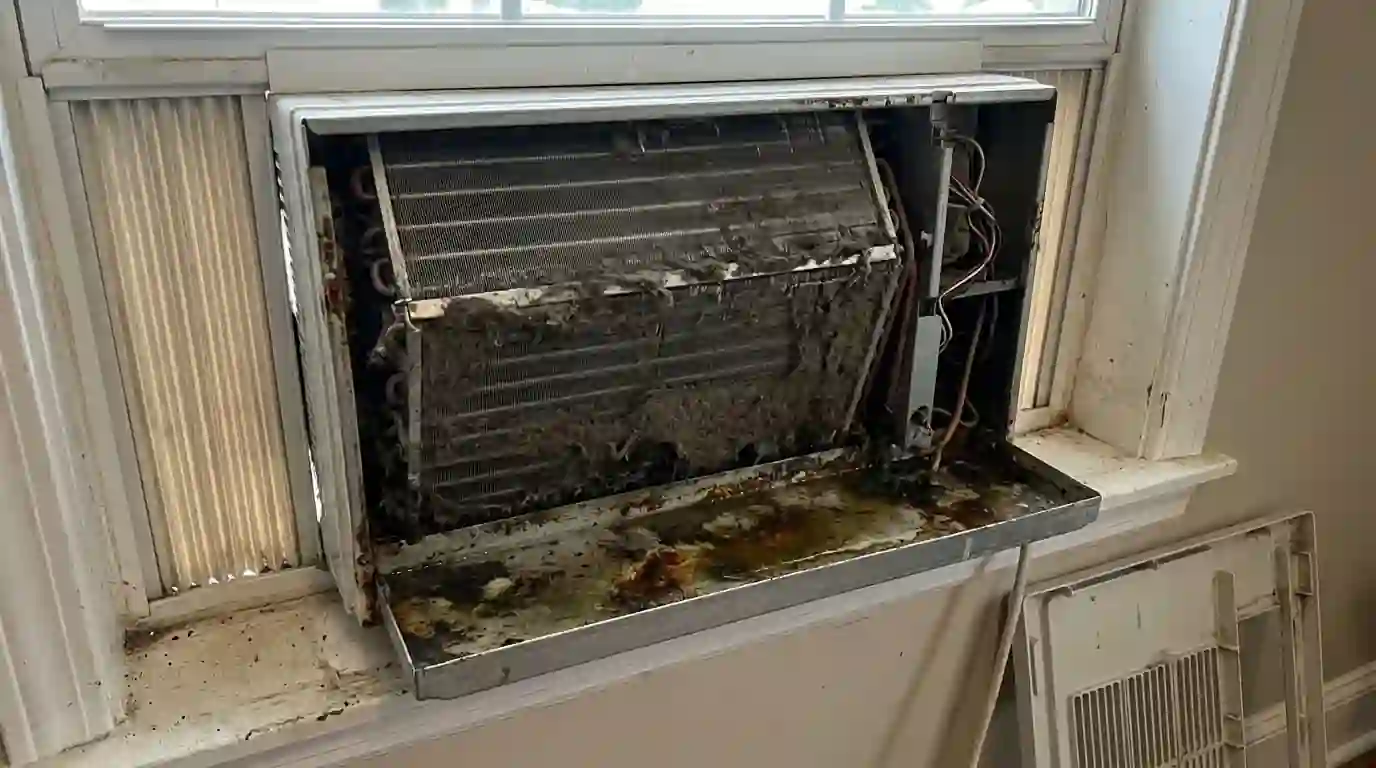
- Air conditioner coils and drain pans, including window and through-wall units
- Basements and cellars, and the boxes stored in them
- Behind furniture on cold outside walls
- Under bathroom vanities and around the toilet base
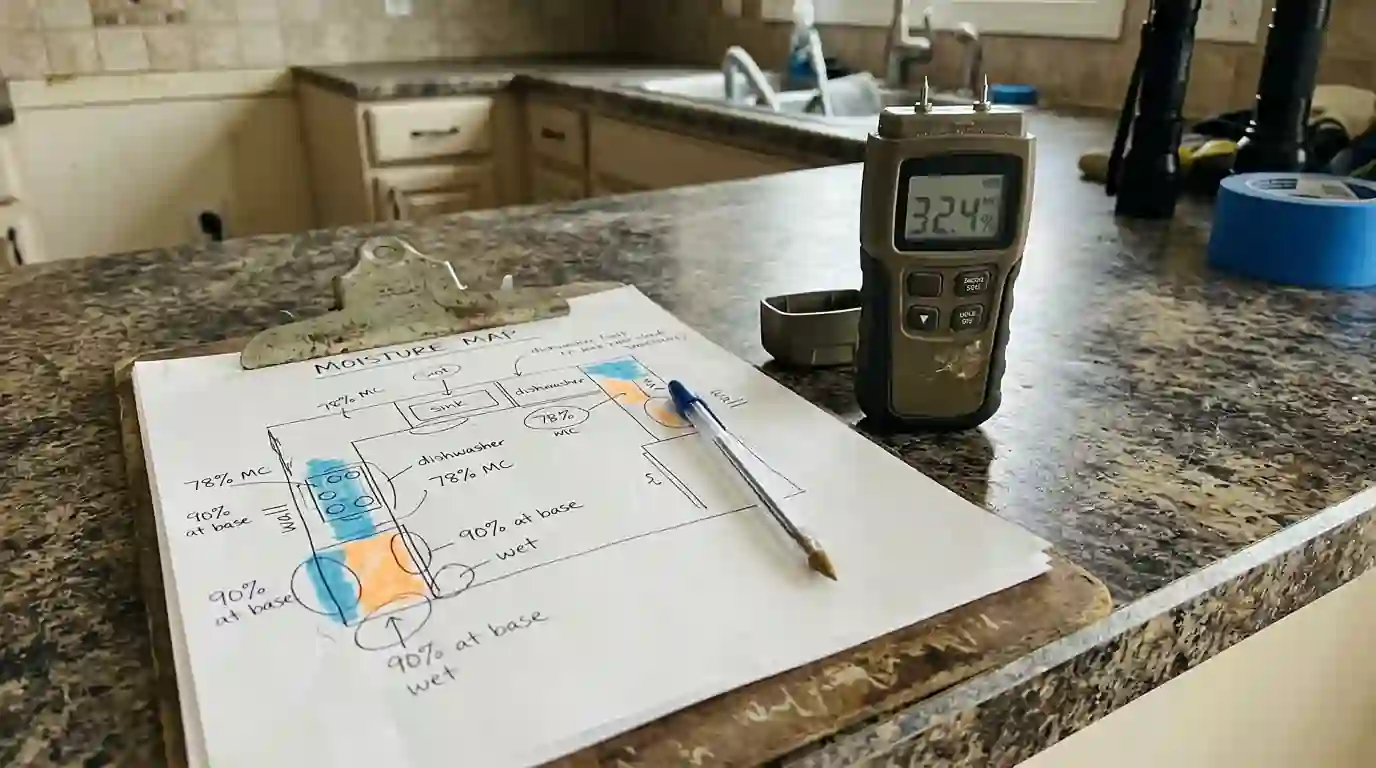
Still cannot find it? We follow the smell with meters and a thermal camera until we do.
Talk to us nowA room-by-room check you can do
Before calling anyone, a short walk-through often narrows it down.
- Follow your nose. Note where the smell is strongest and at what time of day.
- Open the closets and cabinets. Smell inside each, and look at the back walls.
- Check under sinks. Look for swelling, stains or drips.
- Run the air conditioner. If the smell comes with the air, the unit is a suspect.
- Lift a corner of the carpet. Look at the pad and the floor underneath.
- Look behind furniture on outside walls. Gray spots near the floor are common.
When it is not mold
A few things smell similar and are easy to fix.
- A dry floor drain trap lets sewer gas into a basement; pouring water into the drain often fixes it.
- A dirty air conditioner filter can smell stale on its own.
- Damp laundry or towels left in a closed space smell musty within a day.
- An unused bathroom can have a dry toilet or shower trap.
Tools that find it
When the walk-through does not turn it up, instruments do. Pin and pinless moisture meters show wet material behind finished surfaces. A thermal camera shows the cool patches wet walls and floors leave. Humidity logging over a few days shows whether a room sits damp. And when all of that is dry, air sampling or particle counts can point to a source the other tools missed.
Why air purifiers and sprays do not fix it
Air purifiers, candles and odor sprays change the air for a while, but the source keeps producing more. A purifier can help once the source is gone and the space is dry. Until then, the smell is a signal worth listening to, because it means material is wet and growing somewhere.
When the source is next door
More than half of the city's housing units are in buildings put up before 1947, and in older buildings walls, floors and plumbing are shared. A musty closet can be fed by a leak in the apartment next door, and a smell in a basement unit can start in a neighbor's wet cellar. When the readings in your unit are dry, the next place to look is through the wall.
What to do once you find it
Once the source is found, the order is always the same: stop the water, remove what grew, dry the area and then deal with the smell left in the air and fabrics. Small surface growth on hard surfaces can be cleaned at home. Growth in carpet pad, drywall, insulation or an air conditioner needs more, and that is where a proper removal and, for stubborn odor, a hydroxyl or ozone treatment in an empty space come in.
When to call for help
Call when the walk-through turns up nothing, when the smell is strongest at a wall or ceiling you cannot open yourself, when it started after a leak or flood, or when it comes back within days of cleaning. Those are the cases where meters and a thermal camera save you from opening the wrong wall.