Short answer
Local Law 55 of 2018 requires owners of New York City buildings with three or more apartments to inspect units every year for indoor allergen hazards, mold included, and to fix the underlying cause. HPD classes mold violations by size, from Class A under 10 square feet with 90 days to correct, to Class C at 30 square feet or more with 24 hours.
What the law requires of owners
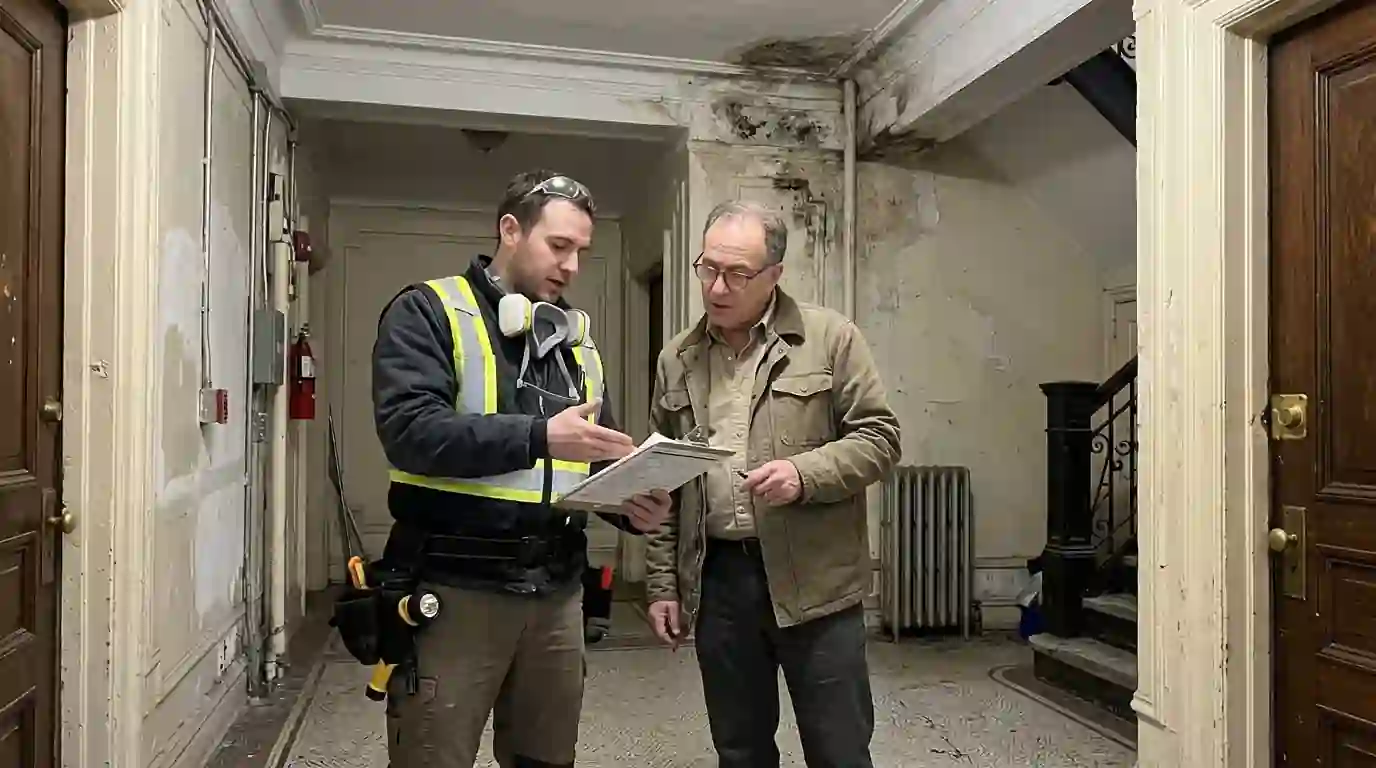
Owners of buildings with three or more apartments have to inspect every unit each year for indoor allergen hazards, including mold, and correct both the condition and what causes it. For mold, that almost always means a leak or a moisture problem, not just the stain.
The city also sets how the work is done: correct the underlying moisture, limit dust, HEPA vacuum at the point of work, clean mold with soap or detergent and water, and finish with wet cleaning or HEPA vacuuming. Owners of buildings under 10 units can handle small jobs themselves if they follow those practices. In buildings with 10 or more units, mold over 10 square feet has to be assessed and removed by two independent companies.
How to picture 10 square feet
The 10 square foot line decides a lot under the rules, so it helps to picture it. Ten square feet is roughly a patch about three feet by three feet, or a strip about a foot high along a ten-foot wall. Growth along the bottom of a wall after a leak adds up quickly, and so do several small patches in the same room.
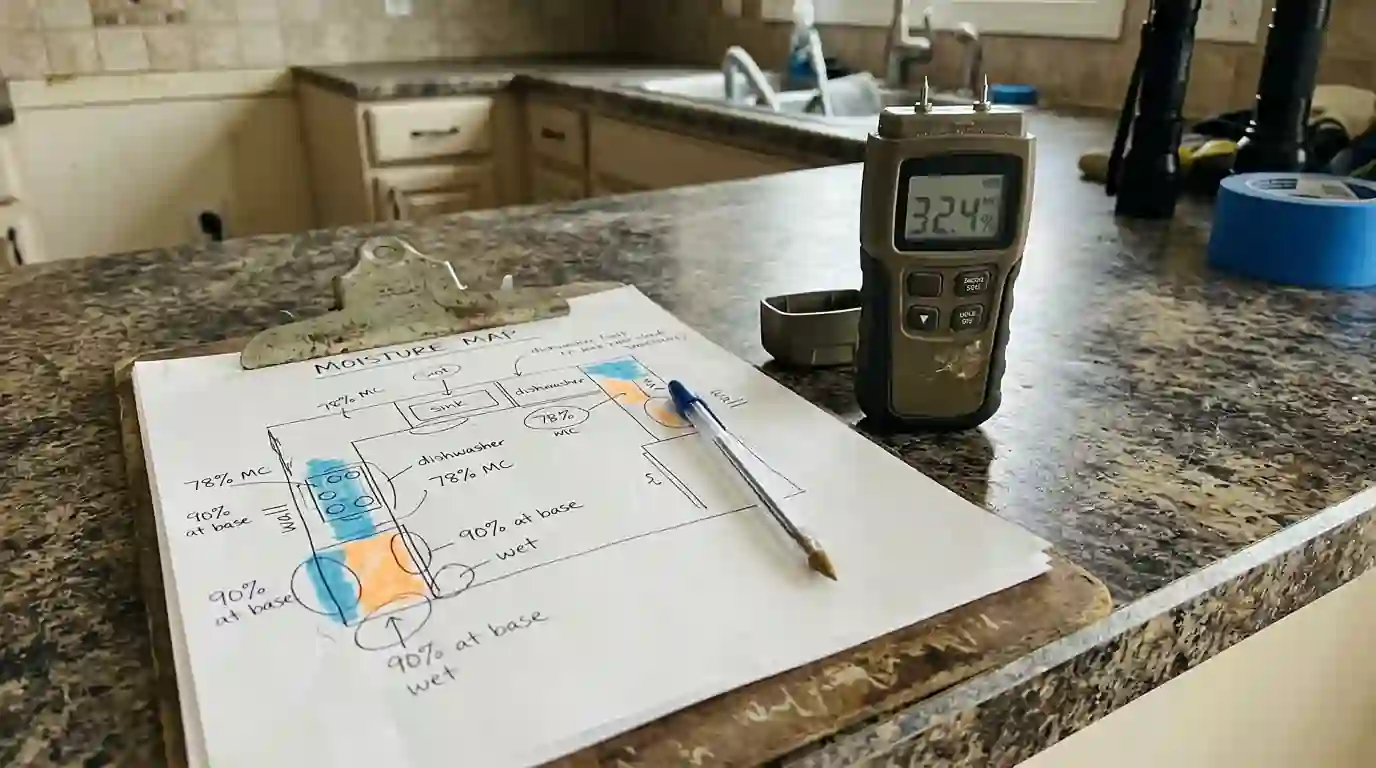
Growth you can see is also only part of it. Mold on the face of drywall is usually matched or exceeded on the back of the board, which is why moisture readings and a small opening matter before anyone decides a job is small.
How HPD classes mold violations
When a tenant reports mold, usually through 311, an HPD inspector measures it and writes a violation by size. HPD completed 56,198 inspections in fiscal year 2022 in response to indoor allergen complaints.
| Class | Size of mold | Time to correct |
|---|---|---|
| Class A | Under 10 square feet | 90 days |
| Class B | 10 to 30 square feet | 60 days |
| Class C | 30 square feet or more | 24 hours |
Violations typically direct the owner to trace and repair the source as well as remove the mold, so painting over a patch does not clear it.
Facing a deadline on a violation? We trace the source, remove the mold and document every step.
Talk to us nowWhat tenants can do
Tenants are not expected to fix mold in a rental, but a few steps make it much easier to get it fixed properly.
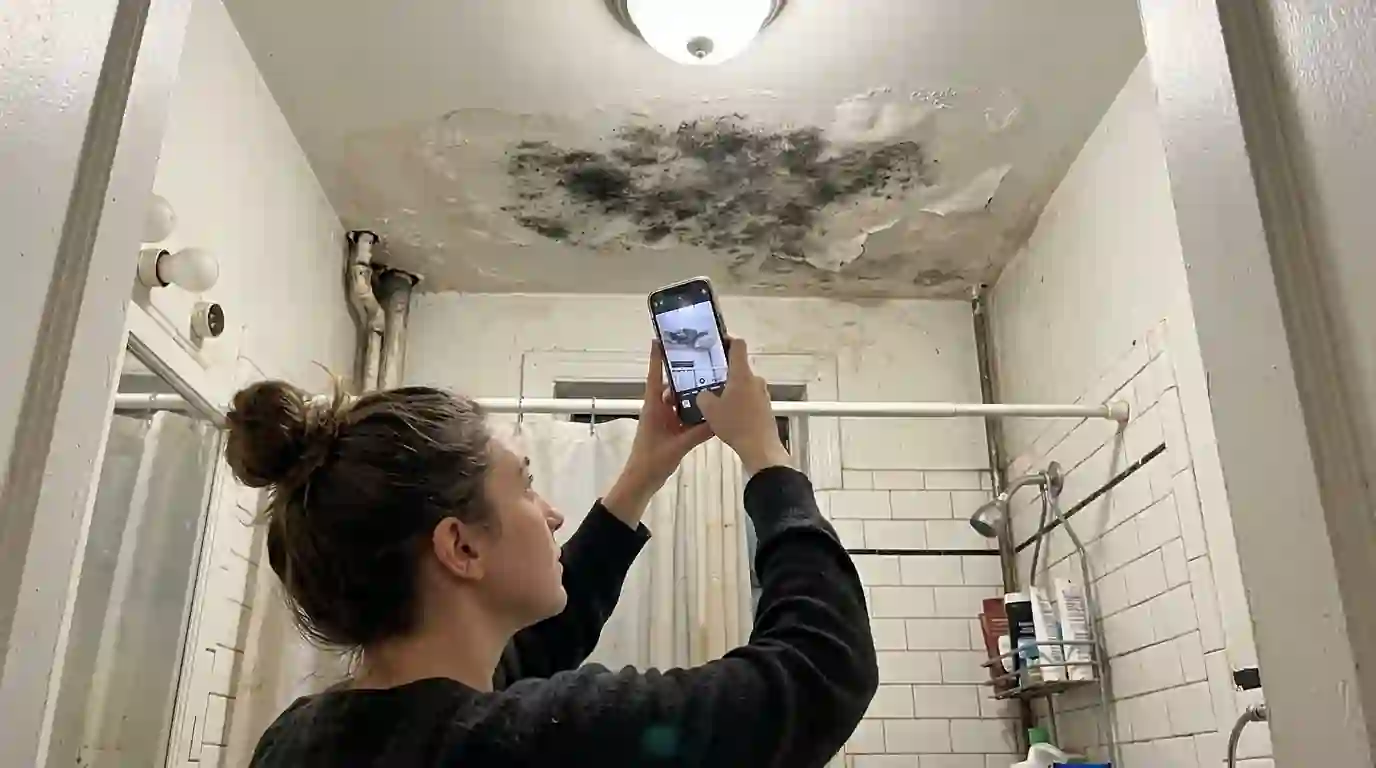
- Document it. Take dated photos, and note any leak, stain or smell.
- Tell the owner in writing. An email or letter to the landlord or managing agent creates a record.
- Call 311 if it is not fixed. HPD can inspect and write a violation.
- Keep the area aired out. Run the fan and wipe small surface spots with detergent and water in the meantime.
What owners should do
Owners who treat each report as a leak to find, rather than a stain to cover, clear violations once instead of twice.
- Trace the water first: risers, roof drains, windows and the unit above
- Follow the city work practices on every job, small or large
- Use two independent companies for mold over 10 square feet in buildings of 10 or more units
- Photograph and record readings before and after the work
- Keep records consistent across units for the annual inspections
Mistakes that bring a violation back
Most repeat violations come from the same short list of shortcuts.
- Painting over the growth without removing it
- Cleaning the surface while the riser, roof drain or window keeps leaking
- Using bleach on drywall and calling it done
- Closing a wall before the framing reads dry
- Skipping photos and readings, so there is no record of what was fixed
Each of these leaves the cause in place, and the next annual inspection or 311 call finds the same mold in the same spot.
How the work gets documented
Documentation is what turns a repair into a cleared violation and a clean annual inspection record. A good file includes dated before photos of each affected area, moisture readings at the source and around the growth, where the water came from and who repaired it, the square footage removed, the work practices used, after photos once the area is clean and dry, and final readings. Keeping the same format from unit to unit makes the file easy for HPD, the board or a buyer to follow.
What happens at the next inspection
At the next annual inspection or HPD visit, the question is simple: is the mold gone and is the area dry? A room where the leak was fixed, the growth removed and the walls closed only after they read dry passes that test on its own.
Where we fit in
We trace the water, remove the mold using the city work practices, dry the area and document every step. In larger buildings we work alongside the independent assessor, following the written plan, and we keep the paperwork the same from unit to unit so owners and managers have a clean file.