Short answer
Winter mold in New York City apartments comes from condensation: warm, moist indoor air meets glass and outside walls that January nights, averaging in the upper 20s at Central Park, keep cold. Water collects on sills, frames and still corners long enough for mold to grow. Lowering indoor humidity, moving air and warming the cold spots are what stop it.
Where the water comes from
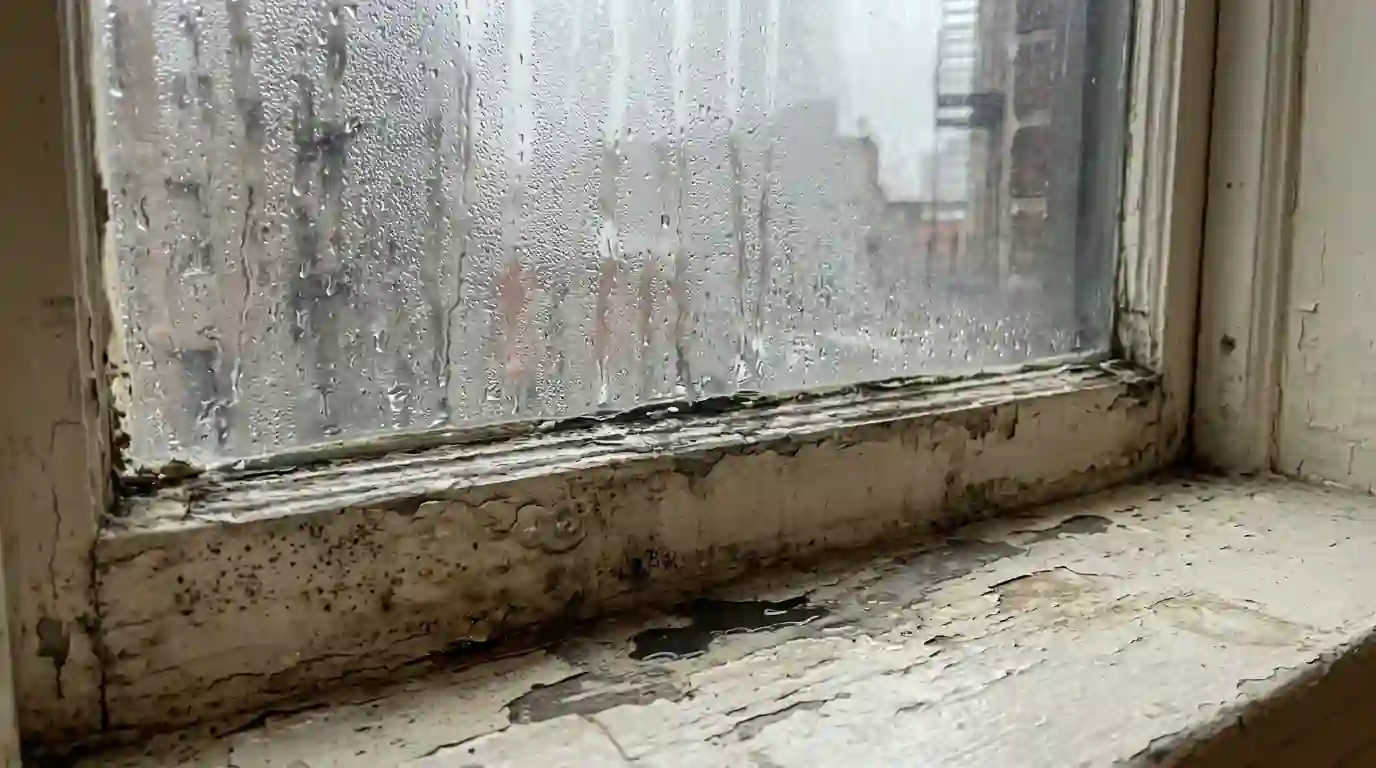
Air holds moisture, and warm air holds more. Cooking, showers, drying laundry and people breathing all add it. When that air touches a surface colder than its dew point, the moisture condenses into water. In winter, the glass and the inside of uninsulated outside walls are the coldest surfaces in an apartment.
January nights at Central Park average in the upper 20s. Inside, a steam-heated apartment stays warm with windows shut, so the moisture has nowhere to go but onto the cold surfaces.
The dew point, in plain terms
The dew point is the temperature at which the air in a room starts to drop water. The more moisture the air carries, the higher the dew point, and the more surfaces in the room are cold enough to hit it. In a heated apartment in January, the glass and the plaster on an outside wall can sit below the room dew point for hours every night. That is why the same spots sweat every morning and why lowering room humidity, even a little, moves the problem off the walls.
Where it shows up
Look for the coldest, stillest spots in the apartment.
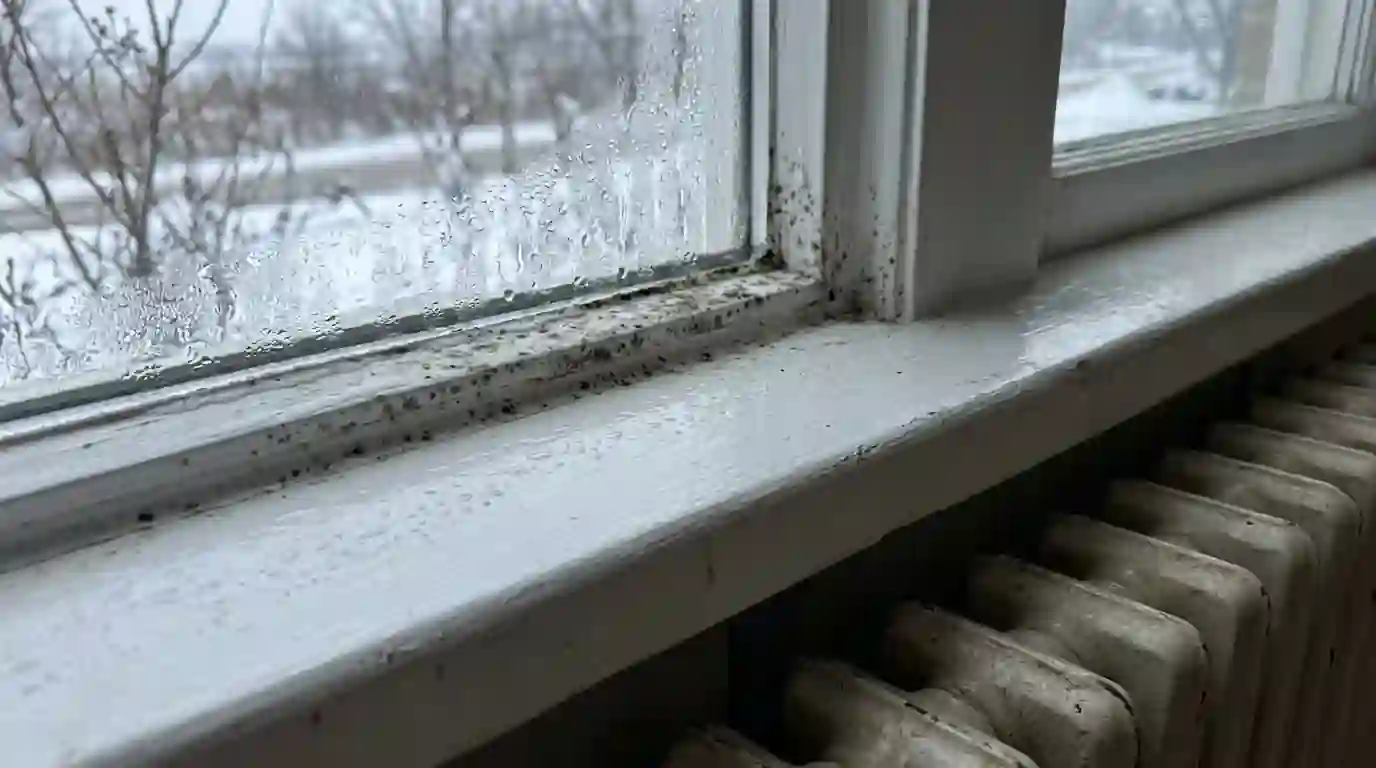
- Window sills, frames, caulk and glazing putty
- Closets on outside walls, especially behind packed clothes
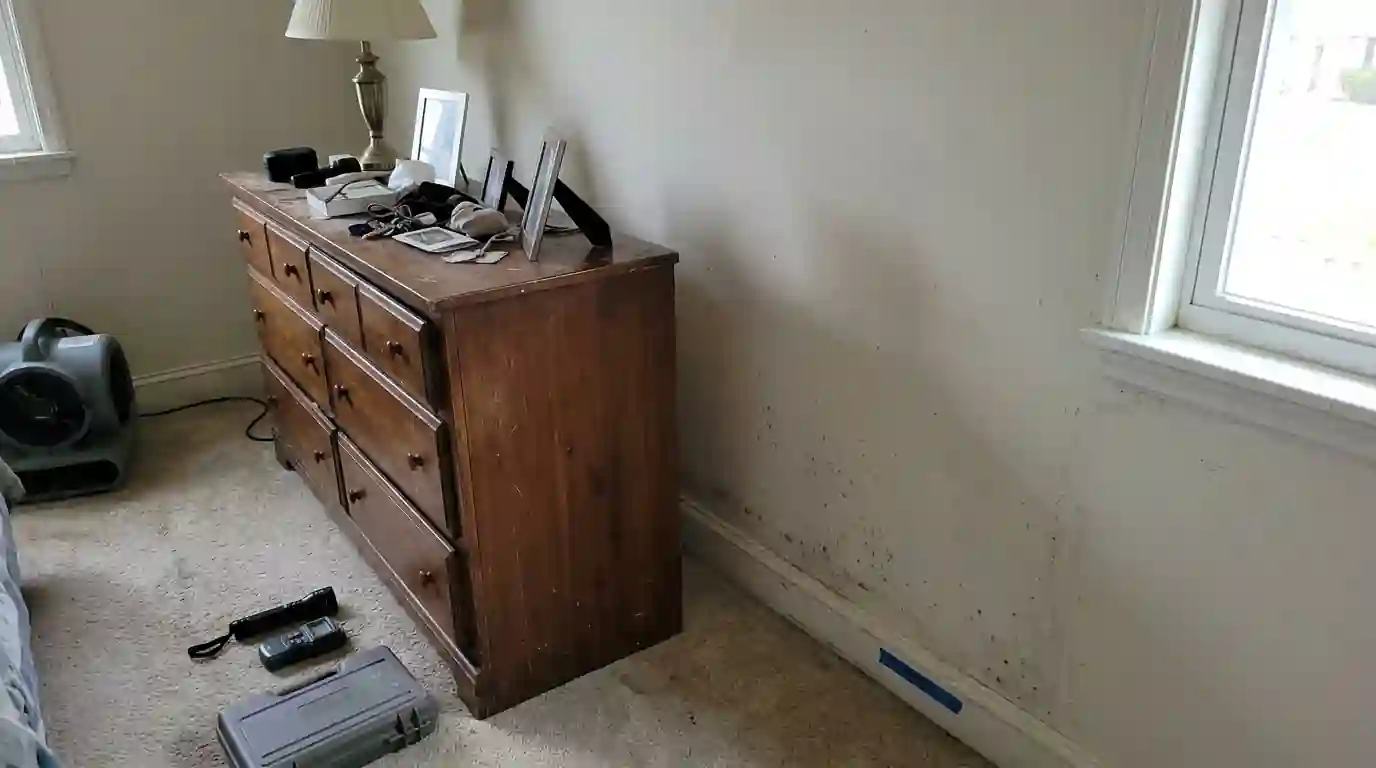
- Behind beds, dressers and bookcases against outside walls
- Upper corners of rooms on the building exterior
- The wall behind radiators under windows
Mold back on the same window? We clean it, check the wall below and help cut the moisture.
Talk to us nowWhy small, older apartments get it worst
More than half of the city's housing units are in buildings put up before 1947, many with single-pane windows and little insulation in the outside walls. Half of the housing units in Manhattan are studios or one-bedrooms, where one room carries the cooking, showering and sleeping for the whole household. More moisture in less space, next to colder walls, is the recipe.
What actually helps
None of these are expensive, and together they cut winter mold sharply.
- Wipe the glass and sill each morning. Water that sits all day is what grows mold.
- Run the bath and kitchen fans. During showers and cooking, and for a while after.
- Open a window briefly. A few minutes after showers swaps wet air for dry.
- Pull furniture off outside walls. A few inches lets air reach the wall.
- Leave closet doors ajar. Still, cold closets are where growth starts.
- Report a leaking radiator vent or valve. It can put a lot of water into the room over a winter.
A week-by-week winter routine
Condensation mold responds to habits more than to products. Through December to March, a simple routine keeps most apartments clear.
- Every morning: wipe the glass and sill dry, and open the blinds so the window warms.
- Every shower and every meal: run the fan and keep it running for a while after.
- Every week: check the back of closets on outside walls and the wall behind the bed.
- Every month: clean small spots on painted surfaces with detergent and water before they spread.
- Once a season: check caulk and putty around each window, and report anything that has cracked.
If you do all of that and the same spots still grow, the moisture is coming from somewhere else, and a moisture check will find it.
Cleaning up what is already there
For surface growth on glass, painted sills and frames, wear gloves, wash with detergent and water, rinse and dry. Replace caulk that has turned black rather than scrubbing it, because the growth sits under the bead. Wash or dry-clean fabrics that touched a moldy wall, and let closets air out before refilling them. If plaster crumbles when you wipe it, or the stain is back within a couple of weeks, leave it for a moisture check instead of cleaning it again.
What owners and buildings can fix
Some of the fix sits with the building rather than the tenant.
- Replacing failed window seals, glazing putty and caulk
- Repairing leaking radiator air vents and valves
- Making sure bath and kitchen exhaust actually vent outside
- Insulating the worst outside walls when they are opened for other work
In a rental, mold and the conditions causing it are the owner's to correct, and a written report of repeated condensation mold is the place to start.
When it is more than condensation
If the wall under the window reads wet on a meter, paint is peeling below the sill, or mold returns within days of cleaning, water may be getting into the wall from outside. That is a wall repair, not a cleaning job, and it is worth a moisture check before the next winter.