Short answer
When choosing a mold remediation company in New York City, ask how they will find the water, how they will contain the area, what they will remove, how they will prove it is dry, and what documentation you will get. In buildings with 10 or more units and mold over 10 square feet, the assessment and the removal must be done by two independent companies.
Start with the water
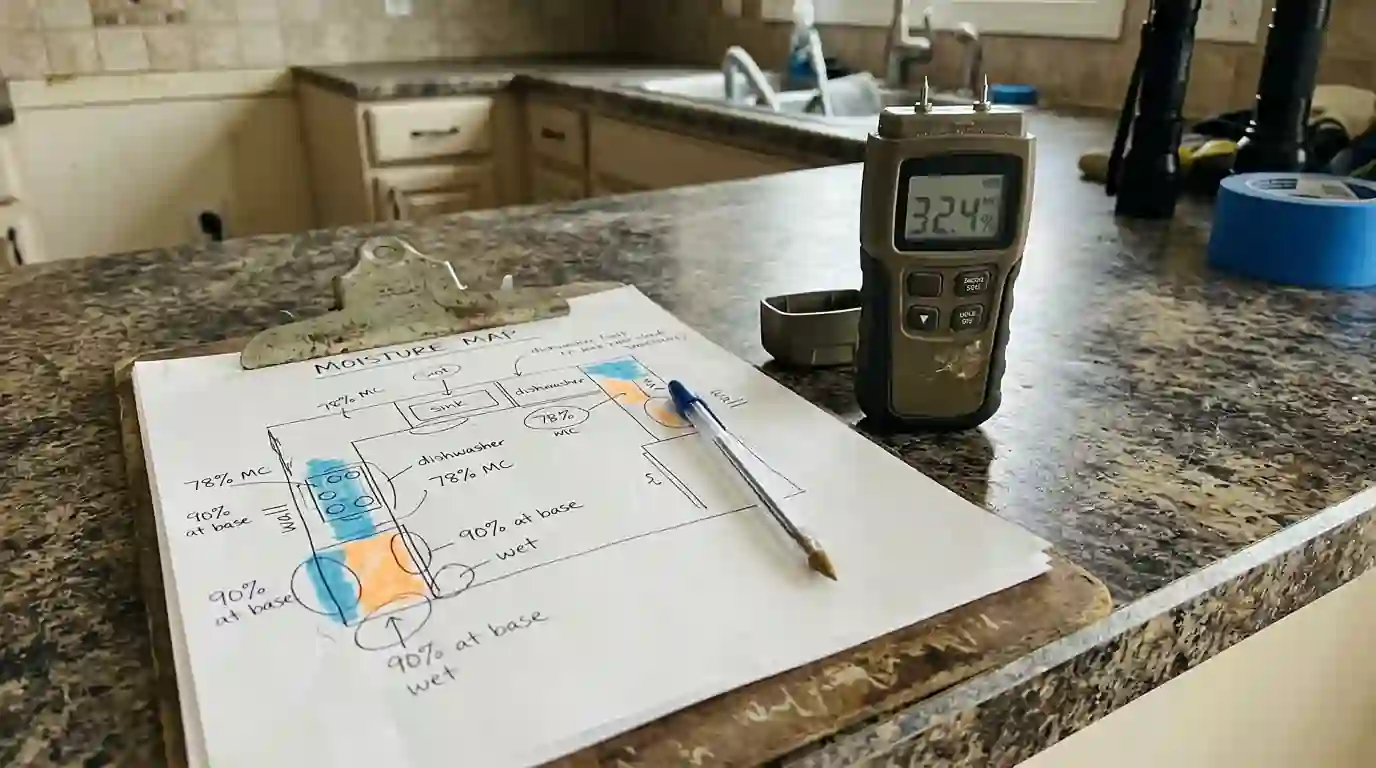
A company that talks about killing mold but not about where the water comes from is selling a symptom treatment. The first visit should include moisture readings, and the plan should name the source and who fixes it. Mold removed from a wall that stays wet grows back.
How the first visit should go
A good first visit is mostly questions and readings. Expect someone to ask where the water came from and how long it has been wet, read the walls and floors around the growth, check the likely sources, and explain what they found before talking about price. If the visit is a quick look and a number, you have learned very little about the job, and so have they.
Questions to ask before you hire
Ask every company the same questions, and compare the answers.
- How will you find the moisture and where the water comes from?
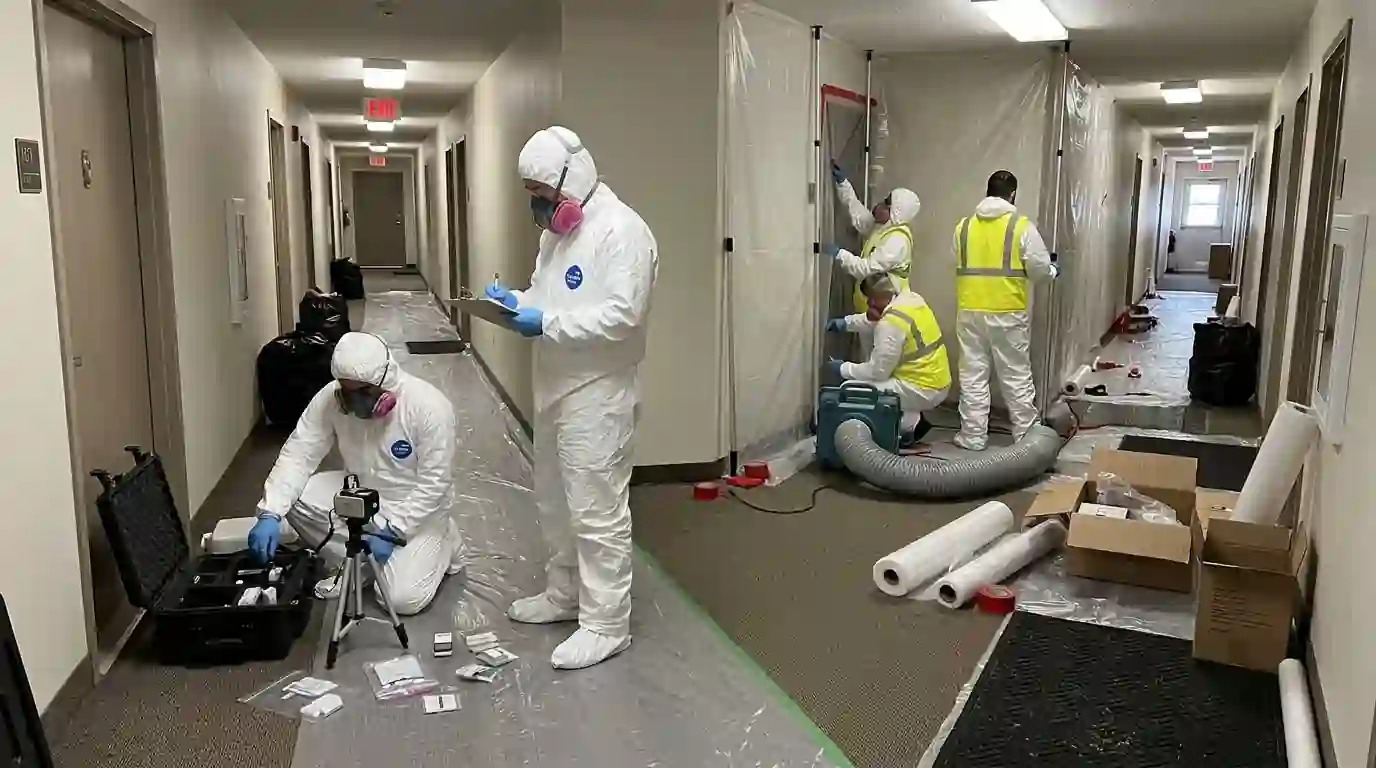
- How will you contain the work area, and will you use negative air?
- What materials will you remove, and how much?
- How will you clean what stays: HEPA vacuuming, damp wiping?
- How will you prove the area is dry before it is closed up?
- Is the rebuild included, or priced separately?
- What photos, readings and written summary will I get?

Comparing companies? Call and ask us every question in this guide.
Talk to us nowQuestions they should ask you
The company should be asking questions too. Whether anyone in the home has asthma or health concerns, whether you rent or own, whether a board or managing agent needs paperwork, whether there is a deadline such as a violation or a closing, and whether the leak is still active all change how the job is planned. A company that asks none of these is planning the job without the facts.
What a good scope includes
A written scope should read like a plan, not a price. Look for the water source and who repairs it, the containment setup, the materials to be removed with rough quantities, the cleaning method, how drying will be verified, whether rebuild is included, and what you get at the end. If a quote only says "mold treatment" and a number, ask what that means in each of those steps.
Red flags
Any of these is a reason to slow down or keep looking.
- Spray-only treatment of drywall or insulation with growth in it
- No containment for anything larger than a small patch
- No moisture readings before or after the work
- Pressure to test when the growth and the leak are already obvious
- One company assessing and removing mold over 10 square feet in a building of 10 or more units, which city rules do not allow
- A price with no scope attached
The rule for larger buildings
In New York City buildings with 10 or more units, mold over 10 square feet has to be assessed and removed by two independent companies: one writes the plan and checks the result, the other does the removal. If you manage or live in a building that size, expect two companies on a larger job and make sure they are not the same firm.
Comparing quotes
National guides put a typical mold remediation at $1,223 to $3,757, but two quotes for the same room can differ widely because they describe different work. Line them up against the scope questions above. The cheapest quote often leaves out containment, drying or the source, and paying twice for the same wall is the most expensive outcome. Our cost guide covers what drives the price.
What you should have at the end
When the job is done, you should have before and after photos, moisture readings showing the area is dry, a note of where the water came from and how it was fixed, what was removed, and, in a larger building, the independent clearance. That file is what landlords, boards, buyers and insurers ask for.
After you choose
Agree the start date, the work hours and what happens to the rest of the home while containment is up. Ask who to call during the job, and when the drying readings will be taken. Clear communication during the work is as good a sign as a clean result at the end.
Where we stand
We start every job with the water, contain every removal, dry to readings and document every step. In larger buildings we do the removal side and work alongside the independent assessor. If you are comparing us with others, ask us the same questions in this guide.