Short answer
A sewer backup in a New York City basement is treated as Category 3, grossly contaminated water: keep people out, stop using drains that flow to it, and have porous materials it touched removed and every hard surface disinfected before drying. National figures put this kind of water damage at about $7.50 per square foot.
Why sewage backs up into basements
About 60 percent of the city runs on combined sewers, where storm runoff and building waste share one pipe. In a heavy storm, the sewer in the street fills and water pushes back up the building connection to the lowest drain, usually a basement floor drain or toilet. City sewers are generally built for 1.5 to 1.75 inches of rain an hour, and recent storms have gone well past that.
Grease is the other common cause. The Department of Environmental Protection found grease behind more than 60 percent of confirmed sewer backups, and community boards 12 and 13 in southeast Queens logged more than 4,800 backup reports over five years.
Safety first
Treat all backup water as contaminated.
- Keep children, pets and anyone with health concerns out of the area
- Do not walk through the water without boots and gloves
- Do not touch electrical equipment or outlets near the water
- Stop using sinks, toilets and washers that drain to the line
- Wash hands and clothing after any contact
Health notes for the household
People with weakened immune systems, young children and anyone with respiratory conditions should stay out of the area until cleanup and disinfection are done. Wash hands after any contact, keep contaminated shoes and clothing out of the living space, and talk to a doctor if anyone feels unwell after exposure. The goal of a proper cleanup is to make the space safe again, not only to make it look dry.
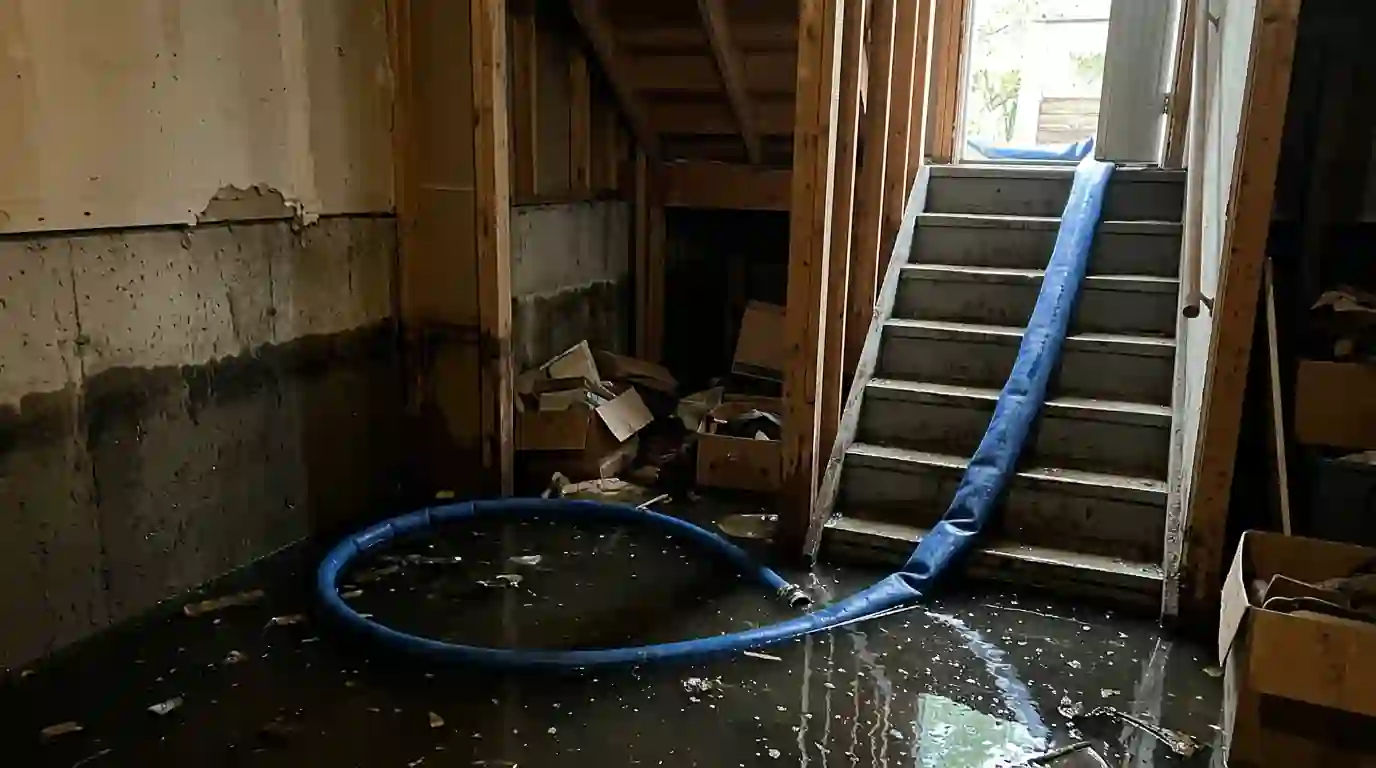
Sewage coming up right now? We answer 24/7 and treat backups as emergencies.
Talk to us nowWhat has to go
Porous materials that soaked up sewage cannot be reliably cleaned.
- Carpet and carpet pad
- Drywall and insulation below the wet line, with a margin above
- Upholstered furniture and mattresses
- Cardboard boxes, paper and particleboard
- Food and anything that touched the water in a kitchen area
Photograph and list everything before it goes, for your insurer.
What can be cleaned
Hard, non-porous materials can usually be kept: concrete, tile, metal, glass, plastic and sealed wood. They are cleaned of all residue, disinfected, rinsed and dried. Solid wood furniture can sometimes be saved if it was only briefly wet, and clothing can often be laundered on hot cycles, but anything with any doubt is safer to discard.
How professional cleanup works
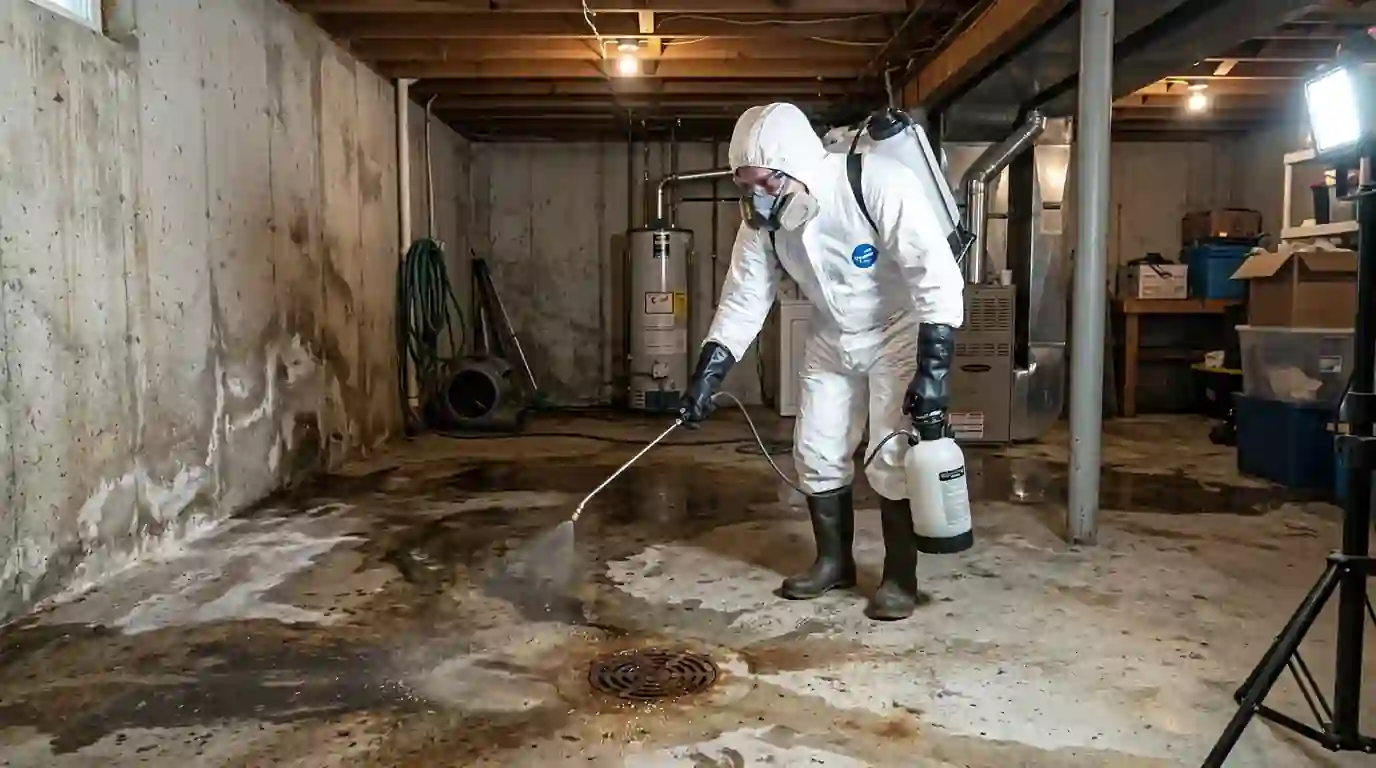
A proper sewage cleanup follows a fixed order.
- Contain the area. Keep the rest of the house clean and separated.
- Extract the water. Pumps and extractors remove standing sewage.
- Remove porous materials. Bagged and taken out of the building.
- Clean and disinfect. Every hard surface in the affected area.
- Dry to readings. Dehumidifiers and air movers until framing and slab read dry.
- Document it. Photos, readings and a list of removed items.
Signs the backup is not finished
Once the water drains away, the risk is not over. Watch for these.
- Water rising again when someone upstairs runs a sink or flushes
- Gurgling from the floor drain or toilets
- A sewage smell that returns after cleaning
- Stains spreading up the drywall in the days after
Any of these means the line is still blocked or the walls are still wet, and both need attention before rebuilding.
Questions to ask whoever cleans it up
Before work starts, ask how the area will be contained, what disinfectant will be used on hard surfaces, how they will decide what is removed, how drying will be verified, and what documentation you will get. A clear answer to each is a good sign the job will be done properly the first time.
What it costs, and what drives it
National figures put black water damage, which includes sewage, at about $7.50 per square foot, compared with about $3.50 for clean water, because of the protective gear, removal and disinfection involved. The size of the affected area, how much of a finished basement has to come out, and how long the space takes to dry move the total most.
Preventing the next one
A few changes make a big difference.
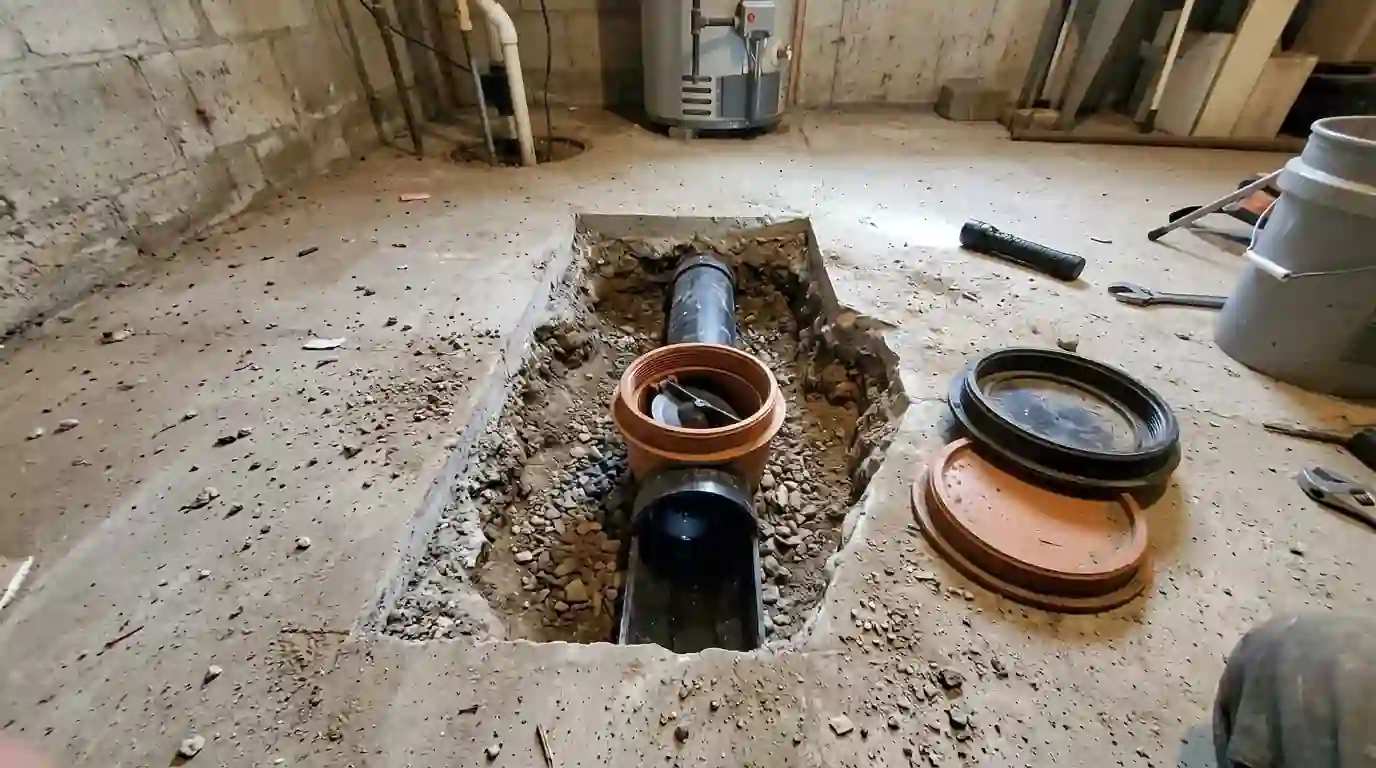
- Ask a plumber about a backwater valve, which stops street sewage from coming back up the building line.
- Keep grease out of drains. Wipe pans and put grease in the trash.
- Have the building line cleared if backups repeat on dry days.
- Store belongings off the floor in plastic bins rather than cardboard.
Insurance and paperwork
Sewer backup is often covered only with a specific endorsement, so check your policy. Our insurance guide explains the usual lines. Whatever your coverage, start the cleanup quickly: waiting on paperwork while sewage-soaked materials sit is how a backup turns into mold as well.